Cocaine boogie: James Booker, the tragic piano genius of New Orleans

Not that one really needs any confirmation, but listening to this rerelease, the genius is palpable. Maestro producer Scott Billington‘s liner notes are fascinating. Here’s hoping that more releases are in the offing — there is precious little available even at the Louisiana Music Factory. Also, check out this Guardian piece plugging the recent documentary.

James-Booker_Classified_Cover_RGB

A Confederacy of Dunces – quotes and extracts – 86

night_of_joy_iphone_case-r16105b25f1424a0cbb6a45b58484e4ee_vx34d_8byvr_324

“That fat freak a guarantee one hunner percen nucular bum. Shit. Drop him on somebody, everybody gettin caught in the fallout, get tin their ass blowed up. Ooo-wee. Night of Joy really turn into a zoo las night. Firs we get a bird, then the fat mother come draggin along, then three cats look like they jus excape from gym. Shit. Everybody fightin and scratchin and screamin and that big fat freak layin in the gutter like he daid, peoples fightin and cussin and rollin all aroun that big cat pass out in the street. Look like a barroom fight in a western movie, look like a gang rumble. We got us a big crowd on Bourbon Street look like we could have us a football game. Po-lice drivin up draggin off that Lee Bastar. Hey! It turn out she don have no pal at the precinc anyways. Maybe they be haulin in some of them orphan she been sponsorin. Whoa! That paper sure sending out plenny mothers takin pictures and axin me all about wha happen. Who say a color cat cain get his picture on the front page? Ooo-wee! Whoa! I gonna be the mos famous vagran in the city. I tell that Patrolman Mancusa, I say, ‘Hey, now this cathouse shut down, how’s about tellin your frien on the force I help you out so maybe they don star draggin my ass off for vagran?’ Who wanna get stuck in Angola with Lana Lee? She was bad enough on the outside. Shit.”

“You got any plan for gettin you a job, Jones?”

Jones blew a dark cloud, a storm warning, and said, “After the kinda job I jus had workin below the minimal wage, I really deserve a pay vacation. Ooo-wee. Where I gonna fin me another job? Too many color mothers draggin they ass aroun the street already. Whoa! Gettin your ass gainfully employ ain exactly the easies thing in the worl. I ain the only cat got him a problem. That Darlene gal ain gonna have no easy time gettin herself and that ball eagle gainfully employ. Peoples see wha happen the firs time she stick her ass on a stage, they be throwin water in her face if she be comin aroun lookin for work. See wha I mean? You drop somebody like that fat mother for sabotage, plenny innocen peoples like Darlene gettin theyselves screwed. Like Miss Lee all the time sayin, that fat freak ruin everybody inves’men. Darlene and her ball eagle probly starin at one another right now sayin, ‘Whoa! We really boffo smash for openin night. Hey! We real openin big.’ I plenny sorry that sabotage goin off in Darlene face, but when I see that big mother, I couldn resis. I knowed he make some kinda esplosion in that Night of Joy. Ooowee. He really go off. Hey!”

“You pretty lucky them po-lice didn’t take you in, too, workin in that bar.”

“That Patrolman Mancusa say he appreciate showin him that cabinet. He say, ‘Us mothers on the force need peoples like you, help us out.’ He say, ‘Peoples like you be helpin me get ahead.’ I say, ‘Whoa! Be sure and tell that to your frien at the precinc, they don star snatchin my ass for vagran.’ He say, ‘I sure will. Everybody at the precinc be appreciatin wha you done, man.’ Now them po-lice mothers appreciate me. Hey! Maybe I be gettin some kinda awar. Whoa!” Jones aimed some smoke over Mr. Watson’s tan head. “That Lee bastar really got her some snapshot of herself in that cabinet. Patrolman Mancusa starin at them pictures, his eyeballs about to fallout on the floor. He sayin, ‘Whoa! Hey! Wow!’ He sayin, ‘Boy, I really be gettin ahead now.’ I say to myself, ‘Maybe some peoples be gettin ahead. Some other peoples be turnin vagran again. Some peoples ain gonna be gainfully employ below the minimal wage after tonight. Some peoples be draggin they ass all aroun town somewheres, be buyin me air condition, color TV.’ Shit. Firs I’m a glorify broom expert, now I’m vagran.” “Things can always be worse off.”

“Yeah. You can say that, man. You got you a little business, got you a son teachin school probly got him a bobby-cue set, Buick, air condition, TV. Whoa! I ain even got me a transmitter radio. Night of Joy salary keepin peoples below the air-condition level.” Jones formed a philosophical cloud. “But you right in a way there, Watson. Things maybe be worse off. Maybe I be that fat mother. Whoa! Whatever gonna happen to somebody like that? Hey!”

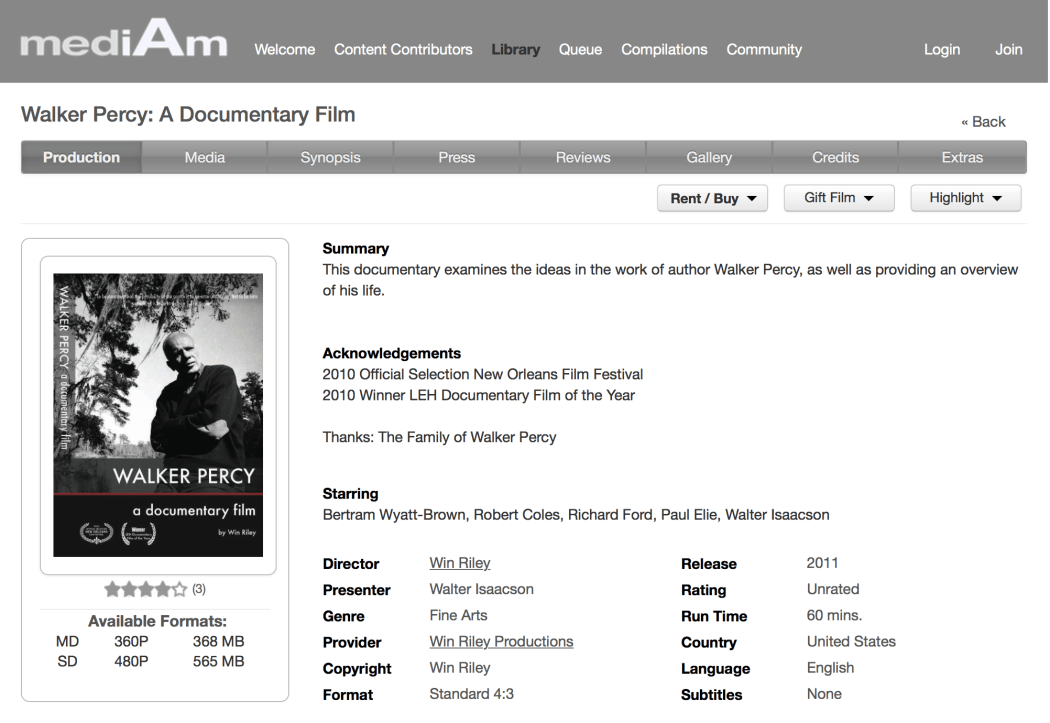
Walker Percy: A Documentary Film

At last Win Riley’s superb one hour documentary is now available for viewing at your convenience and at a reasonable price. Sign up is free and the proceeds go directly to Win — enabling him to make more great content. Tip: best to use Chrome as your browser. If you have any queries check out the FAQ (there are info boxes sprinkled around the site as well). As with every new digital environment, you will get the hang of how things work — I have outlined below some of the distinctive features for viewers.

Screen Shot 2015-01-15 at 11.22.42 AM

Admittedly there is limited content on this site right now but it is growing because unlike other platforms mediAm offers viewers:

• meaningful recommendation tools (recommendation lists and subject-based compilations)
• viewers can create social communities in the form of “like minds” — i.e. people with similar tastes and interests
• viewers can save content for later viewing with all the search and filter functionality of the main library
• allows viewers to search for content based on “media descriptors” — keywords used to describe content for deep searches.

Adam Smith and French Political Economy: Parallels and Differences

The intro to Laurent Dobuzinskis’ chapter:

As is well known, Adam Smith spent about two years in Europe, most of it in France. It was in fact during his stay in Toulouse that he began to work on what became The Wealth of Nations (WN); but what proved decisive for the deepening of his understanding of market processes were his encounters in Paris with Paul-Henri Thiry (Baron d’Holbach), Claude Helvetius, Jean d’Alembert, André Morellet, Jacques Necker, and especially his discussions with Anne-Robert-Jacques Turgot and François Quesnay. (Quesnay was universally regarded as the leader of the so-called Physiocrats, who, in addition to Quesnay, included Pierre-Paul Le Mercier de la Rivière, Pierre Samuel du Pont de Nemours and Turgot but the latter did not rigidly subscribe to the core dogmas of that school.) Although no one denies that Smith was profoundly influenced by these encounters, the question of precisely what debt Smith owed to these thinkers is not central to my purpose here. It is, indeed, a controversial one. Roberts (1935), for example, argued that Smith drew heavily from the writings of Pierre Le Pesant de Boisguilbert whom he would have known through later writers; Du Pont de Nemours and the Marquis de Condorcet, on the other hand, suggested that anything of value in Smith’s WN could be found in what Turgot had written (Groenewegen 1968, p. 271). But this question is probably impossible to answer categorically, partly because Smith’s manuscript notes were destroyed after his death. To talk about an intellectual debt is to put the matter in terms that are too narrow and could be only of interest to erudite biographers.

What I propose to do is to paint in broader strokes the parallels—some intentional, some not—and the significant differences between Smith’s own thought and the French political economists who immediately preceded Smith (and some who immediately followed him)—what Joseph Schumpeter (1954, p. 492) called the ‘French tradition’ or, in any event, its most prominent representatives. My intention, in other words, is not to write an intellectual biography of Adam Smith but to use this investigation as a means of better appreciating the original contributions he made to economic theory and moral philosophy—as well as the less convincing aspects of his reflections—by setting them in a larger context where similar ideas where emerging. The first French political economists advanced a flurry of novel ideas, some of which were arguably more perspicacious than those of Smith. In the end, Smith’s talents in articulating a (more or less) coherent and imposing vision of the balancing of human drives and enterprising spirit stands out. But this should not prevent us from considering whether and to what extent some parts of his system turn out to have been no better and, occasionally, less well analyzed than they had been by his French contemporaries or immediate successors. Indeed some historians of economic thought, most notably Joseph Schumpeter (1954) and Murray Rothbard (1995), have gone as far as claiming that Smith did not contribute any new idea to the fledging political economy of his era. In the same vein, Henry Macleod (1896, p. 73) wryly noted that

Smith’s work and Condillac’s were published in the same year. Smith obtained universal celebrity in a very short time. Condillac’s was universally neglected, but yet in scientific spirit it is infinitely superior to Smith.

The challenge I face here is to take this charge seriously while also trying to be fair to Smith. In the next section, I trace the parallels and differences between Smith and the French political economists who preceded him in their attempts to understand markets as autonomous, spontaneous processes of coordination among myriad producers and consumers. Smith’s ‘invisible hand’ metaphor is very apt and telling but the idea behind it can be traced back much farther in time than Smith’s writings. In section II, I turn to a comparison between Smith’s labour theory of value and the French tradition’s more subjectivist approach. In section III, I underline the French political economists’ more perceptive views on the role of the entrepreneur whose presence is not quite as noticeable in Smith’s writings. Finally, in the concluding section, I identify the aspects of Smith’s political economy and moral philosophy that, on balance, stand out as unique contributions in spite of the weaknesses identified above, and briefly discuss the impact of the WN on the French political economists who read and reacted to it.

Screen Shot 2014-12-03 at 4.13.38 PM

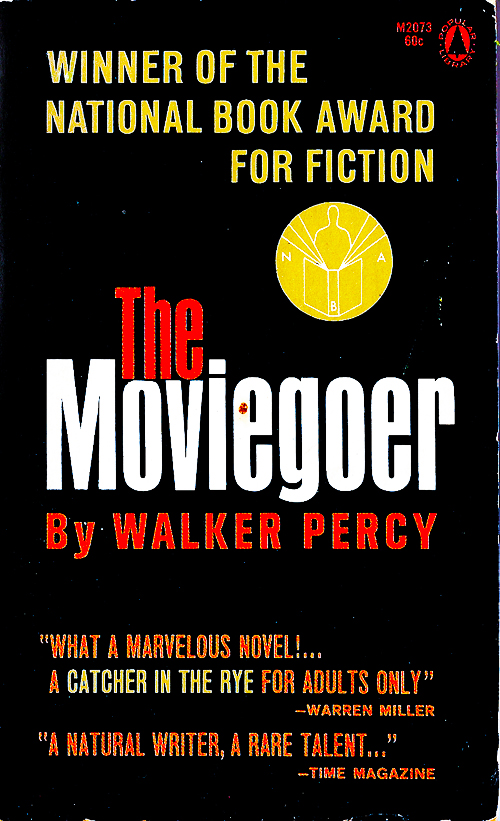
The Moviegoer – quotes and extracts – 17

Yet loves revives as we spin homewards along the coast through the early evening. Joy and sadness come by turns, I know now. Beauty and bravery make you sad, Sharon’s beauty and my aunt’s bravery, and victory breaks your heart. But life goes on and on we go, spinning along the coast in a violet light, past Howard Johnson’s and the motels and the children’s carnival. We pull into a bay and have a drink under the stars. It is not a bad thing to settle for the Little Way, not the big search for the big happiness but the sad little happiness of drinks and kisses, a good little car and a warm deep thigh.

BB0525

The Philosophy of Dance

Here’s a new entry to the SEP. The photos below are of my favourite dancer of all time — the one and only Sylvie Guillem. I’ve heard that she’s been criticized because she came from a gymnastics background. Sour grapes really just because she pushed the bounds . . . because she could. She was physically stronger than all others and always took complete charge of her career with pieces especially written with her in mind. No glove puppet SG.

Dance is underrepresented in philosophical aesthetics. This means that, as a whole, the philosophical aesthetics of dance lacks the full range of views that one can find in more developed field of aesthetics such as literature or music.

c28c9fd06031674dc7cbe986d7f2b879

tumblr_lld5dyKNMv1qbl4bfo1_1280-808x1024

Making Visible “the Invisible Hand”: The Mission of Social Simulation

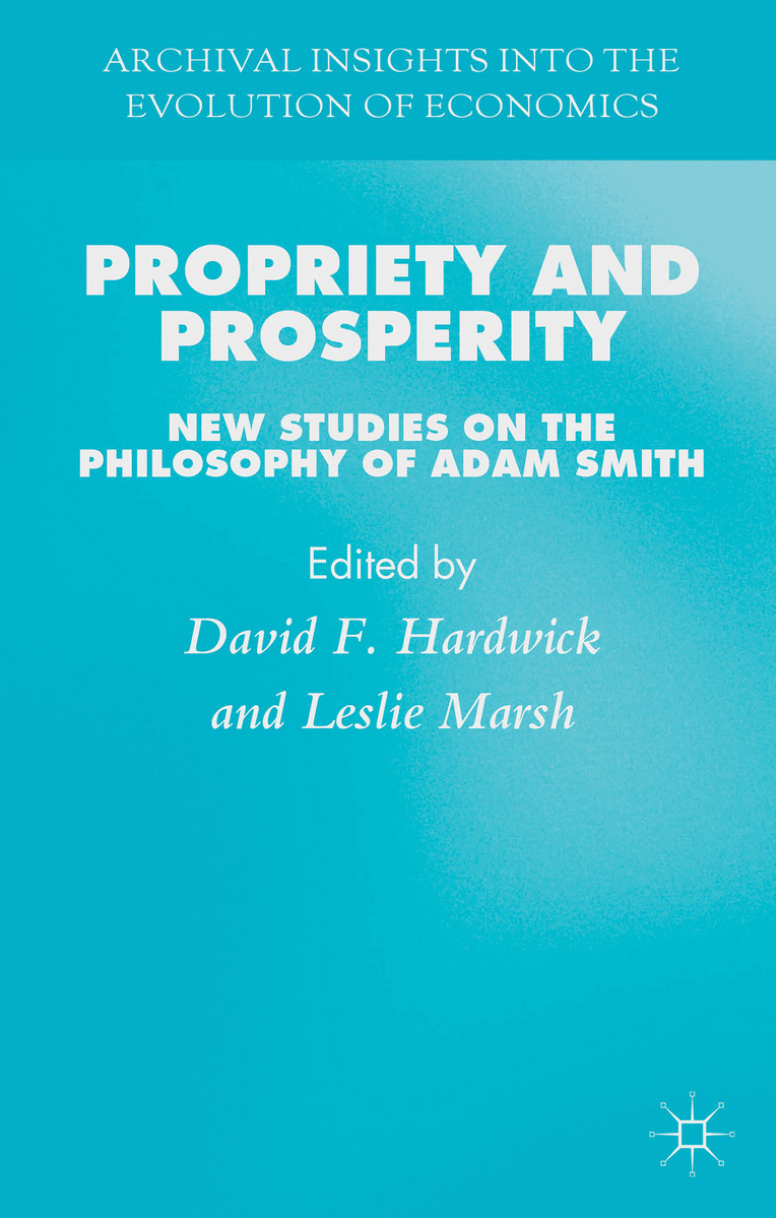
Cristiano Castelfranchi’s interesting article. For more on the invisible hand see Propriety and Prosperity: New Studies on the Philosophy of Adam Smith with the following contributions:

Metaphor Made Manifest: Taking Seriously Smith’s ‘Invisible Hand’ by Eugene Heath

The ‘Invisible Hand’ Phenomenon in Philosophy and Economics by Gavin Kennedy

Instincts and the Invisible Order: The Possibility of Progress by Jonathan B. Wight

367748

Shakespeare: One of the First and Greatest Psychologists

Pinker in The Atlantic. (H/T to Shannon Selin)

Worse still, we humans are the last to notice our own limited nature. In seven words, Shakespeare sums up a good portion of the findings of modern psychology: “most ignorant of what he’s most assured.” A recurring discovery of social and cognitive psychology is that human beings are absurdly overconfident in their own knowledge, wisdom, and rectitude. Everyone thinks that he or she is in the right, and that the people they disagree with are stupid, stubborn, and ignorant. People reliably overestimate their own knowledge, and misjudge their own accuracy at making predictions. A common theme of both Shakespeare and modern social psychology is the human species’ overconfidence.

c8a11097f