Walker Percy Wednesday 167

percycovercroppea

In view of the triumphant and generally admirable democratic-technological transformation of society, what is the ground of the novelist’s radical disquiet? Can the charge be brought against him, as Harvey Cox has accused the existentialists, of being an anachronism, one of the remnant of nineteenth-century “cultivated personalities” who, finding no sympathetic hearing from either technician or consumer, finds it convenient to believe that the world is going to the dogs?

Might not the novelist follow the new theologian in his embrace of the exurb and the computer? Evidently the former does not think so. Offhand I cannot think of a single first-class novelist who has any use for the most “successful” American society, namely life in the prosperous upper-middle-class exurb, in the same sense that Jane Austen celebrated a comparable society. Rather is the novelist more apt to be a refugee from this very society.

The curious fact is that it is the new novelist who judges the world and not the new theologian. It is the novelist who, despite his well-advertised penchant for violence, his fetish of freedom, his sexual adventurism, pronounces anathemas upon the most permissive of societies, which in fact permits him everything. How does the novelist judge the new theologian? One might expect that since one of the major burdens of the American novel since Mark Twain has been a rebellion against Christendom, the emancipated novelist might make common cause with the emancipated theologian. The truth is, or so it appears to me, that neither novelists nor anybody else is much interested in any theologians, and least of all in God-is-dead theologians. The strenuous efforts of the latter to baptize the computer remind one of the liberal clergyman of the last century who used to wait, hat in hand so to speak, outside the scientific laboratories to assure the scientist there was no conflict between science and religion. The latter could not have cared less.

Yet the contemporary novelist is as preoccupied with catastrophe as the orthodox theologian with sin and death.

Why?

Perhaps the novelist, not being a critic, can only reply in the context of his own world view. All issues are ultimately religious, said Toynbee. And so the “religion” of the novelist becomes relevant if he is writing a novel of ultimate concerns. It would not have mattered a great deal if Margaret Mitchell were a Methodist or an atheist. But it does matter what Sartre’s allegiance is, or Camus’s or Flannery O’Connor’s. For what his allegiance is is what he is writing about.

As it happens, I speak in a Christian context. That is to say, I do not conceive it my vocation to preach the Christian faith in a novel, but as it happens, my world view is informed by a certain belief about man’s nature and destiny which cannot fail to be central to any novel I write.

Being a Christian novelist nowadays has certain advantages and disadvantages. Since novels deal with people and people live in time and get into predicaments, it is probably an advantage to subscribe to a world view which is incarnational, historical, and predicamental, rather than, say, Buddhism, which tends to devalue individual persons, things, and happenings. What with the present dislocation of man, it is probably an advantage to see man as by his very nature an exile and wanderer rather than as a behaviorist sees him: as an organism in an environment. Despite Camus’s explicit disavowal of Christianity, his Stranger has blood ties with the wayfarer of Saint Thomas Aquinas and Gabriel Marcel. And if it is true that we are living in eschatological times, times of enormous danger and commensurate hope, of possible end and possible renewal, the prophetic-eschatological character of Christianity is no doubt peculiarly apposite.

It is also true, as we shall presently see, that the Christian novelist suffers special disabilities.

But to return to the question: What does he see in the world which arouses in him the deepest forebodings and at the same time kindles excitement and hope?

What he sees first in the Western world is the massive failure of Christendom itself. But it is a peculiar failure and he is apt to see it quite differently from the scientific humanist, for example, who may quite frankly regard orthodox Christianity as an absurd anachronism. The novelist, to tell the truth, is much more interested in the person of the scientific humanist than in science and religion.

Nor does he set much store by the usual complaint of Christians that the enemies are materialism and atheism and Communism. It is at least an open question whether the world which would follow a total victory of the most vociferous of the anti-Communists would be an improvement over the present world with all its troubles.

No, what the novelist sees, or rather senses, is a certain quality of the postmodern  consciousness as he finds it and as he incarnates it in his own characters. What he finds-in himself and in other people-is a new breed of person in whom the potential for catastrophe- and hope-has suddenly escalated. Everyone knows about the awesome new weapons. But what is less apparent is a comparable realignment of energies within the human psyche. The psychical forces presently released in the postmodern consciousness open unlimited possibilities for both destruction and liberation, for an absolute loneliness or a rediscovery of community and reconciliation.

The subject of the postmodern novel is a man who has very nearly come to the end of the line. How very odd it is, when one comes to think of it, that the very moment he arrives at the threshold of his new city, with all its hard-won relief from the sufferings of the past, happens to be the same moment that he runs out of meaning! It is as if he surrenders his ticket, arrives at his destination, and gets off his train-and then must also surrender his passport and become a homeless person! The American novel in past years has treated such themes as persons whose lives are blighted by social evils, or reformers who attack these evils, or perhaps the dislocation of expatriate Americans, or of Southerners living in a region haunted by memories. But the hero of the postmodern novel is a man who has forgotten his bad memories and conquered his present ills and who finds himself in the victorious secular city. His only problem now is to keep from blowing his brains out.

Death-of-God theologians are no doubt speaking the truth when they call attention to the increasing irrelevance of traditional religion. Orthodox theologians claim with equal justification, though with considerably more dreariness, that there is no conflict between Christian doctrine and the scientific method. But to the novelist it looks as if such polemics may be overlooking the tertium quid within which all such confrontations take place, the individual consciousness of postmodern man.

The wrong questions are being asked. The proper question is not whether God has died or been superseded by the urban-political complex. The question is not whether the Good News is no longer relevant, but rather whether it is possible that man is presently undergoing a tempestuous restructuring of his consciousness which does not presently allow him to take account of the Good News. For what has happened is not merely the technological transformation of the world but something psychologically even more portentous. It is the absorption by the layman not of the scientific method but rather of the magical aura of science, whose credentials he accepts for all sectors of reality. Thus in the lay culture of a scientific society nothing is easier than to fall prey to a kind of seduction which sunders one’s very self from itself into an all-transcending “objective” consciousness and a consumer-self with a list of “needs” to be satisfied. It is this monstrous bifurcation of man into angelic and bestial components against which old theologies must be weighed before new theologies are erected. Such a man could not take account of God, the devil, and the angels if they were standing before him, because he has already peopled the universe with his own hierarchies. When the novelist writes of a man “coming to himself” through some such catalyst as catastrophe or ordeal, he may be offering obscure testimony to a gross disorder of consciousness and to the need of recovering oneself as neither angel nor organism but as a wayfaring creature somewhere between.

And so the ultimate question is what is the term or historical outcome of this ongoing schism of the consciousness. Which will be more relevant to the “lost” man of tomorrow who knows he is lost: the new theology of politics or the renewed old theology of Good News? What is most noticeable about the new theology, despite the somber strains of the funeral march, is the triviality of the postmortem proposals. After the polemics, when the old structures are flattened and the debris cleared away, what is served up is small potatoes indeed. What does the Christian do with his God dead and His name erased? It is proposed that he give more time to the political party of his choice or perhaps make a greater effort to be civil to salesladies and shoe clerks. To the “religious” novelist, whether it be Sartre or O’Connor, the positive proposals of the new theology must sound like a set of resolutions passed at the P.T.A.

The man who writes a serious novel about the end of the world-i.e., the passing of one age and the beginning of another must reckon not merely like H. G. Wells with changes in the environment but also with changes in man’s consciousness which may be quite as radical. Will this consciousness be more or less religious? The notion of man graduating from the religious stage to the political is after all an unexamined assumption. It might in fact turn out that the modern era, which is perhaps three hundred years old and has already ended, will be known as the Secular Era, which came to an end with the catastrophes of the twentieth century.

The contrast between the world views of denizens of the old modern world and of the postmodern world might be sketched novelistically.

Imagine two scientists of the old modern world, perhaps a pair of physicists at Los Alamos in the 1940’s. They leave the laboratory one Sunday morning after working all night and walk past a church on their way home. The door is open, and as they pass, they hear a few words of the gospel preached. “Come, follow me,” or something of the sort. How do they respond to the summons? What do they say to each other? What can they do or say? Given the exhilarating climate of the transcending objectivity and comradeship which must have existed at the high tide of physics in the early twentieth century, it is hard to imagine a proposition which would have sounded more irrelevant than this standard sermon preached, one allows, with all the characteristic dreariness and low spirits of Christendom at the same time in history. If indeed the scientists said anything, what they said would not even amount to a rejection of the summons-Come!-a summons which is only relevant to a man in a certain predicament. Can one imagine these scientists conceiving themselves in a predicament other than a Schadenfreude about creating the ultimate weapon? Rather would the words heard at the open door be received as a sample of a certain artifact of culture. Scientist A might say to Scientist B, “Did you know there is a local cult of Penitentes not five miles from here who carry whips and chains in a pre-Lenten procession?” Nor can one blame them for attending such a spectacle in the same spirit with which they attend the corn dance at Tesuque. The fact is that some of the Los Alamos physicists became quite good amateur ethnologists.

Imagine now a third scientist, perhaps a technician, fifty years later. Let us suppose that the world has not even blown up–it is after all too easy to set the stage so that the gospel is preached to a few ragamuffins in the ruins. Rather has it happened that the high culture of twentieth-century physics has long since subsided to a routine mop-up of particle physics-something like a present-day botanist who goes to Antarctica in the hopes of discovering an overlooked lichen. The technician, employed in the Santa Fe-Taos Senior Citizens Compound, is doing routine radiation counts on synthetic cow’s milk. But let us suppose that the schism and isolation of the individual consciousness has also gone on apace so that mankind is presently divided into two classes: the consumer long since anesthetized and lost to himself in the rounds of consumership, and the stranded objectivized consciousness, a ghost of a man who wanders the earth like Ishmael. Unlike the consumer he knows his predicament. He is the despairing man Kierkegaard spoke of, for whom there is hope because he is aware of his despair. He is a caricature of the contemporary Cartesian man who has objectified the world and his body and sets himself over against both like the angel at the gates of Paradise. All creaturely relations crumble at his touch. He has but to utter a word — achieving intersubjectivity, interpersonal relations, meaningful behavior — and that which the word signifies vanishes.

Such a man leaves his laboratory on a workaday Wednesday feeling more disembodied than usual and passes the same church, which is now in ruins, ruined both by the dreariness of the old Christendom and by the nutty reforms of the new theologians. From the ruins a stranger emerges and accosts him. The stranger is himself a weary, flawed man, a wayfarer. He is a priest, say, someone like the whisky priest in Graham Greene’s The Power and the Glory, who has been sent as yet another replacement into hostile territory. The stranger speaks to the technician. “You look unwell, friend.” “Yes,” replies the technician, frowning. “But I will be all right as soon as I get home and take my drug, which is the best of the consciousness-expanding community-simulating self-integrating drugs.” “Come,” says the priest, “and I’ll give you a drug which will integrate your self once and for all.” “What kind of a drug is that?” “Take this drug and you will need no more drugs” Etc.

How the technician responds is beside the point. The point concerns modes of communication. It is possible that a different kind of communication-event occurs in the door of the church than occurred fifty years earlier.

Screen Shot 2017-10-11 at 10.58.26 AM.png

Symposium on Gerald Gaus’ The Tyranny of the Ideal

Latest issue of C+T

Screen Shot 2017-12-07 at 6.49.37 PM

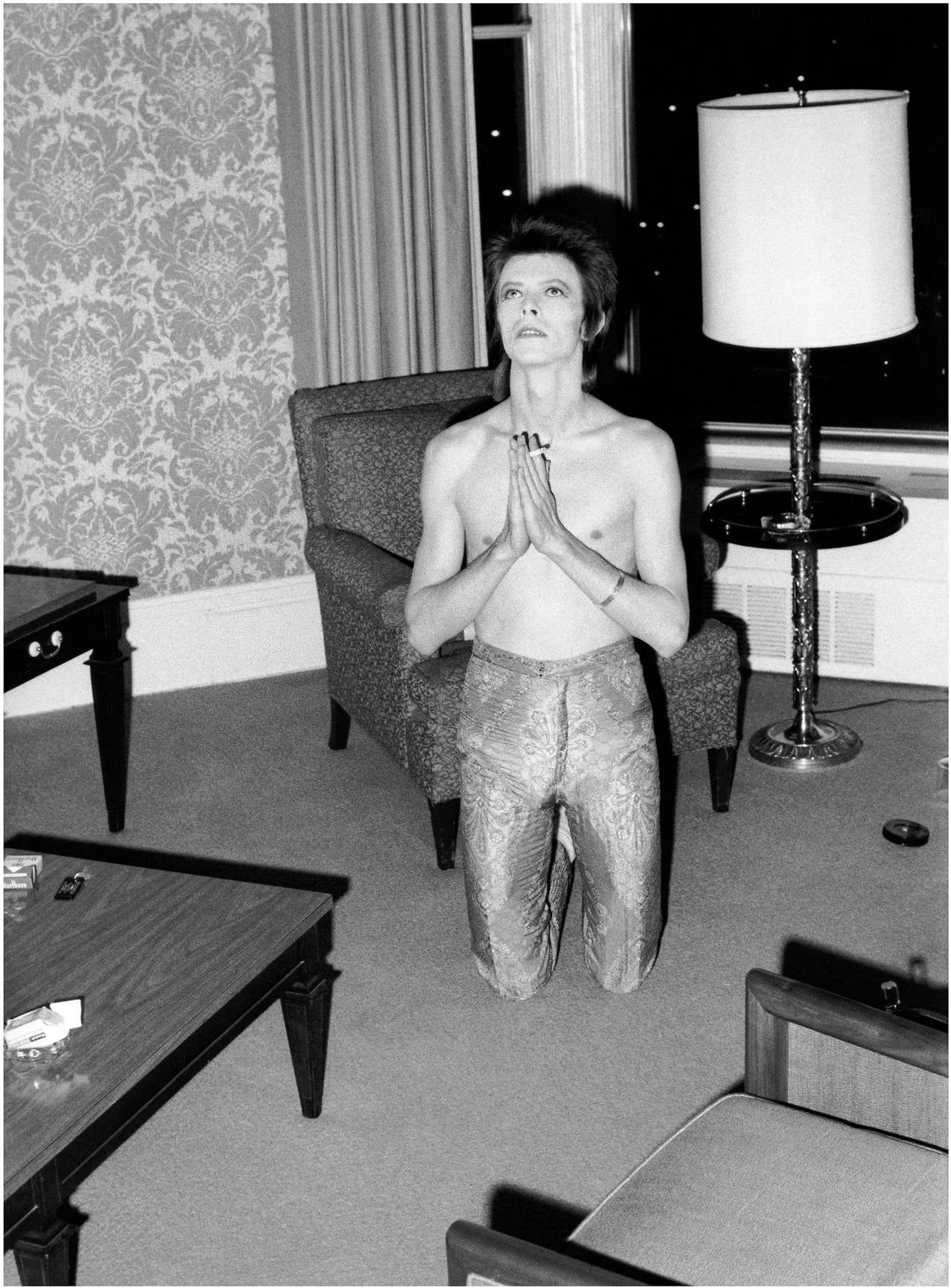
Duelling Bowies

Screen Shot 2017-12-23 at 11.31.26 AM

Also check out Ricky Gervais’ proto-The Office cringe-fest for a good giggle.

Nothing Comes from Nowhere: Reflections on Cultural Appropriation as the Representation of Other Cultures

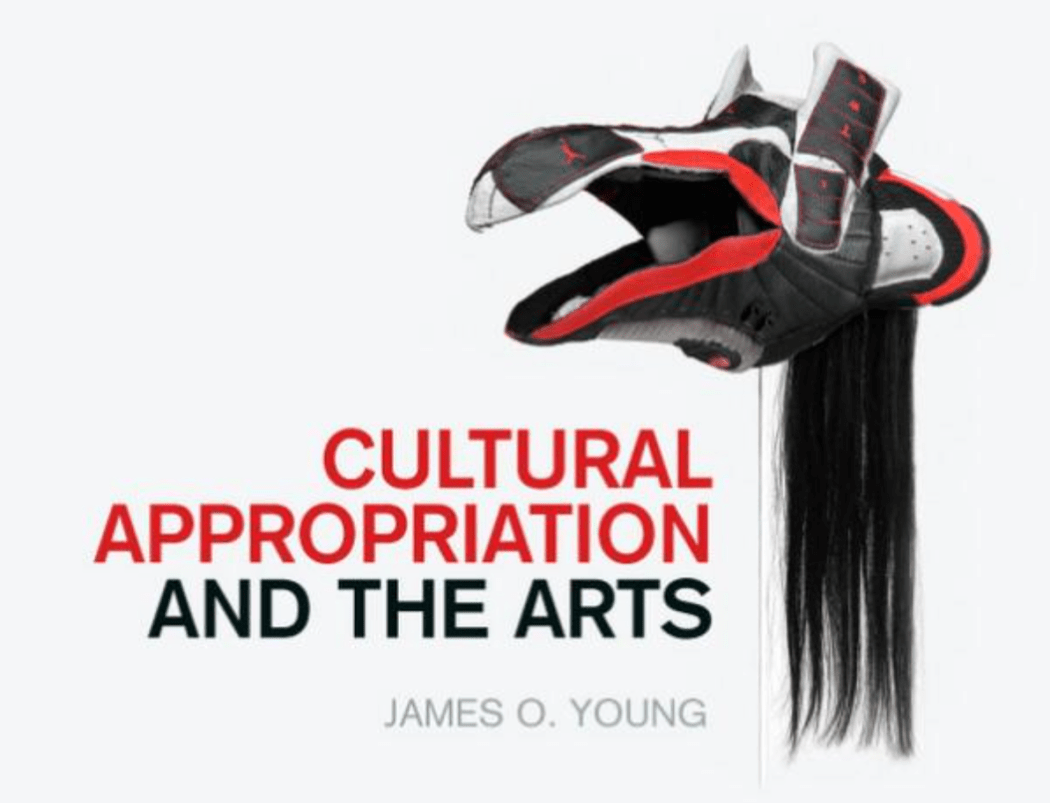
Here’s a nicely nuanced analytical discussion of a topic vulgarized in circles where there is no philosophical culture — typically English departments and other regressive pseudo circles where activism masquerades as inquiry. James Young has been thinking a great deal about these issues as a philosopher and as a Canuck, a refreshing change from the musty low-grade marxism tacitly and uncritically peddled as a preferred state-endorsed secular religion, especially in the Canadian context. It’s well-worth checking out James’ other writings, notably his freely available book Cultural Appropriation and the Arts and a range of other papers on aesthetics.

In point of fact all cultures are in a more or less perpetual state of flux, and all of them historically have impinged to a lesser or greater degree upon one another. These facts about cultures render the accepted perspective on cultural appropriation highly suspect. Once we reject essentialism about cultures, the possibility emerges for avenues of communication between cultures that the essentialist does not recognize.

Screen Shot 2018-01-06 at 1.35.17 PM


Walker Percy Wednesday 166

percycovercroppea
Since true prophets, i.e., men called by God to communicate something urgent to other men, are currently in short supply, the novelist may perform a quasi-prophetic function. Like the prophet, his news is generally bad. Unlike the prophet, whose mouth has been purified by a burning coal, the novelist’s art is often bad, too. It is fitting that he should shock and therefore warn his readers by speaking of last things-if not the Last Day of the Gospels, then of a possible coming destruction, of a laying waste of cities, of vineyards reverting to the wilderness. Like the prophet, he may find himself in radical disagreement with his fellow countrymen. Unlike the prophet, he does not generally get killed. More often he is ignored. Or, if he writes a sufficiently dirty book, he might become a best seller or even be bought by the movies.

What concerns us here is his divergence from the usual views of the denizens of the secular city in general and in particular from the new theologians of the secular city.

While it is important to take note of this divergence, extreme care must be taken not to distort it and especially not to fall prey to the seduction of crepe-hanging for its own sake. Nothing comes easier than the sepulchral manifestoes of the old-style cafe existentialist and the new-style hippie who professes to despise the squares and the technology of the Western city while living on remittance checks from the same source and who would be the first to go for his shot of penicillin if he got meningitis.

Yet even after proper precautions are exercised, it is impossible to overlook a remarkable discrepancy. It would appear that most serious novelists, to say nothing of poets and artists, find themselves out of step with their counterparts in other walks of life in the modern city, doctor, lawyer, businessman, technician, laborer, and now the new theologian.

It’s an old story with novelists. People are always asking, Why don’t you write about pleasant things and normal people? Why all the neurosis and violence? There are many nice things in the world. The reader is offended. But if one replies, “Yes, it’s true; in fact there seem to be more nice people around now than ever before, but somehow as the world grows nicer it also grows more violent. The triumphant secular society of the Western world, the nicest of all worlds, killed more people in the first half of this century than have been killed in all history. Travelers to Germany before the last war reported that the Germans were the nicest people in Europe”-then the reader is even more offended.

If one were to take a Gallup poll of representative denizens of the megalopolis on this subject, responses to a question about the future might run something like this:

Liberal politician: If we use our wealth and energies constructively to provide greater opportunities for all men, there is unlimited hope for man’s well-being.

Conservative politician: If we defeat Communism and revive old-time religion and Americanism, we have nothing to worry about.

Businessman: Business is generally good; the war is not hurting much, but the Negroes and the unions and the government could ruin everything.

Laborer: All this country needs is an eight-hour week and a guaranteed minimum income.

City planner: If we could solve international problems and spend our yearly budget on education and housing, we could have a paradise on earth.

Etc., etc.

Each is probably right. That is to say, there is a context within which it is possible to agree with each response.

But suppose one were to ask the same question of a novelist who, say, was born and raised in a community which has gone far to satisfy the lists of city needs, where indeed housing, education, recreational and cultural facilities, are first class; say some such place as Shaker Heights, Pasadena, or Bronxville. How does he answer the poll? In the first place, if he was born in one of these places, he has probably left since. It might be noted in passing that such communities (plus Harvard, Princeton, Yale, Bennington, Sarah Lawrence, and Vassar) have produced remarkably few good novelists lately, which latter are more likely to come from towns in south Georgia or the Jewish sections of New York and Chicago.

But how, in any case, is the refugee novelist from Shaker Heights likely to respond to the poll? I venture to say his response might be something like: Something is wrong here; I don’t feel good.

Now of course, if all generalizations are dangerous, perhaps the most dangerous of all is a generalization about novelists, who are a perverse lot and don’t even get along with each other, and who, moreover, speak an even more confused Babel nowadays than usual. But if there is a single strain that runs through the lot, whether Christian or atheist, black or white, Greek or Jew, it is a profound disquiet.

Is it too much to say that the novelist, unlike the new theologian, is one of the few remaining witnesses to the doctrine of original sin, the imminence of catastrophe in paradise?

If, anyhow, we accept this divergence as a fact, that the serious American artist is in dissent from the current American proposition, we are faced with some simple alternatives by way of explanation.

Either we must decide that the artist is mistaken and in what sense he is mistaken: whether he is a self-indulged maniac or a harmless eccentric or the culture’s court jester whom everyone expects to cut the fool and make scandalous sallies for which he is well paid.

Or the novelist in his confused Orphic way is trying to tell us something we would do well to listen to.

Again it is necessary to specify the dissent, the issue and the parties to it. One likes to pick the right enemies and unload the wrong allies.

The issue, one might say at the outset, is not at all the traditional confrontation between the “alienated” artist and the dominant business-technological community. For one thing, the novelist, even the serious novelist who doesn’t write dirty books, never had it so good. It is businessmen, or rather their wives, who are his best customers. Great business foundations compete to give him money. His own government awards him cash prizes. For another thing, the old self-image of the artist as an alien in a hostile society seems increasingly to have become the chic property of those writers who have no other visible claim to distinction . Nothing is easier than to set up as a two-bit hippie Cassandra crying havoc in bad verse.

It is the grossness of conventional distinctions which makes the case difficult. The other day I received a questionnaire from a sociologist who had evidently compiled a list of novelists. The first question was something like “Do you, as a novelist, feel alienated from the society around you?” I refused to answer the question on the grounds that any answer would be certain to be m isunderstood. To have replied yes would embrace any one of several ambiguities. One “yes” might mean “Yes, I find the entire Western urban-technological complex repugnant, and so I have dropped out, turned on, and tuned in.” Another “yes” might mean “Yes, since I am a Christian and therefore must to some degree feel myself an alien and wayfarer in any society, so do I feel myself in this society, even though I believe that Western democratic society is man’s best hope on this earth.” Another “yes” might mean “Yes, being a John Bircher, I am convinced the country has gone mad.”

The novelist’s categories are not the same as the sociologist’s. So his response to the questionnaire is apt to be perverse: Instead of responding to the questions, he wonders about the questioner. Does the questionnaire imply that the sociologist is not himself alienated? Having achieved the transcending objective stance of science, has he also transcended the mortal condition? Or is it even possible that if the sociologist should reply to his own questionnaire, “No, I do not feel alienated”-that such an answer, though given in good faith, could nevertheless conceal the severest sort of alienation. One thinks of the alienation Soren Kierkegaard had in mind when he described the little Herr Professor who has fitted the entire world into a scientific system but does not realize that he himself is left out in the cold and cannot be accounted for as an individual.

If the scientist’s vocation is to clarify and simplify, it would seem that the novelist’s aim is to muddy and complicate. For he knows that even the most carefully contrived questionnaire cannot discover how it really stands with the sociologist or himself. What will be left out of even the most rigorous scientific formulation is nothing else than the individual himself. And since the novelist deals first and last with individuals and the scientist treats individuals only to discover their general properties, it is the novelist’s responsibility to be chary of categories and rather to focus upon the mystery, the paradox, the openness of an individual human existence. If he is any good, he knows better than to speak of the “businessman,” as if there were such a genus. It was useful for Sinclair Lewis to create George Babbitt, but it has served no good purpose for bad novelists to have created all businessmen in the image of George Babbitt.

Here is the sort of businessman the “religious” novelist is interested in, i.e., the novelist who is concerned with the radical questions of man’s identity and his relation to God or to God’s absence. He sketches out a character, a businessman-commuter who, let us say, is in some sense or other lost to himself. That is to say, he feels that something has gone badly wrong in the everyday round of business activity, in his office routine, in the routine life at home, in his Sunday-morning churchgoing, in his coaching of the Little League. Even though by all objective criteria all is well with him, he knows that all is not well with him. What happens next? Of course he can opt out. But thanks to Sinclair Lewis, we now know better than Sinclair Lewis. One is not content to have him opt out and take up the thong-sandaled life in Capri. Perhaps we do have better sense in some matters. Or perhaps it is only that Capri is too available. As a matter of fact it would be easier nowadays to write a satirical novel about some poor overaged hippie who did drop out and try to turn on. But the present-day novelist is more interested in catastrophe than he is in life among the Rower people. Uncertain himself about what has gone wrong, he feels in his bones that the happy exurb stands both in danger of catastrophe and somehow in need of it. Like Thomas More and Saint Francis he is most cheerful with Brother Death in the neighborhood. Then what happens to his businessman? One day he is on his way home on the five-fifteen. He has a severe heart attack and is taken off the train at a commuters’ station he has seen a thousand times but never visited. When he regains consciousness, he finds himself in a strange hospital surrounded by strangers. As he tries to recall what has happened, he catches sight of his own hand on the counterpane. It is as if he had never seen it before: He is astounded by its complexity, its functional beauty. He turns it this way and that. What has happened? Certainly a kind of natural revelation, which reminds one of the experiences induced by the psychedelic drugs. (It is interesting to note that this kind of revelation, which can only be called a revelation of being, is viewed by the “religious” novelist as exhilarating or disgusting depending on his “religion.” Recall Sartre’s Roquentin catching sight of his own hand, which reminds him of a great fat slug with red hairs.) At any rate I cite this example to show the kind of character, the kind of predicament, the kind of event with which the novelist is nowadays more likely to concern himself than was Hemingway or Lewis. Is it not reasonable to say that, in some sense or other, the stricken commuter has “come to himself”? In what sense he has come to himself, how it transforms his relationship with his family, his business, his church, is of course the burden of the novel.
Screen Shot 2017-10-11 at 10.58.26 AM.png

RoboCup 2018 Montreal

The forthcoming RoboCup football (soccer) tournament in Montreal promises to be the largest yet.

When established in 1997, the original mission was to field a team of robots capable of winning against the human soccer World Cup champions by 2050.