And his first choice, Bowie’s “My Way” — i.e. Life on Mars. Though he came to self-awareness in the ’60s he preferred the harder-edged and more poetic ’70s. His one item: a lifetime’s supply of Marmite. Sound chap.
And his first choice, Bowie’s “My Way” — i.e. Life on Mars. Though he came to self-awareness in the ’60s he preferred the harder-edged and more poetic ’70s. His one item: a lifetime’s supply of Marmite. Sound chap.
It’s against all the odds that Sly, one of the doyens of acid funk, is still with us. Looking forward to seeing On the Sly.

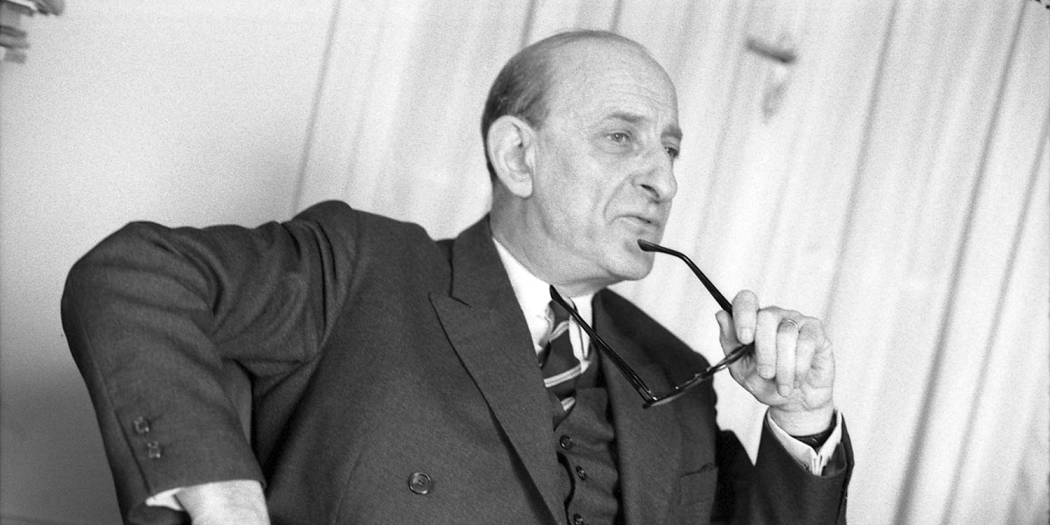
Born on this day. Below is Daniel J. Mahoney’s entry in the Encyclopedia of Modern Political Thought.
Raymond Aron (1905–83) was a distinguished French philosopher, political thinker, social scientist, and journalist. He wrote influential columns for Le Figaro (1947–77) and L’Express (1978–83) and played a major role in shaping moderate and conservative opinion in France in the years after World War II. Today, he is widely acknowledged to be one of the most prominent twentieth-century representatives of the French tradition of political liberalism. He was profoundly shaped by his experience of witnessing the rise of National Socialism in Germany as a student in that country in the early 1930s. As he put it in his 1970 inaugural address at the Collège de France, the experience of a civilized country descending into barbarism permanently cured him of “facile progressivism,” the illusion that “history automatically obeys the dictates of reason.”
It was during this period that Aron discovered the sociological and historical reflection of the German sociologist Max Weber, whose thought he admired and did so much to introduce into French intellectual circles. But the mature Aron expressed grave doubts about the excessive pathos and Nietzschean nihilism that he came to see just beneath the surface of Weber’s austere methodological reflections. Aron increasingly turned to an array of thinkers—the political Aristotle, Alexis de Tocqueville, and Charles-Louis Montesquieu among them, who provided a firmer foundation for his own choice of political moderation over fanaticism in its various forms. In a series of writings culminating in The Opium of the Intellectuals ([1957] 2001), Aron criticized the indulgence of progressive intellectuals toward totalitarian regimes and ideologies and dissected the myths of the left, revolution, and the proletariat, respectively. Despite a well-deserved reputation for thoughtful and balanced political analysis (Aron always insisted that the principal virtue of the social scientist was equity, not neutrality), he won the unrelenting enmity of Jean-Paul Sartre, who never tired of dismissing him as an “anti-communist dog.” For many French intellectuals in the decades after World War II, it was “better to be wrong with Sartre than right with Aron,” to cite a saying that widely circulated at that time.
Aron was a remarkably prolific writer and scholar. The author of at least forty-five books and of dozens of others that appeared posthumously, he wrote about modern political regimes and industrial societies in a manner that affirmed the essential autonomy of politics, theorized about international relations (he was a harsh critic of the realist-idealist dichotomy so central to contemporary international relations theory), and wrote influential interpretations of such classic political and philosophical thinkers as Niccolò Machiavelli, Karl Marx, and Tocqueville. His masterworks such as Paix et guerre entre les nations (1962) and Penser la guerre, Clausewitz (1976) explored the intersection of political philosophy and international relations. They combined encyclopedic learning and moderate and humane judgment with what Aron’s friend and contemporary Bertrand de Jouvenel called “the sadness of the political thinker.” For Aron, there was no end of history in sight. The best hope was to cultivate moderation and to bring violence under salutary political control. Aron was a tough-minded moderate, a conservative-minded liberal, who at the end of his life worried that liberal societies had forgotten that free men were citizens with duties and not merely individuals with rights. For his admirers, such as the French political theorist Pierre Manent, he was that rarity, an orator and civic educator “who spoke with authority and competence and eloquence about the public thing” (2010.) He remains an important intellectual, political, and scholarly reference point in France and in many countries around the world, including the former communist countries of east-central Europe.
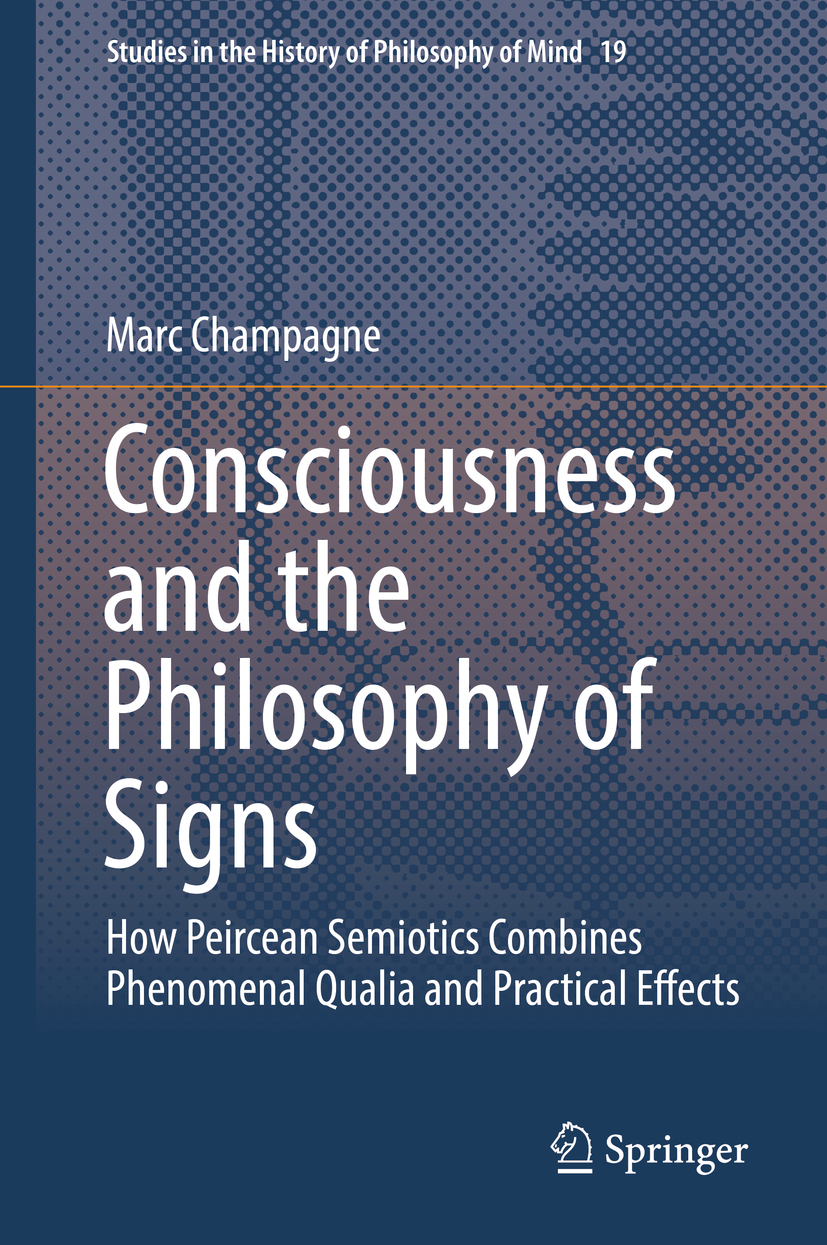
This just released book should be of interest to both Peirceans and Percyeans.
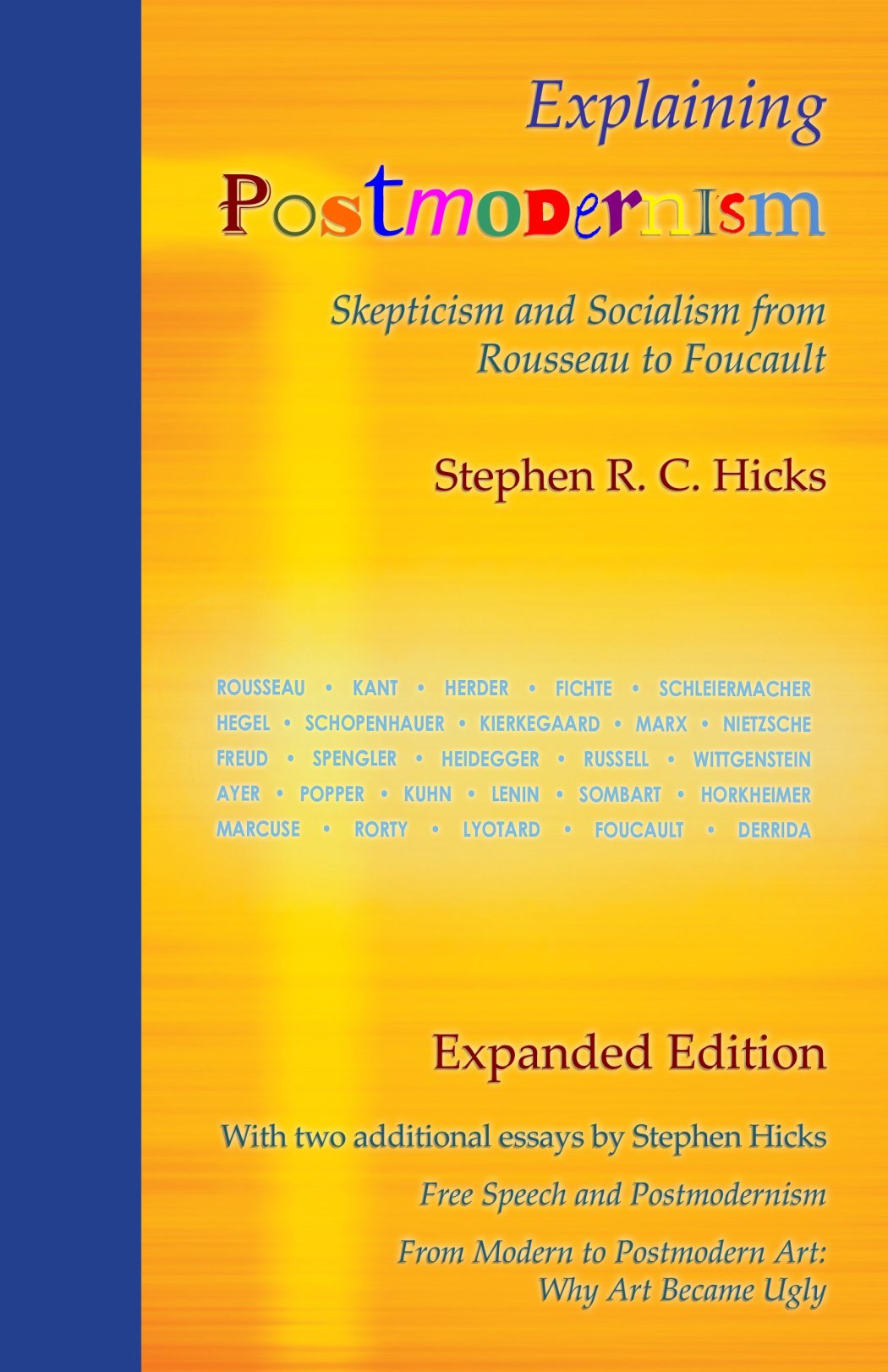
Stephen Hicks’ masterful critical survey of the disparate strands and ever-shifting cynical alliances, and as a consequence, dissonant morphology, offers a very accessible first orientation to understanding the shitstorm that we are currently in the midst of: “Why do they have that power in the humanities but not in the sciences? Why has a significant portion of the political Left — the same Left that traditionally promoted reason, science, equality for all, and optimism — now switched to themes of anti-reason, anti-science, double standards, and cynicism?” There is much to be said for the famous Devitt quote below (in the interim two decades Australia too has succumbed to this intellectual malaise). As a curtain-raiser to the more advanced Devitt discussion, I’d also recommend works by Andre Kukla and James Robert Brown. Speaking of the IYI’s tenuous and disengenuous relationship to reality, Taleb puts it thus: “the public has viscerally detected that some “educated” but cosmetic experts have no skin in the game and will never learn from their mistakes, whether individually or, more dangerously, collectively.” The rationalistic reduction of all forms of experience to the one-dimensional political, illustrates just how uncultivated, vulgar, and narcissistic the mauvaise foi IYIs really are.

Michael Devitt — Realism and Truth
Fredric Jameson’s oft-quoted line—“everything is ‘in the last analysis political”
Here it is useful to recall Derrida: “deconstruction never had meaning or interest, at least in my eyes, than as a radicalization, that is to say, also within the tradition of a certain Marxism, in a certain spirit of Marxism.”
New album just released and in conversation with Mary Louise Kelly.




 manwithoutqualities