Can Faith Ever Be Rational?

An NPR discussion by Tania Lombrozo motivated by the work of Lara Buchak, her paper available here.

My concern in this paper is the relationship between faith and rationality. I seek to develop a unified account of statements of faith concerning mundane matters and those concerning religious faith. To do so, I consider the sense in which faith requires going beyond the evidence, and argue that faith requires terminating the search for further evidence. Having established this, I turn to the question of whether it can still be rational to have faith; arguing that, contrary to common assumptions, there need be no conflict between faith and rationality. We shall see that whether faith can be practically rational depends both on whether there are extrinsic costs associated with postponing the decision to have faith and the extent to which potential counter evidence would be conclusive.


Image

Ant wars

Here is a lovely excerpt from the one and only David Attenborough, the drama heightened by the music. Check out all things swarm related on this excellent website run by Simon Garnier of the Rutgers Swarm lab.

Image

Before they make me run

Keef always worked well within the limitations of his voice: you can hear that he feels what he sings. This song is from the bleakest period of his life, his major contribution to Some Girls. To to Jagger’s credit he pulled off the strongest of the late Stones albums while Keef was otherwise engaged. The “another goodbye to another good friend” refers to Gram Parsons. Listen to any interview and you will hear a charming, dignified, frank and a very wise old goat and of course his marvelous autobiography is the best instantiation of this.

Worked in bars and sideshows along the twilight zone
Only a crowd can make you feel so alone
And it really hit home
Booze and pills and powders, you can choose your medicine
Well it’s another goodbye to another good friend

After all is said and done
Gotta move while it’s still fun
Let me walk before they make me run
After all is said and done
I gotta move, it’s still fun
I’m gonna walk before they make me run

Watched the taillights fading, there ain’t a dry eye in the house
They’re laughing and singing
Started dancing and drinking as I left town
Gonna find my way to heaven, `cause I did my time in hell
I wasn’t looking too good but I was feeling real well

After all is said and done
I gotta move I had my fun
Let us walk before they make me run

After all is said and done
I did alright, I had my fun
I will walk before they make me run

Philanthropic Institutional Design and the Welfare State

Here is the abstract to David’s and my paper just published in Conversations on Philanthropy, Vol. IX: Law and Philanthropy

Image

The topic of philanthropy has a great deal of philosophical interest because it exists at the nexus of issues surrounding distributive, remedial, and commutative justice, perennial issues in political philosophy (Ealy 2010, vi). It is perhaps because of this that, conceptually speaking, philanthropy seems to have a twilight existence, typically laboring under one of the most prevalent confusions—the synonymous usage of the terms “nonprofit” and “philanthropy” (McCully 2010). Yet, discussion of the philosophy of philanthropy is surprisingly neglected. The present discussion examines the relationship between private philanthropy and the welfare-oriented state: Is it possible for the philanthropic sphere and/or indeed the philanthropic impulse to coexist in an expansive governmental environment that sees health care as a natural part of its administrative monopoly? We answer with a qualified “yes.” Our paper, however, is not concerned with an appraisal of welfarism in its many guises nor with recommendations for reform, but with the pragmatics of operating within such an environment. As such we: (a) assess the philosophical presuppositions that animate recent discussion of the “Big Society” and the role philanthropy is accorded within it; and (b) offer practical guidance about protecting and encouraging the philanthropic impulse when a climate of welfarism prevails.

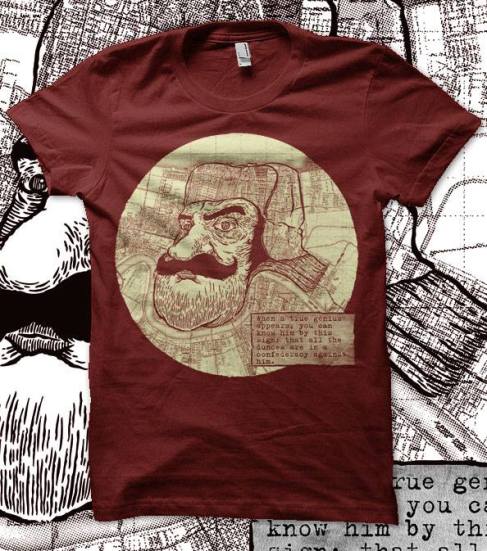
A Confederacy of Dunces – quotes and extracts – 28

He was four workers in one. In Mr. Reilly’s competent hands, the filing seemed to disappear. He was also kind to Miss Trixie; there was hardly any friction in the office. Mr. Gonzalez was touched by what he had seen the previous afternoon – Mr. Reilly on his knees changing Miss Trixie’s socks. Mr. Reilly was all heart. Of course, he was part valve, too. But the constant conversation about the valve could be accepted. It was the only drawback (p. 94).

Image Image courtesy of Miles to Go

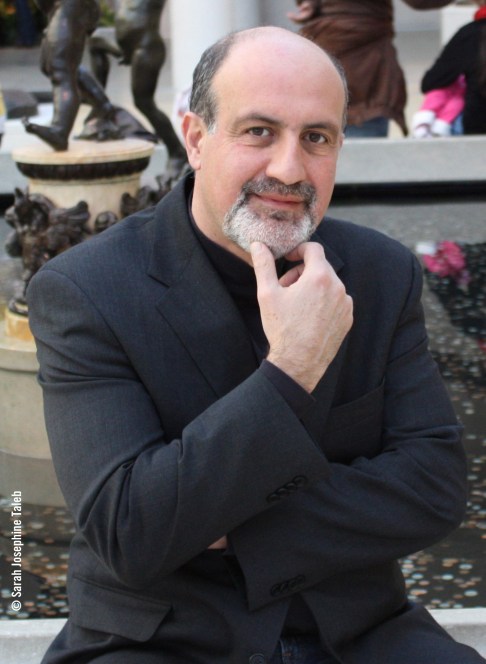
Taleb on Skin in the Game

Nassim Taleb talks with EconTalk host Russ Roberts about his recent paper (with Constantine Sandis) on the morality and effectiveness of “skin in the game.” When decision makers have skin in the game–when they share in the costs and benefits of their decisions that might affect others–they are more likely to make prudent decisions than in cases where decision-makers can impose costs on others. Taleb sees skin in the game as not just a useful policy concept but a moral imperative. The conversation closes with some observations on the power of expected value for evaluating predictions along with Taleb’s thoughts on economists who rarely have skin in the game when they make forecasts or take policy positions.

Image

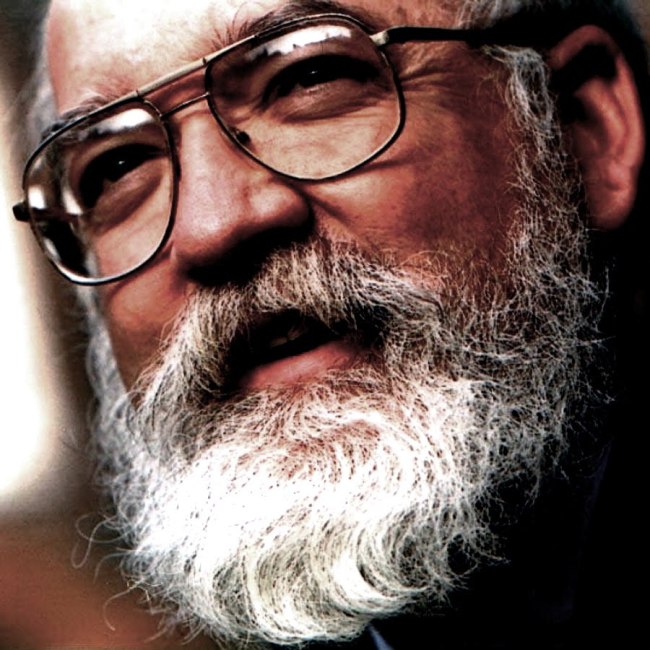
Dennett on Wieseltier vs. Pinker

This from Edge

Postmodernism, the school of “thought” that proclaimed “There are no truths, only interpretations” has largely played itself out in absurdity, but it has left behind a generation of academics in the humanities disabled by their distrust of the very idea of truth and their disrespect for evidence, settling for “conversations” in which nobody is wrong and nothing can be confirmed, only asserted with whatever style you can muster.

Image

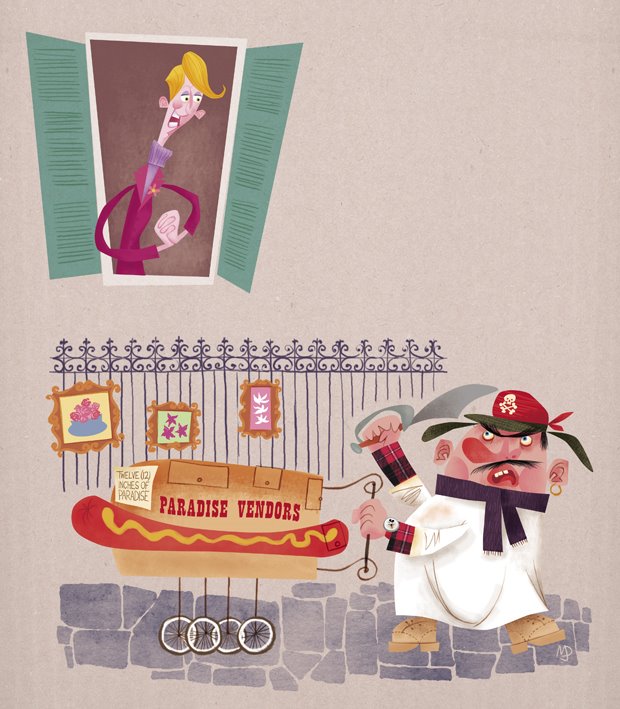
Coming to terms with Napoleon

Matt Dawson is a top-notch illustrator and is currently working on a book project I’m involved with. I came across Matt via the image below (fans of A Confederacy of Dunces will get the reference) and I knew immediately that here was a man of “taste and decency”. If you want a highly responsive, well-judged and artful chap to add class and distinction to your project, this is your man. No flat, schlocky, cliched or corporatized aesthetic here! Now when Matt says that there will “hopefully” be a book cover he’s being way too modest – this is what he’s been engaged to do and having seen the preliminary sketches, things are shaping up beautifully – it will make for a lovely poster as well. Stay tuned for more details as they emerge about this project. Suffice to say, New Orleans plays a pivotal role in this project.

Image

The real “boss”: Gatemouth

Gatemouth died on this day in 2005. So many tributaries flowing seamlessly into this bona fide genius’s unique style which includes covering Led Zep’s “Rock and Roll” and the Stones’ “Ventilator Blues.” To give an idea of this man’s standing, Clapton was consistently upstaged by him: Clapton very graciously got Gatemouth as support on his 1995 tour (note what Gate says about Clapton’s collection of stage guitars in the interview below). The interview is  wonderful (not in the sense that the questions are any good) but solely to hear Gatemouth speak in his mind in his characteristically frank way. Speaking of Frank – Zappa was in full accordance with Gatemouth’s criticism of the phony virtuosity of many guitarists. Here are my previous Gatemouth posts.