Here’s a valentine for the group-think regressives.
Here’s a valentine for the group-think regressives.
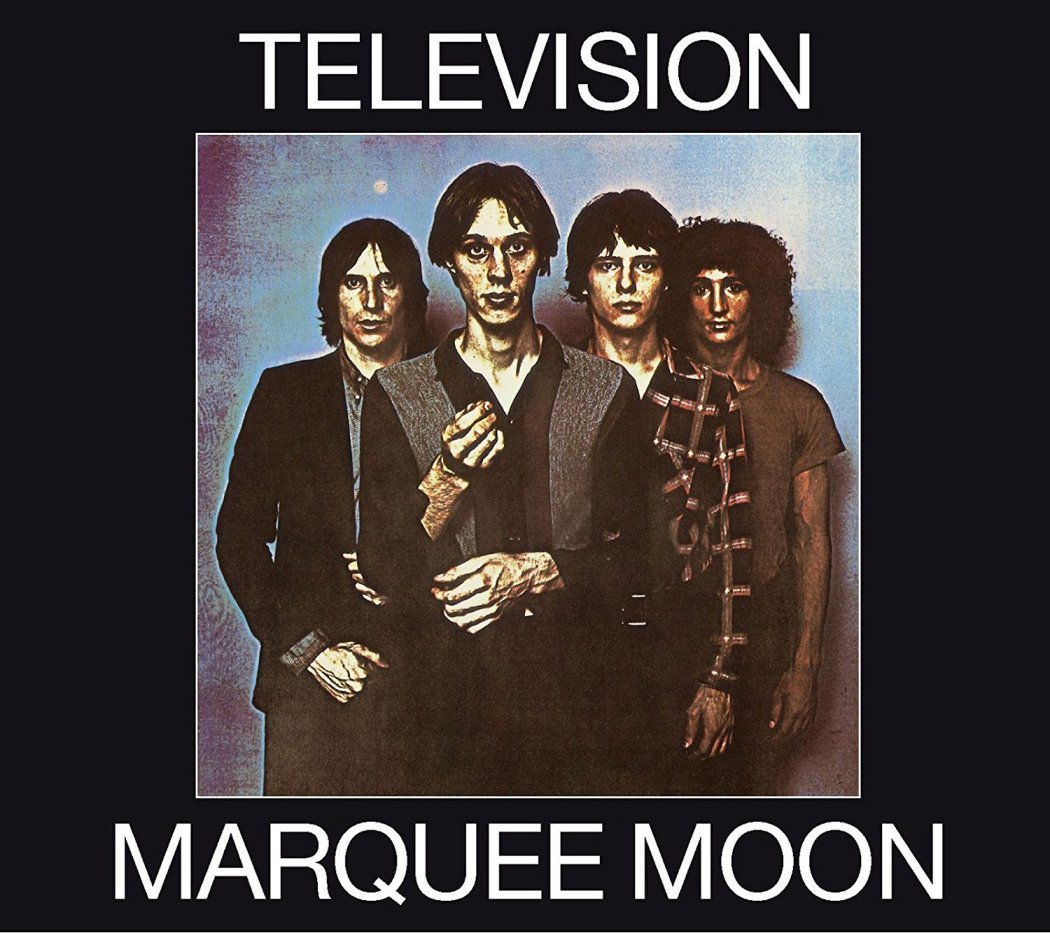
Damn it man, you say as much — so why mention it? Anyway, at least the “reporter” rightly commemorates this timeless album. Television, along with the Talking Heads, are the only North American talents that could consistently approximate the “philosophical musicality” (for want of a better phrase) of what Bowie was up to at the time (made crystal clear in Scary Monsters).
But 40 years later, Marquee Moon remains a singular achievement that transcends the “punk” label and still sounds fresh. It’s a classic from start to finish.
The fourth C+T Conference will be held in Vancouver, May 23-26, 2019. Here’s the call for papers.


IT IS A MATTER for astonishment, when one comes to think of it, how little use linguistics and other sciences of language are to psychiatrists. When one considers that the psychiatrist spends most of his time listening and talking to patients, one might suppose that there would be such a thing as a basic science of listening-and-talking, as indispensable to psychiatrists as anatomy to surgeons. Surgeons traffic in body structures. Psychiatrists traffic in words. Didn’t Harry Stack Sullivan say that psychiatry properly concerns itself with transactions between people and that most of these transactions take the form of language? Yet if there exists a basic science of listening-and-talking I have not heard of it. What follows is a theory of language as behavior. It is not new. Its fundamentals were put forward by the American philosopher Charles Peirce three-quarters of a century ago. It shall be the contention of this article that, although Peirce is recognized as the founder of semiotic, the theory of signs, modern behavioral scientists have not been made aware of the radical character of his ideas about language. I also suspect that the state of the behavioral sciences vis-a-vis language is currently in such low spirits, not to say default, that Peirce’s time may have come.
If most psychiatrists were asked why they don’t pay much attention to the linguistic behavior, considered as such, of their patients, they might give two sorts of answers, both reasonable enough. One runs as follows: “Well, after all, I have to be more interested in what the patient is saying than in the words and syntax with which he says it.” And if, like most of us, he has been exposed to the standard academic behavioral sciences, he might add, again reasonably enough: “Well, of course we know that conversation is a series of learned responses, but these are very subtle events, occurring mostly inside the head, and so there is not much we can say about them in the present state of knowledge.”
Both explanations are familiar, reasonable, and dispiriting. But what is chiefly remarkable about them is that they are contradictory. No one has ever explained how a psychiatrist can be said to be “responding” to a patient when he, the psychiatrist, listens to the patient tell a dream, understands what is said, and a year later writes a paper about it. To describe the psychiatrist’s behavior as a response is to use words loosely.
Charles Peirce was an unlucky man. His two most important ideas ran counter to the intellectual currents of his day, were embraced by his friends-and turned into something else. William James took one idea and turned it into a pragmatism which, whatever its value, is not the same thing as Peirce’s pragmaticism. Peirce’s triadic theory has been duly saluted by latter-day semioticists- and turned into a trivial instance of learning theory. Freud was lucky. The times were ready for him and he had good enemies. It is our friends we should beware of. What follows does not pretend to offer the psychiatrist an adequate theory of language sprung whole and entire like Minerva from Jove’s head. It is offered as no more than a sample of another way of looking at things. I hope that it might either stimulate or irritate behavioral scientists toward the end that they will devise operational means of confirming or disconfirming these statements-or perhaps even launch more fruitful studies than this very tentative investigation.
What follows is adapted freely from Peirce, with all credit to Peirce, and space will not be taken to set down what was originally Peirce and what are the adaptations. Here again Peirce was unlucky, in that his views on language were put forward as part of a metaphysic, i.e., a theory of reality, and in a language uncongenial to modern behavioral attitudes. To say so is not to put down Peirce’s metaphysic. But the problem here is to disentangle from the metaphysic those insights which are germane to a view of language as behavior.
First I shall give a brief statement of what I take to be Peirce’s theory of language considered as a natural phenomenon, i.e., not as a logic or a formal structure but as overt behavior open to scientific inquiry. There shall follow a loose list of postulates which I take to be implied by Peirce’s triadic theory of signs. These “postulates,” unlike the arbitrary postulates of a mathematical system, are empirical statements which are more or less self-evident. From them certain other statements can be deduced. Their value will depend both on the degree to which the postulates are open to confirmation and the usefulness of the deduced statements to such enterprises as the psychiatrist’s understanding of his own transactions with his patients.
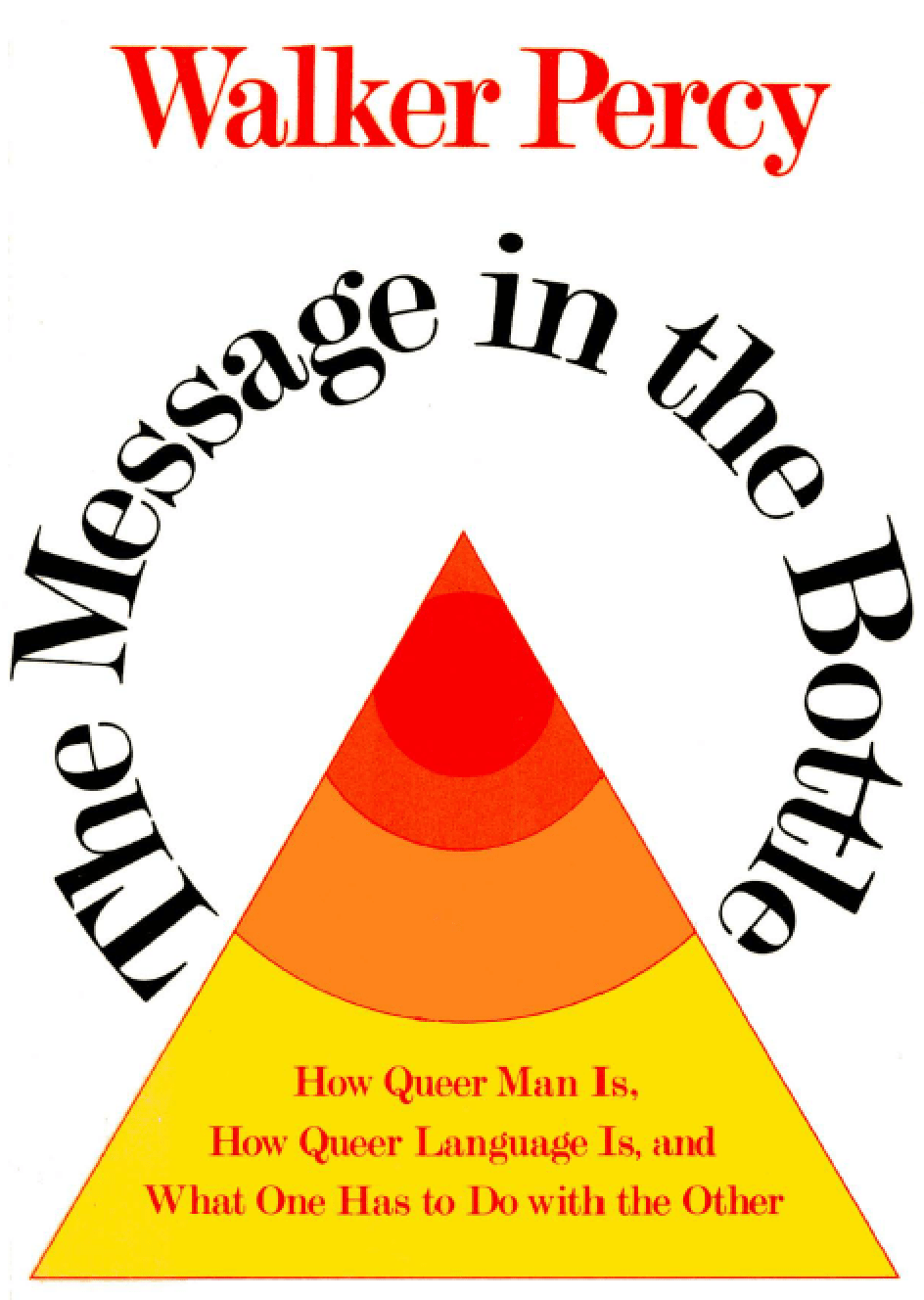
Given today’s news concerning Elon Musk and his company SpaceX it’s an opportune time to announce that this, the first volume of this new series, will be published shortly. To keep apprised of publishing developments sign up to the series’ Facebook page.

The very excellent Elizabeth Corey’s First Things review of Aurelian Craiutu’s the Faces of Moderation: The Art of Balance in an Age of Extremes.

The very excellent Jesse Norman has alerted me to his forthcoming book which will be the subject of a COSMOS + TAXIS symposium appearing sometime next year.




 manwithoutqualities