The fourth C+T Conference will be held in Vancouver, May 23-26, 2019. Here’s the call for papers.

The fourth C+T Conference will be held in Vancouver, May 23-26, 2019. Here’s the call for papers.

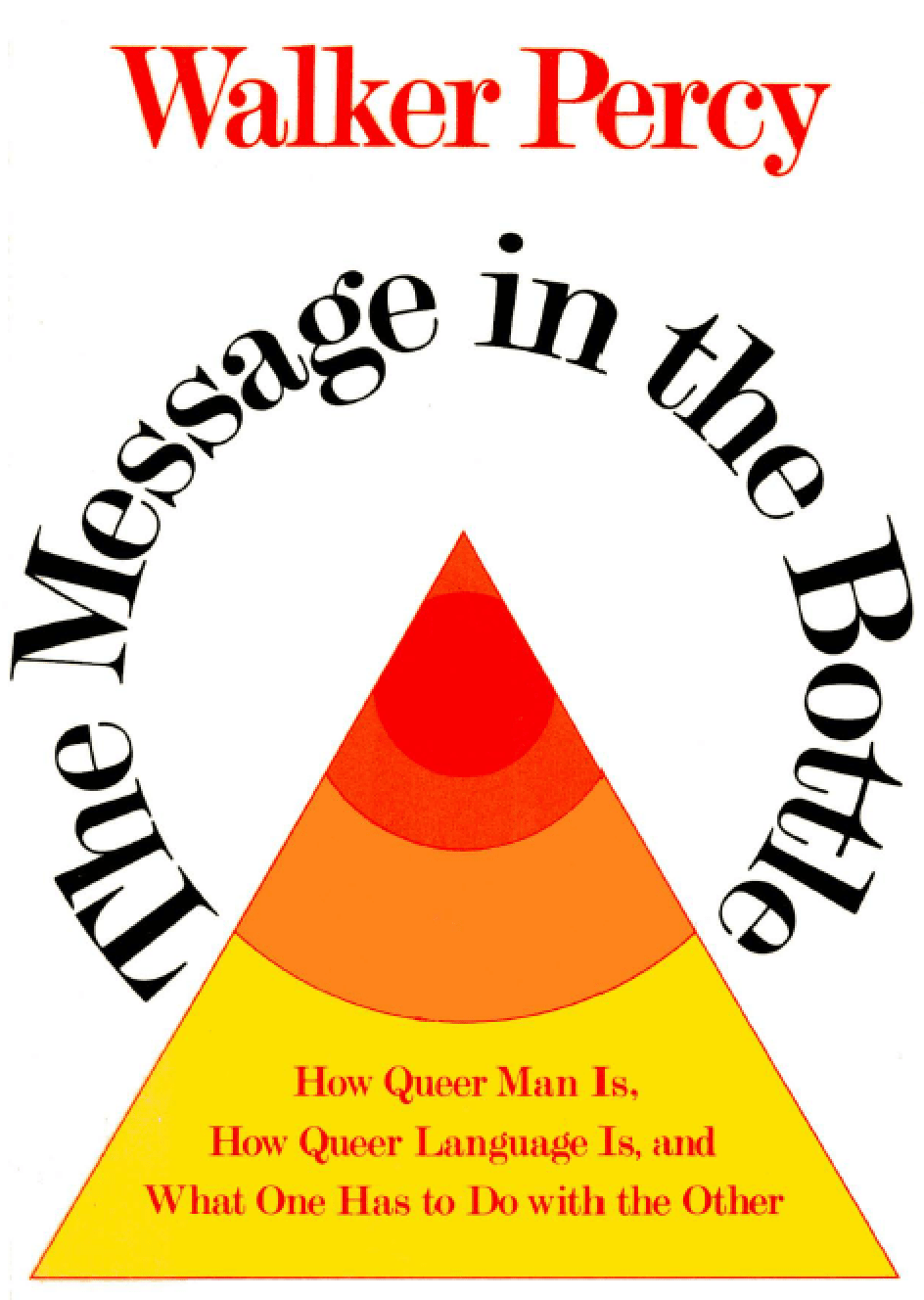
IT IS A MATTER for astonishment, when one comes to think of it, how little use linguistics and other sciences of language are to psychiatrists. When one considers that the psychiatrist spends most of his time listening and talking to patients, one might suppose that there would be such a thing as a basic science of listening-and-talking, as indispensable to psychiatrists as anatomy to surgeons. Surgeons traffic in body structures. Psychiatrists traffic in words. Didn’t Harry Stack Sullivan say that psychiatry properly concerns itself with transactions between people and that most of these transactions take the form of language? Yet if there exists a basic science of listening-and-talking I have not heard of it. What follows is a theory of language as behavior. It is not new. Its fundamentals were put forward by the American philosopher Charles Peirce three-quarters of a century ago. It shall be the contention of this article that, although Peirce is recognized as the founder of semiotic, the theory of signs, modern behavioral scientists have not been made aware of the radical character of his ideas about language. I also suspect that the state of the behavioral sciences vis-a-vis language is currently in such low spirits, not to say default, that Peirce’s time may have come.
If most psychiatrists were asked why they don’t pay much attention to the linguistic behavior, considered as such, of their patients, they might give two sorts of answers, both reasonable enough. One runs as follows: “Well, after all, I have to be more interested in what the patient is saying than in the words and syntax with which he says it.” And if, like most of us, he has been exposed to the standard academic behavioral sciences, he might add, again reasonably enough: “Well, of course we know that conversation is a series of learned responses, but these are very subtle events, occurring mostly inside the head, and so there is not much we can say about them in the present state of knowledge.”
Both explanations are familiar, reasonable, and dispiriting. But what is chiefly remarkable about them is that they are contradictory. No one has ever explained how a psychiatrist can be said to be “responding” to a patient when he, the psychiatrist, listens to the patient tell a dream, understands what is said, and a year later writes a paper about it. To describe the psychiatrist’s behavior as a response is to use words loosely.
Charles Peirce was an unlucky man. His two most important ideas ran counter to the intellectual currents of his day, were embraced by his friends-and turned into something else. William James took one idea and turned it into a pragmatism which, whatever its value, is not the same thing as Peirce’s pragmaticism. Peirce’s triadic theory has been duly saluted by latter-day semioticists- and turned into a trivial instance of learning theory. Freud was lucky. The times were ready for him and he had good enemies. It is our friends we should beware of. What follows does not pretend to offer the psychiatrist an adequate theory of language sprung whole and entire like Minerva from Jove’s head. It is offered as no more than a sample of another way of looking at things. I hope that it might either stimulate or irritate behavioral scientists toward the end that they will devise operational means of confirming or disconfirming these statements-or perhaps even launch more fruitful studies than this very tentative investigation.
What follows is adapted freely from Peirce, with all credit to Peirce, and space will not be taken to set down what was originally Peirce and what are the adaptations. Here again Peirce was unlucky, in that his views on language were put forward as part of a metaphysic, i.e., a theory of reality, and in a language uncongenial to modern behavioral attitudes. To say so is not to put down Peirce’s metaphysic. But the problem here is to disentangle from the metaphysic those insights which are germane to a view of language as behavior.
First I shall give a brief statement of what I take to be Peirce’s theory of language considered as a natural phenomenon, i.e., not as a logic or a formal structure but as overt behavior open to scientific inquiry. There shall follow a loose list of postulates which I take to be implied by Peirce’s triadic theory of signs. These “postulates,” unlike the arbitrary postulates of a mathematical system, are empirical statements which are more or less self-evident. From them certain other statements can be deduced. Their value will depend both on the degree to which the postulates are open to confirmation and the usefulness of the deduced statements to such enterprises as the psychiatrist’s understanding of his own transactions with his patients.
Given today’s news concerning Elon Musk and his company SpaceX it’s an opportune time to announce that this, the first volume of this new series, will be published shortly. To keep apprised of publishing developments sign up to the series’ Facebook page.

The very excellent Elizabeth Corey’s First Things review of Aurelian Craiutu’s the Faces of Moderation: The Art of Balance in an Age of Extremes.

The very excellent Jesse Norman has alerted me to his forthcoming book which will be the subject of a COSMOS + TAXIS symposium appearing sometime next year.

Reported in the Consequence of Sound.

Below is an extract (the first section of Chapter 2) of Ralf Bader’s most excellent and crisp Robert Nozick (pp. 10-14).
Famously, Nozick begins his book Anarchy, State, and Utopia with the claim: ‘Individuals have rights, and there are things no person or group may do to them (without violating their rights)’ (p. ix). This claim constitutes the basis of Nozick’s political philosophy and moral outlook. His book is an attempt to examine the implications of this claim for our understanding of the legitimate functions of the state, while also providing support in favour of this moral outlook and criticisms of alternative views. He intends to assess whether the existence of a state can be justified at all and what functions it can legitimately perform. In particular, he takes the anarchist’s challenge seriously and raises the question whether the acceptance of individual rights leaves any room for legitimate governments. He argues against the anarchist’s claim that every form of government is illegitimate, that states are intrinsically immoral and that only anarchy constitutes a justified societal arrangement. Having defended the legitimacy of the state, he then challenges the dominant view by showing that only a minimal state is legitimate and that anything more extensive violates rights.
Nozick summarizes the main conclusions of his book by saying that ‘a minimal state, limited to the narrow functions of protection against force, theft, fraud, enforcement of contracts, and so on, is justified; that any more extensive state will violate persons’ rights not to be forced to do certain things, and is unjustified; and that the minimal state is inspiring as well as right’ (p. ix). That is, the state is not intrinsically immoral, but can arise in a legitimate manner. In other words, the anarchist’s challenge can be met insofar as we can fi nd room for a legitimate state that is compatible with individual rights. (This is what Nozick attempts to establish in Part I.) Nonetheless, rights place important constraints on any legitimate state, thereby ensuring that only a minimal state is justified. If a state transgresses the narrow boundaries defined by rights, then it becomes an illegitimate state since it violates the rights of individuals. (This is the conclusion of Part II.) Moreover, Nozick contends, a minimal state that complies with these moral restrictions constitutes an attractive ideal since it is a framework for utopia. Not only is a minimal state the only legitimate state, it is also an inspiring state. (This is argued for in Part III.)
This is a radical political philosophy that has many important implications. For example, it implies that the state is not permitted to coerce people to help others and is not allowed to coerce people for their own good. Neither altruistically nor paternalistically inspired intervention is justified. The welfare of other people or of oneself does not constitute an adequate ground for justifying interference. Rights are side constraints on actions and trump all competing considerations, such as considerations of equality or welfare. Redistributionist policies are consequently ruled out as illegitimate. The same holds for various regulations attempting to modify the behaviour of individuals by rendering actions that are deemed to be undesirable either more expensive or even outright illegal. Such prohibitions, regulations and paternalistic policies are ruled out by the rights of individuals. In short, there is no room for redistribution or paternalism within a Nozickian state.
This criticism and rejection of coercion and force is combined with an emphasis on voluntarism that is present throughout Nozick’s works. He wants to minimize the use of force and coercion, restricting its legitimate employment to the protection of individual rights. Governments, as well as individuals, are not permitted to restrain or constrain others for altruistic or paternalistic reasons. This does not, however, imply that non-coercive strategies for the achievement of these goals are ruled out. On the contrary, they can be praiseworthy and we might have nonenforceable duties to engage in them. The only thing that is problematic is the attempt to achieve these goals by coercive means, in particular by means of the coercive apparatus of the state.
Nozick does not deny that we have obligations to help others. He only denies that these obligations are enforceable, that we can be coerced to fulfi l them and that it is the role of the state to achieve these goals. ‘In no way does political philosophy or the realm of the state exhaust the realm of the morally desirable or moral oughts. . . . [R]ights are not the whole of what we want a society to be like, or of how we morally ought to behave toward one another’ (Nozick: 1981, p. 503). Accordingly, it is important to keep in mind that Nozick is restricting his focus in Anarchy, State, and Utopia to those obligations that are enforceable since they are the proper subject matter of political philosophy.
Thus, we can capture the key features of his political philosophy, by noting that it is (i) a theory based on individual rights, that (ii) allows that a minimal state is justified, while (iii) restricting state action such that nothing more than a minimal state can be legitimate, claiming that (iv) such a state is inspiring and right. These are the four key aspects of Nozick’s political philosophy. The present chapter will follow this progression, beginning with an outline of the moral theory that Nozick adopts, followed by his response to the anarchist’s challenge. We will then look at the limits of the state that Nozick identifies, which restrict legitimate state actions to those of a minimal state, before assessing his view that such a minimal state is an inspiring ideal. The chapter concludes with a brief analysis of the evolution of Nozick’s thought after the publication of Anarchy, State, and Utopia.
Accordingly, our discussion in this chapter will more-or-less follow the mode of presentation that Nozick makes use of in Anarchy, State, and Utopia. The only difference being that instead of dividing the discussion into three parts, we divide it into fi ve by adding a separate discussion of Nozick’s moral philosophy, as well as a description of his thought post-Anarchy, State, and Utopia. The reason for the former alteration is that Nozick does not provide a unifi ed and systematic account of morality. Instead, his discussion of such issues is spread throughout Anarchy, State, and Utopia as well as some of his other writings. It will be useful to try to synthesize these various statements since a systematic account of Nozick’s ethical thought will be important for evaluating and understanding the rest of his project.
A few methodological disclaimers are in order. Due to considerations of space, we will only focus on Nozick’s main line of argumentation in favour of the minimal state and against any more extensive state. This requires us to leave aside many of Nozick’s insightful and fascinating tangential discussions and intellectual excursions, such as his treatment of animal rights, his discussion of the Marxist theory of exploitation, and his account of demoktesis (‘ownership of the people, by the people and for the people’, cf. p. 290). Similarly, we will not consider in detail Nozick’s lengthy critique of Rawls’s A Theory of Justice as well as other sometimes technical discussions, but only integrate them into the systematic exposition of Nozick’s positive contribution when relevant. Moreover, Nozick’s discussions of ethics and politics in his other writings will be largely ignored, except when pertinent to the issues discussed in Anarchy, State, and Utopia.
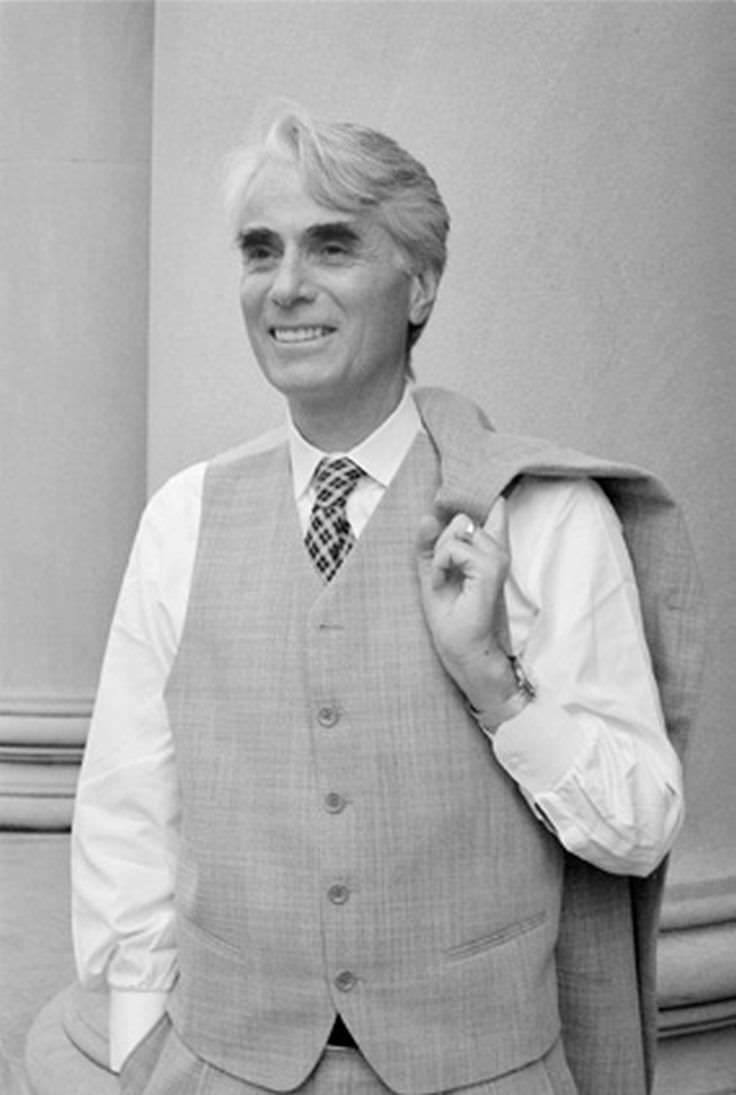
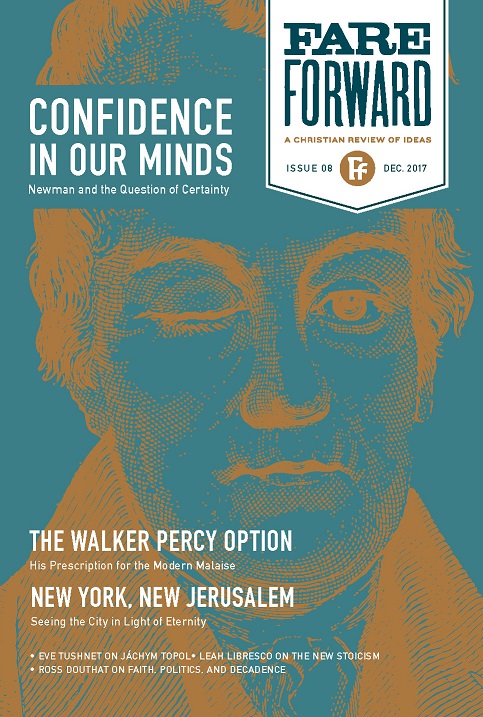
H/T Brian Smith. Charlie Clark in Fare Forward.
One of Percy’s most lost characters speaks more truly than he knows: “I like your banal little cathedral in the Vieux Carré. It is set down squarely in the midst of the greatest single concentration of drunks, drugheads, whores, pimps, queers, sodomists in the hemisphere. But isn’t that where cathedrals are supposed to be?”
One of the all-time bass greats. Glad to see that there are a few Thain aficionados out there. Audio Culture has a rough and ready page dedicated to the man. This YouTube comment pretty much sums up his status.



