It seems that these days Wayne Curtis is the only worthwhile and consistently good contributor to The Atlantic.
What are the perfect conditions for storing the barrels in which bourbon ages? It’s a question that no one had really asked before, despite the oft-noticed phenomenon that barrels situated near the windows in warehouses have a tendency to become what managers call “honey barrels”—that is, ones that produce above-average whiskey. Moreover, the storage question was a logical follow-up to one that Buffalo Trace had already been pondering: How do you make a perfect barrel?
Hume is on my mind especially in regard to my current work on Adam Smith. To this end, I’ve been re-watching Bryan Magee’s series The Great Philosophers from ’87. I’ve especially enjoyed the Hume discussion with John Passmore. Magee is an expositor second to none despite the fact that his expert guests are more intimate with- and have produced more distinguished work on- any of the target thinkers. In this Passmore interview (see below) one has the distinct sense that Magee is getting a great deal of pleasure by letting Passmore rattle on and then with utmost clarity and brevity restating the issue. This is not to put Passmore down – it is more to highlight Magee’s very special talent. I think Tony Quinton had that expository talent in writing but even he got flustered in his chat with Magee on Spinoza and Leibniz. Hume has a special place amongst my intellectual furniture. He speaks to me as the first modern: his discussion of personal identity, political philosophy, epistemology and ethics seem so germane to me as a so-called situated theorist. In any event, anyone who considers themselves a well-read person and who has not read Hume, is really quite impoverished, stylistically and substantively.
Moreover, what I particularly like about Hume is his even temperament and good nature along with his cutting wit. I’d have him by my side at my imaginary dinner party which wouldn’t be comprised by self-ascribed “intellectuals”: only people who love food, wine, conversation and laughter would be there.
He built a house in Edinburgh’s New Town, and spent his autumnal years quietly and comfortably, dining and conversing with friends, not all of whom were “studious and literary,” for Hume also found that his “company was not unacceptable to the young and careless.” One young person who found his company particularly “acceptable” was an attractive, vivacious, and highly intelligent woman in her twenties — Nancy Orde, the daughter of Chief Baron Orde of the Scottish Exchequer. One of Hume’s friends described her as “one of the most agreeable and accomplished women I ever knew.” Also noted for her impish sense of humor, she chalked “St. David’s Street” on the side of Hume’s house one night; the street still bears that name today. The two were close enough that she advised Hume in choosing wallpaper for his new home, and rumors that they were engaged even reached the ears of the salonnières in Paris. Just before his death, Hume added a codicil to his will, which included a gift to her of “ten Guineas to buy a Ring, as a Memorial of my Friendship and Attachment to so amiable and accomplished a Person.”
He also become the rage of the Parisian salons, enjoying the conversation and company of Diderot, D’Alembert, and d’Holbach, as well as the attentions and affections of the salonnières, especially the Comtesse de Boufflers. (“As I took a particular pleasure in the company of modest women, I had no reason to be displeased with the reception I met with from them.”)
With regard to politics and the character of princes and great men, I think I am very moderate. My views of things are more conformable to Whig principles; my representation of persons to Tory prejudices. Nothing can so much prove that men commonly regard more persons than things, as to find that I am commonly numbered among the Tories.
Cited in Ernest Mossner classic biography The Life of David Hume (Clarendon Press, 2001), p. 311.
Let’s give the final word to his dear friend:
Upon the whole, I have always considered him, both in his lifetime and since his death, as approaching as nearly to the idea of a perfectly wise and virtuous man, as perhaps the nature of human frailty will permit.
As most will have realized via Google this event is being commemorated. Parachuting is an activity I haven’t done in a long while but am feeling the urge. Here’s a posting entitled The Metaphysics of Skydiving from a few years back.
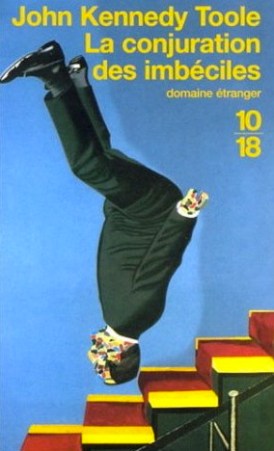
Although residing along the Mississippi River [This river is famed in atrocious song and verse; the most prevalent motif is one which attempts to make of the river an ersatz father figure. Actually, the Mississippi River is a treacherous and sinister body of water whose eddies and currents yearly claim many lives. I have never known anyone who would even venture to stick his toe in its polluted waters, which seethe with sewage, industrial waste, and deadly insecticides. Even the fish are dying. Therefore, the Mississippi as Father-God-Moses-Daddy-Phallus-Pops is an altogether false motif began, I would imagine, by that dreary fraud, Mark Twain. This failure to make contact with reality is, however, characteristic of almost all of America’s “art.” Any connection between American art and American nature is purely coincidental, but this is only because the nation as a whole has no contact with reality. That is only one of the reasons why I have always been forced to exist on the fringes of its society, consigned to the Limbo reserved for this who do know reality when they see it.] . . . The only excursion in my life outside of New Orleans took me through the vortex to the whirlpool of despair: Baton Rouge. In some future installment, a flashback, I shall perhaps recount that pilgrimage through the swamps, a journey into the desert from which I returned broken physically, mentally, and spiritually. New Orleans, is on the other hand, a comfortable metropolis which has a certain apathy and stagnation which I find inoffensive (p. 103).