Ignatieff speaks with Isaiah Berlin

Listening to this interview one must surely reevaluate one’s impression of Berlin (I did view this program back in the day but it left me unmoved). Was Oakeshott being scathing (as is often assumed) in describing Berlin as “a Paganini of ideas” (though Oakeshott had a deeply acerbic and brutally cutting streak to him, I’m not sure this works as a put-down). Berlin achieved more in his short technical philosophical career more than most do these days over the course of 20 years – and he was unmistakably a genuine liberal. But he was also a man of action during the War albeit in DC while Oakeshott was in Phantom. But different horses for different courses. Both were outsiders and though Berlin was considered by some to be the ultimate establishment intellectual, this program makes it very clear that he was always the outsider.

Socially Extended Cognition

Another extended mind themed issue from Cognitive Systems Research, the anchor paper being Shaun Gallagher’s The Socially Extended Mind. 

Here is an extract from the issue’s Editorial introduction: Socializing the extended mind

by Michele Merritt , Somogy Varga, and Mog Stapleton

Research at the intersection of philosophy and cognitive science has been a dynamically evolving and rapidly growing field that has witnessed increased attention over the last decade. A particular debate that has contributed to this growth concerns the role of non-neural, “external” structures in cognition and the idea that the neural, or even organismic, boundary is a merely arbitrary stopping point for the systematic investigation of cognition. This debate is particularly stimulating for researchers across the traditional disciplinary boundaries as it indicates a gradual change in opinion about how the cognitive apparatus is to be studied. Supporters of this approach have, in various ways, opposed the view that cognition is constituted only by computational, representation-manipulating activity that finds place in the head and have argued instead that the study of cognition must acknowledge the non-trivial role of the body and external structures in cognitive processes.

This special issue expands upon the aforementioned discussion by addressing what the editors and contributors see as lacuna among the extended mind debates. The focus in this issue is on the extent to which “extended” frameworks are useful for understanding the role of social structures in cognition. This is an area of research that has until recently received little attention in the philosophy of cognitive science. The title of this special issue, and of the target paper, refers back to one of the most heavily discussed articles in this field, The Extended Mind (Clark & Chalmers, 1998) in which the authors introduce the ‘Hypothesis of Extended Cognition’. In this paper Clark and Chalmers argue that cognitive activity not only often involves the exploitation of the surrounding environment but that sometimes extra-cranial items actually figure as constituents of cognitive processes. That is to say, proper parts of cognition sometimes extend into the environment. Although this hypothesis has provoked a deluge of opponents and defenders, the debate has tended to focus on the two particular kinds of external items which Clark emphasizes in his works: tools in the environment, and actions of the morphological body. Where social cognition has been considered in the debate, it has typically been in terms of the possibility of using another person as some sort of external memory resource, perhaps betraying the prominent influence of the disciplines of artificial intelligence, computer science and robotics upon the philosophy of cognitive science. In the target paper of this volume Shaun Gallagher takes a quite different tack on this theme of cognitive extension and social cognition by arguing that certain social practices, which he calls “mental institutions”, are usefully understood as extending our minds. This proposal could have radical implications for the flow of research between cognitive systems research and the discipline of sociology and pave the way to firmly establishing sociology as one of the cognitive sciences.
235238451_113b4b6d00_b

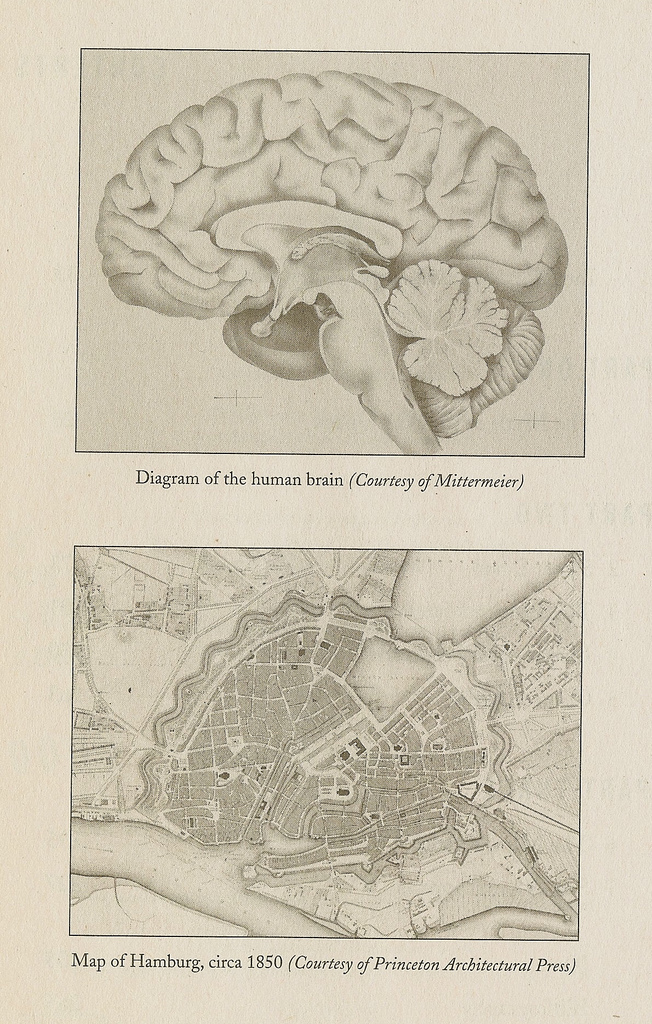
Image: Emergence: The Connected Lives of Ants, Brains, Cities, and Software by Steven Johnson

A Confederacy of Dunces – quotes and extracts – 31

The scene which met my eyes was at once compelling and repelling. The original sweatshop has been preserved for posterity at Levy Pants. If only the Smithsonian Institution, that grab-bag of our nation’s refuse, could somehow vacuum-seal the Levy Pants factory and transport it to the capital of the United States of America, each worker frozen in an attitude of labor, the visitors to that questionable museum would defecate into their garish tourist outfits. It is a scene which combines the worst of Uncle Tom’s Cabin and Fritz Lang’s Metropolis; it is mechanized Negro slavery; it represents the progress which the Negro has made from picking cotton to tailoring it (p. 103).

ACOD3

If a dog could talk, we could not understand him

This famous phrase of Wittgenstein (substitute lion for dog) seems to be salient here. Alva Noë takes on yet another one of those techno-ebullient MRI studies.

photo-bulldog-looking-at-you

Design vs. the Design Industry: Conflicts in Emergent Orders

Here is Joanna Boehnert’s recent paper. Check out Jody’s EchoLabs blog.

cycle-web

Moral y politica en la Europa moderna

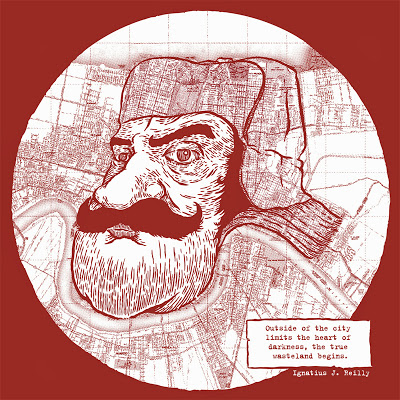
This must surely rate as the wildest cover for an Oakeshott volume that I’ve yet seen.

Image

Stigmergy, collective actions, and animal social spacing

A new paper by Giuggioli et al. in PNAS September 30, 2013

Abstract:

Collective animal behavior studies have led the way in developing models that account for a large number of individuals, but mostly have considered situations in which alignment and attraction play a key role, such as in schooling and flocking. By quantifying how animals react to one another’s presence, when interaction is via conspecific avoidance rather than alignment or attraction, we present a mechanistic insight that enables us to link individual behavior and space use patterns. As animals respond to both current and past positions of their neighbors, the assumption that the relative location of individuals is statistically and history independent is not tenable, underscoring the limitations of traditional space use studies. We move beyond that assumption by constructing a framework to analyze spatial segregation of mobile animals when neighbor proximity may elicit a retreat, and by linking conspecific encounter rate to history-dependent avoidance behavior. Our approach rests on the knowledge that animals communicate by modifying the environment in which they live, providing a method to analyze social cohesion as stigmergy, a form of mediated animal–animal interaction. By considering a population of animals that mark the terrain as they move, we predict how the spatiotemporal patterns that emerge depend on the degree of stigmergy of the interaction processes. We find in particular that nonlocal decision rules may generate a nonmonotonic dependence of the animal encounter rate as a function of the tendency to retreat from locations recently visited by other conspecifics, which has fundamental implications for epidemic disease spread and animal sociality.

Conceptual Framework:

The delayed response between mark deposition, the action of an individual, and conspecific retreat, the reaction of another conspecific, is a basic ingredient of stigmergy (10, 11), a mediated interaction mechanism whereby the changes produced endogenously in the environment by the marks of one individual elicit a response in the neighbors, which in turn respond, affecting their nearest neighbors. This cascade of events creates a feedback mechanism for the entire population, which self-organizes into a dynamic spatiotemporal pattern.

The shrinking and growth of Si are controlled, respectively, by the aging of the marks and the movement of the animals. The transience of the deposited cues tends to reduce the size of a marked area, because inactive marks are ignored by conspecifics. An aging mark at a given location reduces the propensity of other conspecifics to retreat from that location, which in turn increases the pressure onto individual i to move further inside its own marked area, reducing even further the spatial extent of Si. Because a decrease in the size of Si further reduces its spatial extent, the decay of the marks acts as a positive feedback. The other positive feedback is the movement of the animals, which helps the growth of Si. As animals deposit marks by exploring regions beyond their inner-core areas, they increase the extent of Si and pressure neighbors into moving away to avoid confrontation. This in turn allows them to explore even larger areas, thus further increasing the size of their marked areas. Positive feedback mechanisms act to reinforce a given process and are the key to explaining various forms of aggregation and pattern formation (see, e.g., ref. 12 for the application of reinforced random walks to represent some types of positive feedback). On the other hand, the negative feedback acts in the opposite direction of the variation of Si whether it is a decrease or increase in its spatial extent. As marked areas get smaller, animals may traverse them quicker and thus slow their shrinking. Similarly, as marked areas get bigger, animals take longer to move across them, preventing individuals from re-marking aging marks. This results in a reduction of the growth rate of Si.

We choose to interpret the space use of marking animals as a stigmergic interaction for three reasons. The first is that animal marking is a widespread behavior in the animal kingdom, and although each species has evolved specialized means of communication by depositing cues on the terrain, it serves the general function of broadcasting an animal’s presence. Marks contain information about identity and relative dominance (13), with many vertebrates (14) and eusocial insects (15) making use of chemical signals but also with examples in which visual marks are used, such as feathers and feces by birds. Stigmergy represents a well-developed concept that would help in studying animal space use from a general theoretical perspective, independent of the types of signals present in the marks that get deposited or the sensory modalities required for the detection of those signals. The second reason is that stigmergy makes interactive processes history dependent, which captures the fact—often neglected in quantitative analyses of animal space use—that individuals do not respond simply to the current position of other conspecifics, but also to where they have been in the recent past. A mark, when detected, represents a record of an individual’s past activity in a specific location to which other conspecifics eventually respond. The third reason is that stigmergic stimulus–response association relies upon modification of the environment. As environmental heterogeneity may also affect how individuals move in space, our approach yields a method to quantify another form of spatial heterogeneity, the one generated endogenously from animal interactions. It thus may be possible to extend our current framework to provide a common currency to interpret animal space use as a function of the most important endogenous and exogenous features of the ecosystem, respectively, conspecific avoidance and environmental covariates. Promising approaches in that respect already are available and may help link population spatial distribution to animal spatial memory and landscape persistence (16), as well as to prey distribution and terrain steepness (17, 18).

In this framework of socially interacting animals, we are interested in determining how the individual movement response to the presence of conspecifics shapes the degree of segregation in the population. A useful tool to characterize the emerging spatiotemporal pattern of the population is the encounter rate of mobile animals, an instrument of broad ecological applicability (19). Most encounter estimates have relied upon basic animal movement models, in which displacement is ballistic and individuals are completely independent, which amounts to considering animals as “ideal gas” particles. This approach has been taken as a null model to estimate the frequency of meeting or associations among mobile animals (20) and has been used recently to estimate, with the help of allometric considerations in a spatially implicit context, how home range size scales with body mass (21). Here, to capture the key biological features of the movement and interaction processes that underlie animal spacing, we consider a spatially explicit scenario to determine how individual behavior affects animal space use. The focus of our analysis is the quantification of the average encounter rate, home range size, and degree of exclusivity as a function of the degree of stigmergy.

Image

Fig. 1. Schematic representation of stigmergy in marking animals. When the animal i detects the presence of active foreign marks, it responds by retreating from the locations of the foreign marks (Ri). At the same time, the animal i itself deposits marks over the terrain, whose active set constitutes the stimulus Si that another member j of the population detects, inducing the response Rj. In turn, animal j deposits its own marks (Sj), whose locations affect animal i again or individual k, which will react and itself produce a stimulus. The number of individuals involved in this feedback loop may be as a large as the entire population or as small as just individuals i and j, depending on the locations the animals visit after their response. The dashed lines around Rk and Sk represent the fact that the number of steps necessary to affect individual i may vary because of the random nature of the movement process and, thus, of the probability of animal i encountering the stimulus (Sj).

Fear of frying

New Orleanians and Southerners generally have a penchant for fried food. They are not the only ones – the Scots and other UK Northerners even deep fry Mars Bars! Here is a nice article on the way frying should be done using all manner of food. Must try the chicken recipe.

-c0b73cbec05a0b4d

The Autoscopic Author: Kafka and Toole

Once again I have Kafka on my mind. I’ve been amending a review of Toole’s biography Butterfly in the Typewriter: The Tragic Life of John Kennedy Toole and the Remarkable Story of A Confederacy of Dunces by the very excellent Cory MacLauchlin to appear in the Journal of Mind and Behavior. Here is a snippet:

~~~~~~~~~~~~~

The phenomena of the autoscopic and the autotelic was perhaps too rich a mix for Gottlieb, a rarified psychological state that is incongruent with the neat and tidy categories that the business of publishing demands. Exceptional writers need exceptional editors: how different would the world’s intellectual landscape have been were it not for the insight and foresight of Max Brod, Kafka’s literary executor? [1]


[1] See here and the follow up story: I can’t determine if, after nearly a year, any further developments have transpired. 

~~~~~~~~~~~~~

Here is a “survey” of a flourish of recent works on Kafka all replete with attempts to discipher this extraordinary and enigmatic mind.

In a letter to his long-suffering fiancée Felice Bauer he declared: “I am made of literature; I am nothing else and cannot be anything else.” This was a constant theme of his mature years, and one that he expanded on in a highly significant diary entry from August 1916: “My penchant for portraying my dreamlike inner life has rendered everything else inconsequential; my life has atrophied terribly, and does not stop atrophying.”

Now this meets the autoscopic phenomenon that the brilliant Aaron Mishara writes so insightfully about and which I discuss at length in my review. This is where Banville reveals how little he understands:

Of course, Kafka is not the first writer, nor will he be the last, to figure himself as a martyr to his art—think of Flaubert, think of Joyce—but he is remarkable for the single-mindedness with which he conceived of his role.

A martyr to his art? This must rate as one of the most superficial assessments of what’s going on. (And here is the most annoying irony – Banville was awarded the Franz Kafka Prize!!!!!)

Again, here is an extract from my review, from the section I’ve entitled The Autoscopic Author.

~~~~~~~~~~~~~~~~~~~~~

Mishara proposes a fourfold idealized taxonomy, of course more holistic as a phenomenological experience (Mishara, 2007, 2010b, pp. 593-606).

(1) Type I: Visual hallucinatory autoscopy

– I is mirrored by a me (body or self as object)

(2) Type II: Delusional (dream-like) autoscopy (usually called heautoscopy)

– I becomes a me, i.e., the mirror image (ironically) of the other I who usurps the feeling of being a self

(3) Out of body experience

– The I separates from the physical body and views it from an elevated position: I (body as subject) and me (body as object) are experienced as separate

(4) Feeling of a shadowy presence

– Another I is sensed but not seen

Based upon MacLauchlin’s excellent reconstruction of Toole’s writing process (and shadowed by some excerpts from Confederacy), Toole falls more or less into Type II. Type II autoscopic “doubles” are accessible to all perceptual modalities. I put the term “double” in scare quotes because it gives the impression of a mirror-like exactitude. It should be noted that the double need not resemble the subject’s outward appearance – the sartorially dapper Toole [p. 167] is very much at the opposite end of the spectrum to his alter ego Ignatius Reilly’s gait and presentation. Furthermore, age and gender are not material to the double. What of course matters is that the “double’s” personality and worldview are more or less aligned. In short, autoscopic experience does not depend on the phenomenological characteristics of the spectre but on how the subject constitutes the experience (Mishara, 2010b, p. 297, emphasis in original). This form of autoscopic experience has more in common with a dreamlike state, feeding off the actual state of consciousness of the ontologically real persona.

Three aspects of Kafka’s writing modus operandi as presented by Mishara strongly resonates with Toole’s:

1. Kafka deliberately scheduled his writing during the night in a sleep-deprived state; deprivation may serve as a non-drug “psychotomimetic” model.

a. Toole: “and now it had unleashed with consuming urgency . . . could hear the clacking of the typewriter at all hours of the day and night . . .” [p. 151].

b. Toole: “Writing feverishly, I have completed three chapters . . .” [p. 152].

c. Toole: “The ‘creative writing’ to which I turned about three months ago in an attempt to seek some perspective upon the situation has turned out to have been more than simple psychic therapy” [p. 155].

d. Toole: “Russy noticed that there was a ‘remoteness’ about him . . . for a moment she thought he might be depressed. What she previously identified as depression, she now recognized as an astoundingly deep immersion in his manuscript. She noticed that Toole acted as if his mind was split between reality and his book, not as if he couldn’t distinguish between the two, but because he had poured his soul into the novel. “The center of his existence had become his book,” she observed. “When he walked on campus, he looked straight forward, not making eye contact, and every once in a while he would kind of chuckle to himself as if something just struck him as absurd” [pp. 168-169].

2. Kafka is avoidant of unnecessary stimulation; the avoidance or withdrawal from photic and social stimulation; for Kafka, a prerequisite for the self-induction of hypnagogic-like trances.

a. Toole: “It is rolling along smoothly and is giving me a maximum of detachment and release from a routine which had long ago become a somewhat stale second nature” [p. 152].

b. Toole: “In the unreality of my Puerto Rican experience, this book became more real to me than what was happening around me; I was beginning to talk and act like Ignatius” [p. 155].

c. Thelma “noticed something different about him. He seemed quieter, as if completely absorbed by his book” [p. 165].

d. “While Toole’s writing had provided him relief, it also caused him to retreat . . . he became further detached from everything and everybody” [p. 156].

3. Kafka marveled at the automaticity of his own writing.

a. Toole: “I am writing with great regularity. It seems to be the only thing that keeps my mind occupied; I have never found writing to be so relaxing or so tranquilizing . . .” [p. 152].

b. “The language started to pour out. Pent up energies of a decade flowed, filling page after page . . .” [pp. 2, 182]. In Kafka’s work, the writer’s self is doubled in the protagonist in different ways. The narrator’s and protagonist’s perspectives collapse into one another; the protagonist stands in for the author as a double, but takes on a life of his own (Mishara, 2010a, p. 28).

Again, consider Toole and others’ thoughts on the matter:

(a) Toole: “Whenever I attempt to talk in connection with Confederacy of Dunces I become anxious and inarticulate. I feel very paternal about the book; the feeling is actually androgynous because I feel as if I gave birth to it” [pp. 177, 219].

(b) MacLauchlin: “In a twist of roles, Toole, who had spent so much time observing people around him, had placed himself into his character he created to re-envision his world” [p. 179].

(c) Toole: “. . . but since something like 50 percent of my soul is in the thing” [p. 180].

(d) “And at times he could take on that supercilious tone so evident in Ignatius Reilly” [pp. 167, 154-155].

(e) “Seemingly at a loss as to how to edit his novel without destroying it, unable to spill the blood of his creation, his master plan now lay unraveled in his hands” [p. 187].

(f) “He was not egotistical, but it was something deeper. He believed in the exceptionalism of the book, but he had anxiety about it. It had very much to do with his identity and profound sense of self. It seemed he had given himself over to his creation, as if the actual people surrounding him were shadows and the truth lie in the pages that he continued to edit. It was not a task to display his literary prowess. He had created something far more alive than an academic argument” [p. 169].

(g) “In 1980 in the Bloomsbury Review, Michael O’Connel merges the author and protagonist into a single entity, claiming, “Toole-Ignatius despises living in the world, inveighs and scolds; Ignatius in his Big Chief diary and Toole in his fiction” [p. 234].

~~~~~~~~~~~~~~~~~~~

In one of the books under review – Stach’s – Banville writes:

He wishes, he tells us, to experience “what it was like to be Franz Kafka,” yet suggests that the effort even to get “just a little bit closer” is illusory:

Methodological snares are of no use; the cages of knowledge remain empty. So what do we achieve for all our efforts? The real life of Franz Kafka? Certainly not. But a fleeting glance at it, or an extended look, yes, perhaps that is possible.

Well whoopdy doo (as Archie Bunker was fond of saying). The logic of Thomas Nagel’s seminal paper What is it like to be a bat? might be salient here, whether or not those in consciousness studies buy into this argument. He continues:

“… he does truly give a sense of “what it was like to be Franz Kafka.”

Yeah, right oh! Who is Banville trying to kid? More . . .

an epistemological approach to his task, cleaving to the facts as he knows them

Banville wouldn’t know what epistemology is even if it bit him in the Gettier.

And like the low-grade psychological speculation of Toole by René Pol Nevil and Deborah George Hardy (please don’t waste your money on this tripe), Kafka too is subject to speculation that he was a repressed homosexual which, to Banville’s credit, he describes as:

Friedländer’s rare lapses into near psychobabble

The best part of this article is the photo below showing K. with an uncharacteristic smile and in a “normalized” context.

banville_1-102413

Hayek in The Stanford Encyclopedia of Philosophy

It’s about time that Hayek had a dedicated entry in the SEP. I’ve been “lobbying” for FAH’s inclusion for some time now. Here is the stated brief of the article:

This essay concentrates on this enduring theme [spontaneous order] of Hayek’s work, and a question: why would the scholar who did more than anyone in the twentieth century to advance our understanding of price signals and the emergence of spontaneous orders also be driven to claim that social justice is a mirage?

This is fine but it really should only be a subsection to an entry that has FAH as the title. It’s a shame that a broader conspectus isn’t on offer much like the entries on Popper and Berlin. How can one  appreciate the depth of Hayek’s social theory without taking cognizance of The Sensory Order (1952)? – there is a link between Hayek’s philosophical psychology and spontaneous order. Also missing, again from 1952, is The counter-revolution of science: Studies on the abuse of reason – surely an important work for Hayek’s philosophy of social science.

There is nothing wrong with the entry – it’s just disappointing for the novice to Hayek (or the preconceived caricatures that abound) that Hayek’s full breadth and depth is not made apparent (maybe there are supplementary articles in the works). And why is there a reference under “Other Internet Resources” to Matt Zwolinski’s “Libertarianism” in the Internet Encyclopedia of Philosophy? Arguably one of the best internet resources (if not the best) is Greg Ransom’s aptly titled site Taking Hayek Seriously.

Spontaneous order, as a species of emergent phenomena, is not at all dealt with in an analytical way as befits the SEP. The concept is perhaps Hayek’s most problematic and contentious concept notwithstanding being one of the slipperiest of terms within philosophy at large. The concept is a critical element of the five-faceted cornerstone of Hayek’s philosophy of social science: the others being complexity, the dispersion of knowledge, rationality and methodological individualism.

Speaking of long overdue SEP entries how about Herbert Simon and Michael Oakeshott?

Image