Know how

Jason Stanley and John Krakauer in the NYT

We argue that skilled human activity generally requires the acquisition and manipulation of knowledge, as well as implicit processes that do not depend on propositional knowledge (for example, increased dexterity). It is hard, and perhaps not possible, to forge a theoretically significant distinction between working with one’s hands and working with one’s mind.

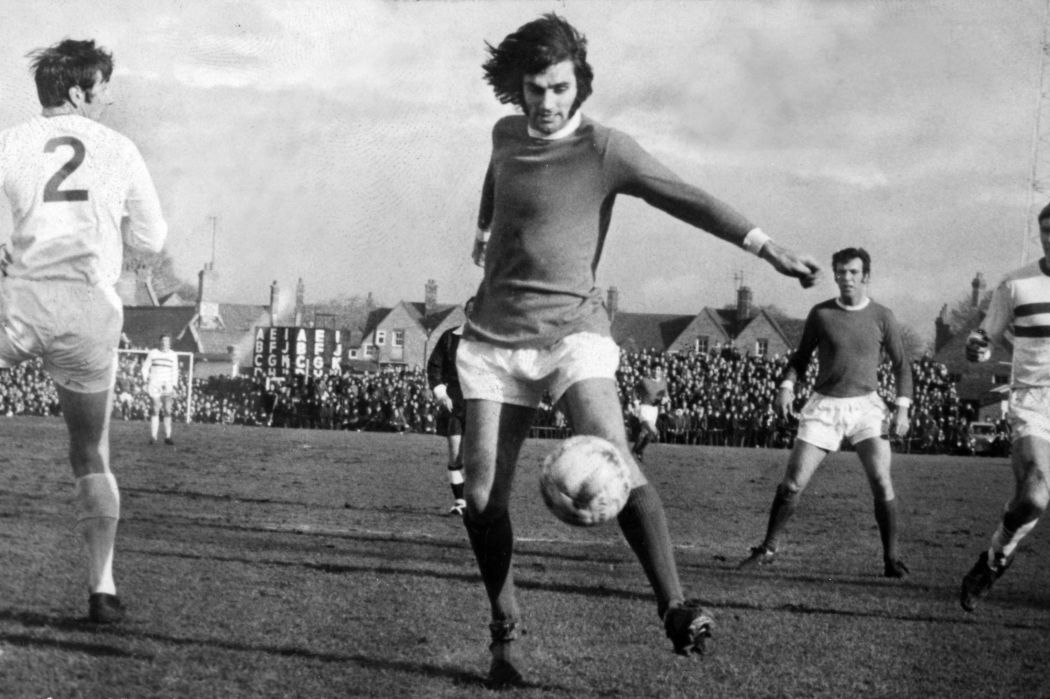
100- George Best scores six v Northampton (1970)-675941

Exploring the Cultural History of the Extended Mind

Georg Theiner has made available a draft copy of his intro to a special issue (Writing in Mind) “Language, Literacy, and Media Theory: Exploring the Cultural History of the Extended Mind“. I notice that he references Marshall McLuhan whose famous slogan “the medium is the message” informs the start-up company that I’m the co-founder of. Georg is also a very good stigmergy theorist and will be contributing to Ted and my Human Stigmergy: Theoretical Developments and New Applications. Check out Georg’s book below.

57937_cover1

The Enactive Approach

Evan Thompson and Ezequiel Di Paolo have co-authored this entry for Larry Shapiro’s upcoming The Routledge Handbook of Embodied Cognition.

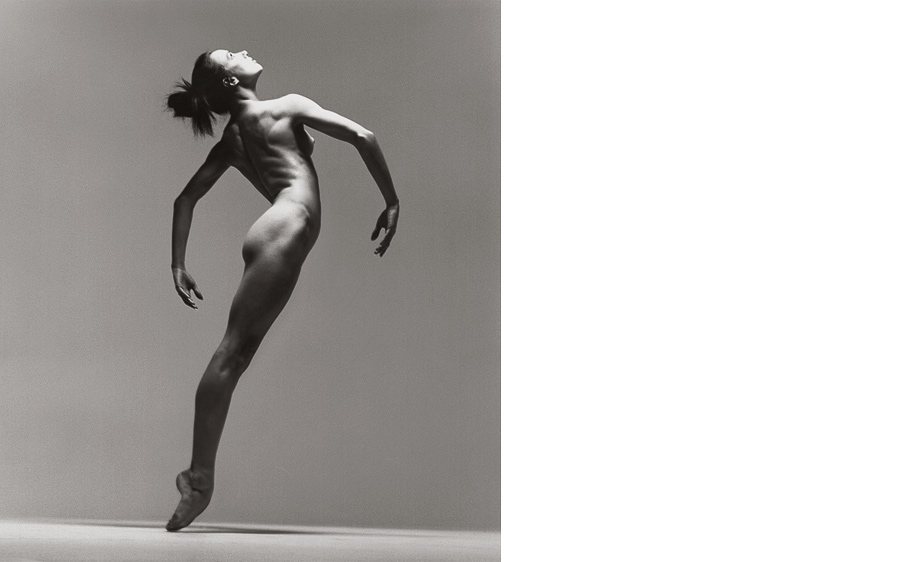
623_1sylvie_guillem4

The one and only Sylvie Guillem

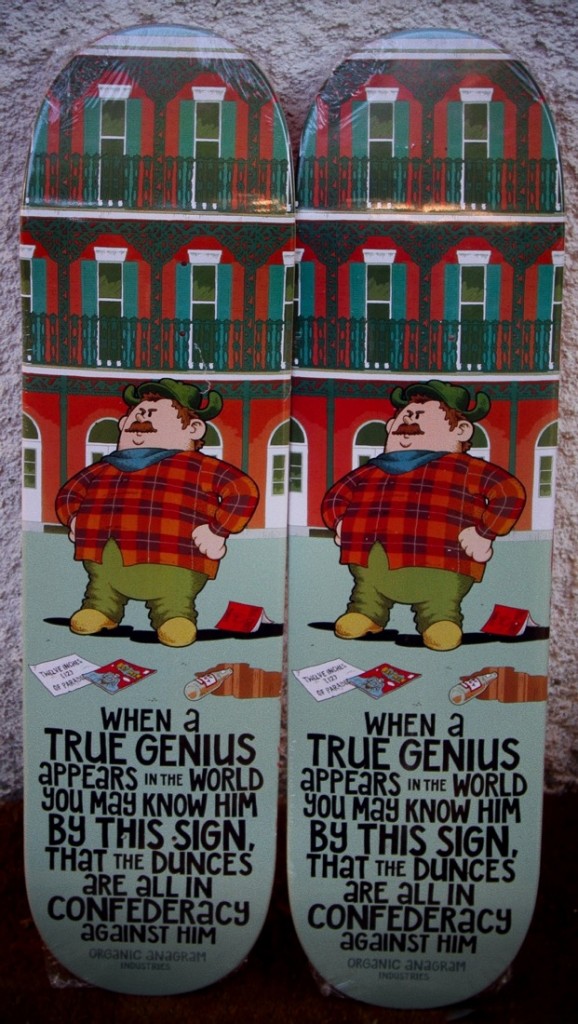
A Confederacy of Dunces – quotes and extracts – 33

At least its climate is mild; too, it is here in the Crescent City that I am assured of having a roof over my head and a Dr. Nut in my stomach, although certain sections of North Africa [Tangiers, etc.] have from time to time excited my interest. The voyage by boat, however, would probably enervate me, and I am certainly not perverse enough to attempt air travel even if I were able to afford it. The Greyhound Bus Line is sufficiently menacing to make me accept my status quo. I wish that those Scenicruisers would be discontinued; it would seem to me that their height violates some interstate highway statute regarding clearance in tunnels and so forth. Perhaps one of you, dear readers, with a legal turn of mind can dredge the appropriate clause from memory. Those things really must be removed. Simply knowing that they are hurtling somewhere on this dark night makes me most apprehensive.) (pp. 103-104).

Image

The New Science of Old Whiskey

It seems that these days Wayne Curtis is the only worthwhile and consistently good contributor to The Atlantic.

What are the perfect conditions for storing the barrels in which bourbon ages? It’s a question that no one had really asked before, despite the oft-noticed phenomenon that barrels situated near the windows in warehouses have a tendency to become what managers call “honey barrels”—that is, ones that produce above-average whiskey. Moreover, the storage question was a logical follow-up to one that Buffalo Trace had already been pondering: How do you make a perfect barrel?

Speaking of Buffalo Trace “Dozens of cases of ‘world’s finest bourbon’ stolen“.

Image

The Avuncular David Hume

Hume is on my mind especially in regard to my current work on Adam Smith. To this end, I’ve been re-watching Bryan Magee’s series The Great Philosophers from ’87. I’ve especially enjoyed the Hume discussion with John Passmore. Magee is an expositor second to none despite the fact that his expert guests are more intimate with- and have produced more distinguished work on- any of the target thinkers. In this Passmore interview (see below) one has the distinct sense that Magee is getting a great deal of pleasure by letting Passmore rattle on and then with utmost clarity and brevity restating the issue. This is not to put Passmore down – it is more to highlight Magee’s very special talent. I think Tony Quinton had that expository talent in writing but even he got flustered in his chat with Magee on Spinoza and Leibniz. Hume has a special place amongst my intellectual furniture. He speaks to me as the first modern: his discussion of personal identity, political philosophy, epistemology and ethics seem so germane to me as a so-called situated theorist. In any event, anyone who considers themselves a well-read person and who has not read Hume, is really quite impoverished, stylistically and substantively.

Moreover, what I particularly like about Hume is his even temperament and good nature along with his cutting wit. I’d have him by my side at my imaginary dinner party which wouldn’t be comprised by self-ascribed “intellectuals”: only people who love food, wine, conversation and laughter would be there.

He built a house in Edinburgh’s New Town, and spent his autumnal years quietly and comfortably, dining and conversing with friends, not all of whom were “studious and literary,” for Hume also found that his “company was not unacceptable to the young and careless.” One young person who found his company particularly “acceptable” was an attractive, vivacious, and highly intelligent woman in her twenties — Nancy Orde, the daughter of Chief Baron Orde of the Scottish Exchequer. One of Hume’s friends described her as “one of the most agreeable and accomplished women I ever knew.” Also noted for her impish sense of humor, she chalked “St. David’s Street” on the side of Hume’s house one night; the street still bears that name today. The two were close enough that she advised Hume in choosing wallpaper for his new home, and rumors that they were engaged even reached the ears of the salonnières in Paris. Just before his death, Hume added a codicil to his will, which included a gift to her of “ten Guineas to buy a Ring, as a Memorial of my Friendship and Attachment to so amiable and accomplished a Person.”

He also become the rage of the Parisian salons, enjoying the conversation and company of Diderot, D’Alembert, and d’Holbach, as well as the attentions and affections of the salonnières, especially the Comtesse de Boufflers. (“As I took a particular pleasure in the company of modest women, I had no reason to be displeased with the reception I met with from them.”)

From The Hume Society

Hume himself:

With regard to politics and the character of princes and great men, I think I am very moderate. My views of things are more conformable to Whig principles; my representation of persons to Tory prejudices. Nothing can so much prove that men commonly regard more persons than things, as to find that I am commonly numbered among the Tories.

Cited in Ernest Mossner classic biography The Life of David Hume (Clarendon Press, 2001), p. 311.

Let’s give the final word to his dear friend:

Upon the whole, I have always considered him, both in his lifetime and since his death, as approaching as nearly to the idea of a perfectly wise and virtuous man, as perhaps the nature of human frailty will permit.

Adam Smith

The Stigmergy Game

Here is a recent open access article I came across entitled Co-Adaptation and the Emergence of Structure. Check out their “Stigmergy Game” model.

journal.pone.0071828.g007

The Spiritual Side of Wynton Marsalis

A new compilation released today. Below is a snippet from Wynton’s Abyssinian Mass that is currently being performed and streamed.

Image

First parachute jump 216 years ago

As most will have realized via Google this event is being commemorated. Parachuting is an activity I haven’t done in a long while but am feeling the urge. Here’s a posting entitled The Metaphysics of Skydiving from a few years back.

Image