Fabulous – see them live if you can.

Michael Graziano in Aeon Magazine
I believe that the easy and the hard problems have gotten switched around. The sheer scale and complexity of the brain’s vast computations makes the easy problem monumentally hard to figure out. How the brain attributes the property of awareness to itself is, by contrast, much easier. If nothing else, it would appear to be a more limited set of computations.

The Economist reviews Terry Teachout’s latest Duke: A Life of Duke Ellington. Teachout’s blog is one of the most refined and insightful arts blogs around and he wrote a terrific bio of Pops.
A man of gargantuan appetites for food and women as well as music, he believed that doing exactly what he wanted when he wanted was the key to maintaining the vital spark that made him special, ordained for spectacular success.
Anyway, here is Stevie Wonder’s classic tribute “Sir Duke”:
She and I could live most pleasantly in some moldy shack in the slums in a state of ambitionless peace, realizing, contentedly that we were unwanted, that striving was meaningless.
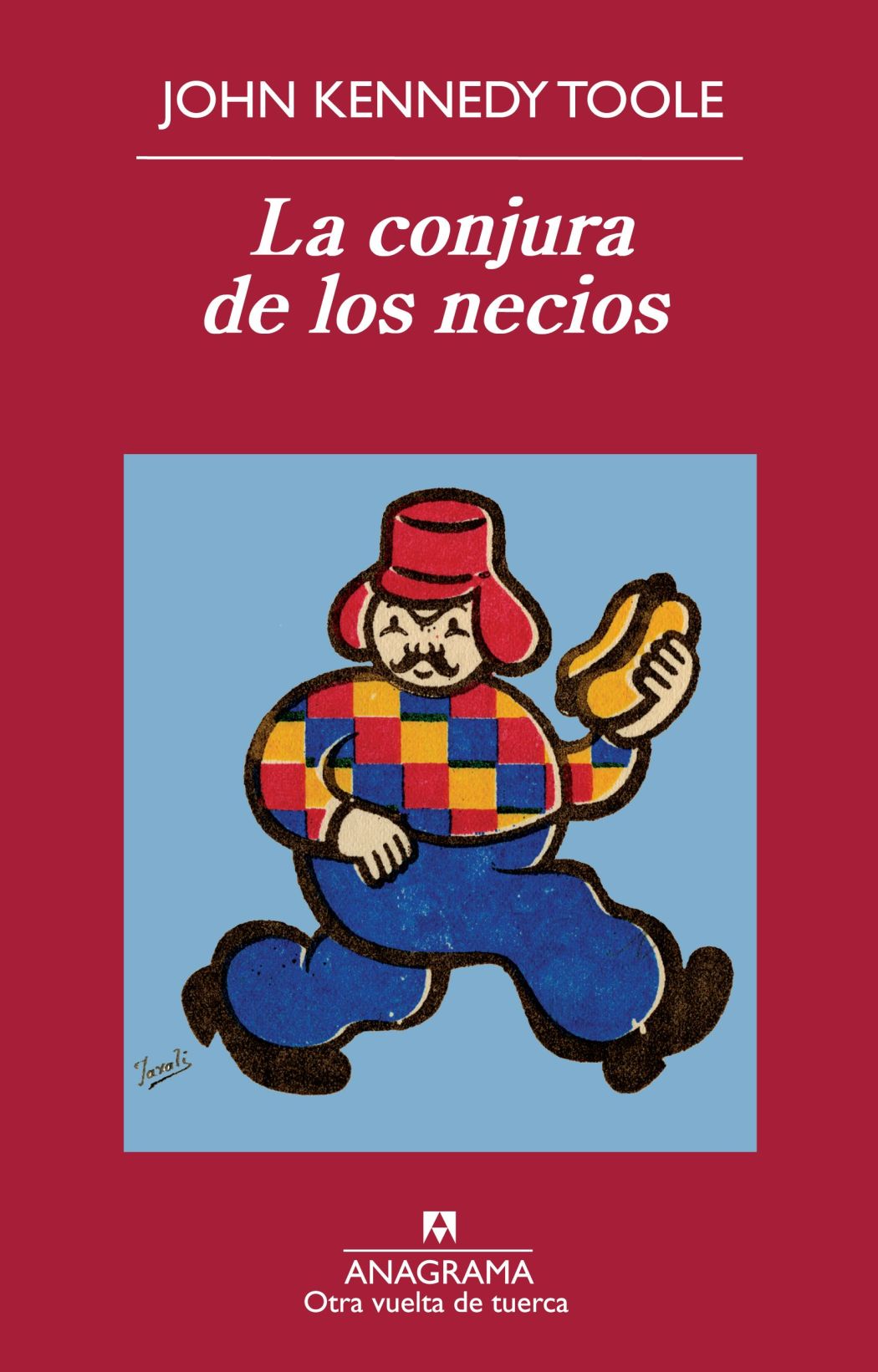
A project for the future could be a social history of the United States from my vantage point; if The Journal of a Working Boy meets with any success at the book stalls, I shall perhaps etch a likeness of our nation with my pen. Our nation demands the scrutiny of a completely disengaged observer like your working Working Boy, and I already have in my files a rather formidable collection of notes and jottings that evaluate and lend a perspective to the contemporary scene (p. 106).
Marking the Camus centenary.
Albert Camus and Jean-Paul Sartre, two of the most important minds of the 20th century, were closely entwined throughout their careers. On the centenary of Camus’ birth, SPIEGEL looks back at their famous friendship and the ideological feud that ultimately unraveled it.

Earlier this year I trailed Joaquín Fuster’s latest book that he so kindly sent me as an uncorrected galley. I’m pleased to report that the book is now finally available. Not surprisingly, Hayek features in this work. If anyone suitably qualified would like to review this book for The Journal of Mind and Behavior or Cognitive Systems Research, please let me know. Pat Churchland has given it a resounding thumbs up.
It’s been about 18 months since my last posting on Bernard Williams. Having worked my way through Bryan Magee’s excellent series (Men of Ideas and The Great Philosophers) my original perception that BW was the best performer of both series, remains in tact 25 years on (Searle being the other good performer though I think BW has the clear edge). And I had the distinct sense that BM felt that way as well. Despite BW being in decline, his dazzling, cutting and deep brilliance is still very much evident. Unlike others who have courted the life as public intellectual, BW never did stop doing real philosophy. Check out the talk called The Human Prejudice.
Many people think that “humanity” is an ethical idea, and that it makes a basic moral difference whether a creature they are dealing with is another human being or not. This is implicit in such as ideas as “human rights”, and in one sense of “human values”. Some philosophers attack this outlook as a prejudice, similar to racism or sexism. I shall argue that their view is based on a deep misconception, which itself involves an attempt to project human attitudes on to the universe. The only way forward is to argue out from what we care about, and to consider who might belong with “us”.

The opening chapter “General Bonaparte is Missing” and part of chapter two “News Reaches Europe” is trailed on Shannon Selin’s website. I’d encourage you to sign up to keep apprised of the book’s publication details which is expected to occur early in the new year. This work is a superbly researched, executed and an entertaining exercise in alternative history or historical fiction, if you like. Her website promises to be content rich with short stories, new historical findings (corrections) and so on – made exclusively available on her website.

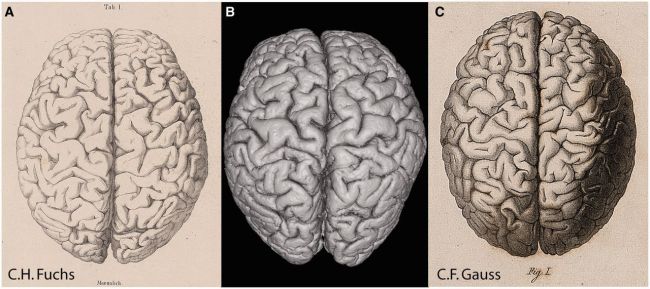
Subsequent inquiries at the University of Göttingen revealed a glass jar labelled ‘C.H. F__s’ similar to the glass jar in which the brain of C.F. Gauss is kept, both most likely originally labelled by Rudolf Wagner. Meticulous comparison of the two brains in these jars with the original copper engravings and lithographs of Wagner (1860, 1862) have now demonstrated that the brain in the jar labelled ‘C.F. G__ss’ is identical to the brain of C.H. Fuchs as shown in the lithographs of Wagner (1862) (Fig. 1). Moreover, the brain in the jar labelled ‘C.H. Fuchs’ is identical to the brain of C.F. Gauss as documented in the copper engravings of Wagner (1860). These observations prove that the brains have been stored in the wrong jars, and that, consequently, our MRI data recorded in 1998 (Haenicke et al., 1999; Wittmann et al., 1999) do not show the brain of C.F. Gauss, but rather the brain of C.H. Fuchs.


