A Confederacy of Dunces – quotes and extracts – 36

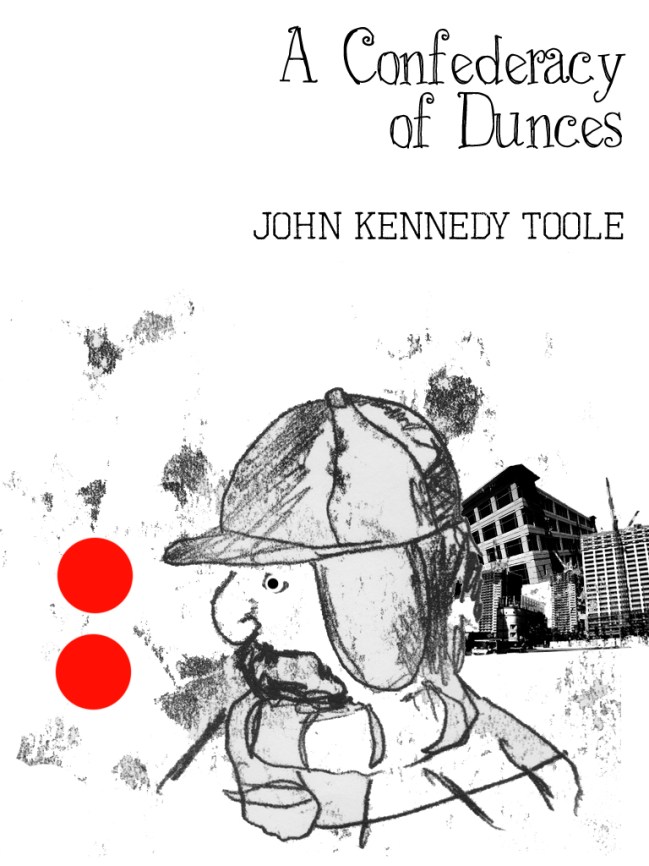
As the magnificence and originality of my worldview became explicit through conversation, the Minkoff minx began attacking me on all levels, even kicking me under the table rather vigorously at one point. I both fascinated and confused her; in short I was too much for her. The parochialism of the ghettoes of Gotham had no prepared her for the uniqueness of Your Working Boy. Myrna, you see, believed that all humans living south and west of the Hudson River were illiterate cowboys or – even worse – White Protestants, a class of humans who as a group specialized in ignorance, cruelty, and torture. (I don’t wish to especially defend White Protestants; I am not too fond of them myself.)

Soon Myrna’s brutal social manner had driven my courtiers from the table, and we were left alone, all cold coffee and hot words. When I failed to agree with her braying and babbling, she told me that I was obviously anti-Semitic. Her logic was a combination of half-truths and cliches, her worldview a compound of misconceptions deriving from a history of our nation as written from the perspective of a subway tunnel. She dug into her large black valise and assaulted me (almost literally) with greasy copies of Men and Masses and Now! and Brocken Barricades and Surge and Revulsion and various manifestos and pamphlets pertaining to organizations of which she was a most active member: Students for Liberty, Youth for Sex, The Black Muslims, Friends of Latvia, Children for Miscegenation, The White Citizens’ Councils. Myrna was, you see, terribly engaged in her society; I, on the other hand, older and wiser, was terribly dis-engaged (pp. 107-108).

Image

Tradition is a Temple

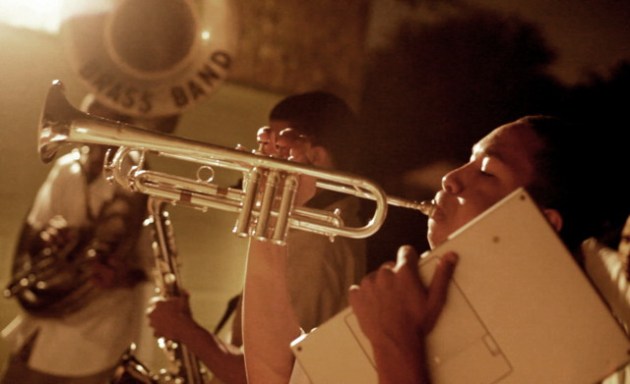
This documentary has been a long time coming. Great that it’s finally seen the light of day. Here is a previous post that has links to the trailers.

Hearing a horn being played in the distance of any street in New Orleans is probably one of the most life-affirming experiences I can imagine. It communicates that we have hope for the future, and there is somewhere we can go dancing.

Image

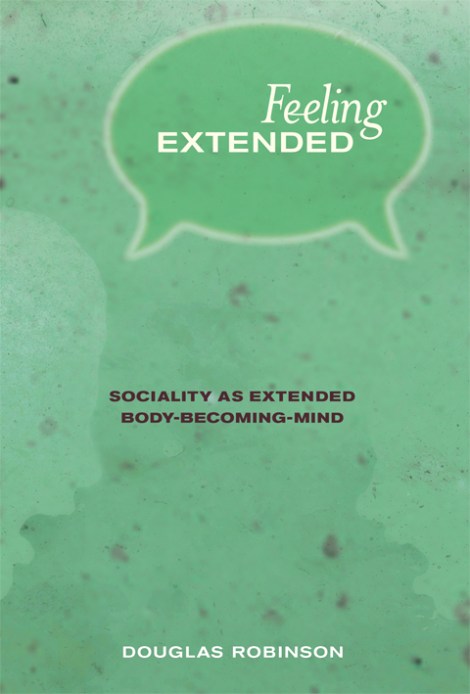
Mirror neurons, embodied simulation and a second-person approach to mind reading

Here is a handy summary of Vittorio Gallese’s highly influential work.

Mirror neurons (MNs) and embodied simulation (ES)

Intersubjectivity can be profitably understood if framedwithin a phylogenetic perspective. The discovery of MNs enabled establishing a relation between human intersubjectivity, the inter-individual relations of other animal species and their underpinning neural mechanisms.

MNs are motor neurons first discovered in macaques’ premotor area F5 and, later on, also in a sector of the posteriorparietal cortex reciprocally connected with area F5 (see Gallese, Gernsbacher, Heyes, Hickock, & Iacoboni,2011), in the primary motor cortex (see Vigneswaran, Philipp, Lemon, & Kraskov, 2013) and in the anterior cingulate cortex (see deAraujo et al., 2012). MNs have been interpreted as the expression of direct form of action understanding, hence their potential relevance for social cognition (Rizzolatti, Fogassi, &Gallese, 2001).

The existence of a mirror mechanism (MM) is now firmly established also in the human brain (see Kilner, Neal, Weiskopf, Friston, & Frith, 2009; Mukamel, Ekstrom, Kaplan, Iacoboni, & Fried, 2010). Motor goal detection, action anticipation and the hierarchical representation of action can be viewed as the direct consequence of the functional architecture of the motor system, organized in terms of goal-directed motor acts. Such perspective was qualified as “motor cognition” (Gallese, Rochat, Cossu, & Sinigaglia, 2009).

The motor system, together with its connections to viscero-motor and somatosensory cortical areas, structures action execution and action perception, action imitation and imagination. When the action is executed or imitated, the cortico-spinal pathway is activated, leading to movement. When the action is observed or imagined, its actual execution is inhibited. The cortical motor network is activated, however, not in all of its components and not with the same intensity: action is not produced, it is only simulated.

ES aims at providing a unitary account of basic aspects of intersubjectivity showing that people reuse their own mental states or processes represented in bodily format to functionally attribute them to others (Gallese, 2003; Gallese &Sinigaglia, 2011). Mental states or processes are embodied primarily because of their bodily format. ES theory neither provides a general Theory of Mind (ToM) reading, nor of mental simulation covering all types of simulation-based mindreading. ES aims at explaining the MM and related phenomena. For sake of concision, I will not deal here with emotions and sensations.

It was proposed that MM-driven ES plays a constitutive role in forms of mindreading, not requiring propositional attitudes, mapped onto mental representations with a bodily format (Gallese, 2007; Gallese & Sinigaglia, 2011). I am not implying that we experience the specific contents of others’ experiences, but only that we experience others as having experiences similar to ours.

ES posits that the capacity to understand others’ intentional behavior also relies on a more basic functional mechanism, which exploits the intrinsic organization of the motor system of primates. More simply put, there are several ways of understanding others: ES is one of them.

Image

Dr. Sym Goes to Heaven

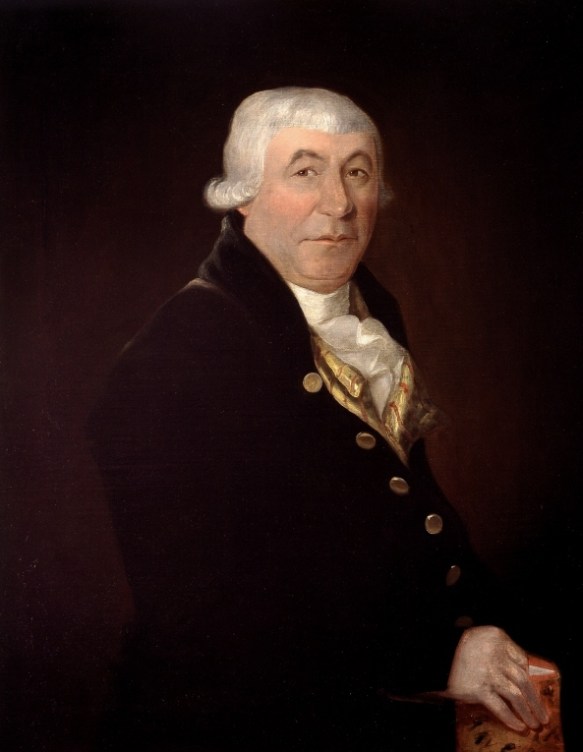
Another Shannon Selin story this time from Commuter Litbased on a historical incident in 1807 Montreal. As two of the comments rightly say:

I love all the historical details woven in without making it sound like a history text book. A vivid glimpse into a particular time and place.

Very interesting story. I had no idea this type of thing ever happened! Well imagined and well written — how it all played out. Love the period dialogue, especially lines like this: “I took the vow of matrimony 30 years ago and have never had occasion to repent my obligation.”

Image

Mind and Behavior: Vol. 34 No. 2

The latest issue of JMB is now available. Two articles have caught my attention:

“Deep Naturalism: Patterns in Art and Mind” by Liz Stillwaggon Swan

and

“Problematizing Tye’s Intentionalism: The Content of Bodily Sensations, Emotions, and Moods” by Juan J. Colomina

Image

“Easy” vs “Hard” Problems of Consciousness

Michael Graziano in Aeon Magazine

I believe that the easy and the hard problems have gotten switched around. The sheer scale and complexity of the brain’s vast computations makes the easy problem monumentally hard to figure out. How the brain attributes the property of awareness to itself is, by contrast, much easier. If nothing else, it would appear to be a more limited set of computations.

Image

Sir Duke

The Economist reviews Terry Teachout’s latest Duke: A Life of Duke Ellington. Teachout’s blog is one of the most refined and insightful arts blogs around and he wrote a terrific bio of Pops.

A man of gargantuan appetites for food and women as well as music, he believed that doing exactly what he wanted when he wanted was the key to maintaining the vital spark that made him special, ordained for spectacular success.

Anyway, here is Stevie Wonder’s classic tribute “Sir Duke”:

A Confederacy of Dunces – quotes and extracts – 35

She and I could live most pleasantly in some moldy shack in the slums in a state of ambitionless peace, realizing, contentedly that we were unwanted, that striving was meaningless.

A project for the future could be a social history of the United States from my vantage point; if The Journal of a Working Boy meets with any success at the book stalls, I shall perhaps etch a likeness of our nation with my pen. Our nation demands the scrutiny of a completely disengaged observer like your working Working Boy, and I already have in my files a rather formidable collection of notes and jottings that evaluate and lend a perspective to the contemporary scene (p. 106).

plantCONJURA.qxd:PlantALBA.qxd

Camus and Sartre

Marking the Camus centenary.

Albert Camus and Jean-Paul Sartre, two of the most important minds of the 20th century, were closely entwined throughout their careers. On the centenary of Camus’ birth, SPIEGEL looks back at their famous friendship and the ideological feud that ultimately unraveled it.

Image