The God Delusion Debate (Dawkins-Lennox)

Here’s a follow-up to the last post, this featuring a debate between Dawkins and Lennox.

Screen Shot 2014-09-23 at 11.29.15 AM

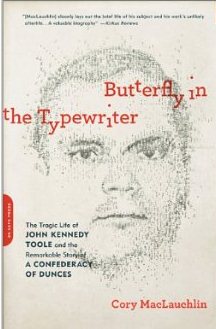
Script for Butterfly in the Typewriter

Still on Toole, this just posted by Cory MacLauchlin.

After the reading the actors talked about the colorful characters and the power of the dialogue. While most of them had heard of John Kennedy Toole, they had no idea how funny and heart-wrenching his life story was.

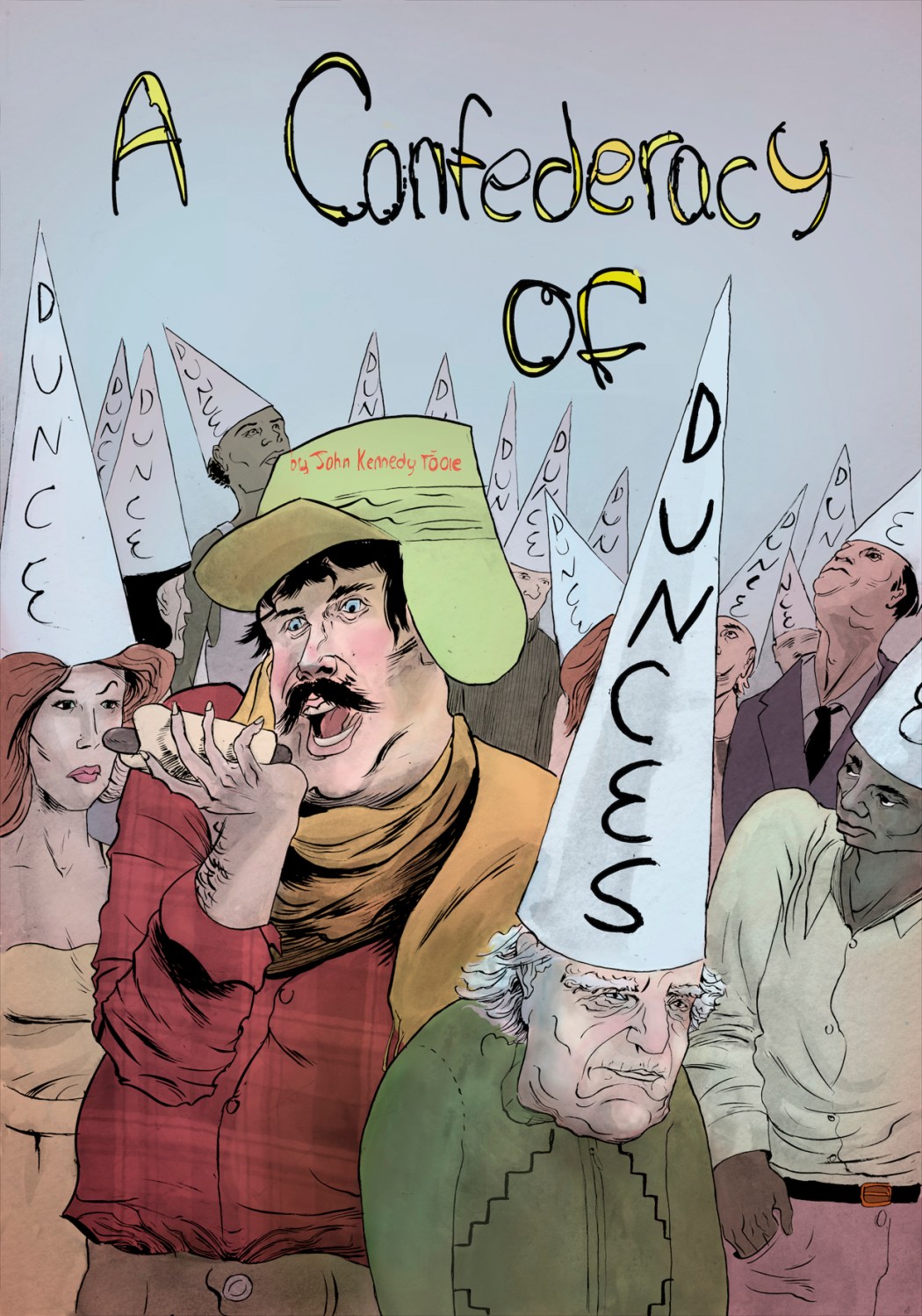
pb-cover

A Confederacy of Dunces – quotes and extracts – 71

Inatius2

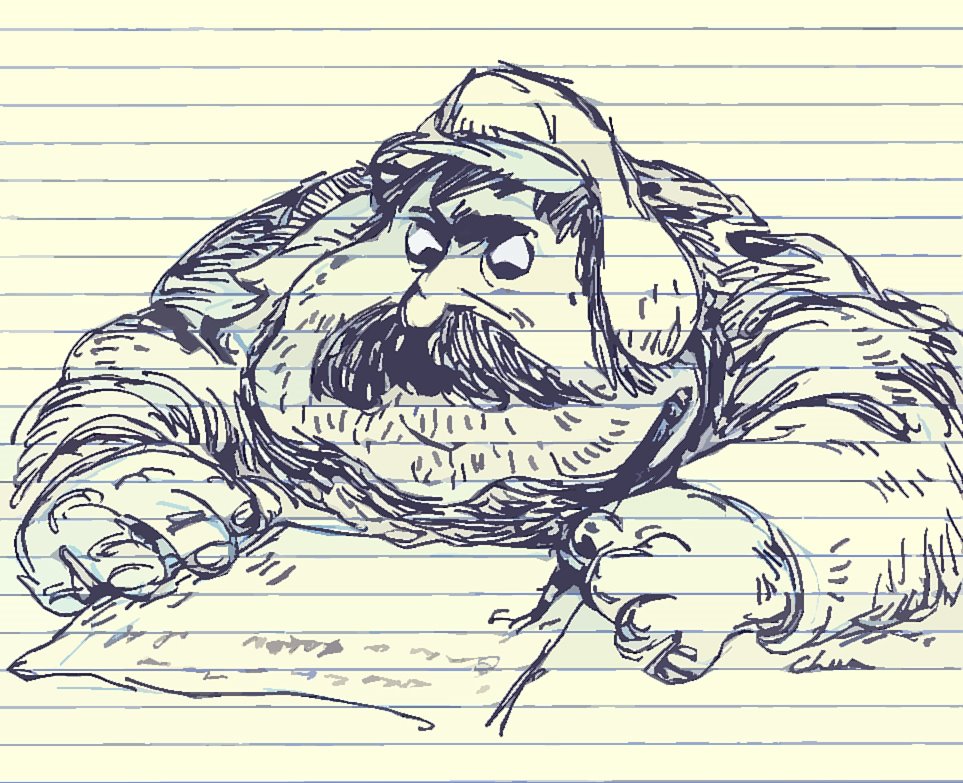
“Be sure to stress the importance of this historic conclave,” Ignatius said. “We shall want no fly-by-nights in this core group.”

“There may be a few costumes. That’s what’s so wonderful about New Orleans. You can masquerade and Mardi Gras all year round if you want to. Really, sometimes the Quarter is like one big costume ball. Sometimes I can’t tell friend from foe. But if you oppose costumes, I’ll tell everyone, although their little hearts will snap with disappointment. We haven’t had a good party in months.”

“I would not oppose a few tasteful and decent maskers,” Ignatius said at last. “They may add the proper international atmosphere to the meeting. Politicians always seem to want to shake hands with mongoloids in ethnic and native costumes. Now that I think of it, you may encourage a costume or two. We do not want any female impersonators, however. I don’t believe that politicians care to be seen with them particularly. They cause resentment among rural voters, I suspect.”

“Now let me run along and find that silly Timmy. I’ll frighten him to death.”

“Beware of that Machiavel of a policeman. If he gets wind of the plot, we’re lost.”

“Oh, if I weren’t so glad to see him back on the beat, I’d telephone the police and have him arrested immediately for soliciting. You don’t know the wonderful expression that man used to get on his face when the squad car arrived to take him off. And the arresting officers. It was too priceless. But we’ll all be so grateful to have him back. No one will dare mistreat him now. So long, Gypsy Mother.”

Dorian skipped off down the alley to find the decadent mariner. Ignatius looked toward Royal Street and wondered what had happened to the women’s art guild. He lumbered over to the passageway where his cart was hidden, prepared a hot dog, and prayed that some customers would happen along before the day was over. Sadly he realized how low Fortuna had spun his wheel. He had never imagined that he would one day be praying that people buy hot dogs from him. At least he had a magnificent new scheme ready for launching against M. Minkoff. The thought of the kickoff rally cheered him greatly. This time the minx would be totally confounded.

— pp. 220-221

Austrian Theory and Economic Organization: Reaching Beyond Free Market Boundaries

9781137371416

The first volume (of two) edited by Guinevere Liberty Nell.

The Austrian economic school famously predicted and explained the problems of calculation in a socialist society. With their concept of spontaneous order, they challenged mainstream economists to look beyond simplified static models and consider the dynamic and evolutionary characteristics of social orders. However, many feel that Austrians took their victory too far and became ideologically devoted to laissez-faire.

Austrian Theory and Economic Organization is a collection of essays on problems and possibilities in economic organization, written by economists and political scientists with an interest in the dynamic and evolutionary nature of market economies. Each chapter explores areas of potential agreement between Austrian theory, market socialist economics, and other heterodox schools of economic and political science. The collection aims to bridge cultural and political divisions between free market advocates who stress individual rights and left-leaning thinkers who stress social justice and a culture of solidarity.

Music, Metaphor and Society: Some Thoughts on Scruton

Here is a superb critical assessment by Bob Grant on Scruton’s work (H/T to BG).

51b5wzCA67L._SY344_BO1,204,203,200_

Roger Scruton’s 530-page blockbuster The Aesthetics of Music was published by Oxford University Press in 1997. A paperback edition followed two years later. Neither received more than a handful of notices, a few appreciative, but some grudging and some actually hostile. As its quality has come to be recognized, and as the resentments it provoked have either died down or found newer targets, the book has gradually achieved a certain canonical, even classic, status. Students of the subject now seem to feel that, however unpalatable some of its conclusions may have been, it can no longer safely be ignored. The questions, it appears, are the right ones, even if we don’t care for Scruton’s answers. (Thus far the pop critic Simon Frith, who said as much from the start.) The book actually covers more than aesthetics, being nothing less than a complete philosophy of music. There are some major omissions: of non-Western music, for example. But they are justifiable, given that Scruton’s project is analytical rather than documentary. Some extra-aesthetic matter is inevitable, since it is scarcely possible to deal in isolation with any art form’s purely aesthetic element (assuming there really could be such a thing). But with music Scruton casts his net wider even than he did in his early The Aesthetics of Architecture (1979). In The Aesthetics of Music he extends his inquiry to virtually every aspect and ramification of the phenomenon in question.

Embracing the Creativity of Stigmergy in Social Insects

One of the doyens of stigmergic computational intelligence.

There is no master architect, nor even a supervisor in these colonies. Grassé has shown that the key information required to ensure the coordination of building actions performed by insects is provided by their previously achieved work: the architecture itself. Grassé coined the term ‘stigmergy’ from the Greek words ‘stigma’, meaning ‘sting’, and ‘ergon’, meaning ‘work’, to describe this form of indirect communication. For instance, each time an ant or a termite worker executes a building action in response to a local stimulus, such as adding or removing a piece of material from the existing nest structure, it modifies the stimulus that has triggered its action. The new stimulus will then influence other specific actions from that worker, or potentially from any other workers in the colony. The stimulus itself can be a particular pattern of matter sometimes soaked with chemical signals called pheromones. Coordination is simply achieved through judiciously chosen stimulating patterns of matter. And the architecture provides enough information and constraints to ensure the coordination and regulation of building actions. The whole chain of stimuli and behavioural responses leads to an almost perfect collective construction that may give the impression that the whole colony is following a well-defined plan. Thus, individual insects do not need any representation or blueprint to build their nest. At the Centre de Recherches sur la Cognition Animale, part of the Centre National de la Recherche Scientifique (CNRS) at Université Paul Sabatier in Toulouse, we have spent the last 20 years identifying and characterising the interactions involved in the coordination of nest building in various species of wasps, ants and termites. This work has led us to identify similar building principles behind the impressive diversity of insect nest architectures and to build distributed construction models that implement these principles.

Screen Shot 2014-09-14 at 5.47.41 PM

Bar room existentialism

Once, in a small-town bar, Percy observed this: “You sit here and listen, and it doesn’t take long to realize that a lot of the ‘existentialism’ of the intellectual is close to the heart of the person next to you, having a beer after a day in a shrimp boat, or working on a farm, or on his way home from one of the businesses around here, but in need of a moment to get his head together.”

Robert Coles, Walker Percy: An American Search, p. 236

Screen Shot 2014-09-14 at 11.43.48 AM