What Martha Argerich is to piano, Rory is to guitar. Below is another documentary about him. Hendrix on Gallagher from a previous post.
What Martha Argerich is to piano, Rory is to guitar. Below is another documentary about him. Hendrix on Gallagher from a previous post.
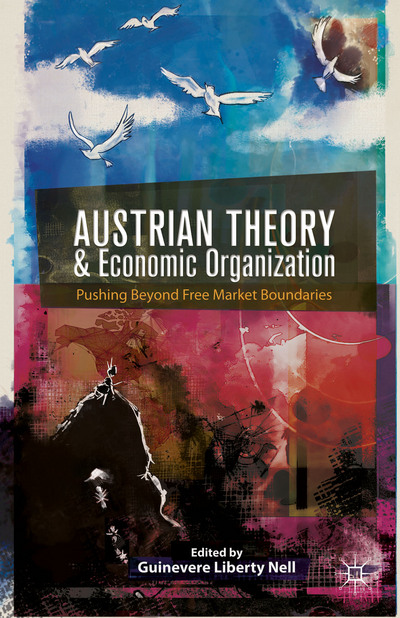
The first volume (of two) edited by Guinevere Liberty Nell.
The Austrian economic school famously predicted and explained the problems of calculation in a socialist society. With their concept of spontaneous order, they challenged mainstream economists to look beyond simplified static models and consider the dynamic and evolutionary characteristics of social orders. However, many feel that Austrians took their victory too far and became ideologically devoted to laissez-faire.
Austrian Theory and Economic Organization is a collection of essays on problems and possibilities in economic organization, written by economists and political scientists with an interest in the dynamic and evolutionary nature of market economies. Each chapter explores areas of potential agreement between Austrian theory, market socialist economics, and other heterodox schools of economic and political science. The collection aims to bridge cultural and political divisions between free market advocates who stress individual rights and left-leaning thinkers who stress social justice and a culture of solidarity.
Here is a superb critical assessment by Bob Grant on Scruton’s work (H/T to BG).
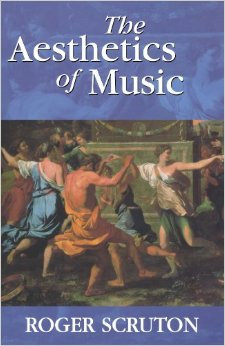
Roger Scruton’s 530-page blockbuster The Aesthetics of Music was published by Oxford University Press in 1997. A paperback edition followed two years later. Neither received more than a handful of notices, a few appreciative, but some grudging and some actually hostile. As its quality has come to be recognized, and as the resentments it provoked have either died down or found newer targets, the book has gradually achieved a certain canonical, even classic, status. Students of the subject now seem to feel that, however unpalatable some of its conclusions may have been, it can no longer safely be ignored. The questions, it appears, are the right ones, even if we don’t care for Scruton’s answers. (Thus far the pop critic Simon Frith, who said as much from the start.) The book actually covers more than aesthetics, being nothing less than a complete philosophy of music. There are some major omissions: of non-Western music, for example. But they are justifiable, given that Scruton’s project is analytical rather than documentary. Some extra-aesthetic matter is inevitable, since it is scarcely possible to deal in isolation with any art form’s purely aesthetic element (assuming there really could be such a thing). But with music Scruton casts his net wider even than he did in his early The Aesthetics of Architecture (1979). In The Aesthetics of Music he extends his inquiry to virtually every aspect and ramification of the phenomenon in question.
One of the doyens of stigmergic computational intelligence.
There is no master architect, nor even a supervisor in these colonies. Grassé has shown that the key information required to ensure the coordination of building actions performed by insects is provided by their previously achieved work: the architecture itself. Grassé coined the term ‘stigmergy’ from the Greek words ‘stigma’, meaning ‘sting’, and ‘ergon’, meaning ‘work’, to describe this form of indirect communication. For instance, each time an ant or a termite worker executes a building action in response to a local stimulus, such as adding or removing a piece of material from the existing nest structure, it modifies the stimulus that has triggered its action. The new stimulus will then influence other specific actions from that worker, or potentially from any other workers in the colony. The stimulus itself can be a particular pattern of matter sometimes soaked with chemical signals called pheromones. Coordination is simply achieved through judiciously chosen stimulating patterns of matter. And the architecture provides enough information and constraints to ensure the coordination and regulation of building actions. The whole chain of stimuli and behavioural responses leads to an almost perfect collective construction that may give the impression that the whole colony is following a well-defined plan. Thus, individual insects do not need any representation or blueprint to build their nest. At the Centre de Recherches sur la Cognition Animale, part of the Centre National de la Recherche Scientifique (CNRS) at Université Paul Sabatier in Toulouse, we have spent the last 20 years identifying and characterising the interactions involved in the coordination of nest building in various species of wasps, ants and termites. This work has led us to identify similar building principles behind the impressive diversity of insect nest architectures and to build distributed construction models that implement these principles.

Once, in a small-town bar, Percy observed this: “You sit here and listen, and it doesn’t take long to realize that a lot of the ‘existentialism’ of the intellectual is close to the heart of the person next to you, having a beer after a day in a shrimp boat, or working on a farm, or on his way home from one of the businesses around here, but in need of a moment to get his head together.”
Robert Coles, Walker Percy: An American Search, p. 236

“Good. Now listen to me. I must come to lecture to you people so that you will be set upon the correct path. I have a rather extensive knowledge of political organization.”
“Marvelous. And you must wear that fantastic costume. I can assure you that you’ll get everyone’s undivided attention,” the young man shrieked, covering his mouth with a hand. “Oh, my dear, what a wild gathering it could be.”
“There is no time to be lost,” Ignatius said sternly. “The apocalypse is near at hand.”
“We’ll have it next week at my place.”
“You must have some red, white, and blue bunting,” Ignatius advised. “Political meetings always have that.”
“I’ll have yards and yards of it. “What a decorating job lies ahead. I’ll have to get some close friends in to help me.”
“Yes, do that,” Ignatius said excitedly. “Begin organizing at every level.”
“Oh, I never guessed that you would be such a fun person to know. You were so hostile in that dreadful, tacky bar.”
“My being has many facets.”
“You amaze me.” The young man stared at Ignatius’ outfit. “To think that they’re letting you run around loose. In a way, I respect you.”
“Thank you very much.” Ignatius’ voice was smooth, pleased. “Most fools don’t comprehend my worldview at all.”
“I wouldn’t imagine so.”
“I suspect that beneath your offensively and vulgarly effeminate facade there may be a soul of sorts. Have you read widely in Boethius?”
“Who? Oh, heavens no. I never even read newspapers.”
“Then you must begin a reading program immediately so that you may understand the crises of our age,” Ignatius said solemnly. “Begin with the late Romans, including Boethius, of course. Then you should dip rather extensively into early Medieval. You may skip the Renaissance and the Enlightenment. That is mostly dangerous propaganda. Now that I think of it, you had better skip the Romantics and the Victorians, too. For the contemporary period, you should study some selected comic books.”
“You’re fantastic.”
“I recommend Batman especially, for he tends to transcend the abysmal society in which he’s found himself. His morality is rather rigid, also. I rather respect Batman.”
“Oh, look, there’s Timmy again,” the young man said. The sailor was passing on Chartres Street in the opposite direction. “Doesn’t he ever get tired of the same old route? Back and forth, back and forth. Look at him. It’s winter and he’s still wearing his summer whites. Of course he doesn’t realize that he’s a sitting duck for the shore patrol. You can’t imagine how stupid and foolish that boy is.”
“His face did appear rather clouded,” Ignatius said. The artist in the beret and goatee passed Chartres, busily following the sailor by several feet. “Oh, my God! That ludicrous law officer will ruin everything. He’s the fly in everyone’s ointment. Perhaps you should run along and get the deranged sailor off the street. If the naval authorities apprehend him, they will discover that he is an imposter, and our political strategy will be undone. Spirit that clown away before he wrecks the most fiendish political coup in the history of western civilization”
— (pp. 218-219).
From offBeat and Keith Spera.
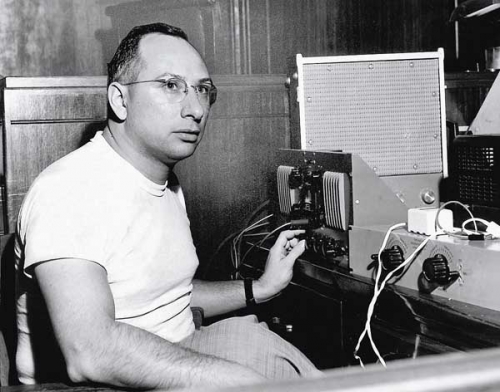
Mr. Matassa helped facilitate the role of New Orleans in the birth of rock ‘n’ roll. He opened his first studio, J&M Recording, in 1945 in the back of his family’s record and appliance store at the corner of North Rampart and Dumaine streets in the French Quarter. Its pedigree is on par with that of Sun Studios in Memphis, Tenn.
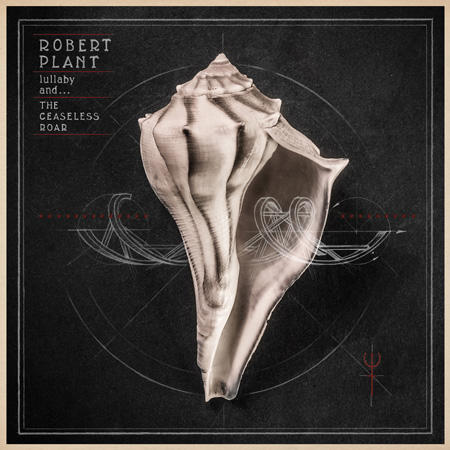
Well, Plant is back and the initial reviews seem to be very warm and pretty similar.
No, not Maimonides but Werner Herzog. Here’s a review in The Telegraph — Herzog is more a wayfarer than a wonderer.
Herzog is a wanderer – on foot, wherever possible – and the sheer amount of information he has gleaned about different corners of the world takes the breath away. Travellers, soldier-poets, artisans, astronauts – these are the people who earn Herzog’s respect.