Pleased to hear that there will definitely be another WP weekend. This was the most convivial “conference” I have ever been to.
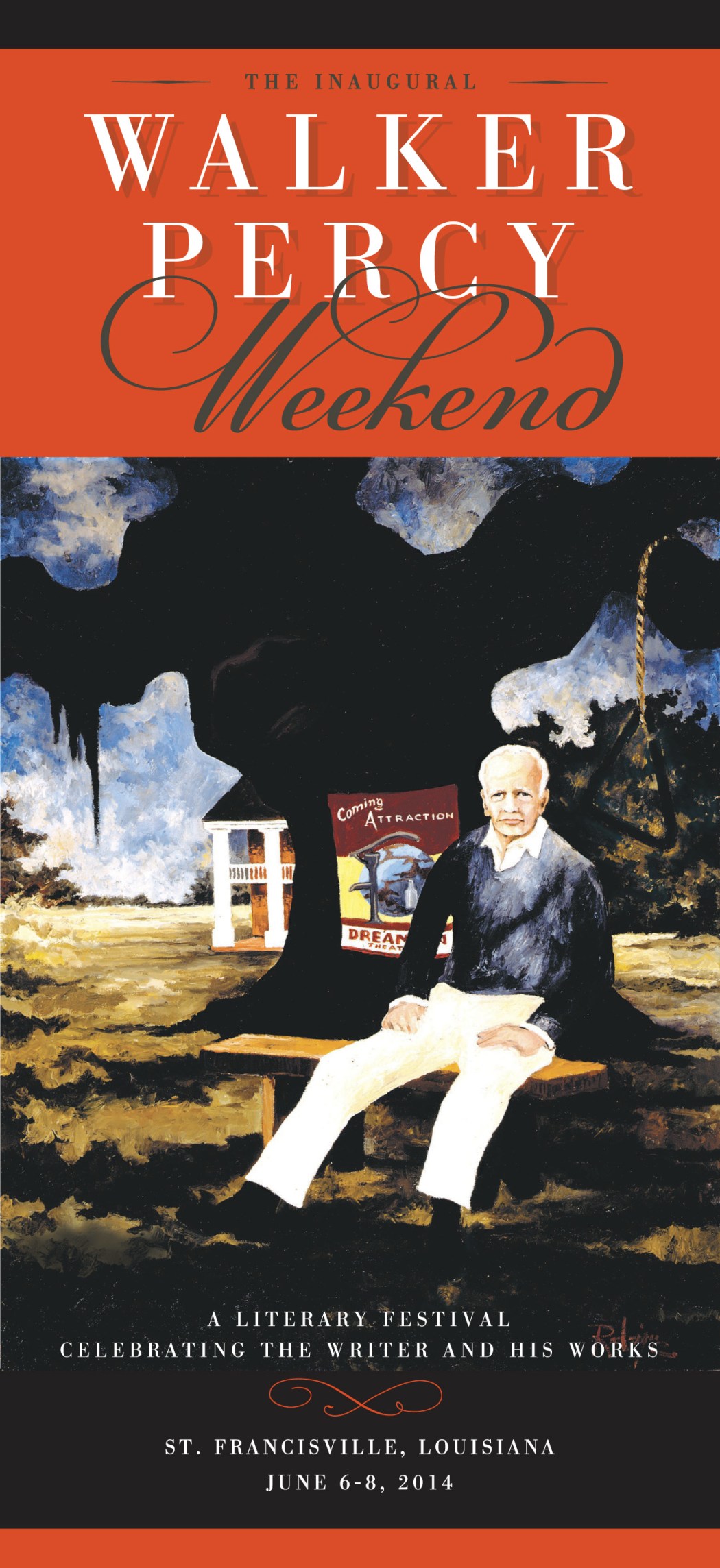
Pleased to hear that there will definitely be another WP weekend. This was the most convivial “conference” I have ever been to.

Yet another piece from the excellent Joel Krueger (as co-author).
“Of course,” Ignatius said in a thoughtful, serious voice, “this could be a worldwide deception.” “The next war could turn out to be one massive orgy. Good grief. How many of the military leaders of the world may simply be deranged old sodomites acting out some fake fantasy role? Actually, this might be quite beneficial to the world. It could mean an end to war forever. This could be the key to lasting peace.”
Two nerve ends in Ignatius’ mind met and formed an immediate association. Perhaps he had found a means of assaulting the effrontery of M. Minkoff.
“The power-crazed leaders of the world would certainly be surprised to find that their military leaders and troops were only masquerading sodomites who were only too eager to meet the masquerading sodomite armies of other nations in order to have dances and balls and learn some foreign dance steps.”
“Wouldn’t that be wonderful? The government would pay us to travel. How divine. We would bring an end to world strife and renew people’s hope and faith.”
“Perhaps you are the hope for the future,” Ignatius said, dramatically pounding one paw into the other. “There certainly doesn’t seem to be anything else on the horizon.”
“We would also help to end the population explosion.”
“Oh, my God!” The blue and yellow eyes flashed wildly. “Your method would probably be more satisfying and acceptable than the rather stringent birth control tactics which I have always advocated. I must dedicate some space to this in my writings. This subject deserves the attention of a profound thinker who has a certain perspective on the world’s cultural development. I am certainly glad that you have given me this valuable insight” (pp. 216-217).
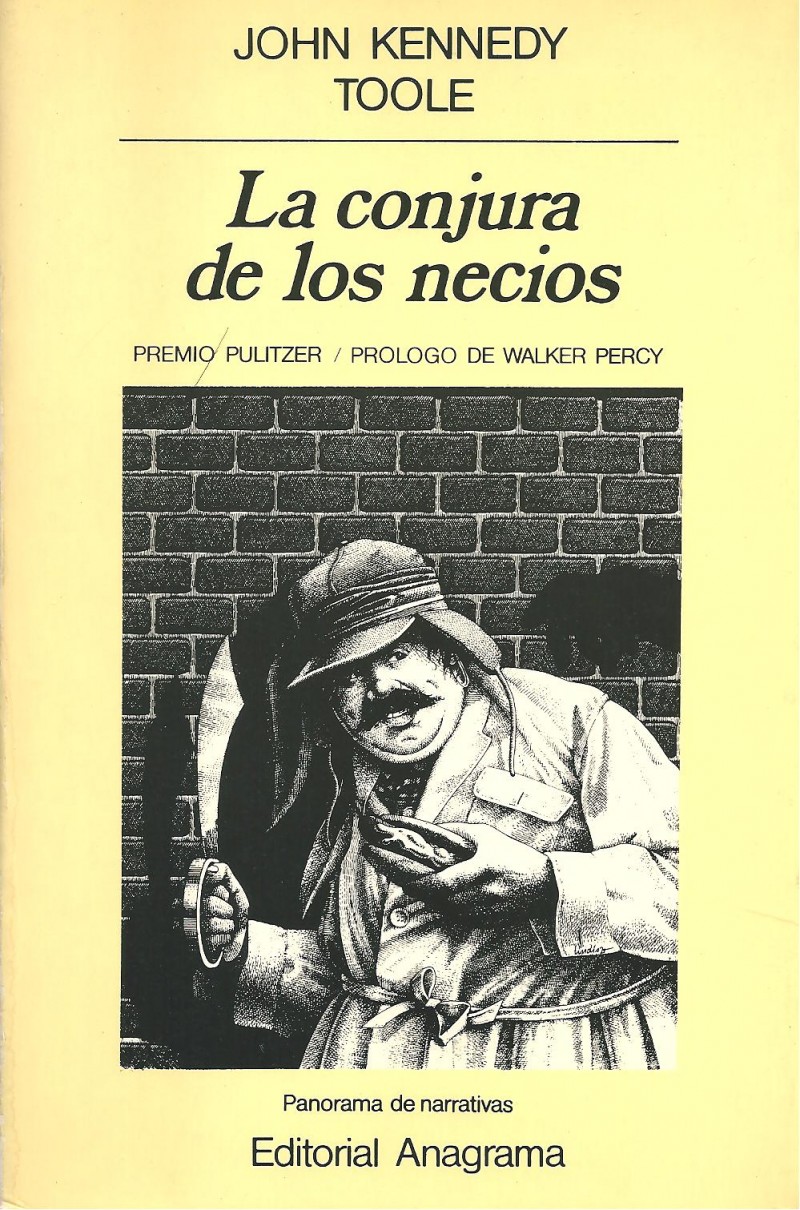
Julian Sanchez interviews the great man.
And in the spring, I’m giving a course jointly with a professor in the Slavic Languages department on Dostoyevsky and his philosophical ideas, and the difference that is made when philosophical ideas are presented in works of fiction rather than in discursive prose.
It’s the difference between people who want to meet arguments, even when they disagree with their conclusions, and those who want to dismiss arguments by scorn or contempt . . .


The interdisciplinary journal Cosmos + Taxis is issuing a call for papers for its second conference on spontaneous orders, to be held at the Rochester Institute of Technology from May 8 to May 9, 2015.
Both days will feature morning and afternoon sessions and informal lunches and dinners. The theme of the conference is “Spontaneous Order in Economic and Political Thought from Smith to Hayek and Beyond.”
We are looking for papers that explore spontaneous orders or complexity theory in the history of political and/or economic thought, including but not limited to work on thinkers such as Adam Smith, Edmund Burke, Herbert Simon, Michael Polanyi, and, of course, Friedrich Hayek. More contemporary work that builds on these traditions is also welcome.
Papers that are selected for presentation will be considered for inclusion in Cosmos + Taxis, an open-source peer-reviewed journal.
Participants will be provided with lodging and meals while in Rochester, NY and may apply for additional travel assistance, depending on funding availability and need. The deadline for abstract submission is October 1, 2015.
The abstract must be an extended one of between 500 and 600 words, not including an optional list of up to 10 key literature references. The abstracts will be reviewed by a multidisciplinary panel. Due to the interactive format of the conference, we will select between 12 and 14 of the proposed papers for inclusion in the final program. Final versions of accepted papers are due April 1, 2015. All accepted papers are allotted 45 minutes of program time.
Extended abstracts and papers should be submitted by email as a Word document to David.Andersson@nottingham.edu.cn.
This from Parade
This summer marks the anniversary of the founding of EPISTEME. Below is a list of the most cited articles — I’m pleased to see that six of the articles that I solicited have a long tail.

Group Knowledge and Group Rationality: A Judgment Aggregation Perspective
Christian List
Episteme / Volume 2 / Issue 01 / June 2005, pp 25 – 38
Collective Epistemology
Margaret Gilbert
Episteme / Volume 1 / Issue 02 / October 2004, pp 95 – 107
Is Trust an Epistemological Notion?
Gloria Origgi
Episteme / Volume 1 / Issue 01 / June 2004, pp 61 – 72
What is the “Equal Weight View”?
David Jehle and Branden Fitelson
Episteme / Volume 6 / Issue 03 / October 2009, pp 280 – 293
Group Knowledge Versus Group Rationality: Two Approaches to Social Epistemology
Alvin I. Goldman
Episteme / Volume 1 / Issue 01 / June 2004, pp 11 – 22
The Basis of Epistemic Trust: Reliable Testimony or Reliable Sources?
Melissa A. Koenig and Paul L. Harris
Episteme / Volume 4 / Issue 03 / October 2007, pp 264 – 284
Minding One’s Cognitive Systems: When Does a Group of Minds Constitute a Single Cognitive Unit?
Robert Rupert
Episteme / Volume 1 / Issue 03 / February 2005, pp 177 – 188
What’s the Point of “Knowledge” Anyway?
Christoph Kelp
Episteme / Volume 8 / Issue 01 / February 2011, pp 53 – 66
Group Knowledge Analyzed
Raimo Tuomela
Episteme / Volume 1 / Issue 02 / October 2004, pp 109 – 127
Epistemic Systems
Roger Koppl
Episteme / Volume 2 / Issue 02 / June 2006, pp 91 – 106
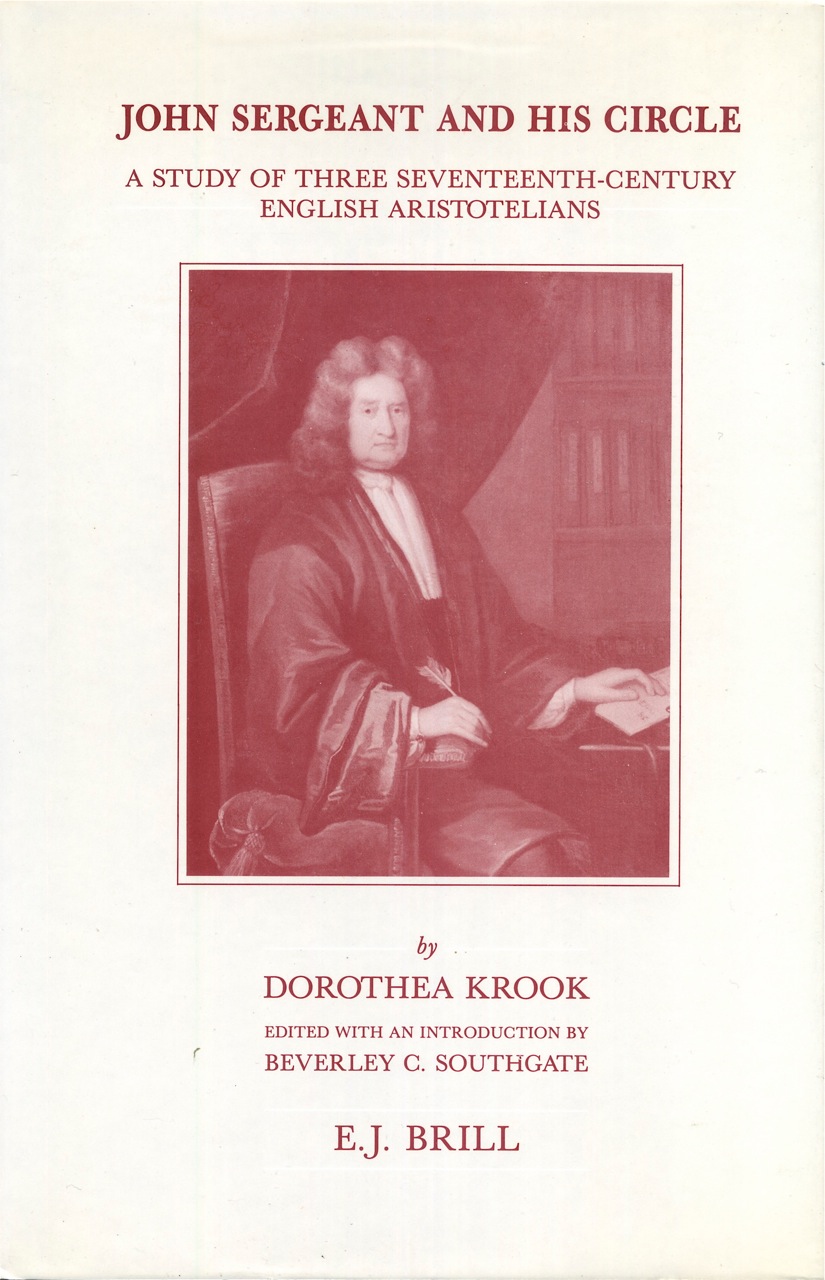
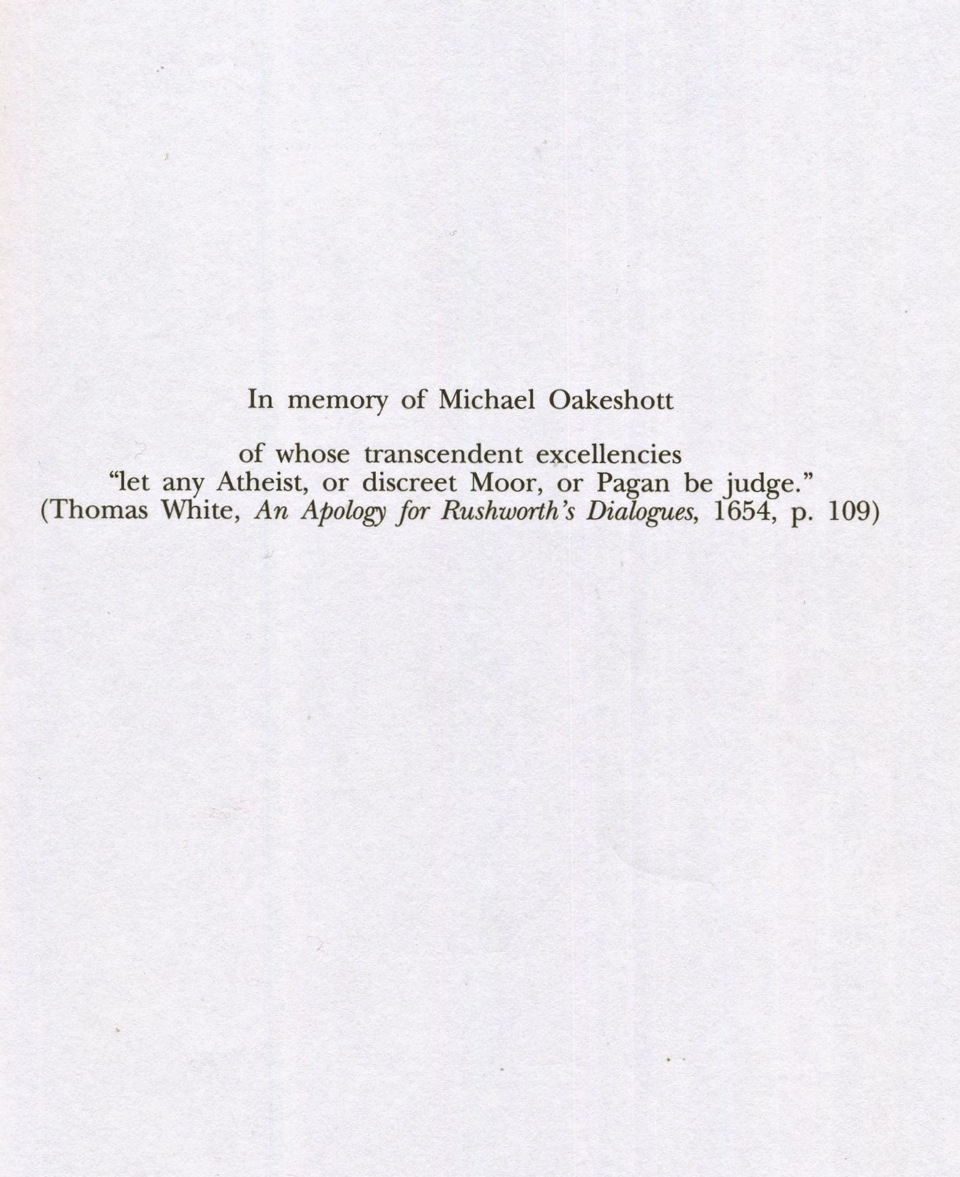
Here’s something that a correspondent sent to me. The first image is the book by Dorothea Krook who contributed to possibly the poorest festschrift I’ve ever come across — though I don’t particularly recall her essay, not a criticism to be laid at Krook’s doorstep — even 25 years ago, this festschrift struck me as nth-rate. What is the rationale for CUP republishing it? So many libraries already have a copy. Maybe Oakeshott is a decent seller these days. But I digress — what I wanted to draw your attention to is the second image — the intriguing dedication.