Probability is the Very Guide of Life

Bishop Butler’s quote “Probability is the Very Guide of Life” (Joseph Butler, The Analogy of Religion, Natural and Revealed, to the Constitution and Course of Nature (Charlottesville: Ibis, n.d.), is one that I invoke from time to time in the most unlikeliest of contexts. (The other Butler quote I invoke from time to time in “identity talk” is “Everything is what it is, and not another thing.” Fifteen Sermons, Preface § 39). I confess that I haven’t read much Butler but if, like me, you appreciate a subtle mind, David E. White provides the best overview of the Bishop’s life and work.

Butler expressed distaste for Oxford’s intellectual conventions while a student at Oriel College; he preferred the newer styles of thought, especially those of John Locke, the 3rd Earl of Shaftesbury and Francis Hutcheson, leading David Hume to characterize Butler as one of those “who have begun to put the science of man on a new footing, and have engaged the attention, and excited the curiosity of the public. — David White

Butler, a respected clergyman and philosopher himself, influenced some of the greatest English-speaking thinkers of his time, including David Hume, Thomas Reid, and Adam Smith. The Analogy of Religion is a work of apologetics, directed at a deist audience. Butler hopes to convince the many deist scholars and public figures of his day that returning to Christian orthodoxy is indeed rational. As he proceeds, he provides more and more evidence for orthodoxy over deism, arguing that a personal rather than a detached God is more likely to exist. Butler did not seek to embellish his language with flowery phrases, and his prose is very straightforward. — Christian Classics Ethereal Library

56004_josep_butler_lg

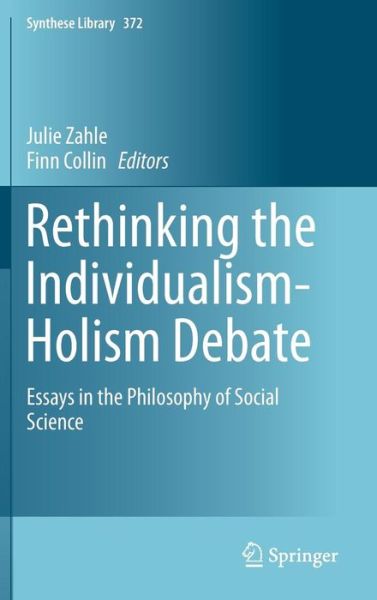
Rethinking the Individualism-Holism Debate

Here’s a review from NDPR — notwithstanding the reviewer’s criticisms, this may well be a useful update to a longstanding, and often infertile debate.

The traditional opposition between social wholes and individuals rings a bit hollow to contemporary ears, not only because the poles of the opposition are only vaguely or ambiguously conceived, nor solely because one suspects that they are hardly mutually exclusive, but also because this opposition doesn’t include, within the scope of potentially relevant factors it considers, those that are non-human or sub-personal (such as, for instance, human biology, ecology, and artifacts and technology). What happens in human affairs is very plausibly constrained, enabled, and affected by a combination of factors classifiable as ecological, biological, and technological, in addition to “individual” and “social.” Since the first three kinds of factors operate in ways that cross-cut the individual-social distinction, and (on some conceptions of the individual or the social) are not included within the framework of that distinction at all, the inherited individualism-holism opposition, and the traditional question of the reducibility or non-reducibility of the social to the individual, are problematic in a way that most contributors to the volume never address.

9783319053431_p0_v2_s600

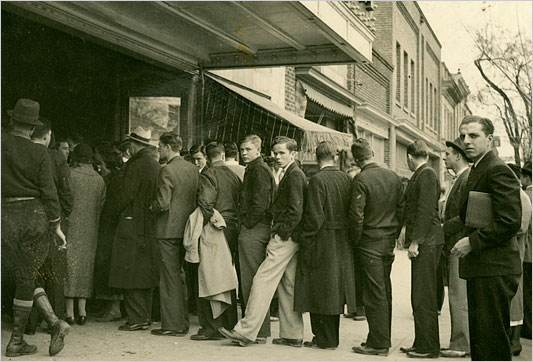
A Confederacy of Dunces – quotes and extracts – 76

Ignatius snorted at the movie credits. All of the people involved in the film were equally unacceptable. A set designer, in particular, had appalled him too many times in the past. The heroine was even more offensive than she had been in the circus musical. In this film she was a bright young secretary whom an aged man of the world was trying to seduce. He flew her in a private jet to Bermuda and installed her in a suite. On their first night together she broke out in a rash just as the libertine was opening her bedroom door.

“Filth!” Ignatius shouted, spewing wet popcorn over several rows. “How dare she pretend to be a virgin. Look at her degenerate face. Rape her!”

“They sure got some funny people at matinees,” a lady with a shopping bag said to her companion. “Just take a look at him. He’s got on a earring.”

Then there was a soft-focus love scene, and Ignatius began to lose control. He could feel the hysteria overtaking him. He tried to be silent, but he found that he couldn’t.

“They’re photographing them through several thicknesses of cheesecloth,” he spluttered. “Oh, my God. Who can imagine how wrinkled and loathsome those two really are? I think I’m getting nauseated. Can’t someone in the projection booth turn off the electricity? Please!”

He rattled his cutlass loudly against the side of his seat. An old usherette came down the aisle and tried to grab the cutlass from him, but Ignatius wrestled with her, and she slid to the carpet. She got up and hobbled away.

The heroine, believing her honor to be in question, had a series of paranoid fantasies in which she was lying on a bed with her libertine. The bed was pulled through the streets and floated across a swimming pool at the resort hotel.

“Good grief. Is this smut supposed to be comedy?” Ignatius demanded in the darkness. “I have not laughed once. My eyes can hardly believe this highly discolored garbage. That woman must be lashed until she drops. She is undermining our civilization. She is a Chinese Communist agent sent over to destroy us. Please! Someone with some decency get to the fuse box. Hundreds of people in this theater are being demoralized. If we’re all lucky, the Orpheum may have forgotten to pay its electrical bill.”

As the film ended Ignatius cried, “Under her All-American face she is really Toyko Rose!”

He wanted to stay for another showing, but he remembered the waif. Ignatius didn’t want to ruin a good thing. He needed that boy. Weakly he climbed over the four empty popcorn boxes that had accumulated before his seat during the movie. He was completely enervated. His emotions were spent. Gasping, he staggered up the aisle and out onto the sunlit street. There, by the cab stand at the Roosevelt Hotel, George was keeping a surly watch over the wagon.

“Jesus,” he sneered. “I thought you was never coming outta there. What kinda appointment you had? You just went to see a movie.”

“Please,” Ignatius sighed. “I’ve just been through trauma. Run along. I’ll meet you at one sharp tomorrow at Canal and Royal.”

“Okay, prof.” George took his packages and started to slouch away. “Keep your mouth shut, huh?”

“We shall see,” Ignatius said sternly.

He ate a hot dog with trembling hands and peeked down into his pocket at the photograph. From above the woman’s figure looked even more matronly and reassuring. Some broken professor of Roman history? A ruined medievalist? If only she would have shown her face. There was an air of solitude, of detachment, of solitary sensual and scholarly pleasure that appealed to him greatly. He looked at the scrap of wrapping paper, at the crude, tiny address. Bourbon Street. The undone woman was in the hands of commercial exploiters. What a challenging character for the Journal. That particular work, Ignatius thought, was rather lacking in the sensual department. It needed a good injection of lip-smacking innuendo. Perhaps the confessions of this woman would perk it up a bit.

Ignatius rolled down into the Quarter and, for a wild and very fleeting moment, pondered an affair. How Myrna would gnaw at her espresso cup rim in envy. He would describe every lush moment with this scholarly woman. With her background and Boethian worldview, she would take a very stoic and fatalistic view of whatever sexual gaucheries and blunders he committed. She would be understanding. “Be kind,” Ignatius would sigh to her. Myrna probably attacked sex with the vehemence and seriousness that she brought to social protest. How anguished she would be when Ignatius described his tender pleasures. “Do I dare?” Ignatius asked himself, bumping the wagon absent-mindedly into a parked car. The handle sank into his stomach and he belched. He would not tell the woman how he came across her. First, he would discuss Boethius. She would be overwhelmed.

Ignatius found the address and said, “Oh, my God! The poor woman is in the hands of fiends.” He studied the facade of the Night of Joy and lumbered up to the poster in the glass case. He read:

ROBERTA E. LEE

presents

Harlett O’Hara

The Virgin-ny Belle

(and pet!)

Who was Harlett O’Hara? Even more important, what kind of pet? Ignatius was intrigued. Afraid of attracting the wrath of the Nazi proprietress, he sat down uncomfortably on the curb and decided to wait.

Lana Lee was watching Darlene and the bird. They were almost ready to open. Now if only Darlene could get that line straight. She wandered away from the stage, gave Jones some additional directions about cleaning under the stools, and went to look out of the porthole of glass in the padded door. She’d seen enough of the act for one afternoon. The act was really pretty good in its own way. George was really bringing in the money with the new merchandise. Things were looking good. Too, Jones seemed to be broken in at last.

Lana pushed the door open and hollered out into the street, “Hey, you. Get off my curb, you character.”

“Please,” a rich voice answered from the street, pausing to think of some excuse. “I am only resting my rather broken feet.”

“Go rest them someplace else. Get that crappy wagon away from in front my business.” “

Let me assure you that I did not choose to collapse here before your gas chamber of a den. I did not return here of my own volition. My feet have simply ceased to function. I am paralyzed.”

“Go get paralyzed down the block. All I need is you hanging around here again to ruin my investment. You look like a queer with that earring. People’ll think this is a gay bar. Go on.”

“People will never make that mistake. Without a doubt you operate the most dismal bar in the city. May I interest you in purchasing a hot dog?”

Darlene came to the door and said, “Well, look who it is. How’s your poor momma?”

“Oh, my God,” Ignatius bellowed. “Why did Fortuna lead me to this spot?” “Hey, Jones,” Lana Lee called. “Quit knocking that broom and come chase this character away.”

“Sorry. Bouncer wage star at fifty dollar a week.”

“You sure treat your poor momma cruel,” Darlene said out the door.

“I don’t imagine that either of you ladies has read Boethius,” Ignatius sighed.

“Don’t talk to him,” Lana said to Darlene. “He’s a fucking smart-aleck. Jones, I’ll give you about two seconds to come out here before I get you picked up on a vagrancy rap along with this character. I’m getting fed up with smartasses in general.”

“Goodness knows what storm trooper will descend upon me and beat me senseless,” Ignatius observed coolly. “You can’t frighten me. I’ve already had my trauma for the day.”

“Ooo-wee!” Jones said when he looked out the door. “The green cap mother. In person. Live.”

“I see that you’ve wisely decided to hire a particularly terrifying Negro to protect you against your enraged and cheated customers,” the green cap mother said to Lana Lee.

“Hustle him off,” Lana said to Jones.

“Whoa! How you hustle off a elephan?”

“Look at those dark glasses. No doubt his system is swimming in dope.”

“Get the hell back in there,” Lana said to Darlene, who was staring at Ignatius. She pushed Darlene and said to Jones. “Okay. Get him.”

“Get out your razor and slash me,” Ignatius said as Lana and Darlene went in. “Throw lye in my face. Stab me. You wouldn’t realize, of course, that it was my interest in civil rights which led to my becoming a crippled vendor of franks. I lost a particularly successful position because of my stand on the racial question. My broken feet are the indirect result of my sensitive social conscience.”
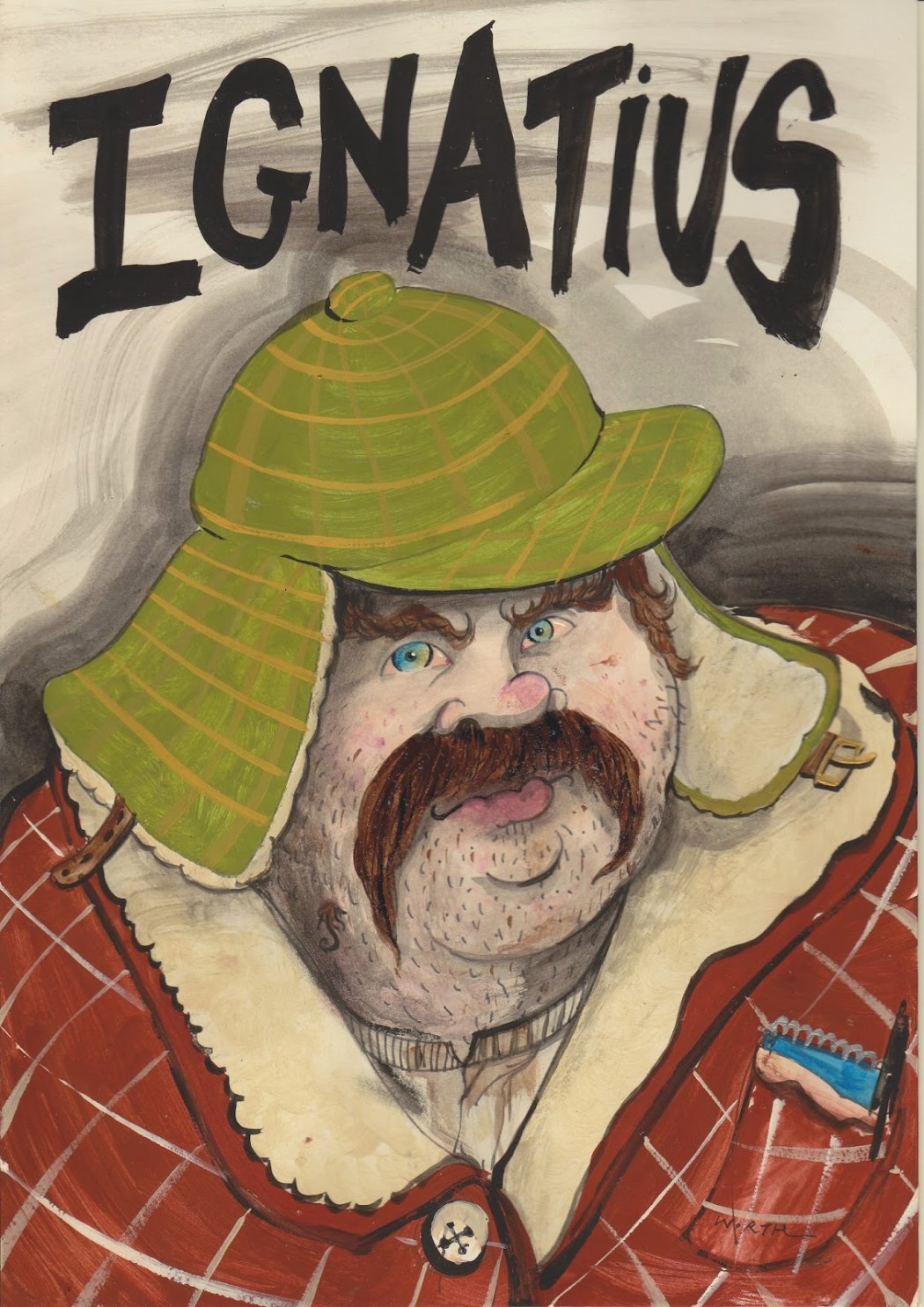
Ignatius by Daniel Worth

Lost in the Cosmos

Here is astrophysicist Adam Frank’s insightful look at Walker Percy’s wonderful book. I don’t share Frank’s nor Lawler’s nor Percy’s optimism but I’m trying very hard. Also check out Peter Lawler’s take on LITC.

PhilcUK-1274438506

There is one book that begins to answer these questions and I’m happy to pass it on. Walker Percy’s “Lost In The Cosmos” is subtitled “The Last Self-Help Book.” And while Percy keeps his tongue held firmly in cheek, his goal is to help in the most universal sense. He knows we are lost. Why it is possible, he asks, to learn more in ten minutes about the Crab Nebula, which is 6,000 light years away, than you presently know about yourself even though you’ve been stuck with yourself all your life? (Frank)

Percy explains, quite scientifically, why each of us is homeless, and, by so doing, he helps us be at home with our homelessness, and so free to be as at home as we can be with the good things of this world. (Lawler)

Fats, Dave and Mac

Good to see that Fats and Dave were able to attend this showing as per my last post. Here are some lovely shots of the three maestros, Dave ever irrepressible; Fats the quiet one.

-84470d90fb433a5e

-32c47ff675a7bf85

The best extended research on Fats and Dave is in the excellent book Blue Monday: Fats Domino and the Lost Dawn of Rock ‘n’ Roll.

41xJzjQq4aL-1._SY344_BO1,204,203,200_

Fats, Dave and The Big Beat

Glad to hear that this documentary has come to full fruition. Below is the blurb from the film’s Kickstarter page.

franck-bertacci-collection-the-historic-new-orleans-collectionjpg-4d4768acd21b0c05

The early years (1949-62) of the Fats Domino / Dave Bartholomew collaboration and its roots in the culture and music of New Orleans.

….On the day in 1948 the unlikely paths of Antoine “Fats” Domino and Dave Bartholomew collided at a small Lower Ninth Ward New Orleans night club neither men would have suspected that their collaboration would result in one of the longest (65 years and running) and most successful in American Music history. A collaboration that, by 1962, would sell over 60 million records.

THE BIG BEAT: THE STORY OF FATS DOMINO AND HIS BAND is also the story of how Fats and Dave’s music BECAME Rock N’ Roll and how it effectively broke down the color barriers that paved the way for racial integration through music. We will use recent interviews with Dave, Fats and with surviving band members and rare previously unseen full length vintage performances of the Fats Domino Band (with Dave Bartholomew on Trumpet) performing their early hits to illustrate the story of these two men and the other musicians who made their band among the greatest in Rock N’ roll history…

Several years ago, while doing preliminary research for a possible Fats Domino documentary, I discovered in (of all places!) the French National Archive, a 45 minute live concert film, shot in 1962, of the original Fats Domino band…the same band that recorded with Fats from 1949 to 1962 as well as appearing , with Dave Bartholomew as band leader and director, on over 200 nationally charted singles and 21 gold records – all of which recorded in Cosimo Matasa’s tiny J&M studio on Rampart Street in the city of New Orleans.

To find a 45 minute concert of any African American Rock N’ Roll band filmed in 1962 is almost completely unheard of. Generally the early pioneers of Rock, both black and white, were only allowed short appearances on TV Dance Party or Variety shows or appeared lip syncing one of their current hits in a Hollywood teen movie. It is just unheard of that a 45 minute 1962 live concert should exist..and one featuring with one of the most important and influential Rock N’ Roll bands of all times.

So, with this amazingly exciting footage as the corner stone, we will tell their story. The film will be a performance/documentary as we intend to show the performances in their entirety..no cutting for narrative..just the band performing as it was on that Summer day in 1962. This will be the true story of the early years of Fats Domino; a story that would not exist without Fats’ longtime collaboration with New Orleans Trumpeter, song writer, arranger and band leader Dave Bartholomew; a story that shows the transition of Rhythm & Blues to Rock N’ Roll at the hands of these two pioneers.

Their story is rooted in the culture, traditions and rhythms of their native New Orleans, their home town from the beginning of their lives til this very day. The film will primarily focus on Fats and Dave but will also pay tribute to legendary New Orleans musicians LEE ALLEN, HERB HARDESTY, CORNELIUS “TENOO” COLEMAN, and WALTER “PAPOOSE” NELSON who were long time members of the Dave Bartholomew and Fats Domino bands and who played on 100’s of the greatest R&B and Rock N’ Roll records to come out of New Orleans.

Its is also the story of how their music BECAME Rock N’ Roll and effectively broke down the color barriers that paved the way for racial integration through music. We will use previously unseen full length vintage performances of the Fats Domino Band( with Dave Bartholomew on Trumpet) performing their early hits. We will tell the story of the secret history of the birth of Rock N’ Roll..and it came from New Orleans!

Risks and challenges

I think my biggest challenge here is to try to dispel the image that Fats Domino has gained over the years as simply being a jolly oldies act. As Fats has always been extremely shy with interviewers and rarely ever speaks about his music and it’s history he has been overlooked by many scholars and fans of great American “Roots” music. I am hoping my reputation as a Producer/Director of films about important American musicians and the way we put together our trailer will help us gain an audience who will be wiling to reevaluate Fats and his place in American Music while still appealing to his fans that want to hear all the old tunes. By the nature of the great performance footage we have discovered and the interviews we have shot with Fats and Dave and their surviving musicians we will be able to do both.

Regarding production set backs..we have overcome all of those in our 5 years of pre-production and planning for this project. We are still searching for rare pre-1962 photographs of Fats & Dave but we already have 100s!. Often times music clearances can hold up a project of this sort but we have already gotten ball park quotes for these and, with the help of this Kickstarter campaign, be able to pay all the licenses!

Walter Isaacson Lecture

2014 JEFFERSON LECTURER

walker-percy_isaacson

It is particularly meaningful for me to be giving this lecture on the 25th anniversary of the one by Walker Percy. I took the train from New York for that occasion, looking out of the window and thinking of his eerie essay about the malaise, “The Man on the Train.” If memory serves, it was over at the Mellon Auditorium, and Lynne Cheney did the introduction.

Dr. Percy, with his wry philosophical depth and lightly-worn grace, was a hero of mine. He lived on the Bogue Falaya, a bayou-like, lazy river across Lake Pontchartrain from my hometown of New Orleans. My friend Thomas was his nephew, and thus he became “Uncle Walker” to all of us kids who used to go up there to fish, capture sunning turtles, water ski, and flirt with his daughter Ann. It was not quite clear what Uncle Walker did. He had trained as a doctor, but he never practiced. Instead, he seemed to be at home most days, sipping bourbon and eating hog’s head cheese. Ann said he was a writer, but it was not until his first novel, The Moviegoer, had gained recognition that it dawned on me that writing was something you could do for a living, just like being a doctor or a fisherman or an engineer. Or a humanist.

He was a kindly gentleman, whose placid face seemed to know despair but whose eyes nevertheless often smiled. He once said: “My ideal is Thomas More, an English Catholic who wore his faith with grace, merriment, and a certain wryness.” That describes Dr. Percy well.

His speech twenty-five years ago was, appropriately enough for an audience of humanists, about the limits of science. “Modern science is itself radically incoherent, not when it seeks to understand subhuman organisms and the cosmos, but when it seeks to understand man,” he said. I thought he was being a bit preachy. But then he segued into his dry, self-deprecating humor. “Surely there is nothing wrong with a humanist, even a novelist, who is getting paid by the National Endowment for the Humanities, taking a look at his colleagues across the fence, scientists getting paid by the National Science Foundation, and saying to them in the friendliest way, ‘Look, fellows, it’s none of my business, but hasn’t something gone awry over there that you might want to fix?’” He said he wasn’t pretending to have a grand insight like “the small boy noticing the naked Emperor.” Instead, he said, “It is more like whispering to a friend at a party that he’d do well to fix his fly.”

The limits of science was a subject he knew well. He had trained as a doctor and was preparing to be a psychiatrist. After contracting tuberculosis, he woke up one morning and had an epiphany. He realized science couldn’t teach us anything worth knowing about the human mind, its yearnings, depressions, and leaps of faith.

So he became a storyteller. Man is a storytelling animal, especially southerners. Alex Hailey once said to someone, who was stymied about how to give a lecture such as this, that there were six magic words to use: “Let me tell you a story.” So let me tell you a story: Percy’s novels, I eventually noticed, carried philosophical, indeed religious, messages. But when I tried to get him to expound upon them, he demurred. There are, he told me, two types of people who come out of Louisiana: preachers and storytellers. For goodness sake, he said, be a storyteller. The world has too many preachers.

For Dr. Percy, storytelling was the humanist’s way of making sense out of data. Science gives us empirical facts and theories to tie them together. Humans turn them into narratives with moral and emotional and spiritual meaning.

His specialty was the “diagnostic novel,” which played off of his scientific knowledge to diagnose the modern condition. In Love in the Ruins, Dr. Thomas Moore, a fictional descendant of the English saint, is a psychiatrist in a Louisiana town named Paradise who invents what he calls an “Ontological Lapsometer,” which can diagnose and treat our malaise.

I realized that Walker Percy’s storytelling came not just from his humanism – and certainly not from his rejection of science. Its power came because he stood at the intersection of the humanities and the sciences. He was our interface between the two.

James Booker: Old Soul with New Wrinkles

JamesBooker_BannerImages3

Since we are coming up to the time of year when Booker died I thought I’d mark it now. IMHO Booker is one of those geniuses on par with “Gatemouth” Brown in the sense that they were so versatile encompassing so many different styles and so authentically. Both were “characters” but of course were very different in lifestyles and temperament.

Below is a Maple Leaf Bar gig apparently from Oct ’83. Also, there is a recent documentary film on Booker that I’ve yet to see Bayou Maharajah: The Tragic Genius of James Booker — check out the trailers for that as well to get some quick context.

Booker combined his classical training with an encyclopedic knowledge of music and filtered this through a singular take on that distinct New Orleans blend of funk, gospel, blues, R&B, gutbucket, and street syncopations. He never played the same set twice. His off-the-cuff medleys could blend a Rachmaninoff tune with Sinatra, dip into some Fats Domino, take a detour through the Afro-Caribbean roots of New Orleans and end up in the first-row pew of a Catholic church. Dr. John told me that Booker is the only guy he ever knew who would play a song with every verse in a different key.

On top of this musical brilliance, Booker was one of the most outrageous characters New Orleans has ever known (and that’s sayin’ something). He might show up at a gig dressed only in a diaper and a police cap and refuse to play a single note until someone brought him drugs. Plagued with mental illness, he would hallucinate, hear voices, and had extreme paranoia about the CIA’s and the mafia’s plots against him. Self-proclaimed as the Piano Pope, he used the piano bench as his pulpit, expounding on his views on Louisiana’s incarceration policy, racism, the multiple-offender act, how the busses were running, or anything else that irked him.


Pt: 1


Pt: 2


Pt: 3


Pt: 4


Kickstarter page for documentary: interest in video from about 1:20 since the campaign is closed.

Old Soul with New Wrinkles