Sean Hermanson’s open access paper in Philosophies 2017, 2(2).

Sean Hermanson’s open access paper in Philosophies 2017, 2(2).
I have never met Barry Smith in person but over the years he has been incredibly helpful and supportive of my various philosophical enterprises. Having only been familiar with Hayek’s social philosophy, it was Barry who first brought me to Hayek’s philosophical psychology and for that alone I’m especially grateful. Unlike so many in your profession you are a man of taste and decency. Cheers Barry!
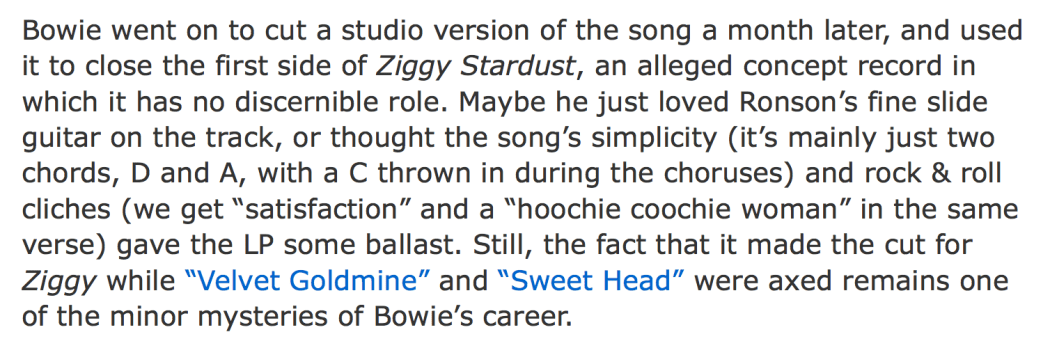
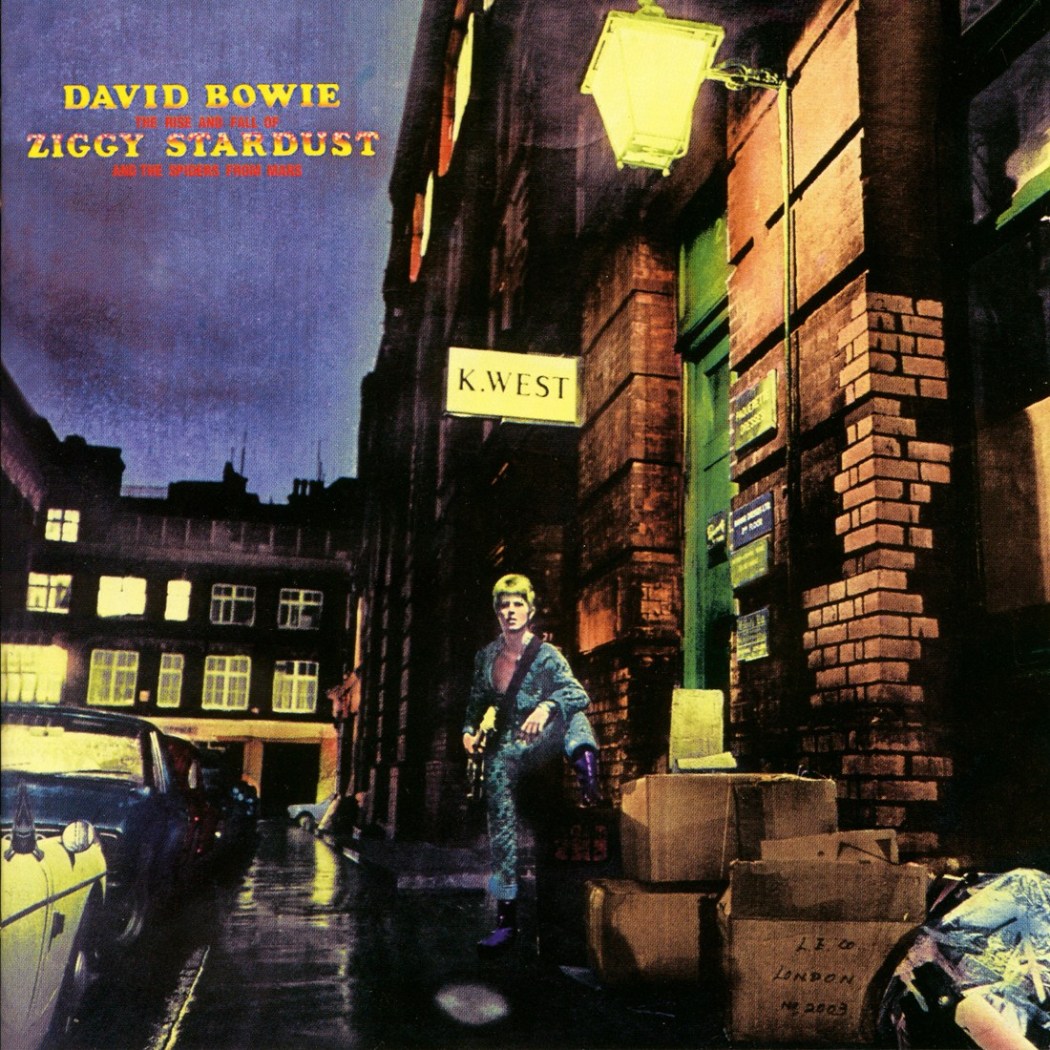
On this day 45 years ago there occurred a musical earthquake. Nothing has ever been the quite the same. Yet again, I refer you to the master Bowie analyst Chris O’Leary for his song-by-song commentary. Chris, you are about 10 years younger than me, but given your thoughts on “Moonage Daydream”, how the fuck do you think we felt when we heard this as 11 year olds? We were not quite at the age to have our music: ’50s nostalgia was then more interesting to us than the lingering and dusty late hippiedom of the Stones and Beatles (see “All the Young Dudes“). “Moonage” was the apotheosis of a nostalgic past and an imagined future, purveying an oddly B-movie feel to it, far removed from the grimness of the early ’70s in the UK — and it was as much Ronson’s song as it was Bowie’s.
Don’t fake it baby, lay the real thing on me
The church of man, love
Is such a holy place to be
Make me baby, make me know you really care
A close second to “Moonage” would be the sexually frenzied blitzkrieg “Suffragette City” (thematically not dissimilar to Zappa’s Bobby Brown) but driven by Ronson’s brutalist Jerry Lee-like piano:
This mellow thighed chick just put my spine out of place
Hey man, my schooldays insane
Hey man, my work’s down the drain
Hey man, well she’s a total blam-blam
She said she had to squeeze it but she then she . . .
There’s only room for one and here she comes, here she comes . . .
Ohhh, wham bam thank you ma’am
A most intriguing track, because of it’s mystical feel, is “Soul Love” which, for me at least, evokes the existentialist Catholicism of Unamuno‘s The Tragic Sense of Life. Chris makes the plausible observation that “Soul Love” may well have been spun out of “Five Years“:
Soul love: the priest that tastes the word and
Told of love: and how my God on high is
All love: though reaching up my loneliness
Evolves, by the blindness that surrounds him
“Star” sewed the seeds and created the template for a ’70s boy to fantasize about rock ‘n roll as a lifestyle. As you rightly say: “The singer sees his friends commit to activism or violence (like Tony, who goes off to fight in Northern Ireland) and decides he’s not cut out for sacrifice. Instead he just wants to be a rock & roll star, which seems easy enough. “So enticing to play the part,” the singer imagines, pouting into the mirror.” I’ve spent all these years puzzling over the “It Ain’t Easy” (you say minor, I say major) curiosity but didn’t ever come up with a plausible explanation until now, thanks to you Chris, as you also did for “Let’s Spend the Night Together“:
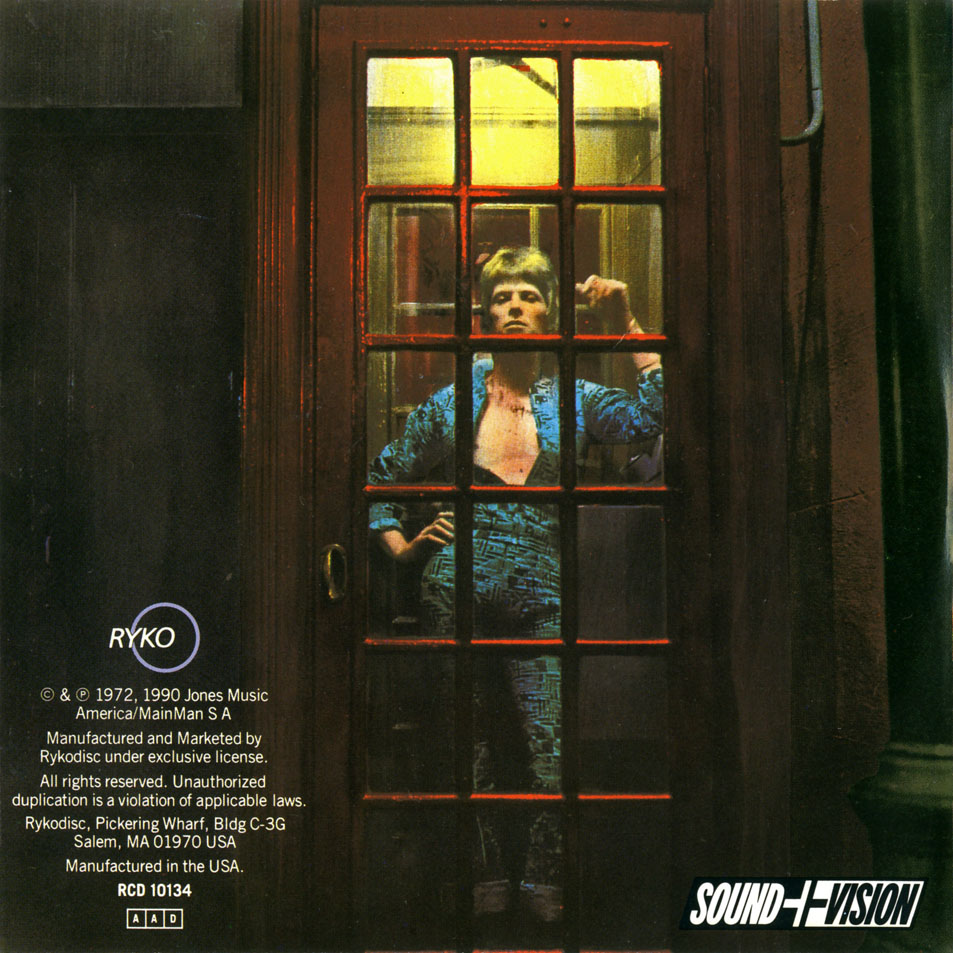
It is not surprising that the Heddon Street of ’72 where the cover photos were shot, bears little resemblance to the soulless development that is there now. By the early ’80s the relatively secluded phone box locale had become a well-used urinal over-adorned with graffiti, and if I recall correctly, the red call box was replaced by one of those hideous glass half booths.
To be played at maximum volume
I had the good fortune to be able to taste a 100 year old Château Latour this past week. Now I’ve never had any strong desire to experience a vintage merely for its exclusivity and I certainly would not ever pay even a fifth of the market price for the privilege, however fantastic a wine might be. But I got lucky. A friend had a case of these half-bottles and was kind enough to open one. Well, it was time: the cork looked dodgy and I can’t vouch that the wine was properly stored. The wine, needless to say, had to be filtered given the significant amount of sediment/dregs. The best part of the qualic experience was the dank smell of the wine, much like a Morgon. The wine itself was surprisingly very subtle and smooth with no obvious sign of deterioration though I suspect to the advanced palate, it was well past its optimal drinking. So all things considered, while I’ve had far better and much cheaper wines, this held up pretty damn well. The case was offered up for auction but didn’t qualify because, as you will notice, the label is not labelled Pauillac de Latour but was labelled by the wine négociant, Schröder & Schÿler, established in 1739. The authenticity of the item was not in doubt because the crate had the requisite stamp duty markings and intact packaging and this was verified by the auctioneers. Each half bottle came wrapped in this thatch. The toast: to those who died for our freedoms at The Battle of Vimy Ridge.


Yet they, the lay scientists, those who perceive themselves in the community of scientists and at some remove from the ordinary world, may be better off than those who live immanent lives, beneficiaries of science and technology, but with only a glimmering of the scientists, the glimmering that there are scientists and that “they” know about every sector of the world, including one’s very self. “They” not only know about the Cosmos, they know about me, my aches and pains, my brain functions, even my neuroses. A remarkable feature of the secondhand knowledge of scientific transcendence is the attribution of omniscience to “them.” “They” know.
They are expected to know. Example: a recent Donahue Show in which paraplegics discussed their troubles. The message: rage at doctors. “They” could cure us if they wanted to, took the time, did their research. The powers attributed to them, the scientists—powers which they, the scientists, never claimed—are as magical as those of the old gods.
The layman, dazzled by the extraordinary accomplishments of science and technology, nevertheless gives away too much to science. Where the genuine scientist is generally amazed at the meagerness of knowledge in his own field, the layman is apt to assign omniscience as what he takes to be a property of scientific transcendence.
(iii) Transcendence by Art. If the scientist is the prince of the post-religious age, lord and sovereign of the Cosmos itself through his transcendence of it, the artist is the suffering servant of the age, who, through his own transcendence and his naming of the predicaments of the self, becomes rescuer and savior not merely to his fellow artists but to his fellow sufferers. Like the scientists, he transcends in his use of signs. Unlike the scientists, he speaks not merely to a small community of fellow artists but to the world of men who understand him.
It is no accident that, for the past hundred years or so, the artist (poet, novelist, painter, dramatist) has registered a dissent from the modern proposition that, with the advance of science and technology, man’s lot will improve in direct proportion. The alienation of the artist puzzles many, both the scientists and technologists who are happy and busy and their lay beneficiaries who are happy in the immanence of consumption. Most Danes and Japanese don’t appear to be alienated—though there are those who say that their obliviousness of their own immanence is the worst alienation of all. To most of the happy von Frisches and Rutherfords and to the contented denizens of Silicon Valley, the dark views of modern life held by most serious novelists since Tolstoy, most poets since Tennyson, most painters since Millet, most dramatists since Schiller, have seemed neurotic indulgences. It is possible, however, that the artist is both thin-skinned and prophetic and, like the canary lowered into the mine shaft to test the air, has caught a whiff of something lethal. Indeed, as this dreadful century wears on, even the most immanent Dane and the most proficient IBM computer-engineer is beginning to sense that all is not well, that the self can be as desperately stranded in the transcendence of theory as in the immanence of consumption.
The artist, caught in the predicament of the self, is at once more vulnerable to the predicament of self than the nonartist and at the same time privileged to escape it by the transcendence of his art. He serves others who share his predicament by naming it.
The difference between Einstein and Kafka, both sons of middle-class middle-European families, both of whom found life in the ordinary world intolerably dreary:
Einstein escaped the world by science, that is, by transcending not only the world but the Cosmos itself.
Kafka also escaped his predicament—occasionally—not by science but by art, that is, by seeing and naming what had heretofore been unspeakable, the predicament of the self in the modern world.
The salvation of art derives in the best of modern times from a celebration of the triumph of the autonomous self—as in Beethoven’s Ninth Symphony—and in the worst of times from naming the unspeakable: the strange and feckless movements of the self trying to escape itself.
Exhilaration comes from naming the unnameable and hearing it named.
If Kafka’s Metamorphosis is presently a more accurate account of the self than Beethoven’s Ninth Symphony, it is the more exhilarating for being so.


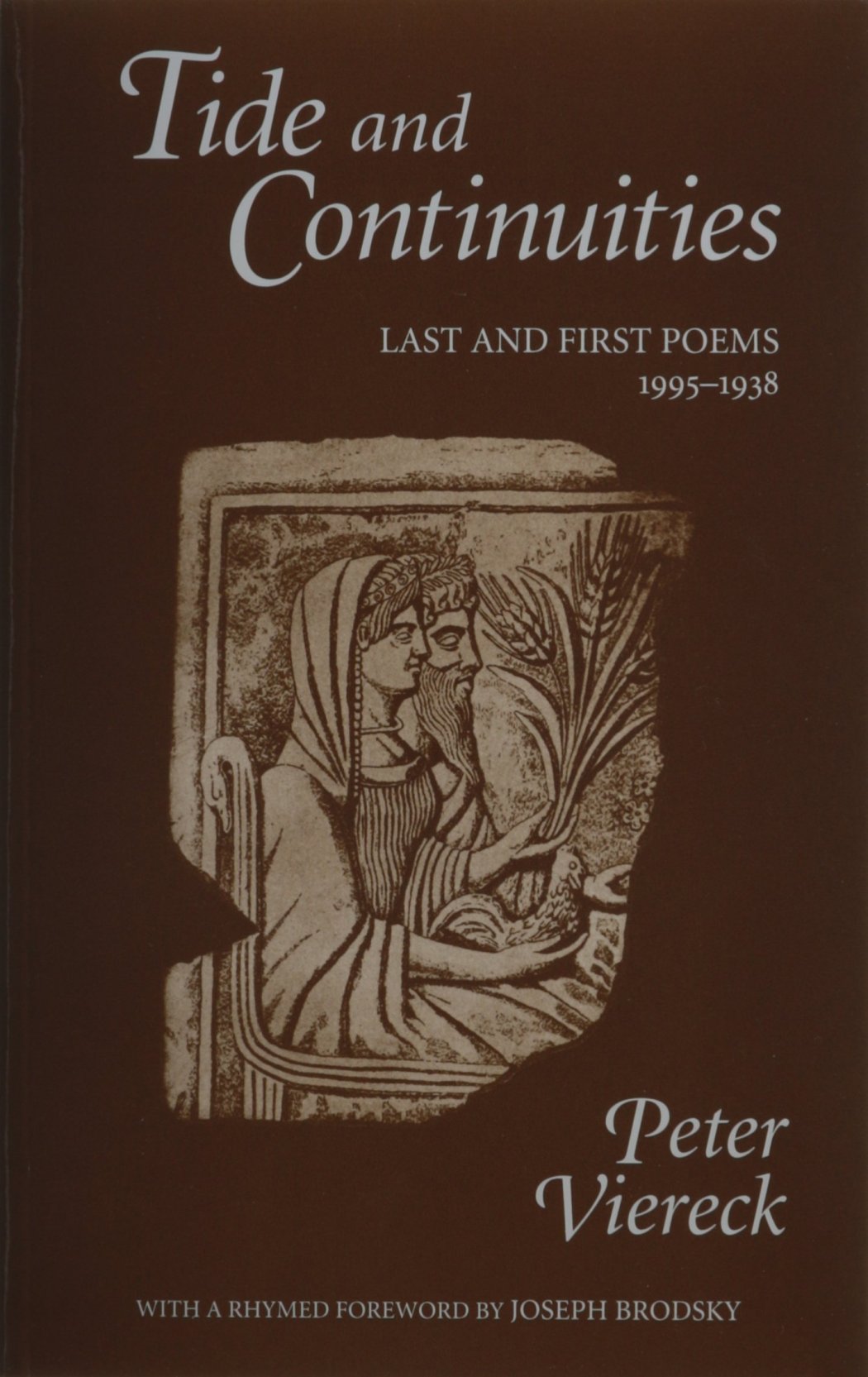
Peter Viereck’s difficult masterpiece with commentary by Michael Weinstein.
The question posed by Liel Leibovitz: “Why have so many Jewish leaders put their weight behind an activist whose separatist rhetoric is cloaked in the flaccid language of human rights?” On a closely related note, see Gary Weiss’ earlier “The Politics of Anti-anti-Semitism“. I also refer my Right Honorable friends to the phenomenon termed as Ostrich Parasitic Syndrome.
And hear, hear! Courtney
Self as Transcendent. In a post-religious age, the only transcendence open to the self is self-transcendence, that is, the transcending of the world by the self. The available modes of transcendence in such an age are science and art.
00000
Reentry problems become noticeable in less inspired scientists. The divorced wife of an astronomer at the Mount Wilson Observatory accused her husband of “angelism-bestialism.” He was so absorbed in his work, the search for the quasar with the greatest red shift, that when he came home to his pleasant subdivision house, he seemed to take his pleasure like a god descending from Olympus into the world of mortals, ate heartily, had frequent intercourse with his wife, watched TV, read Mickey Spillane, and said not a word to wife or children.
00000
With the waning of transcendence, reentry problems increase. One manifestation, which always amazes laymen, is the jealousy and lack of scruple of scientists. Their anxiety to receive credit often seems more appropriate to used-car salesmen than to a transcending community.
Other examples of reentry failures: the general fatuity of scientists in political matters, their naïveté and credulity before tricksters. The magician Randi says that scientists are easier to fool—e.g., by Uri Geller—than are children.
More distressing consequences occur when the zeal and excitement of a scientific community runs counter to the interests of the world community, e.g., when scientists at Los Alamos did not oppose the bomb drop over Hiroshima and Nagasaki. The joys of science and the joys of life as a human are not necessarily convergent. As Freeman Dyson put it, the “sin” of the scientists at Los Alamos was not that they made the bomb but that they enjoyed it so much.
00000
Their impoverishment is to be located in both an inflation of theory and a devaluation of the world theorized about. They out-Freud Freud without the scruples of Freud.