Music Noir Americana

I’m so glad that Robert Fontenot in OffBeat has again unequivocally given the Deltas the thumbs up. I’ve been thinking about how to characterize this band and independently came up with the idea that Deltaphonic are the musical analog to film noir. This time of year I usually visit Baton Rouge but I’ll have to settle for listening to track 7 (Radio) off the album: get your copy here.

Their new backwoods mystik only augments their trademark smirking despair . . .

. . . dark Americana with history’s dust shaken off

18835607_1472316339500379_6169741932279312906_n

David Stove

Died on this day in 1994. A sure-fire way to wind up your colleagues on “plantation regressive” is to leave this book in plain sight or, for that matter, any Stove book would do the trick. If you like a cracking no-holds-barred philosophical polemic then Stove is the man for you (Stove might well have been the most prominent modern philosophical troll). The last and posthumous Stove piece that was published was edited by my chum Andrew Irvine. Here are some review pieces, one by the mischievous Willam Briggs; others include Mark Anthony SignorelliJohn DerbyshireMichael Beran, Kelly Jane Torrance, Patrick Keeney, and Barry Maley. For more on Stove see Roger Kimball’s “Who was David Stove?“; the best online resource is maintained by Jim Franklin and Gerry Nolan. (Interestingly, on the original website this message was posted: “An authorized officer of the University of New South Wales has requested that one of David Stove’s articles not be hosted on a UNSW web server. So the David Stove website has moved”.)

what-s-wrong-with-benevolence

Walker Percy Wednesday 138

percycovercroppea

As a consequence of the unprecedented appearance of the triad in the Cosmos, there appeared for the first time in fifteen billion years (as far as we know) a creature which is ashamed of itself and which seeks cover in myriad disguises.
One semioticist defined the subject of his study as the only organism which tells lies.
The exile from Eden is, semiotically, the banishment of the self-conscious self from its own world of signs.
The banquet is still there, but it is Banquo in attendance.
The self perceives itself as naked. Every self is ashamed of itself.
The semiotic history of this creature thereafter could be written in terms of the successive attempts, both heroic and absurd, of the signifying creature to escape its nakedness and to find a permanent semiotic habiliment for itself—often by identifying itself with other creatures in its world.

00000

As soon as the self becomes self-conscious—that is, aware of its own unique unformulability in its world of signs—from that moment forward, it cannot escape the predicament of its placement in the world.
An organism exists in its environment in only one mode, that of an open system responding to those segments of its environment to which it is genetically programmed to respond or to which it has learned to respond.
But a self must be placed in a world. It cannot not be placed. If it chooses by default not to be placed, then its placement is that of not choosing to be placed.

00000

In a post-religious technological society, these traditional resources of the self are no longer available, leaving in general only the two options: self conceived as immanent, consumer of the techniques, goods, and services of society; or as transcendent, a member of the transcending community of science and art.
(a) Self as Immanent. The self sees itself as an immanent being in the world, existing in a mode of being often conceived on the model of organism-in-an-environment as a consequence of the powerful credentials of science and technology.
Such immanence is a continuum. At one end: the compliant role-player and consumer and holder of a meaningless job, the anonymous “one”—German man—in a mass society, whether a backfence gossip* or an Archie Bunker beer-drinking TV-watcher.
At the other end: the “autonomous self,” who is savvy to all the techniques of society and appropriates them according to his or her discriminating tastes, whether it be learning “parenting skills,” consciousness-raising, consumer advocacy, political activism liberal or conservative, saving whales, TM, TA, ACLU, New Right, square-dancing, creative cooking, moving out to country, moving back to central city, etc.
The self is still problematical to itself, but it solves its predicament of placement vis-à-vis the world either by a passive consumership or by a discriminating transaction with the world and with informed interactions with other selves.

9780312253998_custom-879fe996d0c45da2a69a358283ae164595a77f96-s6-c30

Reissue of Hayek’s The Sensory Order

The University of Chicago Press has alerted me that TSO is almost as good as here — so order now through the usual channels so as to not waste anytime in getting your hands on a copy.

9780226436425

A systematic approach to cancer: evolution beyond selection

This recent open access paper in Clinical and Translational Medicine caught my attention primarily because it invokes the concept of stigmergy. It’s unusual, though not surprising, that the idea is now finding some currency in medicine.

Eukaryotic cells have an entire panoply of communicative and cooperative mechanisms. Since the individual cellular participants can have independent goals in any mixed cellular ecology, there is a natural division of labor. The variety of these participants working together through stigmergic paths builds complexity, in sequence or in parallel, based on a continuous stream of information from within any niche or those aspects of any conjoined information field that is shared with other niches.

40169_2016_131_Fig1_HTML

Martini time

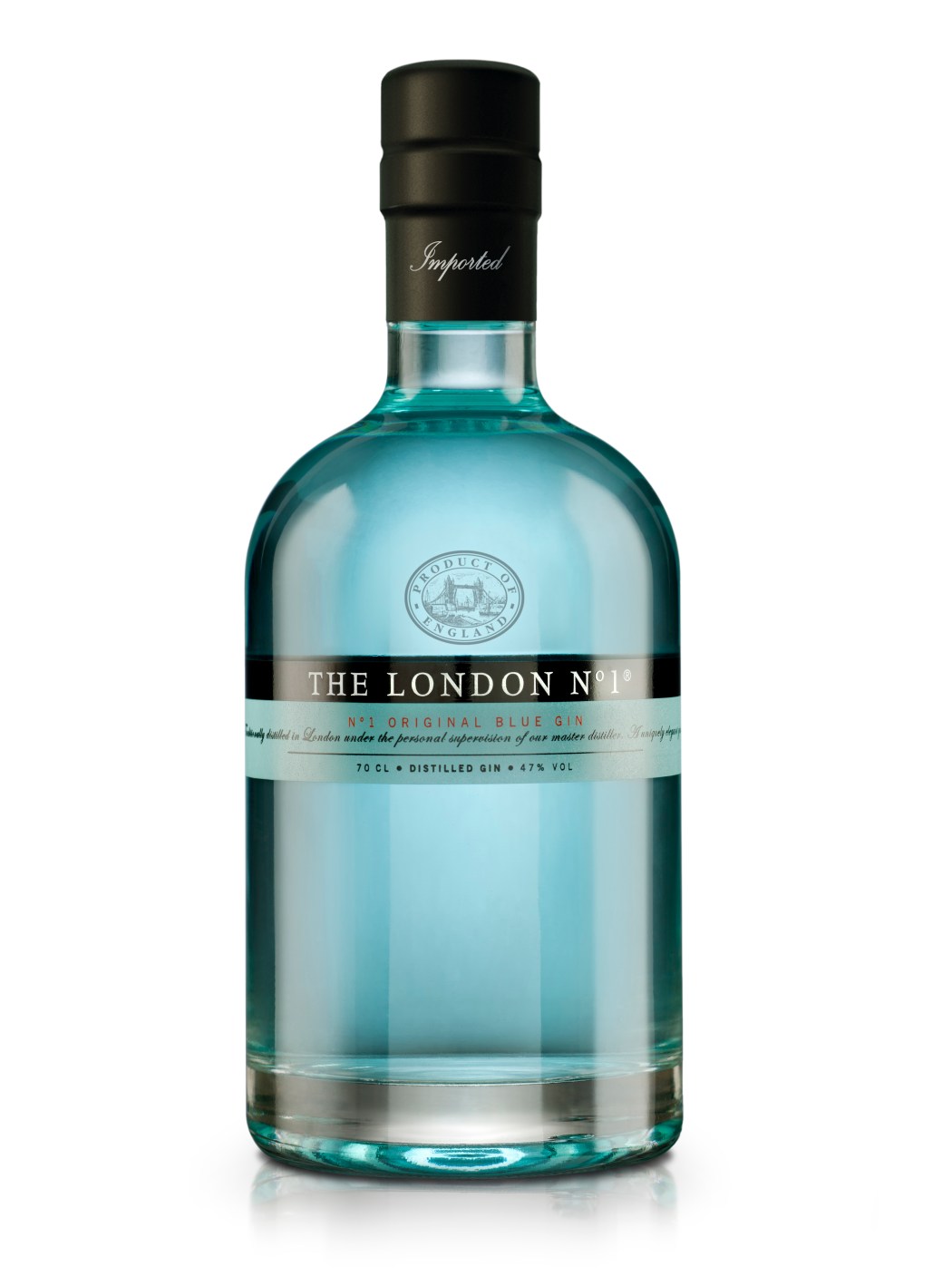
Staying true to the spirit of the recipe as handed down by the patron saint of martinis, Luis Buñuel, here is a marriage made in heaven. The London Nº1 is an absolutely superb well-priced not gimmicky new gin on the market: so smooth, it was palatable straight up ice-cold! Where I respectfully deviated from Buñuel was my use of Fee Brothers bitters rather than Angostura bitters. Wow! The quality of their bitters is unlike any I’ve ever had. The intense aroma alone was a memorable qualic experience. I’d like to think Buñuel would approve. I used bog standard dry vermouth: I saw a bottle of Australian vermouth called MAiDENii but, good as it might have been, 50 bucks seemed way too steep a price. This said, I would give it ago now that I have settled on a superb gin and bitters and maybe between these three particular ingredients, we have the makings of the best martinis. No longer do you have to expose yourself to the sloppy attempts most bars serve up. I declare this summer to be the summer of the martini.

To provoke, or sustain, a reverie in a bar, you have to drink English gin, especially in the form of the dry martini. To be frank, given the primordial role played in my life by the dry martini, I think I really ought to give it at least a page. Like all cocktails, the martini, composed essentially of gin and a few drops of Noilly Prat, seems to have been an American invention. Connoisseurs who like their martinis very dry suggest simply allowing a ray of sunlight to shine through a bottle of Noilly Prat before it hits the bottle of gin. At a certain period in America it was said that the making of a dry martini should resemble the Immaculate Conception, for, as Saint Thomas Aquinas once noted, the generative power of the Holy Ghost pierced the Virgin’s hymen “like a ray of sunlight through a window — leaving it unbroken.”

Another crucial recommendation is that the ice be so cold and hard that it won’t melt, since nothing’s worse than a watery martini. For those who are still with me, let me give you my personal recipe, the fruit of long experimentation and guaranteed to produce perfect results. The day before your guests arrive, put all the ingredients, glasses, gin, and shaker-in the refrigerator. Use a thermometer to make sure the ice is about twenty degrees below zero (centigrade). Don’t take anything out until your friends arrive; then pour a few drops of Noilly Prat and half a demitasse spoon of Angostura bitters over the ice. Shake it, then pour it out, keeping only the ice, which retains a faint taste of both. Then pour straight gin over the ice, shake it again, and serve.

gonzalez-byass

BITTE204008