Constructivism and Relativism in Oakeshott

I’ve been thinking and writing about social constructivism for nigh on 20 years which was one of the primary motivations behind the setting up of EPISTEME to take on the tripe that was being peddled in philosophy departments, but had already well and truly infected departments with no philosophical culture, i.e. English, sociology, anthropology, gender and so on. So I thought I’d repost this piece despite the fact that it takes to task one of my intellectual heroes. Constructivism-relativism was thoroughly dubious then; now it is as vulgar as it gets.

Legacy.pdf


Southern Comfort

Another insightful review of Deltaphonic by Wilson Koewing in the Nola Defender.

To listen to the band’s catalogue straight through feels like a backseat ride in an out-of-control burning muscle car through a backdrop of vast southern landscapes, occasionally stopping in this small town or that, to go inside a bar, or strip club, or seedy motel room to sit down and listen to captivating, nostalgia-tinged, smoky back table, yarns spun by singer/songwriter Andrew T. Weekes over Deltaphonic’s driving, dusty musical tapestry.

18278901_1443440342387979_1423552700159760214_o

Walker Percy Wednesday 141

percycovercroppea

The naming of the predicament of the self by art is its reversal. Hence the salvific effect of art. Through art, the predicament of self becomes not only speakable but laughable. Helen Keller and any two-year-old and Kafka’s friends laughed when the unnameable was named. Kafka and his friends laughed when he read his stories to them.
The community of art is not the elect community of science but the community of the artist and all who share his predicament and who can understand his signs.
The impoverishment? It comes from the transience of the salvation of art, both for the maker of the sign (the artist) and for the receiver of the sign.
The self in its predicament is exhilarated in both the making and the receiving of a sign—for a while.
After a while, both the artist and the self which receives the sign are back in the same fix or worse—because both have had a taste of transcendence and community.
If poets often commit suicide, it is not because their poems are bad but because they are good. Whoever heard of a bad poet committing suicide? The reader is only a little better off. The exhilaration of a good poem lasts twenty minutes, an hour at most.
Unlike the scientist, the artist has reentry problems that are frequent and catastrophic.
In fact, a catalogue of the spectacular reentries and flameouts of the artist is nothing other than a pathology of the self in the twentieth century, much as the fits and frenzies of Saint Vitus’s Dance were signs of the ills of an earlier age.

What account, then, can a semiotic give of the paradoxical impoverishments and enrichments of the self in the present age?
Why do people often feel bad in good environments and good in bad environments? Why did Mother Teresa think that affluent Westerners often seemed poorer than the Calcutta poor, the poorest of the poor?
The paradox comes to pass because the impoverishments and enrichments of a self in a world are not necessarily the same as the impoverishments and enrichments of an organism in an environment.

9780312253998_custom-879fe996d0c45da2a69a358283ae164595a77f96-s6-c30

A Closer Walk

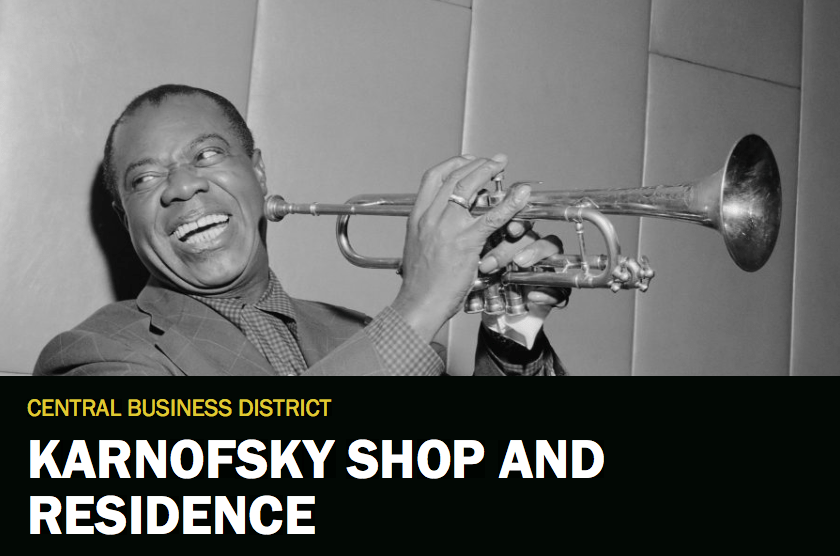
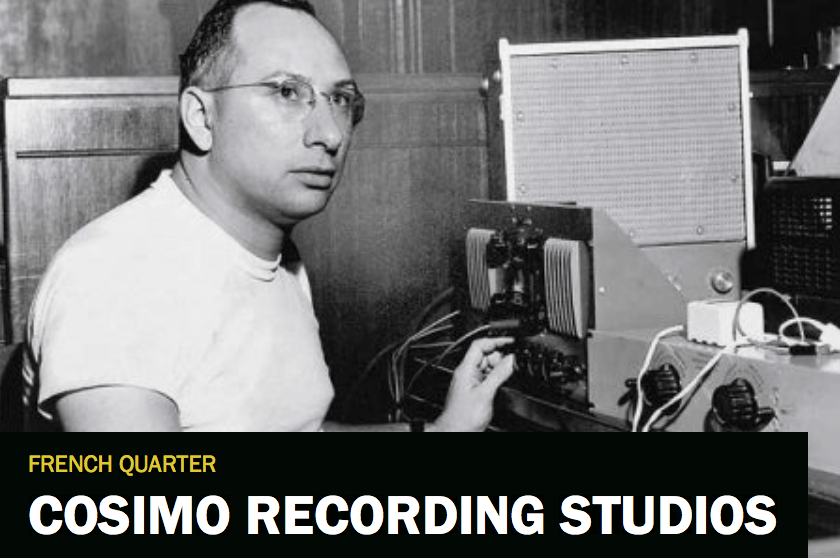
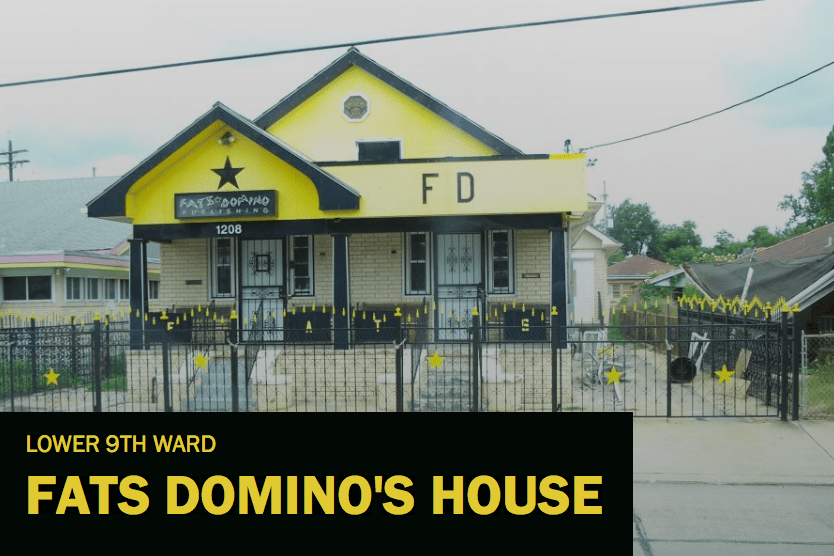
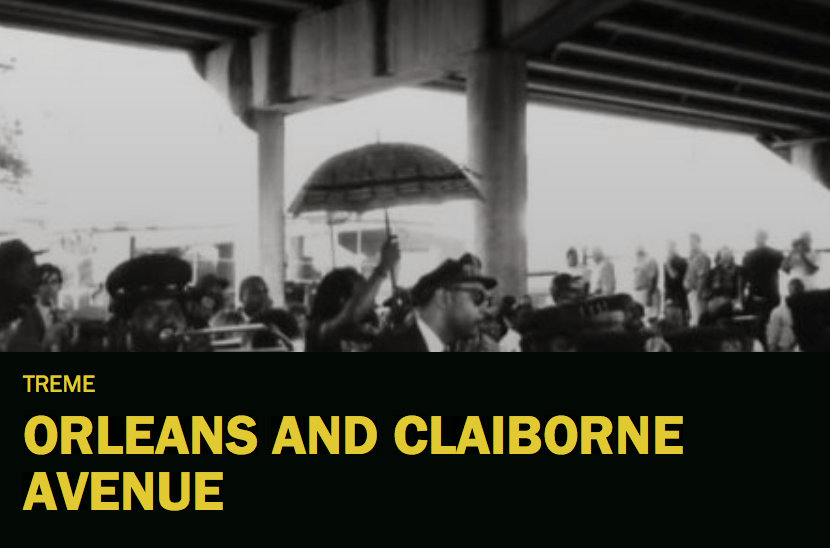
WWOZ have just launched a website A Closer Walk to “highlight, contextualize and advocate” for the future of these locales. It’s a bit late in the day for this: such a damn shame that so much has already been destroyed. Here are some of the locales that are meaningful to me.

Screen Shot 2017-06-19 at 5.30.52 PM

Screen Shot 2017-06-19 at 5.36.57 PM

Screen Shot 2017-06-19 at 5.42.35 PM

Screen Shot 2017-06-19 at 5.38.28 PM

Screen Shot 2017-06-19 at 5.40.40 PM

Robert Musil’s Flypaper

Looking forward to reading this little book I’ve just acquired: Nachlass zu Lebzeiten (The posthumerous papers of a living author), 1936. I haven’t come across much commentary on it, but it is mentioned in the NYT:

In these ”Posthumous Papers,” Musil’s pleasure is to start small. The first essay, ”Flypaper,” begins with an almost pedantic description of the sticky substance. It proceeds to focus on trapped insects, briefly comparing them to a woman fighting off a strong man’s grip, and ends with the image of a fly’s moribund twitching, compared to ”a minuscule human eye that ceaselessly opens and shuts.” This is the patented Musilian cadence. An immensely sensuous and concrete prose carries us from the ordinary to the almost-surreal and near-apocalyptic, a progression that appears logical, if not methodical.

flypaper

Implicit Bias, Stereotype Threat, and Political Correctness in Philosophy

Sean Hermanson’s open access paper in Philosophies 2017, 2(2).

636132932568795793-711096477_colorblindwh

A Festschrift for Barry Smith

I have never met Barry Smith in person but over the years he has been incredibly helpful and supportive of my various philosophical enterprises. Having only been familiar with Hayek’s social philosophy, it was Barry who first brought me to Hayek’s philosophical psychology and for that alone I’m especially grateful. Unlike so many in your profession you are a man of taste and decency. Cheers Barry!

Screen-Shot-2017-06-16-at-10.46

Ziggy Played Guitar

On this day 45 years ago there occurred a musical earthquake. Nothing has ever been the quite the same. Yet again, I refer you to the master Bowie analyst Chris O’Leary for his song-by-song commentary. Chris, you are about 10 years younger than me, but given your thoughts on “Moonage Daydream”, how the fuck do you think we felt when we heard this as 11 year olds? We were not quite at the age to have our music: ’50s nostalgia was then more interesting to us than the lingering and dusty late hippiedom of the Stones and Beatles (see “All the Young Dudes“). “Moonage” was the apotheosis of a nostalgic past and an imagined future, purveying an oddly B-movie feel to it, far removed from the grimness of the early ’70s in the UK — and it was as much Ronson’s song as it was Bowie’s.
     Don’t fake it baby, lay the real thing on me
     The church of man, love
     Is such a holy place to be
     Make me baby, make me know you really care
A close second to “Moonage” would be the sexually frenzied blitzkrieg “Suffragette City” (thematically not dissimilar to Zappa’s Bobby Brown) but driven by Ronson’s brutalist Jerry Lee-like piano:
     This mellow thighed chick just put my spine out of place
     Hey man, my schooldays insane
     Hey man, my work’s down the drain
     Hey man, well she’s a total blam-blam
     She said she had to squeeze it but she then she . . .
     There’s only room for one and here she comes, here she comes . . .
     Ohhh, wham bam thank you ma’am
A most intriguing track, because of it’s mystical feel, is “Soul Love” which, for me at least, evokes the existentialist Catholicism of Unamuno‘s The Tragic Sense of Life. Chris makes the plausible observation that “Soul Love” may well have been spun out of “Five Years“:
     Soul love: the priest that tastes the word and
     Told of love: and how my God on high is
     All love: though reaching up my loneliness
     Evolves, by the blindness that surrounds him 
Star” sewed the seeds and created the template for a ’70s boy to fantasize about rock ‘n roll as a lifestyle. As you rightly say: “The singer sees his friends commit to activism or violence (like Tony, who goes off to fight in Northern Ireland) and decides he’s not cut out for sacrifice. Instead he just wants to be a rock & roll star, which seems easy enough. “So enticing to play the part,” the singer imagines, pouting into the mirror.” I’ve spent all these years puzzling over the “It Ain’t Easy” (you say minor, I say major) curiosity but didn’t ever come up with a plausible explanation until now, thanks to you Chris, as you also did for “Let’s Spend the Night Together“:

Screen Shot 2017-06-05 at 5.59.32 PM

It is not surprising that the Heddon Street of ’72 where the cover photos were shot, bears little resemblance to the soulless development that is there now. By the early ’80s the relatively secluded phone box locale had become a well-used urinal over-adorned with graffiti, and if I recall correctly, the red call box was replaced by one of those hideous glass half booths.

To be played at maximum volume

ziggy_stardust