Neven Sesardic‘s recent book has really set tongues a wagging (to put it mildly), a book that is freely available here. Below one can hear Nevan talk on the topic. The discussion is all very disconcerting as Joseph Bottum points out in his review.
Maybe God actually “set eternity in the human heart.”
David French in the National Review citing Clay Routledge’s recent article in the NYT.
Religious faith is the evocation of a sentiment (the love, the glory, or the honor of God, for example, or even a humble caritas), to be added to all others as the motive of all motives in terms of which the fugitive adventures of human conduct, without being released from their mortal and moral conditions, are graced with an intimation of immortality: the sharpness of death and the deadliness of doing overcome, and the transitory sweetness of a mortal affection, the tumult of a grief and the passing beauty of a May morning recognized neither as merely evanescent adventures nor as emblems of better things to come, but as aventures, themselves encounters with eternity. — Oakeshott

Applied Stigmergy: Swarms of Autonomous Aerial Vehicles
Two reports on aerial applied stigmergy which prima facie seems more successful than most of the land-based modeling initiatives I’ve seen. (Report 1) (Report 2).
(1) [t]he first actual experimentation of flying two autonomous swarms of UAVs against one another with no human control, other than sending high level commands or sending a message to engage. We were really trying to understand how different autonomy tactics work against other autonomy tactics.
(2) They are a collective organism, sharing one distributed brain for decision-making and adapting to each other like swarms in nature

Hayek in Mind
Three sections: Neuroscience — Philosophy of Mind — Mind and Sociality

The cognitive differences between men and women
Bruce Goldman reports in the Spring issue of Stanford Medicine.
Our differences don’t mean one sex or the other is better or smarter or more deserving. Some researchers have grappled with charges of “neurosexism”: falling prey to stereotypes or being too quick to interpret human sex differences as biological rather than cultural. They counter, however, that data from animal research, cross-cultural surveys, natural experiments and brain-imaging studies demonstrate real, if not always earthshaking, brain differences, and that these differences may contribute to differences in behavior and cognition.
Whiskey in the jar
This the “most overplayed” of Irish folk songs obviously lends itself to interpretation across genres. There are several very excellent versions but these rate as two of my favorite.
Mishima and Masculinity
This article featured in the “politically incorrect” (whatever the fuck that means) Return Of Kings blog.

An Unpublished Note on Christian Morality
I chanced upon the piece below published in Religious Studies 19 (2):175 – 183.
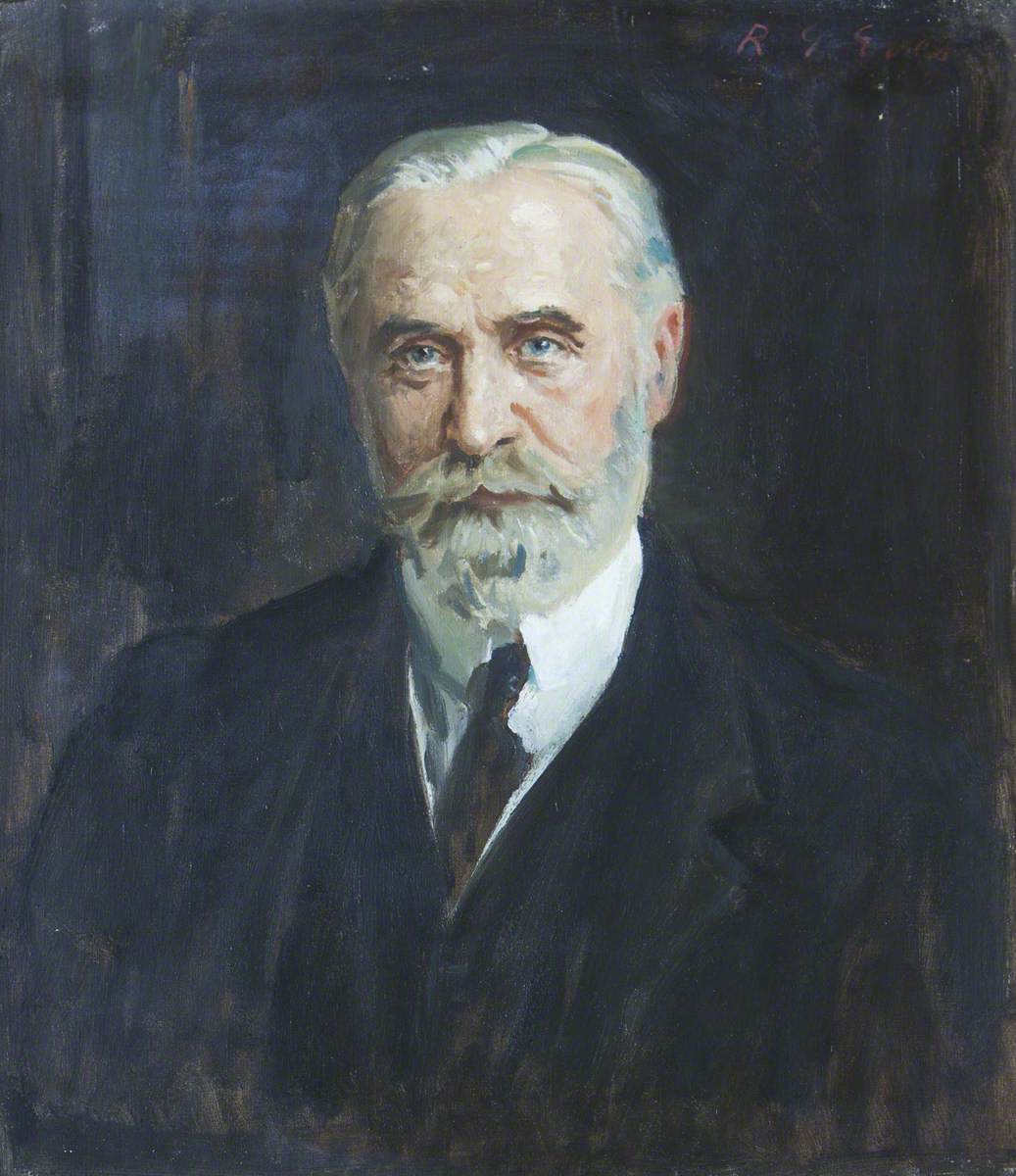
F. H. Bradley, An Unpublished Note on Christian Morality, Introduced and edited by Gordon Kendal.
At some time between 1907 and 1912, probably very much nearer the earlier date, [1] Bradley produced the first draft of an article on Christian morality. He did this in response to criticism that his moral ideas were anti-Christian. This charge was based mainly on the content of two articles that he published during 1894 in the International Journal of Ethics, one called ‘Some Remarks on Punishment’ and the other ‘The Limits of Individual and National Self-Sacrifice.’ [2] In these Bradley had maintained that the conventional ‘Christian’ belief in the sacredness of life undermined any sensible approach to punishment and any clear understanding of the moral importance of self-assertion (in contrast to self-sacrifice). It encouraged a squeamishness about retribution and ‘social surgery.’ It devalued proper human ends and interests, and the rights and duties founded on them. There was needed ‘a correction of our moral view, and a return to a non-Christian and perhaps a Hellenic ideal,’ [3] one that would recognize the unlimited right of the moral organism (i.e. virtually the state) to dispose of its members and to use force internationally in defence of right. Bradley pulled no punches and had this to say about the self-styled ‘Christian’ party:
If ‘Christianity’ is to mean the taking the Gospels as our rule of life, then we none of us are Christians and, no matter what we say, we all know we ought not to be. If Greek morality was one-sided, that of the New Testament is still more one-sided, for it implies that the development of the individual and the state is worthless. It is not merely that it contemns victory over the forces of nature, that it scorns beauty and despises knowledge, but there is not one of our great moral institutions which it does not ignore or condemn. The rights of property are denied or suspected, the ties of the family are broken, there is no longer any nation or patriotism, and the union of the sexes becomes a second-rate means against sin. Universal love doubtless is a virtue, but tameness and baseness—to turn the cheek to every rascal who smites it, to suffer the robbery of villains and the contumely of the oppressor, to stand by idle when the helpless are violated and the land of one’s birth in its death-struggle, and to leave honour and vengeance and justice to God above—are qualities that deserve some other epithet. The morality of the primitive Christians is that of a religious sect; it is homeless, sexless, and nationless. The morality of today rests on the family, on property, and the nation. Our duty is to be members of the world we are in; to be in the world and not of it was their type of perfection. The moral chasm between us is, in short, as wide as the intellectual; and if it has been politic to ignore this, I doubt if it is politic any longer. We have lived a long time now the professors of a creed which no one consistent-ly can practise, and which, if practised, would be as immoral as it is unreal. [4]
But Bradley still wanted to regard himself as a Christian (indeed as an Anglican: see A. E. Taylor’s obituary article in Mind). [5] His projected article was an attempt to show that nobody really accepts ‘Christian morality’ in the conventional sense: it is incoherent. There must be another sense, and in that sense Bradley counts himself as Christian.
The article was never offered for publication. It appears that he had made a typewritten revision, and he left instructions in 1921 that it be published after his death; but the typescript was lost. In the early 1930s the matter was discussed at length in correspondence between Mrs Marian de Glehn (one of Bradley’s sisters) and Bradley’s younger colleague and fellow-Idealist, H. H. Joachim. The early draft seemed plainly one-sided and not entirely fair to Bradley’s antagonists (whoever precisely they may have been): Mrs de Glehn had no doubt, for example, that Bradley had taken out the sentence about Nonconformists. Some of the reasons for his reluctance to publish it near the time of writing—that it would horrify some good people and embarrass his College—were pertinent still in the 1930s. [6] Moreover, if it were to be included in the Collected Essays it might well distract attention from the rest of that collection. The possibility of a private printing was raised but not pursued; so was the possibility of a discreet rewording here and here. But nothing ultimately was done, and the manuscript has remained since then, largely unread, among the Bradley papers in Merton Library.
It bears a small number of later amendments and insertions, and with it there are three handwritten fragments: two are clearly preparatory to the original draft, while the third (reproduced below) is the rough sketch of a more positive sequel.
I am very grateful to the Warden and Fellows of Merton College for allowing the text to be published. Editorial intrusions have been kept to a minimum. The Note should be read with the two earlier articles mentioned above, with an article of comparable vintage ‘On the Treatment of Sexual Detail in Literature,’ [7] and of course with Ethical Studies. [8] But it can stand on its own. It is a good example of Bradley’s invective. It illustrates his passion for common sense and relevance in morality. It makes plain his conviction of the value of the experienced world: Bradley did not maintain that this world is unreal! It shows him struggling to find a way of delineating a moral authority sufficiently determinate to have a prescriptive bearing upon us, while not so prematurely defined that it stultifies and distorts our moral sense. The Note is an interesting complement of his more theoretical writings. It goes as follows. [9]
[The note begins]
The views expressed in the two foregoing papers have, I believe, been condemned as anti-Christian. They have been even taken to have been inspired by a hatred of Christianity. Now if by Christianity is meant the moral doctrine of the New Testament and of the early Christians, I have certainly urged that this is defective. Viewed as a supreme guide I life I do not hesitate to call it detestable. And, apart from self-deception and hypocrisy, there is no one, if we except a few fanatics, who does not really think as I think. There are of course countless persons who for good or for evil attempt in part to realize the moral idea of the Gospels. But any man in any ordinary social position who, in acts and not in words, tries to follow this teaching thoroughly is at once set down as more or less intellectually and morally insane. And in the sense in which I am said to hate Christianity every honest man knows, or should know, that he does well to hate it. This I take to be indubitable fact and, this being so, here are some questions which are perhaps worth our attention.
Is or is not, I ask first, our moral consciousness to be supreme? Has it a right to judge as to moral good and evil, or has it to listen to some authority external to itself? I insist on an answer to this question, and I have a right to insist, for I address myself here only to those who accept the above supremacy. With those who reject it I am not seeking to argue. And now that we are possibly clear on one question, I will go on to ask another. Suppose that our present moral sense finds that the morality of early Christianity is one-sided—does (or would) that fact show that we are at issue with Christianity? It seems to have been assumed against me that no other alternative is possible, but is not any such assumption false and is it not really even monstrous? If the reader will reflect I am sure that he will find that I have some reason on my side.
I ask him to say in general that a living principle may be superior to its first origin, and I ask him to apply this general truth to Christianity. I ask him to agree that the present Christian mind is autonomous and has a right to judge of its own beginnings. And I beg him to tell me why the early appearance of a principle should not be one-sided and defective. The idea of a spirit which developes itself within the Christian community, if a false idea, is at least not novel. And if there is any reason why this developed spirit should not pronounce on its own history, and if there is any reason why this history should not have started with imperfection, I should be glad to hear, for I do no know what these reasons can be. And when I am told that to identify the moral idea with the morality of the early Christians is to show love for Christianity, while to refuse to do this is hatred, I ask the reader to consider what is involved in such a principle of judgment.
I am going on now, not because I like it, but because I find that I must, to point out some of the many defects of the Gospel morality. There is nothing new to say on the matter, but there are things which apparently are hard to convey. And the difficulty arises, I urge, from the refusal to look at plain and obvious facts. Listen to this utterance: “Every man who . . . taking Christ as his model in all the relations of life.” [10] Reflect on what it means and on the state of mind from which such a saying proceeds. Imagine Jesus of Nazareth plunged into our social and political life, and then take him as a model, no matter what the situation may be. Is it my duty to the State to beget children? Have I any right to refuse to serve as a soldier? Ought I, being a soldier, to volunteer to lead a storming party to take a town by assault? Have I a right to insist on an increase of my salary? Should I under the sheriff serve as a hangman or sit on a jury to try cases of adultery with damages? I need never be in doubt on such questions. I need only betake myself to the words and to the ideal of Jesus of Nazareth. For I suppose that Jesus of Nazareth is what is meant by “Christ.” Is not this monstrous? It is blasphemous, you may reply, but who, I ask, is responsible for the blasphemy? And there is another question I would put to the reader. Is there any man who, in perfect good faith, could speak in this way of taking Jesus everywhere as his model, if he had not lived, as we most of us have lived, in a world full of hypocrisy, a world where on certain subjects we have formed the habit of not saying what we mean and of not meaning what we say? But the result is not merely that we do not know what we mean. There is a worse result still – that we do not mean what we know.
To any one who can see the facts it is obvious that the morality of the Gospels and of the early Christians is the one-sided morality of a mere sect. How could it have been otherwise, and what other morality could have answered the purpose? I am not speaking of the essence and principle of Christianity, and I am not even here asking what that is. I am speaking of how Christianity shows itself in its first imperfect appearance. It in fact was a sect. And that from the morality of such a sect we can learn our duty as citizens in a state and in the world, is, when you consider it, at once ridiculous. But I will venture to point to a few details.
We most of us believe in the moral necessity of private property, and we all of us, save a few fanatics, believe in the moral necessity of some degree of wealth, held at least by the community. Consider on the other side the attitude of Jesus as reported in the Gospels. And yet there are those who will tell you that to acquire wealth is a Christian’s duty to God and to his fellow men and to himself, and that, in carrying out this duty, his master and his model is Jesus of Nazareth. It is the same man perhaps who will give his hypocrisy a deeper dye by condemning the sacred duty of every citizen to serve his country in arms. He will fatten himself like a parasite on an organism without which he would lose all he cares for in life, and he will not blush to invoke the name of one who, whatever else he was, was no hypocrite.
Most of us, I think, still believe in the duty of patriotism. I will go so far as to say that even those who contemn this duty keep, most of them, a place for it in their hearts. One cannot after all forget everything and reach complete baseness in a day. On the other hand where in the Gospels is the patriot applauded or even recognized? How could there be a duty of patriotism where the framework of society was to go and the world itself soon to pass away? The idea is absurd, and the actual fact, to anyone who is not blind to fact, is certain. To profess here to follow Jesus as a model is not possible except to the injury or ruin of one’s own moral honesty.
I will go on to say something on another point where the truth is even more certain to give offence. Let us think of sexual morality, a subject which, whether we like it or not, is becoming more and more a burning question. “Wherewithal,” we have to ask, “shall a young man cleanse his way?” And we shall perhaps agree that, especially when a young man thinks for himself, it is desirable for him to find not only good example but also sound doctrine. But, as things are, unless the young man is specially fortunate, a sound doctrine is precisely that which he is unlikely to find. He meets on the one side the moral code of the man of the world. And this, even if it is not too lax, is at least confused and void of principle and far from inspiring. And on the other side the young man is offered a doctrine of purity which is downright false and immoral, a doctrine which is essentially one-sided and negative. And against this not only do his senses revolt, but his reason and his heart and his whole spirit reject it as monstrous. [11] Is it not an abominable lie that fornication takes the first place among the deadly sins? Do we not all, except a small minority, really know that this is a lie and that to utter it is hypocrisy? No one could deny that the habitual pursuit of a certain pleasure, in abstraction from all that normally should qualify it, is bad, and may be extremely bad, not to say pernicious. But that is not the way in which this matter is put to the young man. Where does his sacred book tell him that both the perfection of his own nature and also his duty to the community call for the proper use of his sexual powers, and that this (to speak in the main) is the reason why any abuse of them is wrong? What he learns from his sacred book is that to remain virgin is the ideal state of man, and that anything else (if I may repeat myself) is “a second-rate means against sin.” And, rejecting this as morally false, the young man is left, to speak in general, without any doctrine to help him in his troubles. He lives in England, and I dare say things are worse in Scotland or Wales, where men hear and say one thing in church and in public and quite another thing outside an in private. And things are worse at the polluted level of “the Nonconformist conscience,” where wholesale treason and robbery and murder weigh like feathers and one adultery like lead.
To pursue this subject in further detail, and to point out how the moral ideal of early Christianity clashes positively and negatively with the real dictates of our conscience, is not my desire. It is a conclusion not to be enforced by argument and illustration so much as to be seen by any man who is willing and is able to open his eyes. And I must be permitted henceforth to take it as obvious. I will go on to ask if our disease admits of any remedy.
I am not with those who seek a remedy in the rejection of Christianity. It is not easy to say, when we accept or reject Christianity, exactly what it is which we reject or accept. The assumption that the Christian principle is to be identified with its defective origin, to myself seems ridiculous. I do not ask here what in its essence this principle is, but I do not think it hard to find a sense in which this principle expresses absolute truth. And the evil which attends any attempt at complete rejection is obvious. My difficulty is not with the principle of Christianity, whether on the theoretical or the practical side. What troubles me is the collision between any decent ethical principle or practice and the moral doctrine and the moral ideal of the sacred books. It is these sacred books which to us, like our fellow sufferers of Islam, threaten, if we cannot subordinate them, to become an intolerable burden.
It is better where the Bible is interpreted by authority, and where the living voice of the Church decides on spiritual truth. The valid interpretation of the holy oracles by every idiot for himself is the price due from Protestantism for whatever merits it possesses. And the price which has bee paid, and which will have to be paid, is heavy. But on the folly and the hypocrisy which disgraces Protestantism enough has been said.* [*Bradley’s footnote: “The Socialists were counted atheists. What was their crime? They desired our political system, our industrial system, and our land system to correspond with the teaching of the Master.” (Keir Hardie, as reported in the Morning Post of Jan 14 1907.) Imagine the industrial and the land systems of Jesus of Nazareth. Think of the blindness and the self-deception involved in the above utterance. The only persons who say these things and really mean them are persons like the Doukhobors. And can there by anything more sickening than this dragging of the name of Jesus into our political disputes?] It is the living Church which has the right to override and to subordinate the one-sidedness of its own beginning. The principle here is clear and is to my mind indubitable. Unfortunately no living Church exists which can be said even approximately to realize our ideal.* [*Bradley’s footnote: I am not suggesting that Christian morality outside of Protestantism is self-consistent. We have only to consider (to take one instance) how the practice of dueling is regarded in some orthodox Roman Catholic circles to see that the opposite is the case.]
And the way of salvation, thus open in principle, seems closed in practice. We are, without regard to any past authority, to develop from within the Christian principle. And, attempting to do this, we are in collision at once with our sacred books. And how is it possible for us to insist openly that, since we are right, these holy books can say only what we mean? On the other side how is it possible for us to disconnect “Christ” as an ideal from the historical Jesus? This disconnection seems to be essential and to be really a matter of life and death for Christianity. And yet, if we attempt it openly, can we hope to succeed?
“No,” I shall be told, “and what you are seeking to do is to force an open door. This separation of Christ from the historical Jesus (if we are to use your misleading phrase) is in great part already done and is still in doing before your eyes. No one, if we are to except a few scholars, reads the Bible as you seem to imagine that it can be read. Every one finds there what he brings with him, and between what he finds and what he brings he cannot distinguish. And, as his ideal developes, so by a beneficent necessity he reads his ideal into his holy books. You may speak of hypocrisy, but things after all are not as simple as you would make them. Nay, have you not yourself said somewhere that ‘Hypocrisy is often the beginning of virtue’? And, as to the historical Jesus, surely you yourself must know what best deserves to be called historical. [12] The true Jesus of history is not the man who once lived and is dead. The true historical reality is the living spirit which makes the history of the Christian church and which for ever projects backward its ideal Christ on the changing clouds of its own progress. The reconstitution of the original Jesus is a task which, partly perhaps because it is not possible, will never cease to attract. But in practice we know that this attempt, eve if it succeeded, would be useless, because we know that this original for us is now actually nothing. The real Jesus is the Christ originated within us whom we transport to a far origin and who meets us in whatever we make of our Scripture—if, that is, we read it with our hearts. If you yourself cannot see this, it is because (forgive us) you are made blind by your own one-sidedness, your own impatience and your own want of living faith in the true Christ. Be of good cheer, for even in the world of politics things are better than you fear. You will yet go to the poll with the successful cry of ‘Universal and compulsory military service in the name of Jesus.’”
I admit the truth of this reply, but I cannot believe that we have here the whole truth. The power of overlaying, of superposing our own ideal on the evidence of documents is great indeed, but this power is not unlimited. And yet we are to continue, every one of us, it appears, to use these documents for ourselves as an infallible guide. The power on the other side of a false ideal presented to us to react on our own ideal no doubt again is limited, but it is not negligible. And we have seen in fact the undeniable existence and the injurious effect in our lives of a double morality with all its confusion and hypocrisy. Your faith may assure you that all will come right in the end, but your faith can tell you nothing about the mean time, and as to how much in the mean time is to be ruined it cannot assure you. If it is true, for instance, that our country has reached a crisis in its history, and if it is true that our country is blinded and weakened by false morality and hypocrisy and cant, then your ideal can afford to wait and we cannot. And yet, so far as I see, you have no remedy but to wait.
And for myself I cannot profess to have a remedy at all. For myself, and for any others whose views I share, to throw off in public the incubus of the holy books would be useless, and to separate ourselves from our religious community would, if anything, be perhaps worse. I never myself have had any personal leaning towards the career of a hotgospeller or schismatic, and if allowed to remain in the church in which I was born, I see no advantage in moving. And being no theologian I am not even aware that any opinion which I hold is heretical. But not to make a noise in public is one thing, and to be altogether silent is another. And, thinking as I think, I cannot believe that I ought wholly to conceal the views which I have expressed. For, though not to myself, yet to others a remedy for our disease may be visible, and at any rate silence may be taken as condonation of that which I am forced to abhor. Hence I offer the above opinions, which, whether they are right or are wrong, belong I might almost say to my life, and, if mistaken, at least are my honest convictions.
(Additional note written separately)
Reluctant to leave the matter so. Is there a sense in which I can accept Christian morality. Yes there is but the question is whether this sense can properly be called Christian? This I cannot answer and I do not see how it is to be answered except more or less arbitrarily. But I can say what it is I accept and in what sense I accept Christian morality.
The principle is that of the positive immanence and realization of the Divine in the Human or rather in the world of finite mind. It is negatively the denial of any good outside of the world of finite mind. It is again the denial of any breach or split in this world. It is positively the assertion of Good as the self-realization of this world as a Whole. And for the individual the self-realization of this so far as it is given him to see it (both in and beyond his own personal existence) and (?) so far as in him lies.
This means Autonomy—no external authority. And it means Autocracy—no internal limit to rights of Whole over constituent members. We are our own Providence.
(1) The individual has no rights—as an individual. His duty to self-sacrifice or self-assertion is the foundation of his rights.
(2) The individual as such has no value—let alone an infinite value. The right and duty of the Whole to dispose of him is in principle unlimited.
Positively the right and duty of self-assertion on the part of the Whole and lesser Wholes and again the individual follows. And of course the use of force where required follows (force as compulsion of others). Immorality of Peace-mongers.
This self-realization is to have no limits. No asceticism—no higher region of any kind which is separate and has more than a relative value.
Hence no denial of right to exist to any class or part of the finite world. Early Christianity asserted this principle though only of all human beings—mainly on a mistaken ground. But we cannot stop there. We cannot exclude what we call the lower animals. We cannot even exclude what we call the inanimate world. There is no downward limit. To treat these things as matters of indifference is not moral.
Nothing is excluded but on the other side all is a matter of degree. There are no equal rights in the human world or outside it. You must sacrifice the welfare of part to whole within that world—and also outside it. It is monstrous to say that for us man has no more right than lower animals or inanimate nature. It is also monstrous to say that these have no right as against him. The covering a hideous world with the greatest possible number of inferior beings so long as they are human is not the end—even for us.
To go into detail is (even if it were possible) not my subject. All I want to assert is the principle. And how far this principle is Christian I must leave it to others to determine.
Notes
- Bradley’s own estimate, in a letter written in 1921, was 1909. The outer limits are set by the date of the quotation from the Morning Post and the date of the later article “On the Treatment of Sexual Detail in Literature.” The two notes keyed by symbols are Bradley’s own.
- Reprinted in Collected Essays (Clarendon Press, Oxford, 1935), VII and VIII, pp. 149-76.
- Ibid. p. 149.
- Ibid. pp. 173-4.
- Mind, XXXIV, 133 (January 1925], 1-12, esp. pp. 9-12.
- Mrs de Glehn wrote: “I don’t think he ever quite understood . . . the character and personality of Christ that still emerges out of the confusion, and affects so many in their deepest feeling and lives. It was the difficulty he always had of understanding a very—to him—foreign stand-point—so that he hurt where had no idea or wish to hurt.” The correspondence is with the manuscript in Merton Library, Bradley papers, II. B. 9.
- Collected Essays, pp. 618-27.
- Ethical Studies (Oxford, 1876; second edition 1927).
- Punctuation and spelling has been kept strictly as it is in the manuscript. Ed. [E.g., “developes” – A.F.]
- Contentio Veritatis, p. 86 [1902 “By Six OxfordTutors”: W. R. Inge contributed an article on “The Person of Christ,” to which Bradley refers].
- Cf. Collected Essays, p. 625: “Which is the higher being? Is it the man who strives to empty his mind of all that is sexual, to banish from his life all the beauty and all the romance that, based on sex, carries sex into an idealised world? Is it he who thus leaves his own nature at best vacant and starved, or opened perhaps to the inroad of that which turns it into ‘a cistern for foul toads to knot and gender in’? Such a question surely cannot be answered in the affirmative.”
- Cf. Bradley’s “The Presuppositions of Critical History,” Collected Essays, pp. 1-70.
Stranger: Bernie Worrell on Earth
Alongside Booker and Martha Argerich, Bernie (“The Wizard of Woo”) is my favourite keyboard genius. I’ve been wanting to see this documentary for some time and am pleased that someone has made it available — at least for the time being. Like Booker, an absolutely authentic character and the most synesthesiac musician I can think of.
The Failed Programme of Analytical Philosophy
Wayne Cristaudo in The European Legacy.