‘You Are My Witnesses’: Walker Percy, Jacques Maritain and the Jews

Julien Smith in Religion & Literature Vol. 45, No. 1 (spring 2013), pp. 55-79. I’m pleased to have come across this paper since I have for several years been muling over Percy’s invocation of the Jews.

From his first novel The Moviegoer to his last novel The Thanatos Syndrome the fiction of Catholic novelist Walker Percy manifests a sustained preoccupation with the significance of the Jews. Stephen R. Haynes has correctly observed that for Percy, Jews are not merely an incidental element in the cultural landscape of the American South but rather possess profound theological significance within the author’s narrative world. However, Haynes misreads Percy when he regards him as an unwitting exemplar of Christian contempt for Jews. Rather, Percy’s portrayal of Jews is better understood as having been influenced by the French philosopher and man of letters Jacques Maritain, who was similarly concerned to understand the theological significance of the Jews from the perspective of the Christian metanarrative. To make this case I will present Haynes’s critique of Percy as an exemplar of what he calls “witness-people” thinking; provide an overview of Maritain’s developing understanding of Jews; and demonstrate that not only does Percy’s fiction betray an indebtedness to the perspective of Maritain but that both men are beholden to the biblical identification of Israel as God’s covenant people rather than to the Christian invention of the witness-people myth.

percy_cropped

The Poor Lady Immured: Notes on Public Philosophy

The very excellent Eugene Heath in Metaphilosophy.

Philosophy should not be immured within the confines of the university but should step confidently into the communal spaces of society. Philosophy should include, in other words, public philosophy. What, however, is public philosophy? And is it an unalloyed good? These questions are the subject of this essay.

Speaking of public philosophy, happy 89th birthday to Bryan Magee, public philosopher par excellence! Here is a write-up on Bryan from 2003 in The Guardian.

2159

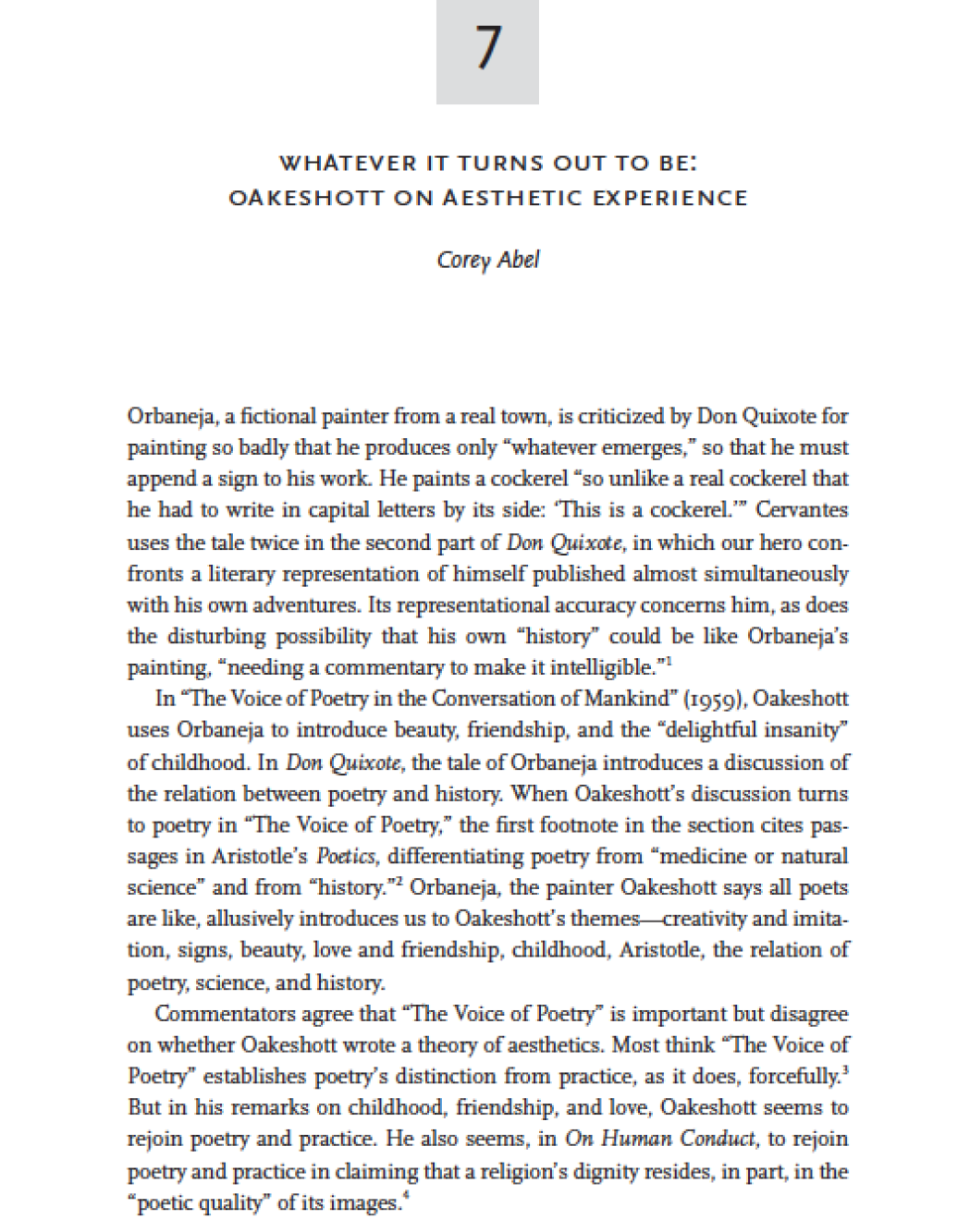
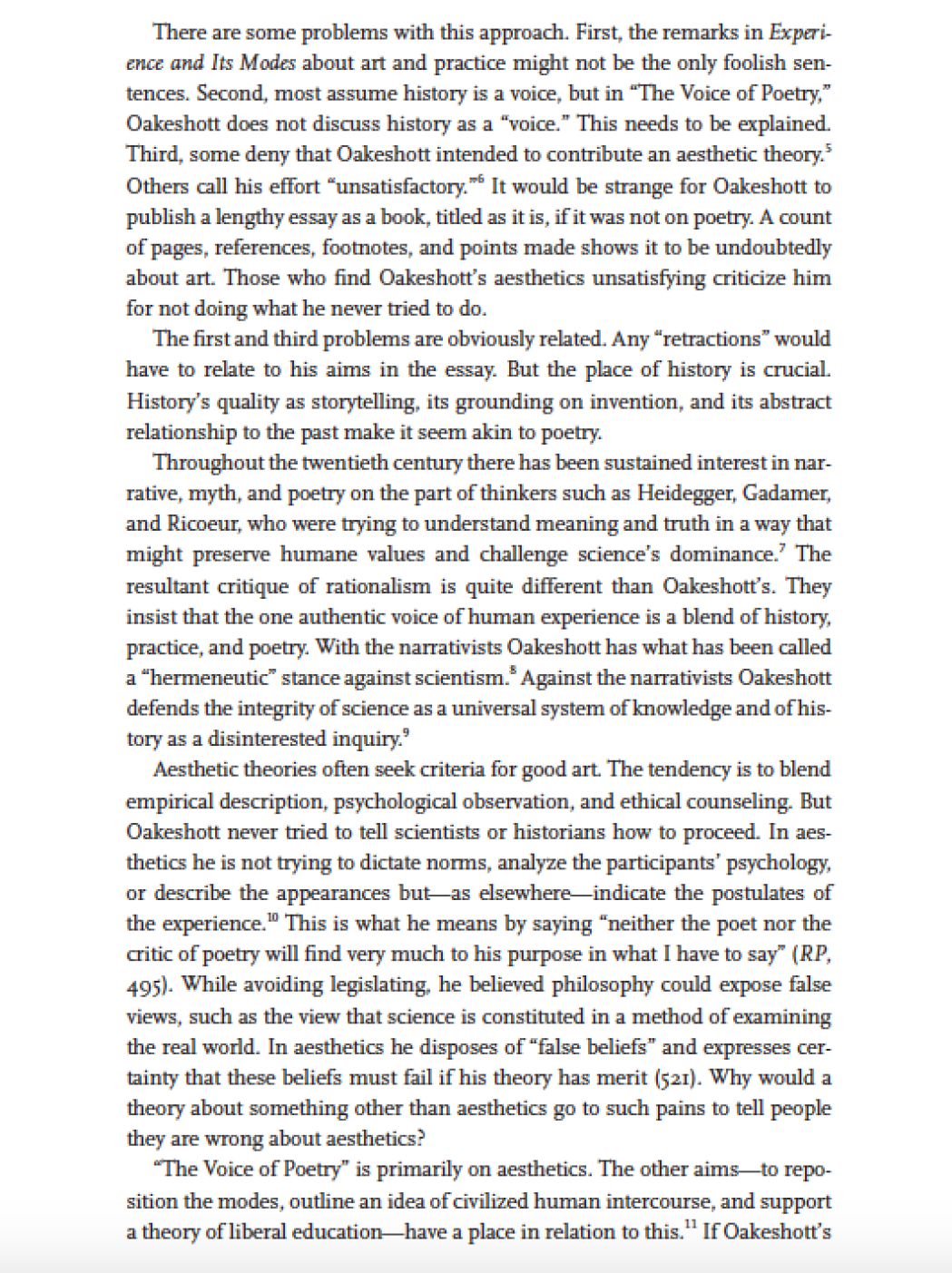
Whatever It Turns Out To Be: Oakeshott on Aesthetic Experience

Focusing his analysis on the lengthy “Voice of Poetry” essay, Abel provides a robust defense of Oakeshott’s nonrepresentational and nonpractical conception of art. Critics who suggest that Oakeshott goes too far in severing art from truth and morality fail to grasp that Oakeshott’s fundamental philosophical concern is to identify the differentia of aesthetic experience vis-à-vis other forms of experience. One of the most important dif- ferentiating features of aesthetic experience, according to Oakeshott as Abel interprets him, is its timelessness, its denial of historicity; here Oakeshott parts ways with the historicism of thinkers such as Gadamer and Ricoeur. Another important differentiating feature of aesthetic experience is its playful character versus the unavoidably worklike character of practical experience.

Screen Shot 2019-04-08 at 11.20.45 AMScreen Shot 2019-04-08 at 11.20.12 AMScreen Shot 2019-04-08 at 11.20.28 AM

front_cover

The digital world, cognition and behaviour

Herbert Simon Society call for papers. For a comprehensive overview of Simon’s work by a Who’s Who of writers, check out this collection of essays.

Screen Shot 2019-04-08 at 8.03.54 AM

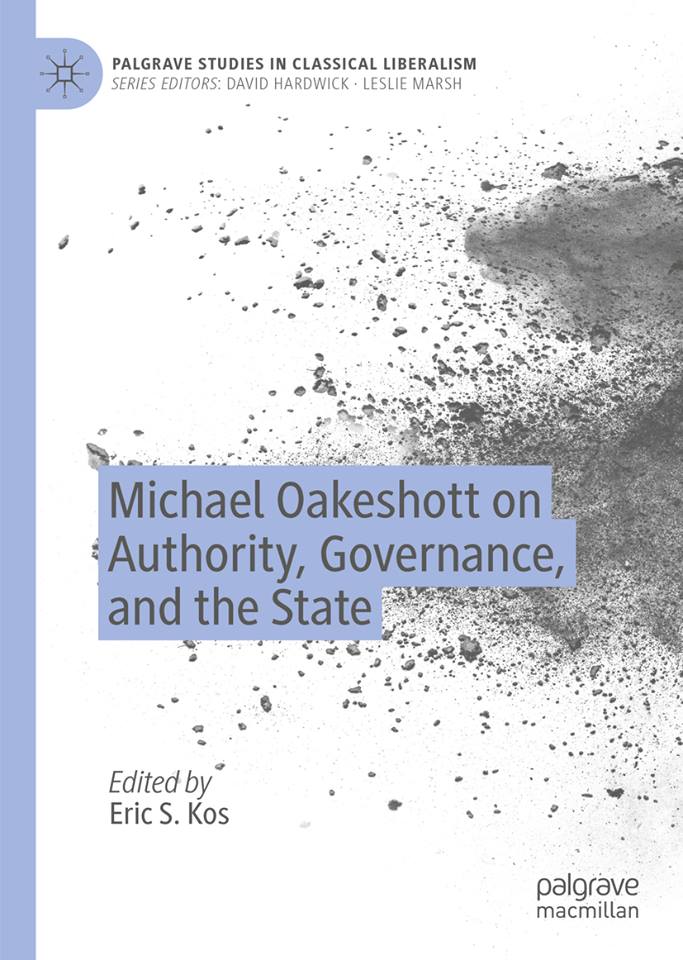
Michael Oakeshott on Authority, Governance, and the State

Due to be published this August.

  • Introduction/Eric S. Kos
  • The State is the Attempt to Strip Metaphor out of Politics/James Alexander
  • The Problem of Liberal Political Legitimacy/David D. Corey
  • Oakeshott on the State: Between History and Philosophy/Gary Browning 
  • Taking Natural Law Seriously within the Liberal Tradition/Timothy Fuller
  • The Authority of the State and the Traditional Realm of Freedom/Carlos Marques de Almeida
  • Anarchic and Antinomian? Oakeshott and the Cambridge School on History, Philosophy, and Authority/Jordan Rudinsky
  • Michael Oakeshott’s Political Realism /Gulsen Seven
  • Government as a British Conservative Understands It: Comments on Oakeshott’s Views on Government/Ferenc Hörcher
  • Global Governance and the “Clandestine Revolution”: From the Legal State to the Judicial State/Agostino Carrino
  • Three Different Critiques of Rationalism: Friedrich Hayek, James Scott and Michael Oakeshott/Shekhar Singh

56242775_10157250458733385_1927904664762712064_n

The Problem of Meaning in AI and Robotics: Still with Us after All These Years

The always interesting Tom Froese in this just published co-authored open access essay.

shutterstock_557818402-1

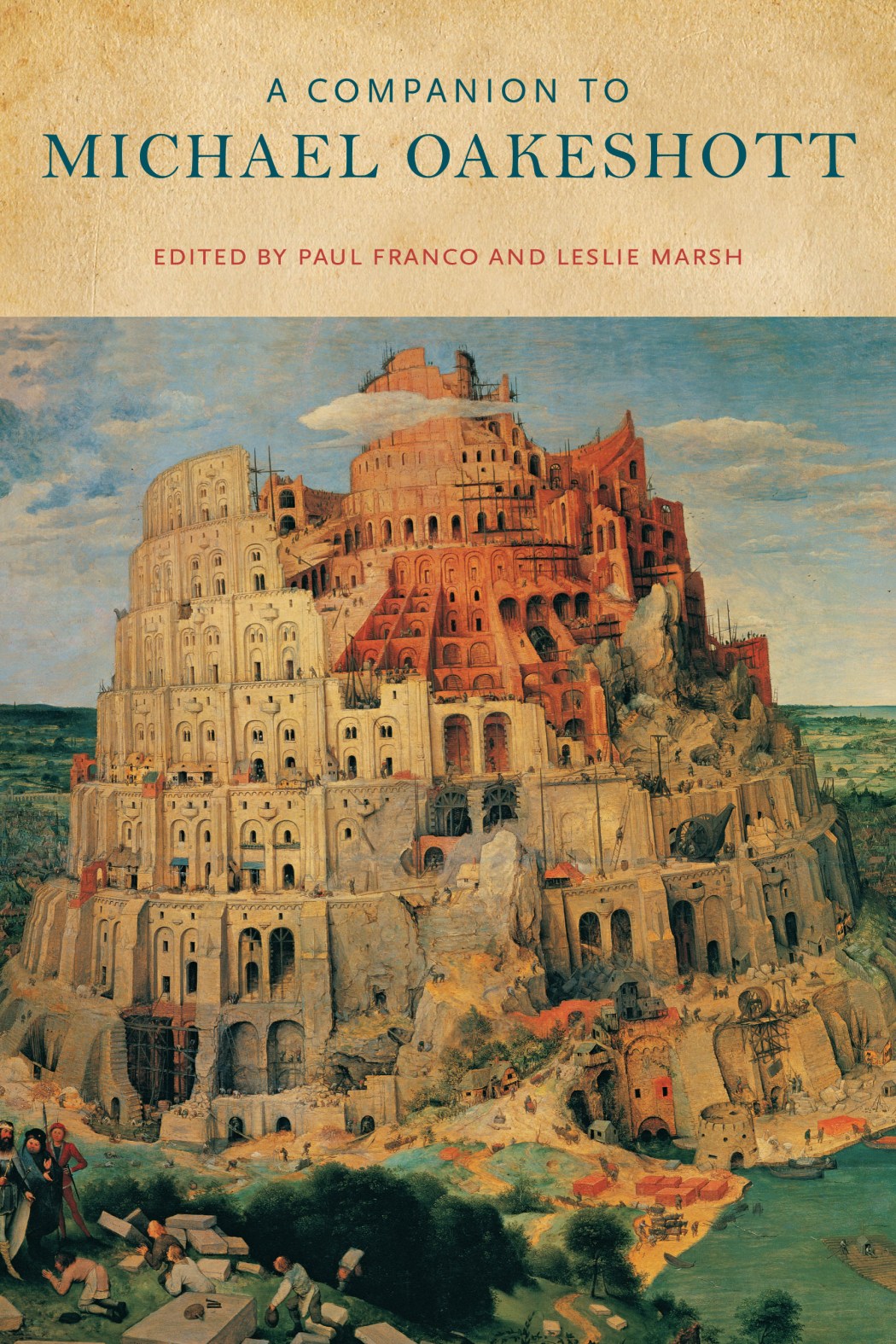
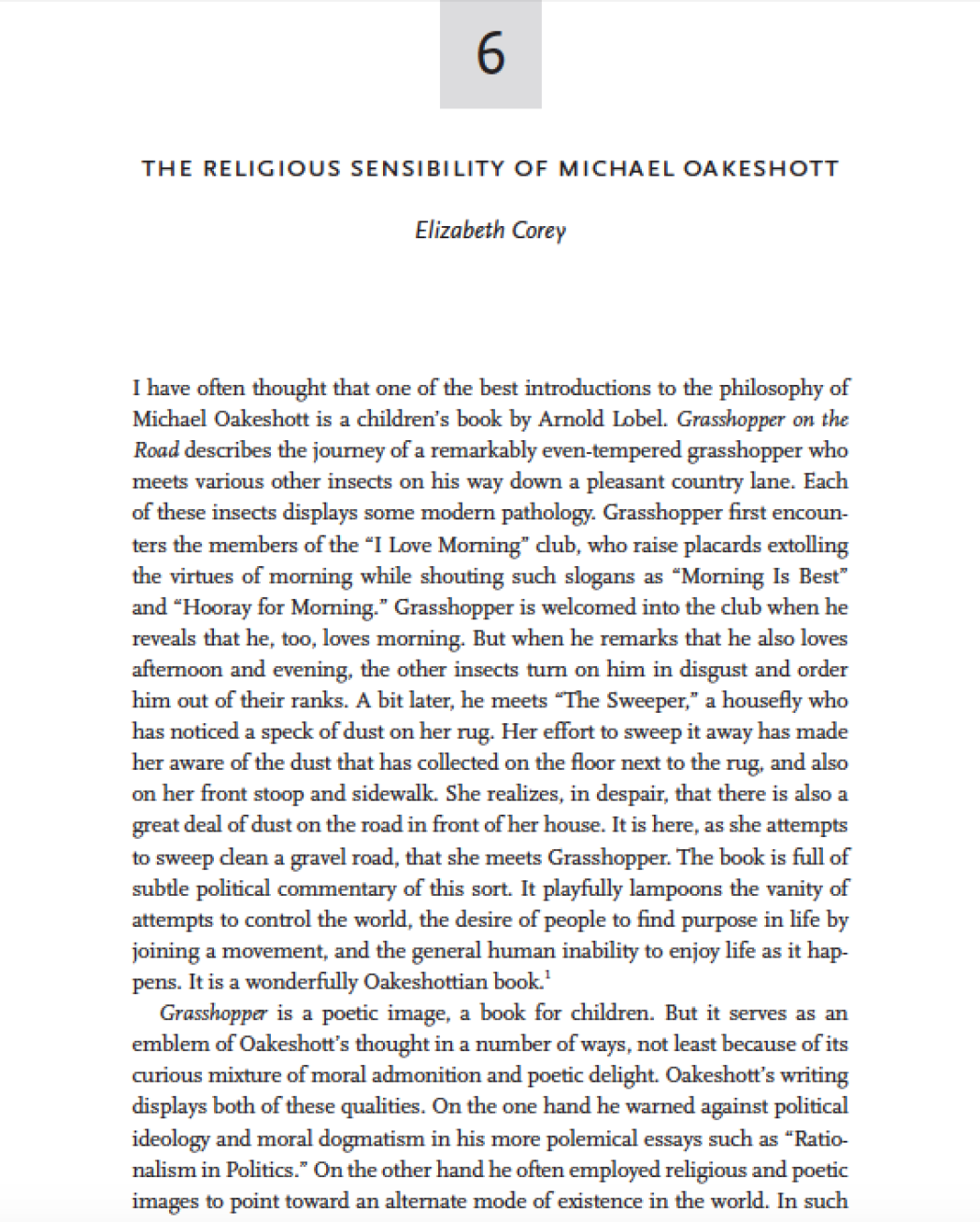
The Religious Sensibility of Michael Oakeshott

The theme of the unremitting nature of practical life also appears in Elizabeth Corey’s essay “The Religious Sensibility of Michael Oakeshott.” Drawing on Oakeshott’s two essays on the Tower of Babel to flesh out his critique of the perfectionism and obsession with achievement that vitiate modern life, Corey shows how Oakeshott conceived of religion as a corrective to these spiritual maladies. She does not conceal that Oakeshott’s conception of religion, which stresses living in the present, unburdened by anxiety for worldly success or achievement, is not exactly orthodox; nevertheless, she insists that Oakeshott’s work is full of authentic religious insight. Corey is particularly attracted to Oakeshott’s assimilation of the religious disposition to the poetic disposition. Both dispositions eschew the frenetic quest for worldly achievement and opt instead for delight in the present, and both offer a temporary respite from the tyranny of practice.

Screen Shot 2019-03-29 at 3.52.06 PMScreen Shot 2019-03-29 at 3.52.25 PM

front_cover

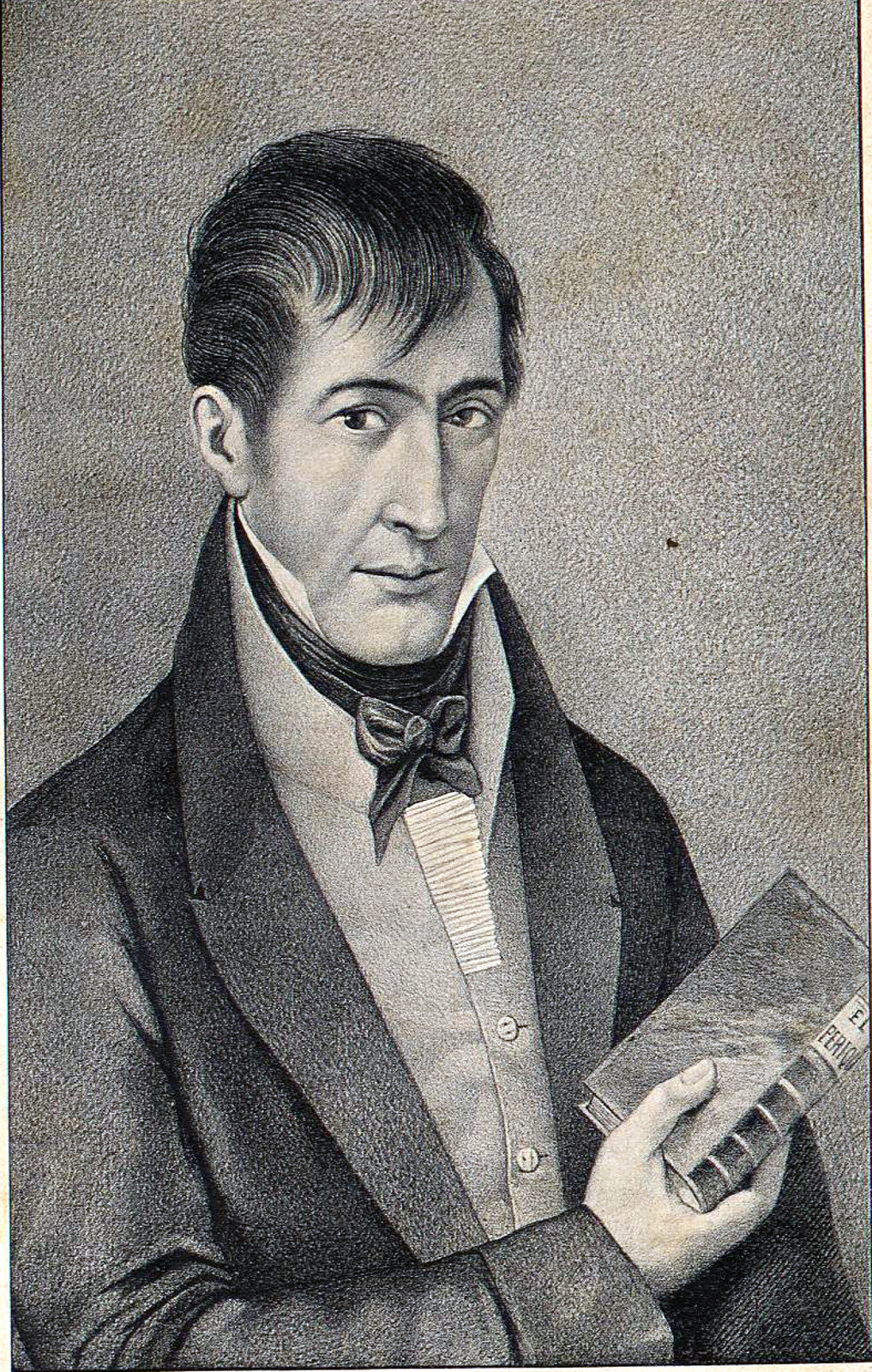
José Joaquín Fernández de Lizardi

For Spanish speakers: Conferencia Bicentenario de El Periquillo Sarniento. I’ll pick up again on posting English extracts from the Frye translation of The Mangy Parrot shortly. Here is Danny Anderson’s entry for Encyclopedia of Latin American History and Culture, pp. 213-214.

José Joaquín Fernández de Lizardi (b. 15 November 1776; d. 21 June 1827),

Mexican writer. Born in Mexico City, Fernández de Lizardi began his education in Tepozotlán, where his father was a physician. He later went to Mexico City for further education and in 1793 entered the Colegio de San Ildefonso. After abandoning his studies in 1798 at his father’s death, Fernández de Lizardi held various bureaucratic positions and initially opposed the independence movement, a stance that he soon reversed in support of Iturbide. As a journalist he is most remembered for the newspaper El Pensador Mexicano (The Mexican Thinker [1812–1814]), which he founded when the Spanish Constitution of 1812 established freedom of the press. His writings reflect the Mexican social milieu at the time of the country’s struggle for independence. His special concern was the place of Spaniards born in the New World. Because of newspaper censorship, he resorted to fiction and wrote El periquillo sarniento (The Itching Parrot [published serially 1816; complete version published posthumously 1830–1831]). This picaresque tale is recognized as the “first” Spanish-American novel. It achieves compositional complexity and development, and it treats contemporary New World themes. Fernández de Lizardi wrote three other novels—Noches tristes y día alegre (Sad Nights and Happy Day [1818, 1819]), La Quijotita y su prima (Quijotita and Her Cousin [1818]), and Don Catrín de la Fachenda (written about 1819, published posthumously in 1832)—before he returned to journalism and pamphleteering in 1820. By 1822 Fernández de Lizardi became disenchanted with Iturbide and began to advocate liberal causes, and his modest social position became increasingly precarious. He died of tuberculosis in Mexico City.

58819fc735345302936667