A fully detailed programme is now available.

The always interesting Tom Froese in this just published co-authored open access essay.

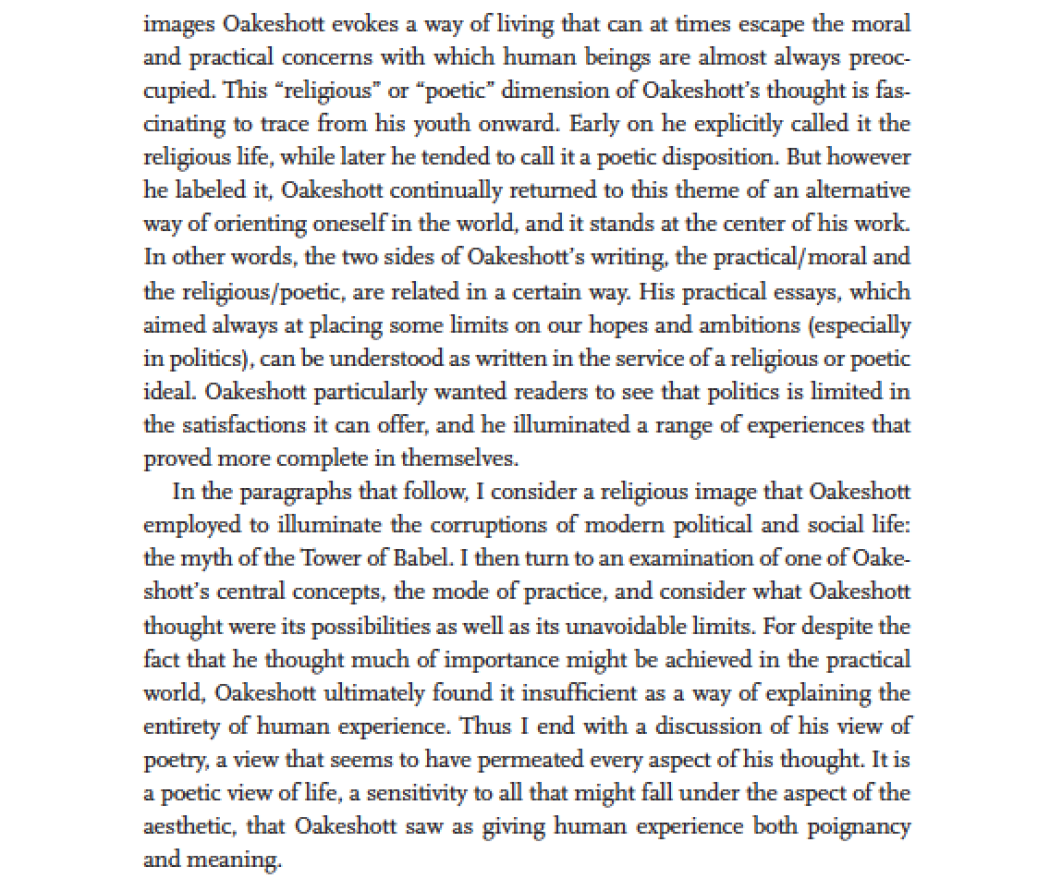
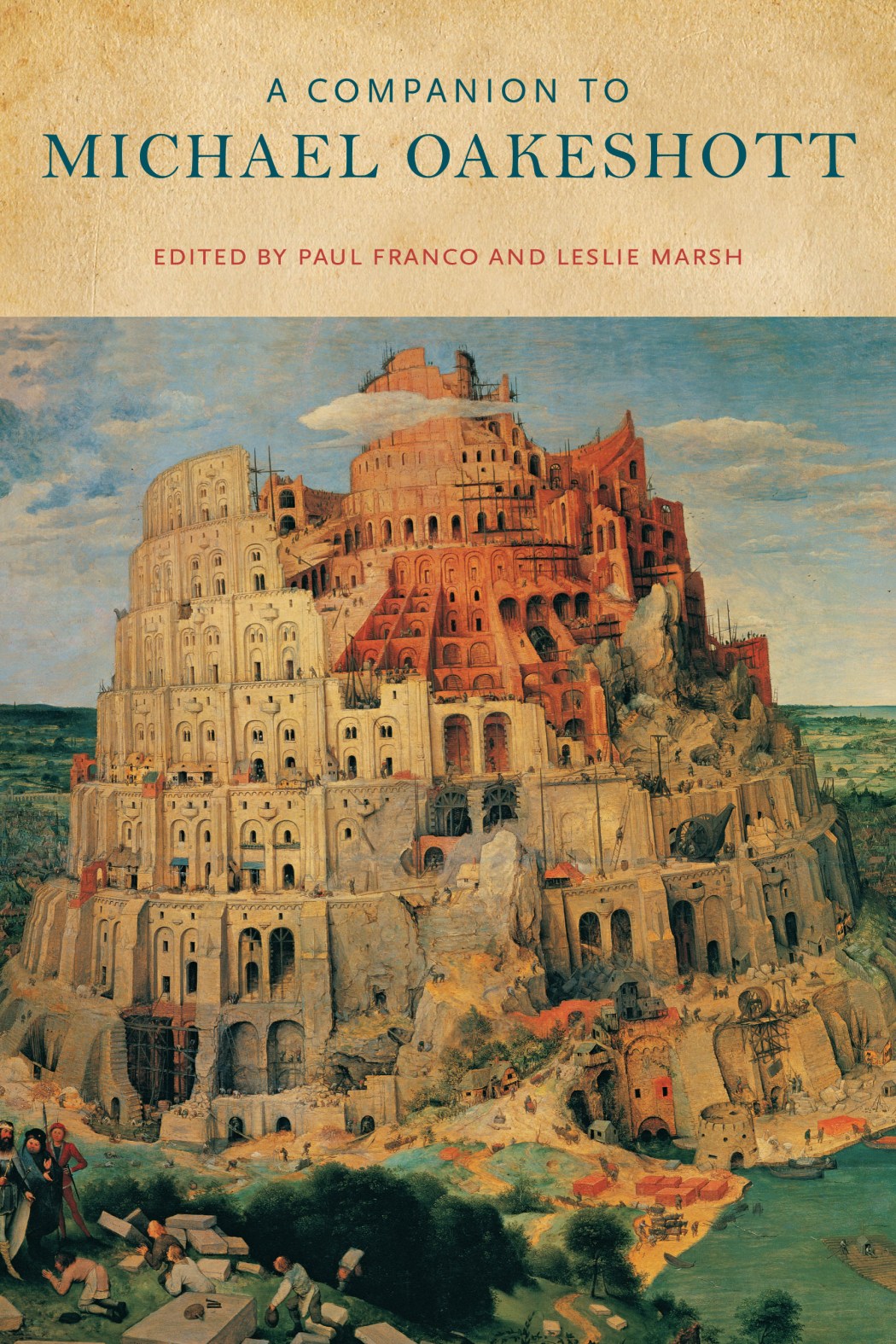
The theme of the unremitting nature of practical life also appears in Elizabeth Corey’s essay “The Religious Sensibility of Michael Oakeshott.” Drawing on Oakeshott’s two essays on the Tower of Babel to flesh out his critique of the perfectionism and obsession with achievement that vitiate modern life, Corey shows how Oakeshott conceived of religion as a corrective to these spiritual maladies. She does not conceal that Oakeshott’s conception of religion, which stresses living in the present, unburdened by anxiety for worldly success or achievement, is not exactly orthodox; nevertheless, she insists that Oakeshott’s work is full of authentic religious insight. Corey is particularly attracted to Oakeshott’s assimilation of the religious disposition to the poetic disposition. Both dispositions eschew the frenetic quest for worldly achievement and opt instead for delight in the present, and both offer a temporary respite from the tyranny of practice.
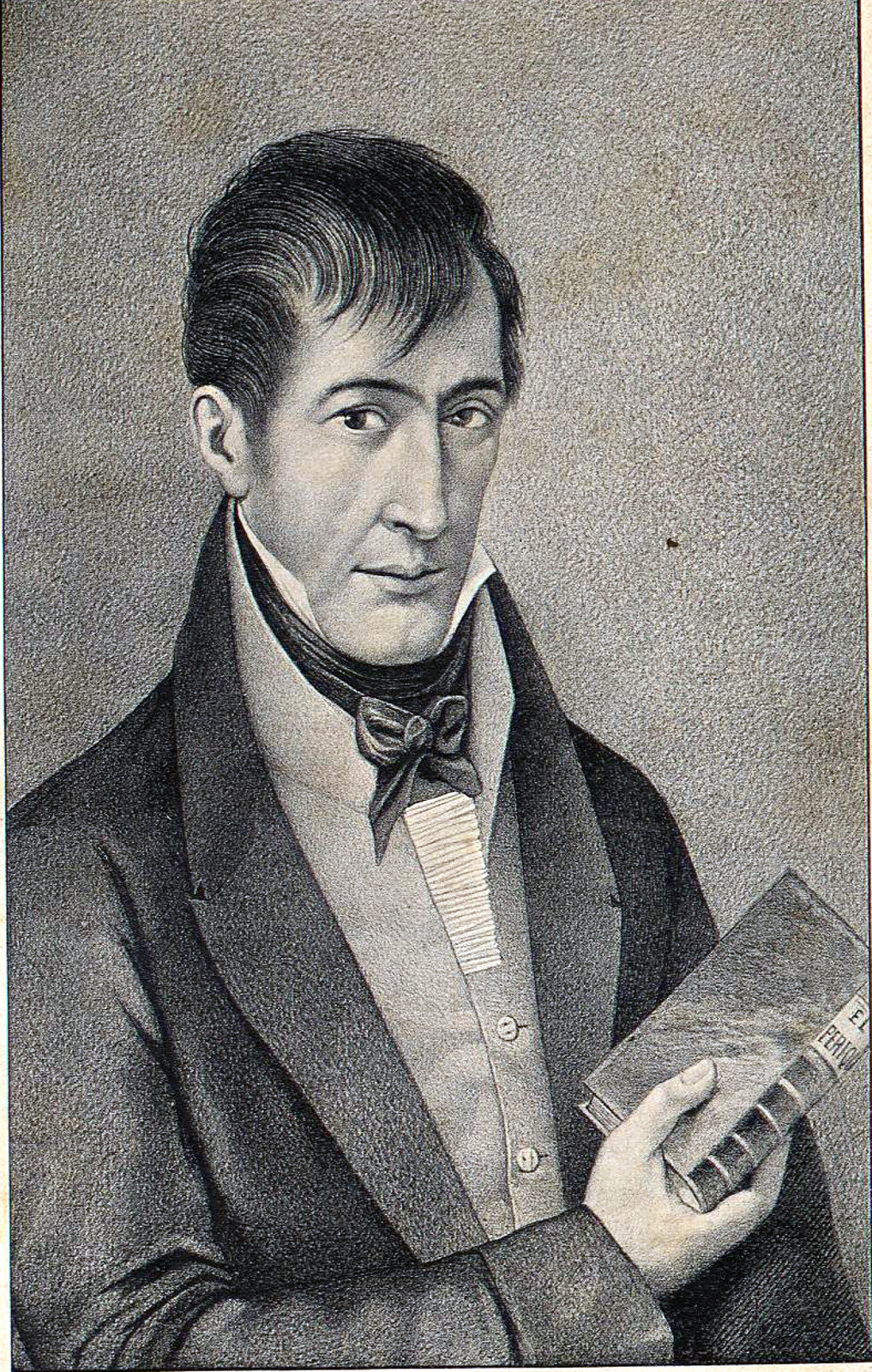
For Spanish speakers: Conferencia Bicentenario de El Periquillo Sarniento. I’ll pick up again on posting English extracts from the Frye translation of The Mangy Parrot shortly. Here is Danny Anderson’s entry for Encyclopedia of Latin American History and Culture, pp. 213-214.
José Joaquín Fernández de Lizardi (b. 15 November 1776; d. 21 June 1827),
Mexican writer. Born in Mexico City, Fernández de Lizardi began his education in Tepozotlán, where his father was a physician. He later went to Mexico City for further education and in 1793 entered the Colegio de San Ildefonso. After abandoning his studies in 1798 at his father’s death, Fernández de Lizardi held various bureaucratic positions and initially opposed the independence movement, a stance that he soon reversed in support of Iturbide. As a journalist he is most remembered for the newspaper El Pensador Mexicano (The Mexican Thinker [1812–1814]), which he founded when the Spanish Constitution of 1812 established freedom of the press. His writings reflect the Mexican social milieu at the time of the country’s struggle for independence. His special concern was the place of Spaniards born in the New World. Because of newspaper censorship, he resorted to fiction and wrote El periquillo sarniento (The Itching Parrot [published serially 1816; complete version published posthumously 1830–1831]). This picaresque tale is recognized as the “first” Spanish-American novel. It achieves compositional complexity and development, and it treats contemporary New World themes. Fernández de Lizardi wrote three other novels—Noches tristes y día alegre (Sad Nights and Happy Day [1818, 1819]), La Quijotita y su prima (Quijotita and Her Cousin [1818]), and Don Catrín de la Fachenda (written about 1819, published posthumously in 1832)—before he returned to journalism and pamphleteering in 1820. By 1822 Fernández de Lizardi became disenchanted with Iturbide and began to advocate liberal causes, and his modest social position became increasingly precarious. He died of tuberculosis in Mexico City.
In our paper Stigmergic Epistemology, Stigmergic Cognition we noted the phenomenon whereby swarm behavior runs the risk of a dysfunctional communal narrowing of attention that can be self-fulfilling. This phenomenon is validated by Jonathan Touboul in his revised paper freely available here. As Touboul rightly says, this phenomenon is found across all domains of collective intentionality but it is especially noticeable within the domain of the socially “fashionable”, hipsters hardly being unique in this regard. The so-called “fashionable” set(s) should not be conflated with a classic aesthetic.


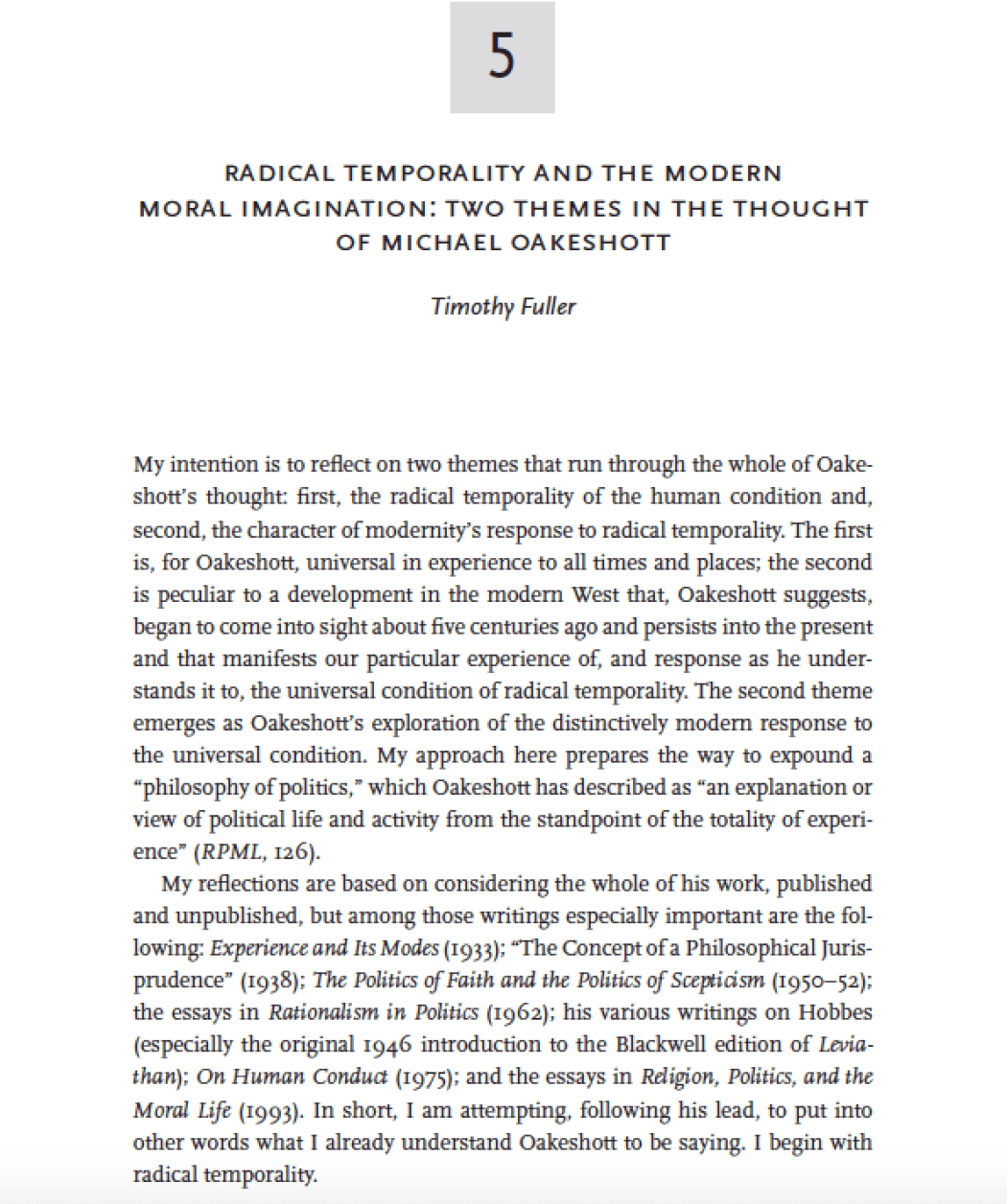
In “Radical Temporality and the Modern Moral Imagination,” Timothy Fuller, the dean of American Oakeshottian studies, powerfully evokes Oakeshott’s conception of the endlessness of practical life, which ceaselessly attempts to reconcile “what is” with “what ought to be.” This constitutes the “radical temporality” referred to in the title of his essay, and Fuller goes on to elaborate the various ways in which the modern moral imagination has responded to it. The modern moral imagination, as it expresses itself in Hobbes, Locke, Hume, Smith, and Kant, is marked by a faith in human self-perfection, a faith in humanity’s ability to escape the radical temporality of the human condition. Fuller argues that Oakeshott offers two alternatives to this modern politics of faith: first, a politics of skepticism that does not envisage the evanescence of human imperfection; and second, the voice of poetry, which, without denying the radical temporality of the human condi- tion, offers a temporary release from it in contemplative delight.
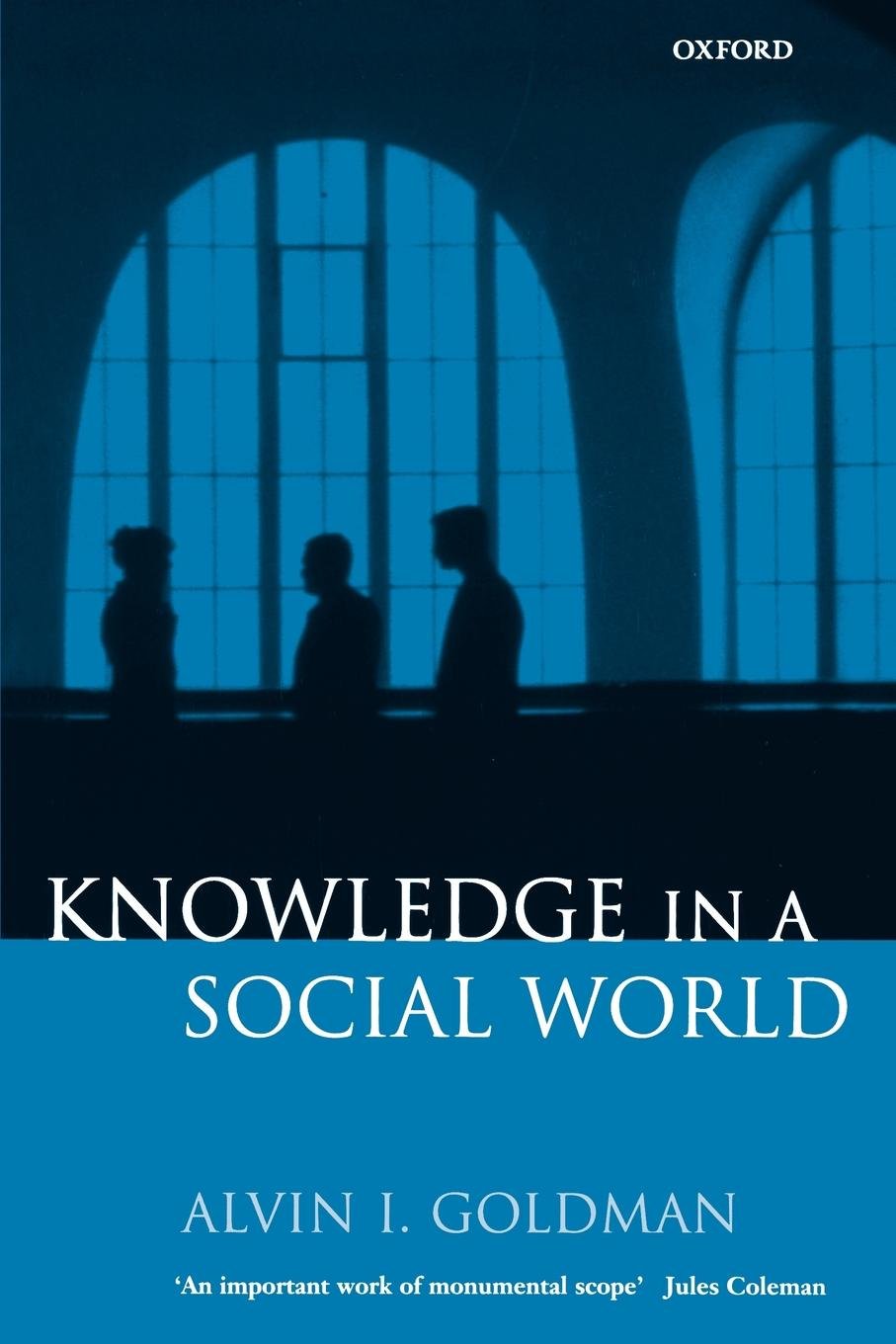
It was twenty years ago today . . . since the publication of Alvin Goldman’s classic of sorts, a work that inspired myself and my chum, Chris Onof — and later with Alvin’s help — to set up EPISTEME. The Sokal hoax was another motivating factor.
It’s been fifty years since the loss of this man. Gone but certainly not forgotten. If anything, his star has never been as high.
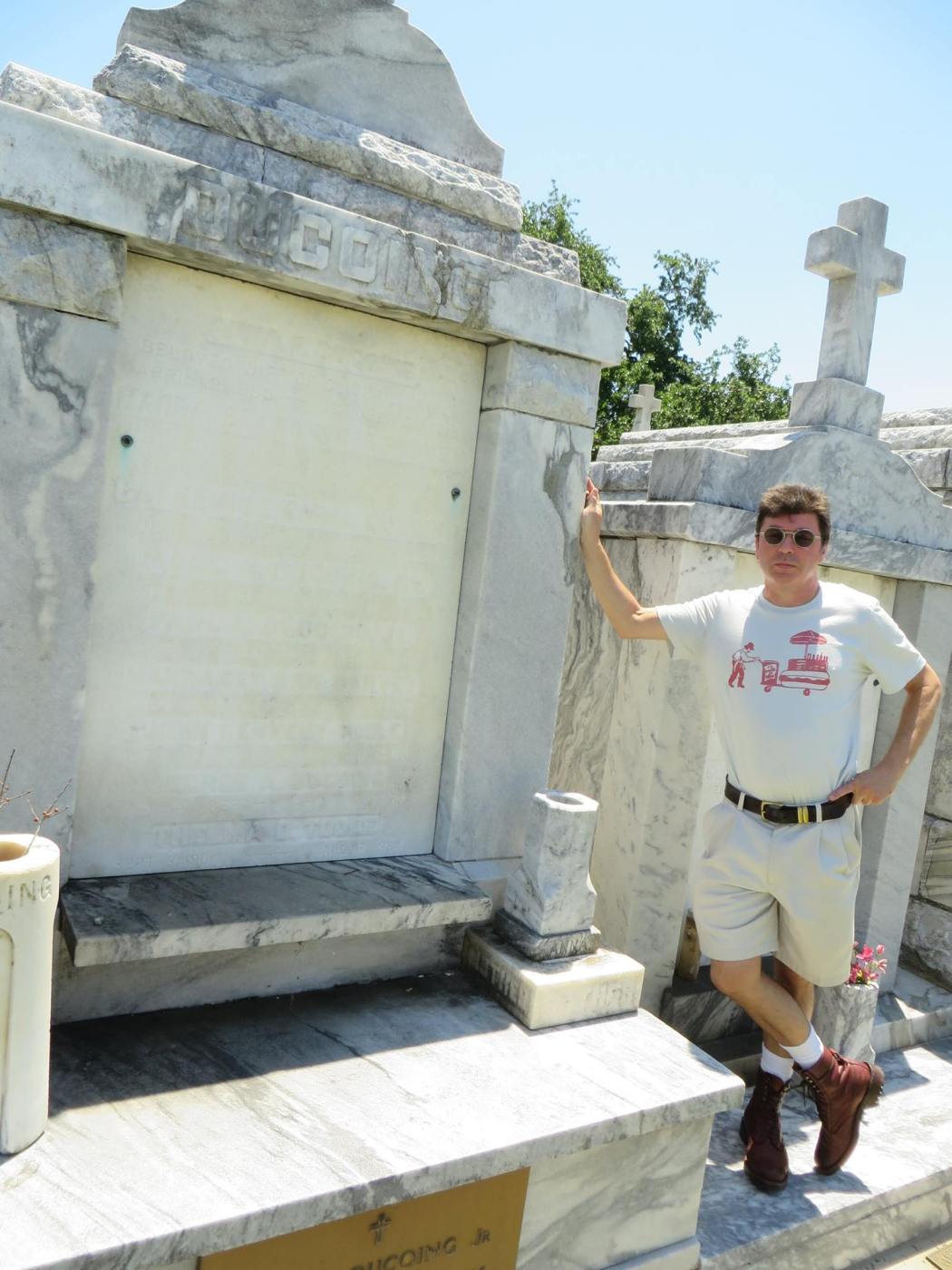
Paying my respects. Ducoing Tomb, Greenwood Cemetery