Yet some more new Oakeshottiana.
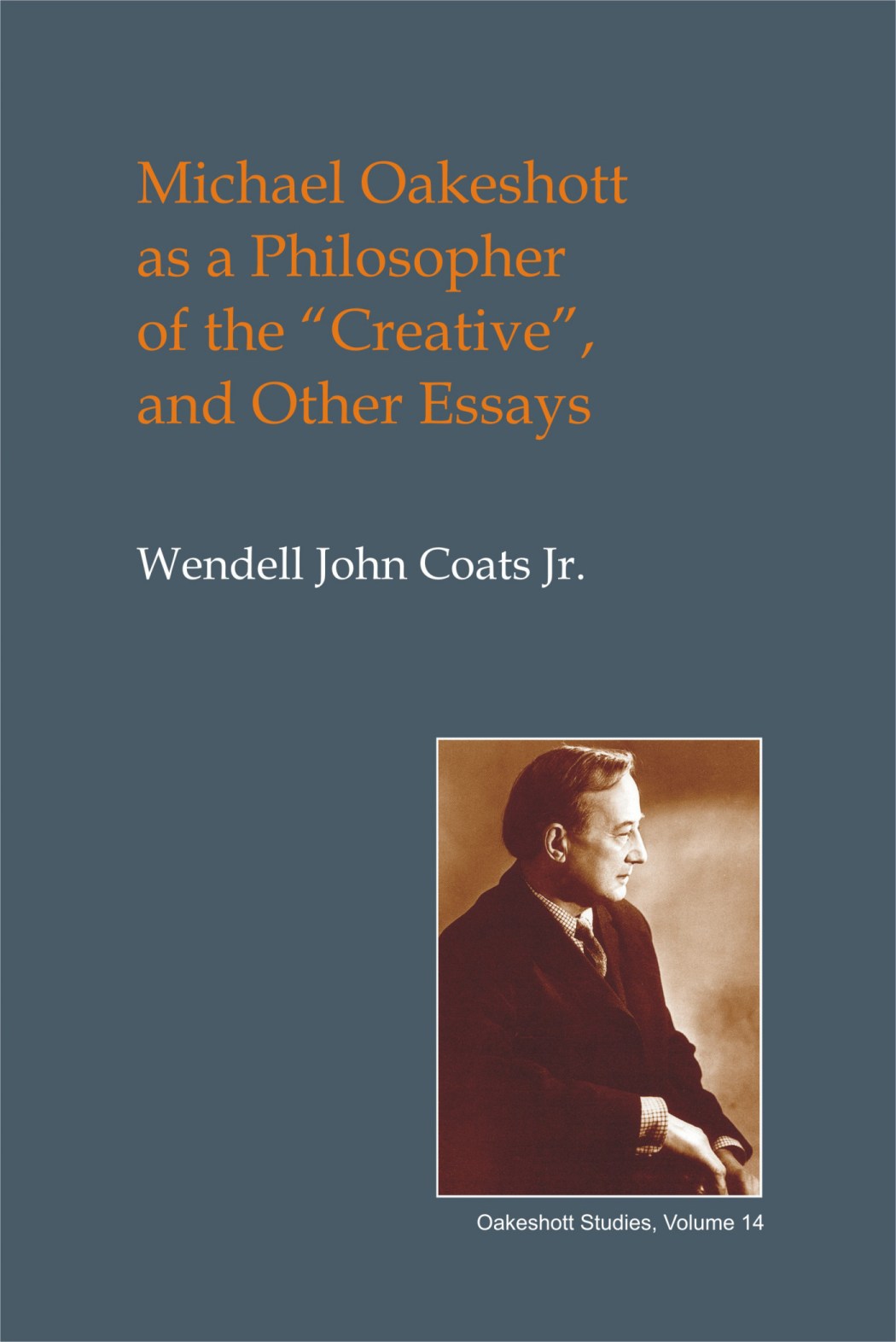
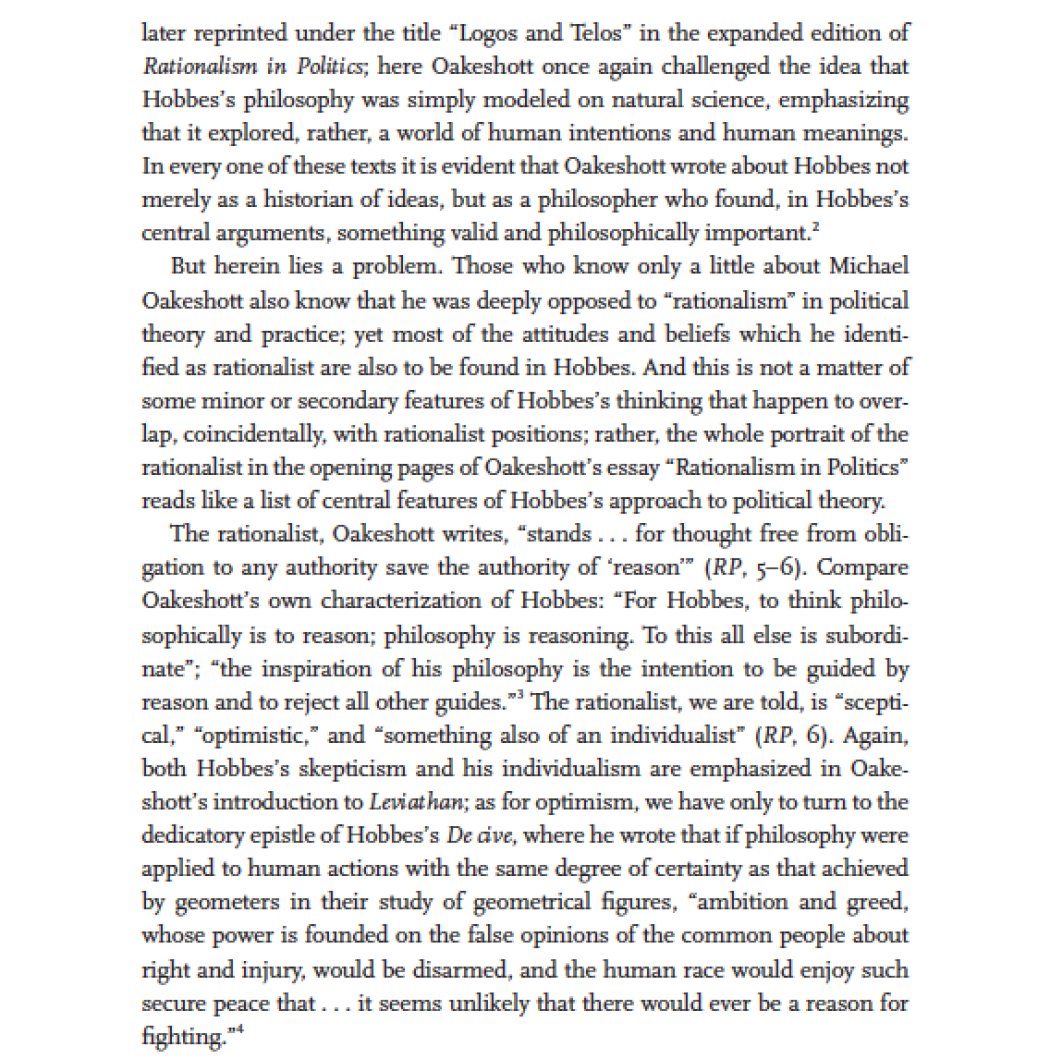
Oakeshott’s interpretation of Hobbes is the central subject of Noel Malcolm’s essay “Oakeshott and Hobbes.” Malcolm notices that there seems to be a discrepancy between Oakeshott’s hostility to rationalism, on the one hand, and his admiration for Hobbes, an archetypal rationalist if ever there was one, on the other. In the first instance, Oakeshott seems to overcome this self-contradiction only by misunderstanding Hobbes and overlooking the deeply rationalist strains in his thought—for example, his antipathy to prejudice and tradition, his faith in scientific method, and his preoccupation with certainty. But Malcolm does not leave it at that. He argues that Oakeshott ultimately admired Hobbes because he saw him as an exponent of a non-instrumental conception of the state. This noninstrumentalist or nonteleological interpretation of Hobbes raises questions of its own, and Malcolm takes us through the rich debate over it in the 1930s—between Collingwood, Schmitt, Strauss, and others. In the end, though, he finds the interpretation problematic, given that Hobbes seems to see everything as instrumental to civil peace or individual self-preservation. Once again, Hobbes appears to be more of a rationalist than Oakeshott’s interpretation suggests.
Coming June 17th. Martyn of course tackled this topic for us.
Excerpt from Star dropping tomorrow.
All eyes are on Rikio. And he likes it, mostly. His fans cheer, screaming and yelling to attract his attention—they would kill for a moment alone with him. Finally the director sets up the shot, the camera begins to roll, someone yells “action”; Rikio, for a moment, transforms into another being, a hardened young yakuza, but as soon as the shot is finished, he slumps back into his own anxieties and obsessions.
— Translated from the Japanese by Sam Bett

Coming soon.

Released today. Here is a good survey article from a few years back.

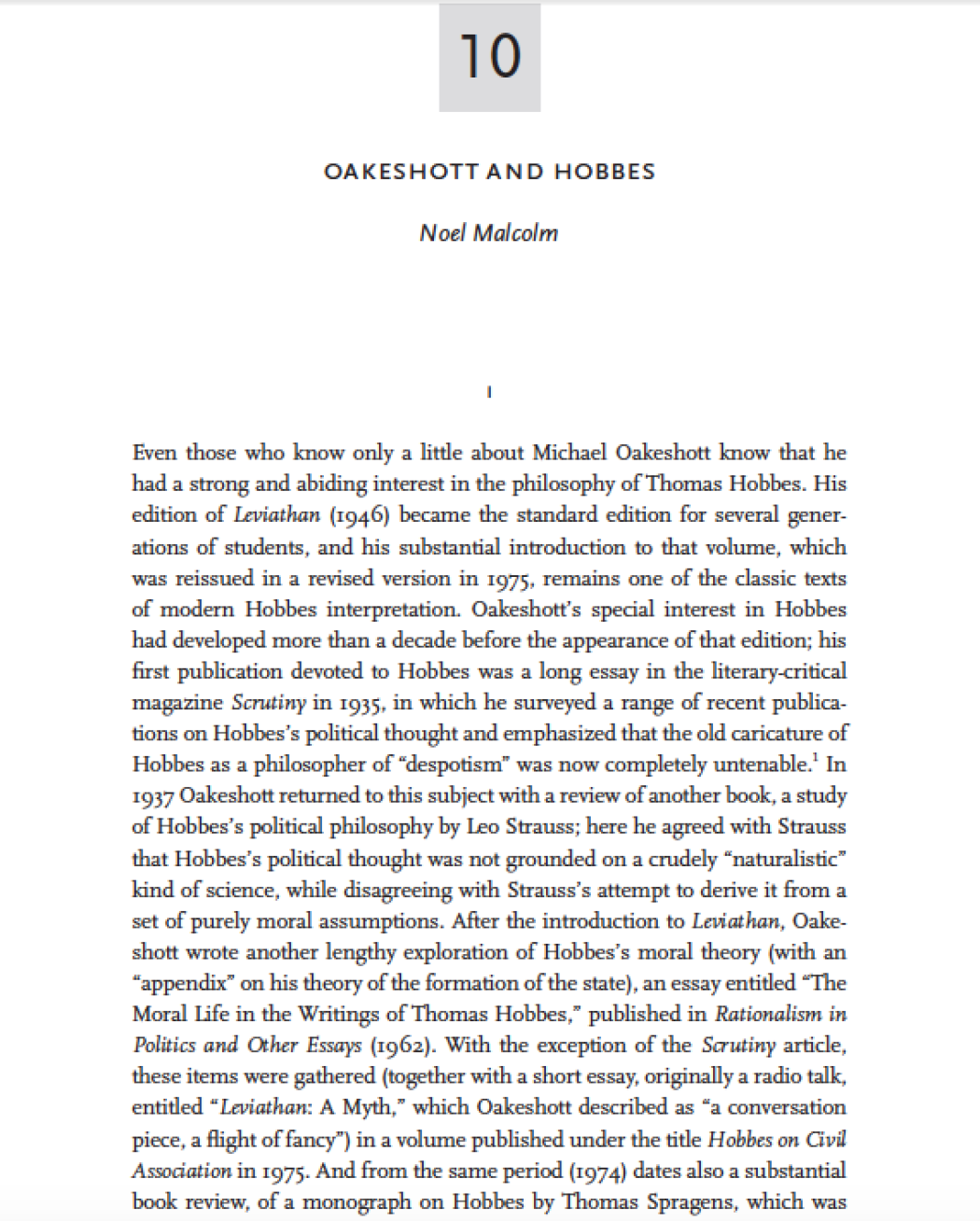
What did Oakeshott mean by the “history of political thought”? This is the question Martyn Thompson addresses in his essay “Michael Oakeshott on the History of Political Thought.” He highlights two features of Oakeshott’s conception: first, that the historical past is a construction of the historian, and therefore the meaning of any given historical text will depend on the specific question a historian is seeking to answer; and second, that political thinking takes place on different levels, some more practical, some more theoretical, and the historian should never confuse these levels. Taken together, these two features point to a multidimensional conception of the history of political thought that contrasts sharply with Quentin Skinner’s attempt to reduce it to a history of ideologies. Thompson draws out this contrast by considering Oakeshott’s and Skinner’s respective interpretations of Hobbes’s Leviathan.

Check out Craig Bourne’s popular philosophy book — a couple of brief extracts below. Bike-wise, Moto Guzzi was my first love and with the release of the V7 III Carbon Dark (below), my pulse has quickened. On my bucket list is a visit to the factory and museum at Mandello del Lario on Lake Como.

There is no such thing as the philosophy of motorcycles, any more than there is a philosophy of pizza or of haemorrhoids (think about that when you next tuck into your black olives). Motorcycling in itself is just not fundamental enough to the nature of reality or human existence for it to be a philosophical area in its own right in the way that time, space and causation, possibility and necessity, logic and mathematics, thought and language, and right and wrong are. Nevertheless, motorcycles are well-placed (unlike haemorrhoids) to illustrate profound philosophical ideas and the practice of motorcycling raises a host of important philosophical issues, such as the meaning of life and the significance of danger and death, individual freedom and the legitimacy of state interference, our obligations to humans, animals and the environment, and the boundaries of our concept of art. In particular, it raises questions such as: Should I be punished for not wearing a helmet if I don’t want to wear one? Is it right to wear leather?
*******
Why do motorcyclists ride? It has been said that only bikers know why dogs stick their heads out of car windows. Anyone who has ever ridden a motorcycle will have a good idea but those on the outside just don’t seem to get it. There are a number of theories on why motorcyclists ride, apart from the obvious sensual pleasures of acceleration and so on, and the subtle pleasure of manipulating an instrument skilfully. However, as some outside motorcycling have suspected, there may be darker impulses at play under the surface.
Regarding suicide, in his very thoughtful review of After Life Philip Martin writes:
I can’t be the only person who wonders if Gervais has read Walker Percy.