Born on this day . . . see bio

Born on this day . . . see bio
Why were we able to feed and water and medicate this person but not respond to the deeply human needs that he might have . . . — Bill Thomas
It’s been a long time coming but I’m now firmly of the view that if I had to lose sight or sound I’d opt for losing the former.

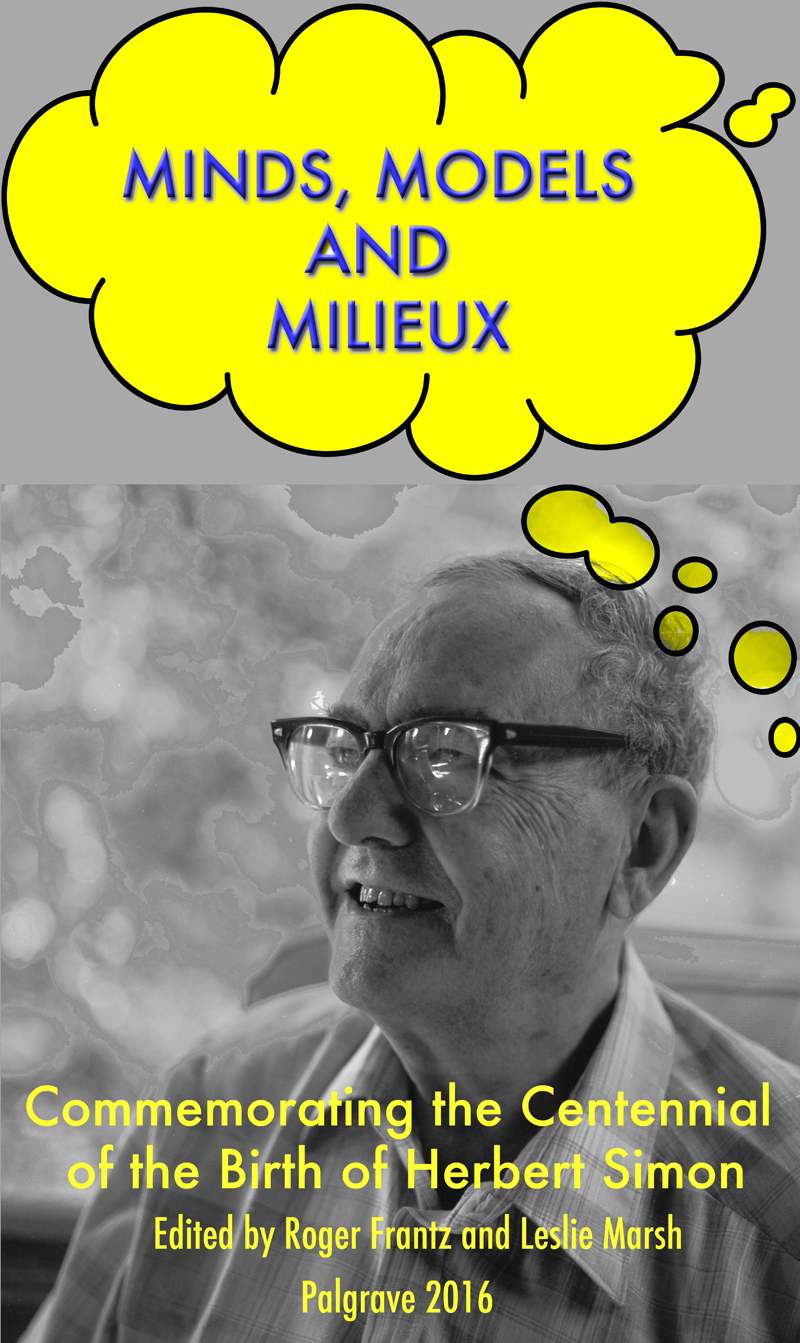
Riccardo Viale, the general secretary of The Herbert Simon Society has brought my attention to this workshop featuring the one and only Gerd Gigerenzer. Gerd, by the way, will also be on the SABE sub-panel of the AEA “Minds, Models and Milieux: Commemorating the Centennial of the Birth of Herbert Simon” in a month’s time in San Francisco. In addition to Gerd several other contributors to the soon to be published book will be in attendance.
THE HARVARD REVIEW OF PHILOSOPHY vol.XII no.1

I particularly learned from his criticism of dividing philosophy into what he called ‘isms’ and schools of philosophy. He believed there were many philosophical questions and ways of arguing about them, but that attaching labels like ‘physicalism’ or ‘idealism’ to any particular way of answering philosophical questions was extremely mechanical and also misleading.
Many philosophers pursue a line of argument in a very linear fashion, in which one proof caps another proof, or a refutation refutes some other supposed proof, instead of thinking laterally about what it all might mean.
Stuart Hampshire used to say that historically, there have been two aims or motives for philosophy. One was curiosity and the other was salvation (laughs). Plato, as he managed to combine almost every thing else, combined the two (laughs again). I think that Wittgenstein was very much on the side of salvation. So was Kierkegaard, though he was so clever that curiosity was always catching him out.
That is that the effect of modern entertainment, modern communication, modern saturation with “information”, may make effective criticism, or effective reflection impossible. Just as the tabloid newspapers get obsessed with the day’s scandal, and the internet becomes dominated by the same kind of “news”, it is possible that this so-called self-searching and questioning becomes just another superficial phenomenon, and that there are simply a lot of unquestioned assumptions about how life is being led that are really quite unsatisfactory.

“I get uh uncomfortable when politics gets mixed with medicine, to say nothing of angels.”
. . .
Here’s the hottest political issue of the day: euthanasia. Say the euthanasists not unreasonably: let’s be honest, why should people suffer and cause suffering to other people? It is the quality of life that counts, not longevity, etcetera. Every man is entitled to live his life with freedom and to end it with dignity, etcetera etcetera. It came down to one curious squabble (like the biggest theology fight coming down to whether to add the que to the filio): the button vs. the switch. Should a man have the right merely to self-stimulation, pressing the button that delivers bliss precisely until the blissful thumb relaxes and lets go the button? Or does he not also have the right to throw a switch that stays on, inducing a permanent joy—no meals, no sleep, and a happy death in a week or so? The button vs. the switch.
And if he has such a right and is judged legally incompetent to throw the switch, cannot a relative throw it for him?
. . .
She lives for what she considers rare perfect moments. What I long to share with her are ordinary summer evenings, cicadas in the sycamores.

That Wendell Berry takes on the campus commissars (and their complicitous willingly martyred cannon-fodder individual manqué bidders) offers some inkling of hope for preserving liberality. But I fear we are just entering the beginnings of a Darkness at Noon moment — the prospect of a total eclipse is immanent. Check out Orwell’s article on Koestler’s Darkness at Noon reprinted in The New Statesman.
If the passion for truthfulness is merely controlled and stilled without being satisfied, it will kill the activities it is supposed to support. This may be one of the reasons why, at the present time, the study of the humanities runs a risk of sliding from professional seriousness, through professionalization, to a finally disenchanted careerism — Williams
If forgetting history is now the purpose of higher education, I may be taking some risk by reminding the flagship censors of the persecution of Boris Pasternak by Soviet officials when Dr. Zhivago was published in the West and awarded the Nobel Prize. I will go further into danger and remind them also that Thomas Merton wrote a brilliant appreciation of that novel and its author. Among much else of value Merton said this: “It is characteristic of the singular logic of Stalinist-Marxism that when it incorrectly diagnoses some phenomenon as ‘political,’ it corrects the error by forcing the thing to become political” — Berry
The whole problem with the world is that fools and fanatics are always so certain of themselves, and wiser people so full of doubts — Russell
Those who say that all historical accounts are ideological constructs (which is one version of the idea that there is really no historical truth) rely on some story which must itself claim historical truth — Williams
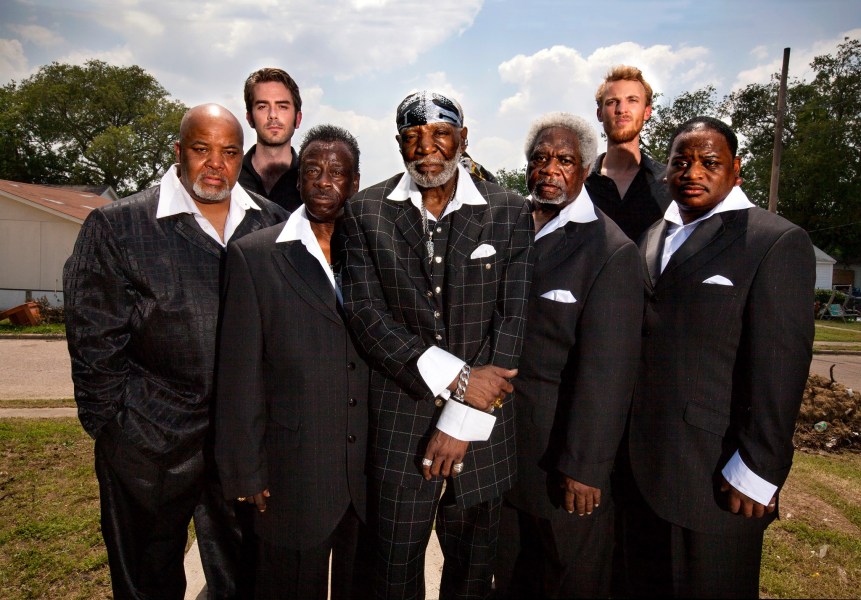
It’s been reported on The Relatives FB webpage that Tony Corbitt (far left) has died. We lost Gean West earlier this year.
Coming soon . . .
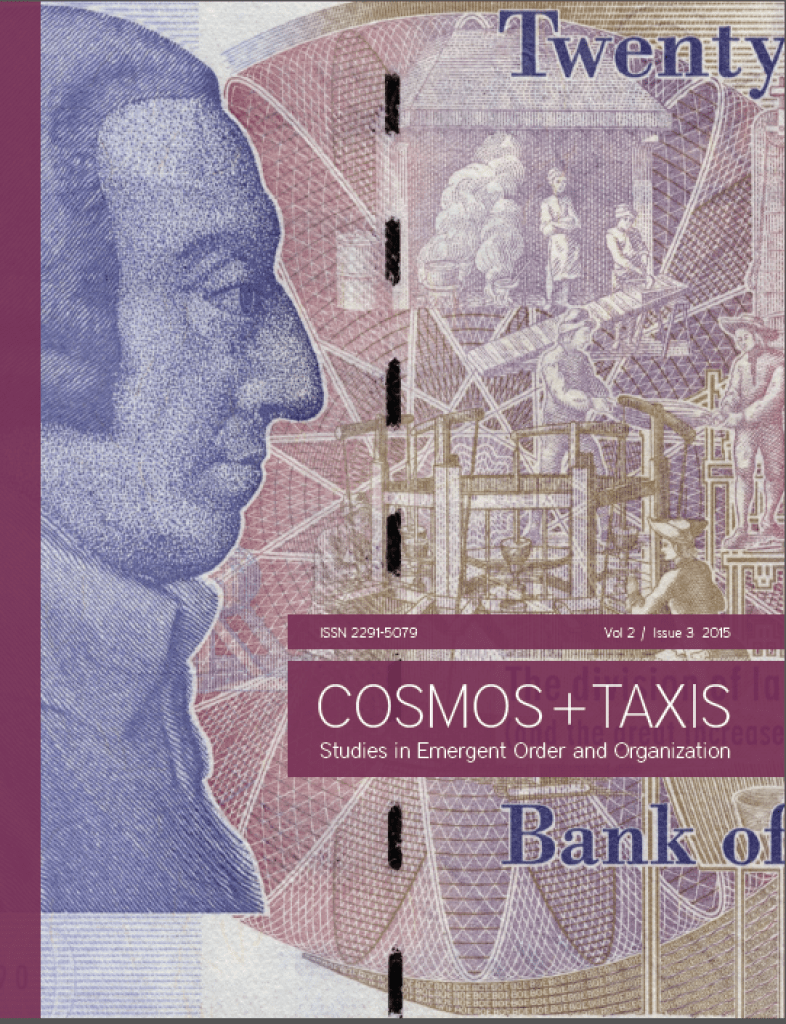
Pride and Profit explores the ways in which Austen’s novels reflect Smith’s ideas. More than this, they provide colorful illustrations of Smith’s ideas on self-command, prudence, benevolence, justice, and impartiality as well as vanity, pride, and greed.
A freely available symposium on Jack Russell Weinstein’s Adam Smith’s Pluralism: Rationality, Education And The Moral Sentiments available here.
George Clinton famously told Hazel to play “like your momma had just died,” and the resulting evocation of melancholy and sorrow doesn’t merely rival Jimi Hendrix’s work, but arguably bests a lot of it. Accompanied by another softer guitar figure providing gentle rhythm for the piece, the end result is simply fantastic, an emotional apocalypse of sound. — AllMusic
Ok, so all guitarists worth their salt have “technical tricks” and “customization” but this really is unusual.
Speaking of acid, who recalls The Teardrop Explodes? Though tinged with that awful wimpy early 80s English sound, it’s the brass and the Acid King (Julian Cope) that lifts it. “Bless my cotton socks I’m in the news” must rate as one of the most suitable slogans for the now fuckwits who are either on TV or who aspire to be on it.
“The Semiotics of Footwear” by Gustav Temple and Vic Darkwood in The Chap Almanac.

The Oxford: As eloquent as a letter of recommendation from the Marquis de Sade, the Oxford singles a man out as a fellow worth serious consideration. A foot clad in well-polished and immaculately-crafted leather acts as a passport to the realms of the sublime.
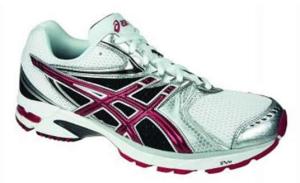
The Trainer: What vile barbarism is afoot here? The perfidious ailments known as “youth” and “sport” can so damage a fellow’s critical faculties that cladding one’s feet in tawdry plastic and rubber presents itself as a perfectly reasonable dress option. It is not.

The Brogue: If Dionysus were to be incarnated as an Englishman he would undoubtedly favour the brogue as a fitting accompaniment to his robust lifestyle. Ideally suited to outdoor activities such as dashing about in Arcadian glades in hot pursuit of nymphs and dryads.

The Brothel Creeper: Favoured by crazed ragamuffins addicted to Thunderbird wine, duck’s bottoms and rock ‘n roll, these crepe-sided absurdities are the calling-card of callow and virgin youth. A mature man attends his assignations at the bordello with certitude and pride.

The Loafer: Despite its promising name, the Loafer is chiefly the domain of hard-working middle-management who signify their leisure hours through the sickly cult of the tassel. A man skilled in the art of lassitude has no need of shoes that advertise the fact.
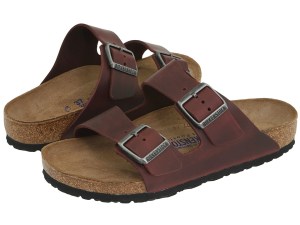
The Sandal: These flimsy artifacts may seem perfectly acceptable to antipodean back-packers fundamentalist Christians and hirsute environmentalists, but in truth they are only suitable for wear in the hotter colonies. They certainly have no place north of Gibraltar.
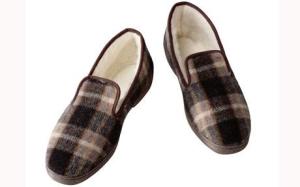
The Slipper: Langour is the badge of all right-thinking men, and slipper-usage (in conjunction with a brocade dressing gown) is a daily staple. They should not, however, be worn for dining — such a practice marks the wearer out as either bourgeois or dangerously eccentric.
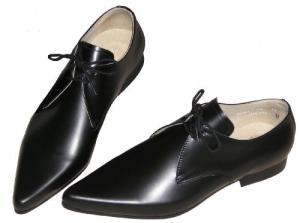
The Winkle-Picker: Though a trifle outré, this pointy-nosed creation can, if accompanied by acerbic wit, wads of cash and a 5000-acre estate in Hampshire, single its wearer out as a man of charming unconventionality and creative genius.

The Exotique: The only acceptable mode of dress for a night in with one’s hookah and friends from North Africa, this festive adornment takes up where the slipper leaves off. Exceptionally effective in establishing one’s decadent credentials when worn during business meetings.

The Over-Designed: Concepts such as “fashion” and “designer labels” have no place in the wardrobe of a gentleman. A designer who claims to have “reinvented the concept of the shoe” is a charlatan and singles his customers out as gullible or, even worse, nouveau riche.

