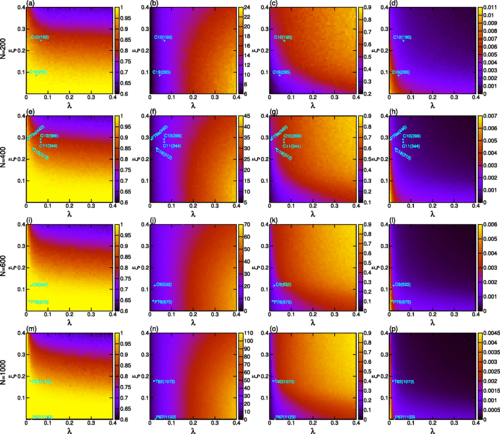
Just published (H/T Olaf Sporns)

Just published (H/T Olaf Sporns)

As reported in the Brains Blog we are most chuffed to have Marcin’s participation in Minds, Models and Milieux: Commemorating the Centennial of the Birth of Herbert Simon

My only firm conclusion after twenty years of psychiatry: nothing is crazier than life. Here is a Baptist deacon telling me, a Catholic, to relax and enjoy festivals. Here’s a black Southerner making common cause—against me!— with a white Southerner who wouldn’t give him the time of day.
That’s nothing. Once I was commiserating with a patient, an old man, a Jewish refugee from the Nazis—he’d got out with his skin but lost his family to Auschwitz—so I said something conventional against the Germans. The old fellow bristled like a Prussian and put me down hard and spoke of the superiority of German universities, German science, German music, German philosophy. My God, do you suppose the German Jews would have gone along with Hitler if he had let them? Nothing is quite like it’s cracked up to be. And nobody is crazier than people.
. . .
A near breach, an insignificant incident. A stranger observing the incident would not have been aware that anything had happened at all, much less that in the space of two seconds there had occurred a three-cornered transaction entailing an assignment of zones, a near infraction of zoning, a calling attention to the infraction, a triple simultaneous perception of the mistake, a correction thereof, and an acknowledgment of that—a minor breach with no consequences other than these: an artery beats for a second in Leroy’s temple, there is a stiffness about Victor’s back as he leaves, and there comes in my throat a metallic taste.
. . .
The terror comes from piteousness, from good gone wrong and not knowing it, from Southern sweetness and cruelty, God why do I stay here? In Louisiana people still stop and help strangers. Better to live in New York where life is simple, every man’s your enemy, and you walk with your eyes straight ahead.
It’s already been thirty-five years since JL’s murder and Jim Morrison would have been 72 today.
COSMOS + TAXIS have a new call for papers out.

Born on this day . . . see bio

Riccardo Viale, the general secretary of The Herbert Simon Society has brought my attention to this workshop featuring the one and only Gerd Gigerenzer. Gerd, by the way, will also be on the SABE sub-panel of the AEA “Minds, Models and Milieux: Commemorating the Centennial of the Birth of Herbert Simon” in a month’s time in San Francisco. In addition to Gerd several other contributors to the soon to be published book will be in attendance.

THE HARVARD REVIEW OF PHILOSOPHY vol.XII no.1

I particularly learned from his criticism of dividing philosophy into what he called ‘isms’ and schools of philosophy. He believed there were many philosophical questions and ways of arguing about them, but that attaching labels like ‘physicalism’ or ‘idealism’ to any particular way of answering philosophical questions was extremely mechanical and also misleading.
Many philosophers pursue a line of argument in a very linear fashion, in which one proof caps another proof, or a refutation refutes some other supposed proof, instead of thinking laterally about what it all might mean.
Stuart Hampshire used to say that historically, there have been two aims or motives for philosophy. One was curiosity and the other was salvation (laughs). Plato, as he managed to combine almost every thing else, combined the two (laughs again). I think that Wittgenstein was very much on the side of salvation. So was Kierkegaard, though he was so clever that curiosity was always catching him out.
That is that the effect of modern entertainment, modern communication, modern saturation with “information”, may make effective criticism, or effective reflection impossible. Just as the tabloid newspapers get obsessed with the day’s scandal, and the internet becomes dominated by the same kind of “news”, it is possible that this so-called self-searching and questioning becomes just another superficial phenomenon, and that there are simply a lot of unquestioned assumptions about how life is being led that are really quite unsatisfactory.
“I get uh uncomfortable when politics gets mixed with medicine, to say nothing of angels.”
. . .
Here’s the hottest political issue of the day: euthanasia. Say the euthanasists not unreasonably: let’s be honest, why should people suffer and cause suffering to other people? It is the quality of life that counts, not longevity, etcetera. Every man is entitled to live his life with freedom and to end it with dignity, etcetera etcetera. It came down to one curious squabble (like the biggest theology fight coming down to whether to add the que to the filio): the button vs. the switch. Should a man have the right merely to self-stimulation, pressing the button that delivers bliss precisely until the blissful thumb relaxes and lets go the button? Or does he not also have the right to throw a switch that stays on, inducing a permanent joy—no meals, no sleep, and a happy death in a week or so? The button vs. the switch.
And if he has such a right and is judged legally incompetent to throw the switch, cannot a relative throw it for him?
. . .
She lives for what she considers rare perfect moments. What I long to share with her are ordinary summer evenings, cicadas in the sycamores.