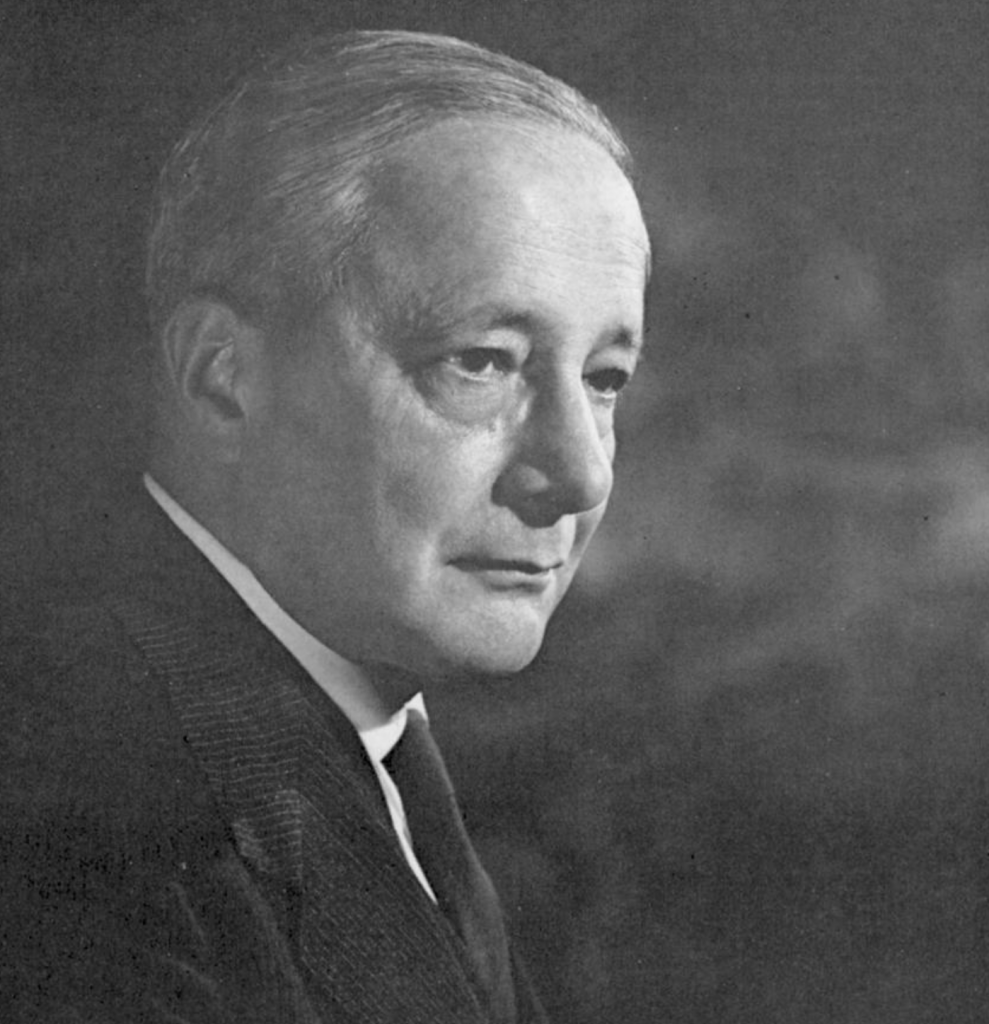
To the Memory of an Angel

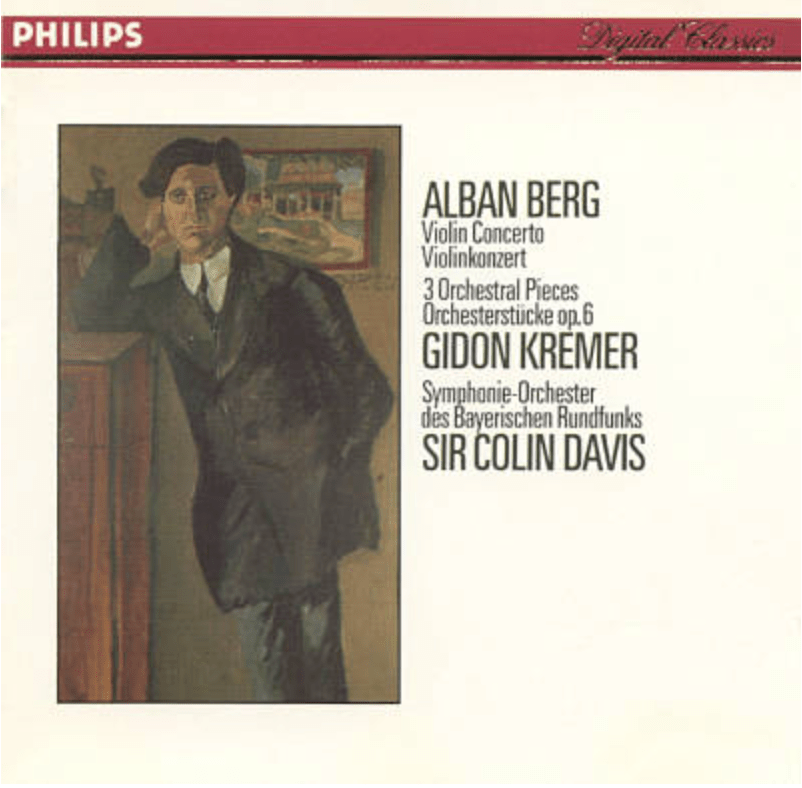
This is my favorite version of Berg’s challenging masterpiece, here played by Gidon Kramer and conducted by the late Colin Davis.

Screen Shot 2016-03-06 at 10.12.55 PM

Friedrich Hayek and Michael Polanyi in Correspondence

Friedrich Hayek and Michael Polanyi corresponded with each other for the best part of thirty years. They had shared interests that included science, social science, economics, epistemology, history of ideas and political philosophy. Studying their correspondence and related writings, this article shows that Hayek and Polanyi were committed Liberals but with different understandings of liberty, the forces that endanger liberty, and the policies required to rescue it. — Struan Jacobs & Phil Mullins History of European Ideas, Volume 42, Issue 1, 2016.

Screen Shot 2016-03-05 at 1.27.56 PM

The Mangy Parrot 5

It was not yet common, in that illustrious college, that seminary of the learned, that ornament of knowledge for the metropolis—it was not yet common, I was saying, to teach modern philosophy there in all its aspects; its lecture halls still resonated with the ergos of Aristotle. There you could still hear debates over the Rational Being, the Hidden Properties, and the Prime Matter, which was defined in relation to Nothingness, nec est quid, and so on. Experimental physics had never been mentioned on that campus, and the great names of Descartes, Newton, Musschembroek, and others are scarcely known within the walls that had nurtured Portillo and other celebrated geniuses. In short, the Aristotelian system that dominated the loftiest intellects of Europe for so many centuries had not yet been entirely abandoned when my wise teacher first dared to show us the path of truth, while trying not to stick out too much, for he selected the best in Aristotle’s logic and what he felt was most probable in the modern authors, through whom he taught us the rudiments of physics; and in this way, we became true eclectics, who would not stick capriciously to any one opinion nor defer to any system simply because we were well disposed toward its author.

*****

I could fool my friends as easily with Barbara as with Ferison, since I produced nothing but barbarities with each word. I learned to create sophisms rather than to recognize and dispel them; to obscure the truth rather than investigate it; a natural outcome, given the obsessions of schools and the pomposity of boys.

In the midst of this hubbub of shouting and exoticized wordplay, I learned to distinguish between a syllogism, an enthymeme, a sorites, and a dilemma.

*****

Believe me, my children, whenever you see great crowds drawn to a fiesta, whether a wedding, a baptism, or any other ceremony, what attracts most people is the chow. Yes, free grub, free grub is the bell that calls the crowds to visit, and the flag that recruits so many friends of the moment.

Mangy_Parrot

How Do Our Social Networks Affect Our Health?

Nicholas Christakis (yes, the very same that had been in the news recently, unfortunately caught in the midst of campus fuckwittery) explains how face-to-face social networks and their structures influence behaviors and phenomena in human society and the natural living world. (H/T to Guy Theraulaz). NPR/TED Video/Audio.

“Just because I believe don’t mean I don’t think as well”

It’s been just over 40 years since Station to Station was released, arguably Bowie’s (and by definition rock’s) finest album. I realize that it’s not immediately obvious that this work deserves this slot — it certainly didn’t at the time — but somehow we sensed something rather unusual was going on and for Bowie fans (and critics) who by now had been trained up to not be musical fuckwits, this was the first big test and were happy to go along with it. It is simultaneously Bowie’s most philosophically and emotionally desperate (the eponymously named Low was the absolute low point) and warm album going from dissonance to full stretch crooner and much more in between. It is usually cast as a transitional/bridge album, inferring that perhaps it is neither fish nor foul, and in some sense this is true — but taken as a bridge, it can also connote a highpoint. Here is a superb piece of rock journalism by Ben Graham (I don’t know his work but he reminds me of Melody Maker‘s great Chris Welch, from the heyday of rock journalism). Here’s the insiders’ take on STS: “I think David’s too intelligent to try to follow one philosophy.” Anyway, here Ben Graham assesses the album and the circumstances of its coming to pass.

‘Station to Station’ isn’t about trains, despite being written while the notoriously aerophobic Bowie was touring America and Europe by rail; instead, it refers to the fourteen Stations of the Cross, which Bowie also equates to the eleven Sephirot of the Tree of Life in the Jewish Kabbalah- hence, “one magical movement from Keter to Malkuth,” the songs most enigmatic lyric, which refers to the descent from the Crown of Creation to the Physical Kingdom, or from one end of the tree to the other.

stationtostation-1024x1024

Rationality and the true human condition

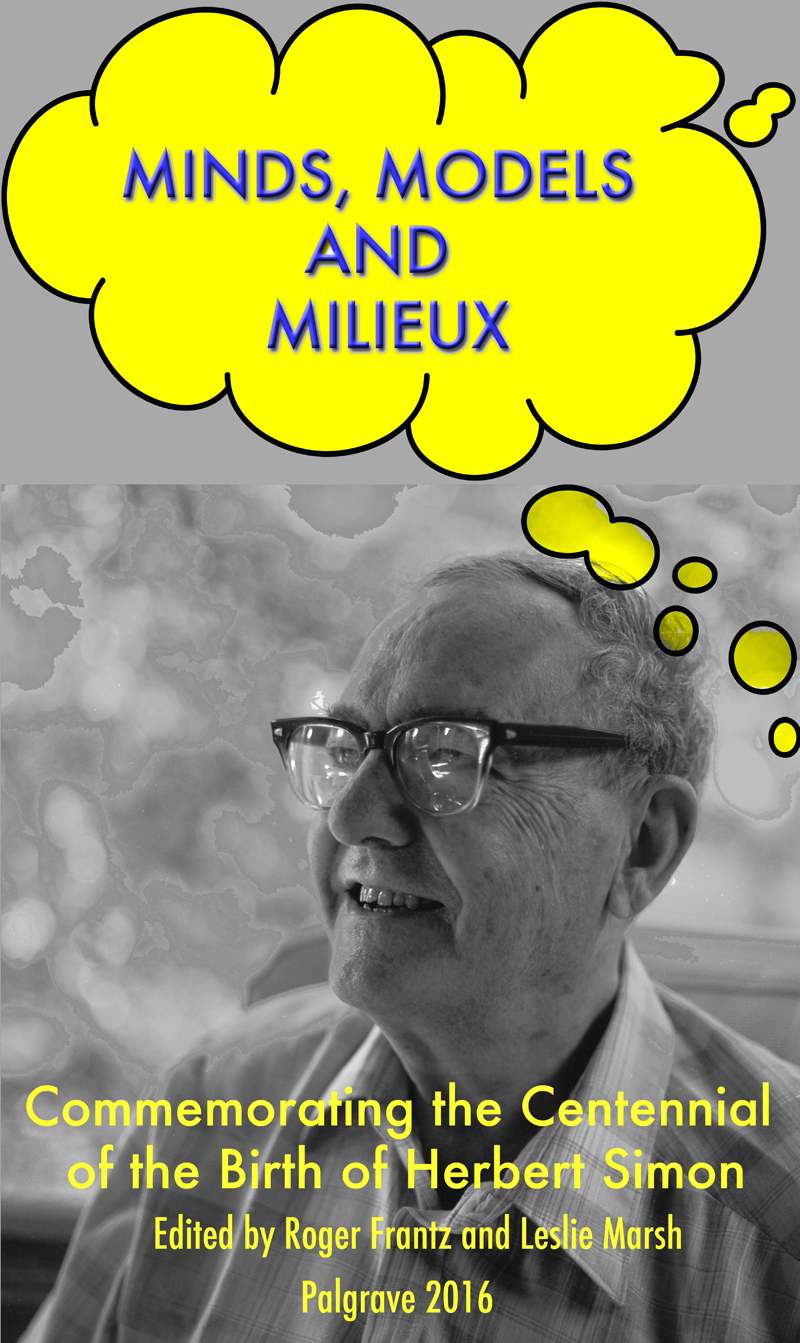
The fifth in a series of excerpts from Minds, Models and Milieux: Commemorating the Centennial of the Birth of Herbert Simon.

Ron Sun

The notion of rationality is important to many fields in social and behavioral sciences. Herbert Simon’s seminal work on “bounded rationality” and “satisficing” led to broadened conceptions of rationality, which significantly impacted a number of fields in social and behavioral sciences. In this article, I would like to further explore the notion of rationality on the basis of Simon’s work.

First, in this regard, I believe that it may be necessary to go beyond Simon’s notions of “bounded rationality” and “satisficing”, for example, in dealing with limitations and variations in actual human rationality. Furthermore, I believe that it may be necessary to go beyond the notion of rationality as optimization of a utility function. I will argue that we need to take into serious consideration the true human condition in this regard, that is, actual human nature (especially the actual human psychology), in defining or understanding the notion of rationality.

In the 1950’s, Herbert Simon proposed his theory of “bounded rationality” that tried to reflect real human abilities to reason and to make decisions, in relation to his work in economics and organization theory (Simon, 1957, 1991). This notion of a limited kind of rationality of Simon’s might have in some way enabled the social sciences to move beyond the then prevailing theories in economics and in other branches of social sciences. But the questions now are: does it go far enough in “respecting” human reality? What is the true human condition in this regard? Is the true human condition sufficient captured by Simon’s theory of rationality?

It is my belief that the true human condition (human psychology) was, unfortunately, not sufficiently addressed yet in this line of work. This point applies to Simon’s treatment of rationality, and also to Simon’s approach to studying cognition within the realm of cognitive science and artificial intelligence (which paralleled his work in economics and organization theory). In contrast, in this article, what I want to emphasize is exactly such true human condition that I believe has not been sufficiently examined in Simon’s approach. I will do so based on the framework of a comprehensive computational theory of the human mind, that is, a computational cognitive architecture, taking into account some very human facets of human nature.

In this chapter, I will first discuss what rationality means in various contexts (while questioning this very notion). Then I will discuss some findings regarding the unconscious mind, which shows various tendencies that appear to contradict the notion of rationality. I will then present a theoretical framework that addresses all of these facets in mechanistic and process-based way (but not necessarily mathematically). The application of this framework in exploring issues in social, cultural, political, and organizational contexts are then briefly sketched. This discussion will draw upon the ideas from Reber (1989) regarding the unconscious mind, H. Murray (1938) regarding basic needs or desires, as well as others, in addition to Simon’s own ideas.

HS_POSTER

John McWhorter: public intellectual par excellence

In a crowded field of public intellectuals, John McWhorter stands head and shoulders above most. He has a genuine commitment to the Socratic method (i.e. intellectual honesty), never peddling an over-rehearsed hardened position that he’s been married to since the year dot. One always feels that he really values the provisionality of intellectual discourse and is always open to be convinced of countervailing positions. Unlike many whose vanity is so easily massaged (wannabe public intellectuals seduced even if they are not paid a dime to meet the voracious appetite for “content”), John never merely takes on the role as “expert” or “brand/virtue signaling” totem, fulfilling echo chamber/parti pris expectations. Even when one feels that he might be on the ropes, he never resorts to playing the badge of honor card (“Well, I am an x, y, z, therefore . . . ) a strategy typically used to shut conversation down. I always get a fresh, unexpected, well-informed and reasoned perspective from him, even if the conclusion may be one I’d be at odds with. Under these circumstances one can fully accept and appreciate countervailing positions without it becoming an either-or situation. So here’s the thing: John has a true commitment to liberality, conversability and civility — virtues that have been severely corroded over the past decades both within the academy and throughout public life. Moreover, John doesn’t “play the role” of professorial know-all — his tone, comportment, and poise is so very natural. One gets a sense that John would be just the same chap over a pint of beer — and this would be possible since divergent views would be a rather shallow determinate mitigating against friendship.

Both John and Glenn Loury are a fabulous paring: whatever they talk about one always comes away with a sense of having learnt something, a model of civility and mutual respect which in no way entails pussyfooting around controversial and complex ideas replete with phony euphemisms. Speaking of John, he was the star performer at the recent debate on free speech. As debates go, this format was the best I’ve come across (and that includes the many Oxford Union debates I attended). The moderator was superb as were the questions from the students — this is the way it should be. I for one didn’t call the result but no doubt the standard recriminations/excuses will be proffered. Check out the debate. Maybe there is a glimmer of hope for us in this overly polarized and vulgarized culture. Update: see The Atlantic‘s take on the debate. 

JohnMcWhorter2

David Egan’s last stand

Our great Southern songwriter lays in a recliner, feet propped up into a blanket that covers legs made thin by a cancer whose patience has worn out. Those legs used to amble around one hell of man — a tall, ruggedly handsome man’s man and raconteur gifted in music and conversation. — full article here.

DavidEagan_ROBINMAY_110915_1647.32048

Walker Percy Wednesday 74

percycovercroppea

In New Orleans I have noticed that people are happiest when they are going to funerals, making money, taking care of the dead, or putting on masks at Mardi Gras so nobody knows who they are.

*****

I like your banal little cathedral in the Vieux Carré. It is set down squarely in the midst of the greatest single concentration of drunks, drugheads, whores, pimps, queers, sodomists in the hemisphere. But isn’t that where cathedrals are supposed to be? It, like the city, has something else even more comforting to me, a kind of triumphant mediocrity.

*****

The Creoles have the secret of living ordinary lives well.

*****

Could it be true all one needs to know nowadays is what one wants?