From Aristotle to John Searle and Back Again: Formal Causes, Teleology, and Computation in Nature

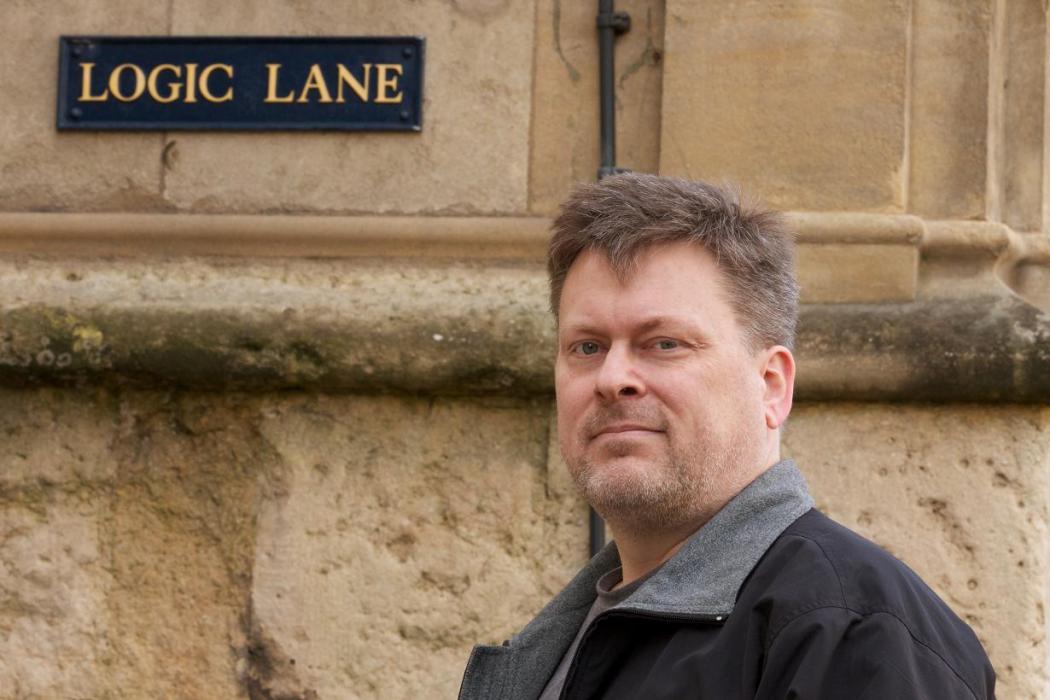
The richly eclectic Ed Feser has brought my attention to his latest paper. If you don’t know Ed’s work or at least his blog (as well as his popular writings), you really should explore his diverse interests. Ed is one of those highly unusual writers because he so naturally draws on contemporary, ancient and scholastic perspectives and this latest article is a classic instantiation of the worlds he simultaneously inhabits. I’ve repeatedly said that the most interesting people are those with a distinctive quality of mind, regardless of the particular positions they hold — an attitude that has long since been expunged from much of formal philosophical teaching. Ed reminds me a bit of Richard Sorabji in the sense of marrying the deep philosophical (and unfashionable) past with the ever present — and that’s high praise indeed. Anyway, here’s the abstract to Ed’s paper:

Talk of information, algorithms, software, and other computational notions is commonplace in the work of contemporary philosophers, cognitive scientists, biologists, and physicists. These notions are regarded as essential to the description and explanation of physical, biological, and psychological phenomena. Yet, a powerful objection has been raised by John Searle, who argues that computational features are observer-relative, rather than intrinsic to natural processes. If Searle is right, then computation is not a natural kind, but rather a kind of human artifact, and is therefore unavailable for purposes of scientific explanation.

In this paper, I argue that Searle’s objection has not been, and cannot be, successfully rebutted by his naturalist critics. I also argue, however, that computational descriptions do indeed track what Daniel Dennett calls “real patterns” in nature. The way to resolve this aporia is to see that the computational notions are essentially a recapitulation of the Aristotelian-Scholastic notions of formal and final causality, purportedly banished from modern science by the “mechanical philosophy” of Galileo, Descartes, Boyle, and Newton. Given this “mechanical” conception of nature, Searle’s critique of computationalism is unanswerable. If there is truth in computational approaches, then this can be made sense of, and Searle’s objection rebutted, but only if we return to a broadly Aristotelian-Scholastic philosophy of nature.

The plan of the paper is as follows. The next section (“From Scholasticism to Mechanism”) provides a brief account of the relevant Aristotelian notions and of their purported supersession in the early modern period. The third section (“The Computational Paradigm”) surveys the role computational notions play in contemporary philosophy, cognitive science, and natural science. The following section (“Searle’s Critique”) offers an exposition and qualified defense of Searle’s objection to treating computation as an intrinsic feature of the physical world—an objection that, it should be noted at the outset, is independent of and more fundamental than his famous “Chinese Room” argument. In the fifth section (“Aristotle’s Revenge”), I argue that the computational paradigm at issue essentially recapitulates certain key Aristotelian-Scholastic notions commonly assumed to have been long ago refuted and that a return to an Aristotelian philosophy of nature is the only way for the computationalist to rebut Searle’s critique. Finally, in “Theological Implications,” I explore ways in which computationalism, understood in Aristotelian terms, provides conceptual common ground between natural science, philosophy, and theology.
ed-feser-3

Zionism and the Black Church

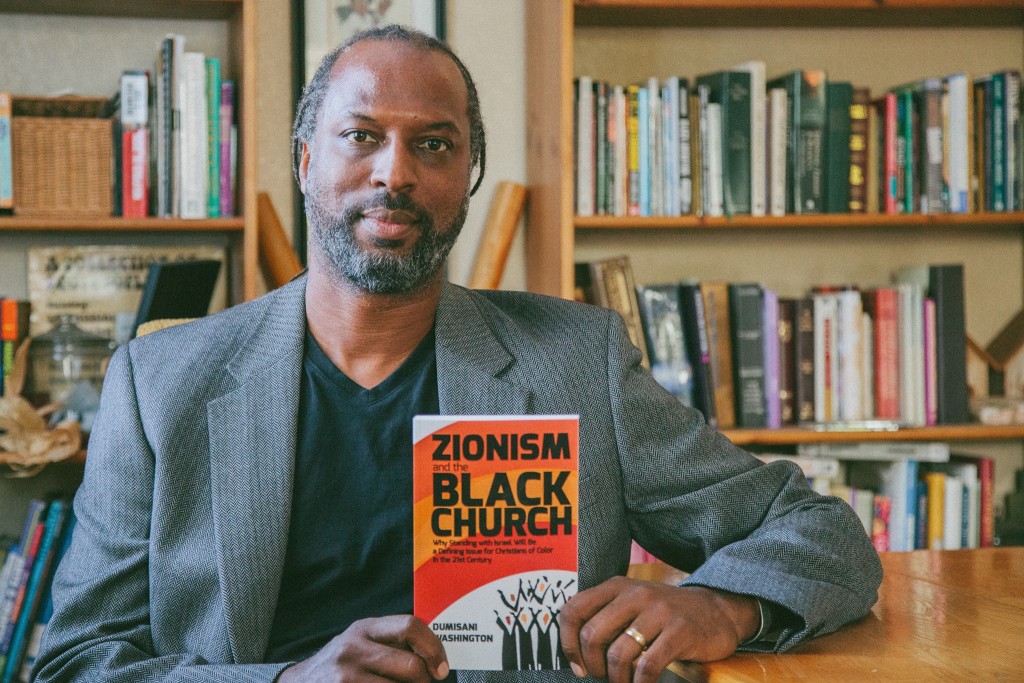
Discovering that there were African-Americans in the 1970s who were also offended at the outrageous notion that ‘Zionism is Racism’, and voiced their loud and eloquent opposition, I was comforted. I took great pride in knowing that Black leaders in the U.S. not only condemned that ‘Zionism is Racism’ lie, but stood boldly with their Jewish friends . . . It seemed they were trying to figure me out. Their expressions had a mixture of curiosity and contempt . . . For them, a Black person standing with Israel was an anathema.

— Pastor Dumisani Washington

This book should befuddle the monometric rationalist regressives. (Purchase here).

See also Chloe Valdary’s very recent article: Black Lives Matter’s Jewish Problem Is Also a Black Problem

a-Dumi

The Excitements

If you appreciate Northern Soul and/or any of the Daptone acts, you will surely enjoy these guys. Hailing from Barcelona, they will I think, be right at home on Frenchman Street in New Orleans — and I have no doubt that will happen before long. In the meantime check them out here.

61-og

The long and the short of it

We are indebted to Sam Harris for bringing us Eric Weinstein in Sam’s latest podcast Faith in Reason: A Conversation. What a luxury it is to have about 2.5 hours of real intellectual engagement (i.e. not resorting to cheap rug-pulling strategies) and not be subject to the faux Facecrack type knee-jerk regurgitated indignation (or pat ideological virtue-signaling) that is now very much characteristic of institutionalized philosophy. Eric has such a nuanced and conceptually interesting take on some of the deepest philosophical and social issues around — and importantly he has humility. As I’ve said umpteen times before, if you want to get a genuine philosophical education, one can do no better than listen to guys like this who are not climbing the greasy pole (see Eric’s Cartesian diagram below and guess where, for the most part, professional philosophy lies?) And Sam himself is getting better and better at this job: Eric brings out a much more subtle and finessed Sam Harris at least on matters of faith. There is much to be said for the in-person chat as Eric rightly says and this came through with Sam’s chat with Dennett as well. So Sam can “play it again and again” please support him here.

Lot’s of stigmatized truth that needs to be reclaimed

Artboard

Walker Percy Wednesday 95

percycovercroppea

Why did good married couples look so glum? Old couples, young couples, thirty-five-year-old Atlanta couples in condos, sixty-five-year-old Ohio couples in villas, each as glum as if one had got stuck with the other at a cocktail party for two hours. Two hours? Ten years! Thirty years!

*****

In his strange new mood he made the following observation: people notice very little indeed, ghost-ridden as they are by themselves. You have to be bleeding from the mouth or throwing a fit for them to take notice. Otherwise, anything you do is no more or less than another part of the world they have to deal with, poor souls.

*****

You want to know what a man is? I’ll tell you. A man is born between an asshole and a peehole. He eats, sleeps, shits, fucks, works, gets old, and dies. And that’s all he does. That’s what a man is.

*****

My equally belated discovery is the total failure, recklessness, and assholedness of people in general and in particular just those people I had looked to.

*****

So much for you. My quarrel with the others can be summed up as a growing disgust with two classes of people. These two classes between them exhaust the class of people in general. That is to say, there are only two classes of people, the believers and the unbelievers. The only difficulty is deciding which is the more feckless.
My belated discovery of the bankruptcy of both classes has made it possible for me to take action. Better late than never.

71x7p-XhQGL

Complexity and Stupidity

Catching up on Sam Harris’ podcasts — this one is of particular interest. Sam’s guest, David Krakauer, I recall from taking the debut Santa Fe Institute freebie course a few years back run by the excellent Melanie Mitchell. Do check out the SFI’s free programmes, notably SFI’s Complexity Explorer: it beats many a fee-paying university course. In any event, if you really want to become a truly educated person, you no longer need to be subjected to the rationalistically inclined ideologues that plague the humanities and the social sciences, ideologues that will ensure that you are more stupid (i.e. narrow) than when you began their course. Where there is some semblance of intellectual honesty, it still behooves one to supplement your course work with stuff you won’t find on any formal syllabus — and complexity studies fulfills this multidisciplinary evidence-based approach in spades by cutting across economics, sociology, social epistemology, philosophy of social science, computational intelligence and indeed philosophy at large. As David Krakauer points out, uncertainty is pregnant with possibility and this is psychologically discomforting to the closed-minded rationalist technocrats and theoreticians who fail to grasp social complexity: they are under the profound delusion that all can and must be solved without any sense of generating worse unintended consequences.

SFI_Logo_Vertical_308_hi_res

The most influential chat show you’ve never heard of

We live in a time when being dumb is reward and being smart is counter-culture.

If one makes a claim for harbouring a disinterested approach to truth, then one needs to explore ideas beyond one’s ideological reservation, most of which have long since become barren and infertile through infelicitous activity. It used to be that being liberal was punkishly socially transgressive, pointing out social incoherencies in a given culture and offering genuine (not gestural) remedies. Now so-called “liberals” are anything but — they are REGRESSIVE and ILLIBERAL driven by the inherent superficiality and attendant divisiveness of identity politics.

The Rubin Report is not a vehicle for Dave Rubin — as with many of us that used to comprise a broad centre, he is concerned by the loss of liberal values (intellectual diversity). We are now caught between a rock and a hard place. On the one hand we have the “regressive” Left and THEIR unwanted newly-born defective baby whose name cannot be mentioned. The Right fills the role of the absent father, having not adequately taken on their epistemic responsibility. To rework John Kennedy Toole’s phrase from A Confederacy of Dunces the unwanted baby is the product of a particularly weak conception on the part of the father whose sperm was emitted in a rather offhand manner — hence they are deemed, in internet parlance, as “cucks.” These two parents frame the shit-storm we find ourselves in.

Don’t be fooled by the word “chat” — The Ruben Report is not some ubiquitous showbiz chat show where someone is on for eight minutes plugging the obligatory film or book, wrapped up in unchallenging soft sparkling repartee and “well-rehearsed spontaneity”. Of course the guests do have books and films but the discussion is genuinely conversational, wide-ranging and most importantly substantive. The guests do not agree on everything — that’s the point. The common cause, though, is the key liberal value of free speech which is conspicuously absent from the parti pris reservation style of thinking that deeply infects mainstream media and their complicitous partners — the political establishment (Right and Left), a whole array of associated vested interests, assisted by the cowardly and disingenuous sniping from the Platonic rationalist generals and their minions on academic reservations.

Now more than ever when we are drowning in a sea of disinformation, the only thing we have (or we’ve ever had) to test the veracity of ideas, is free speech — however unpalatable some of it might be. It’s an epistemic virtue that underpins civil society and Enlightenment values.

Dave, along with Gad Saad and others, is fighting the good fight for liberal values. If you have any regard for truth, you need to expose yourself to a whole range of perspectives, and not get hung up on the branding of demonization. Along with Dave’s programme check out the following channels for thoughtful and nuanced discussion that you won’t get on TV or the traditional press. Of course, it will require putting some time in and not lazily regurgitating (virtue-signaling) some empirically faulty headline. As per Dave’s graphic below, I find that the most interesting people are those that break the stereotype, are independent thinkers, cosmopolitan but not globalist, liberal in experience and high Tory as to what constitutes knowledge, an idea wonderfully articulated by Nassim Nicholas Taleb.

The Rubin Report

The Saad Truth

Blogging Heads

Sam Harris

The Factual Feminist

DaveRubinIdentityPolitics

Ip Chun

Born on this day and still going. I had the privilege of chi sao‘ing with sigung (master’s master) some 15 years ago in London and afterwards bumming a smoke from him outside. It’s also been three years since the loss of one of my sifus.

Problems at the Intersection of Aesthetics and Ethics

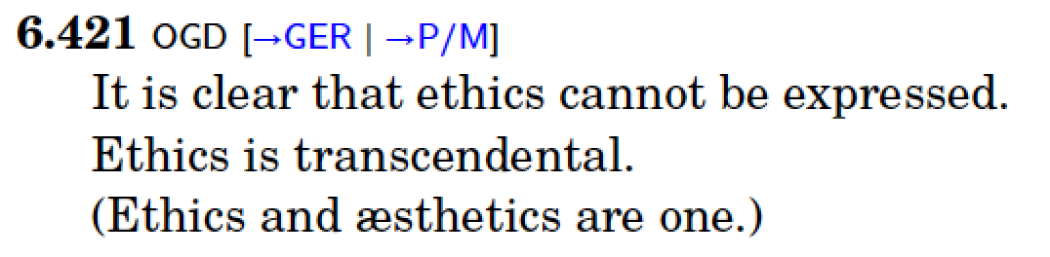
The very excellent Seth Vannatta in Response: The Digital Journal of Popular Culture Scholarship. I’d suggest that readers also think about Wittgenstein’s idea in the Tractatus that ethics and aesthetics are one — on which much has been written. I’d also refer readers to the collection of essays entitled Aesthetics and Ethics: Essays at the Intersection.

Screen Shot 2016-07-30 at 3.14.58 PM