The very excellent Bruce Caldwell (the general editor of The Collected Works of F.A. Hayek) on Hayek — skip to 4 minutes in to avoid the preliminaries. At 59:40 The Sensory Order comes up.
The very excellent Bruce Caldwell (the general editor of The Collected Works of F.A. Hayek) on Hayek — skip to 4 minutes in to avoid the preliminaries. At 59:40 The Sensory Order comes up.
But it was worse than this in his case. It was more than being a Southerner. For some years he had had a nervous condition and as a consequence he did not know how to live his life. As a child he had had “spells,” occurrences which were nameless and not to be thought of, let alone mentioned, and which he therefore thought of as lying at the secret and somehow shameful heart of childhood itself. There was a name for it, he discovered later, which gave it form and habitation. It was déjà vu, at least he reckoned it was. What happened anyhow was that even when he was a child and was sitting in the kitchen watching D’lo snap beans, or make beaten biscuits, there came over him as it might come over a sorrowful old man the strongest sense that it had all happened before and that something else was going to happen and when it did he would know the secret of his own life. Things seemed to turn white and dense and time itself became freighted with an unspeakable emotion. Sometimes he “fell out” and would wake up hours later, in his bed, refreshed but still haunted.
When he was a youth he had lived his life in a state of the liveliest expectation, thinking to himself: what a fine thing it will be to be come a man and to know what to do—like an Apache youth who at the right time goes out into the plains alone, dreams dreams, sees visions, returns and knows he is a man. But no such time had come and he still didn’t know how to live.
To be specific, he had now a nervous condition and suffered spells of amnesia and even between times did not quite know what was what. Much of the time he was like a man who has just crawled out of a bombed building. Everything looked strange. Such a predicament, however, is not altogether a bad thing. Like the sole survivor of a bombed building, he had no secondhand opinions and he could see things afresh.
There were times when he was as normal as anyone. He could be as objective-minded and cool-headed as a scientist. He read well-known books on mental hygiene and for a few minutes after each reading felt very clear about things. He knew how to seek emotional gratifications in a mature way, as they say in such books. In the arts, for example. It was his custom to visit museums regularly and to attend the Philharmonic concerts at least once a week. He understood, moreover, that it is people who count, one’s relations with people, one’s warmth toward and understanding of people. At these times he set himself the goal and often achieved it of “cultivating rewarding interpersonal relationships with a variety of people”—to use a phrase he had come across and not forgotten. Nor should the impression be given that he turned up his nose at religion, as old-style scientists used to do, for he had read widely among modern psychologists and he knew that we have much to learn from the psychological insights of the World’s Great Religions.
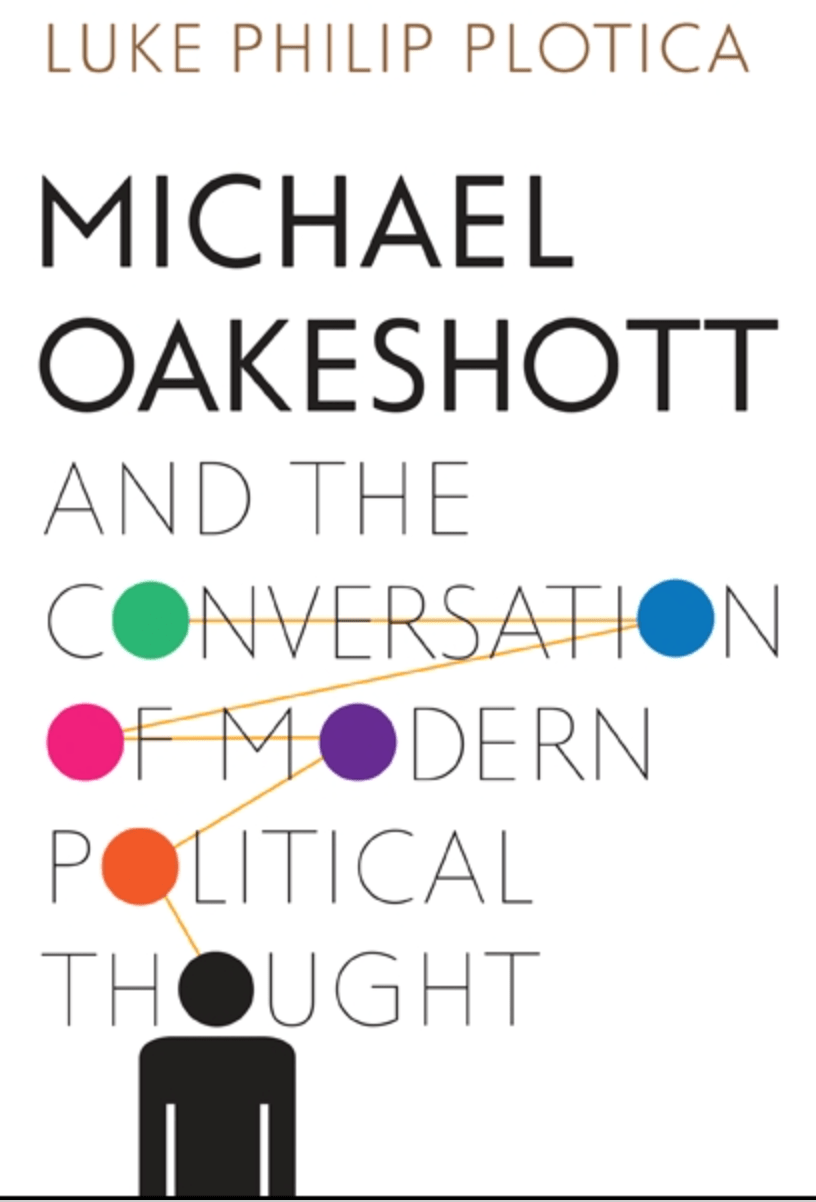
Listen to Jesse Norman’s Oakeshott talk.
Also an article recently published by Davide Orsi.
Introduction
Michael Oakeshott’s thought has been considered from a great variety of perspectives and has been interpreted in many, often divergent, ways. For example, scholars have placed his works in the context of the history of philosophy and they have highlighted their relationship with British and German idealism (Boucher, 2012; Nardin, 2001; Podoksik, 2010). His critique of rationalism, central planning and political dogmatism, as well as the contraposition between civil association and enterprise association, has been considered as a contribution to contemporary liberalism (Franco, 1990, 2004; Galston, 2012; Gamble, 2012; Giorgini, 1999; Gray, 1989: 199–216, 1993: 40–46; Haddock, 2005), conservatism (Abel, 2010; Devigne, 2012) and republicanism (Boucher, 2005; Callahan, 2013; Coats, 1992). However, it often goes unnoticed that his work has occasionally influenced international political theory. In particular, the dichotomy between civil association and enterprise association, developed in On Human Conduct (Oakeshott, 1975: 111–122), has been employed by Terry Nardin (1983) and Robert Jackson (2000) to revitalise the English School’s notion of international society, and, more recently, Nicholas Rengger (2013) has used it to interpret the evolution of the just war tradition (see also Astrov, 2005; Bain, 2003, 2007; Frost, 2002).
This article will elaborate on these works and will show the relevance of Oakeshott’s political philosophy for the contemporary constructivist debate in International Relations. First, I will argue that Oakeshott’s perspective stresses that political institutions are based on norms and relationships which result from human understanding. To this end, I focus on the distinction between civil association and enterprise association, with particular regard to the concept of authority, also in light of Oakeshott’s indebtedness to Hobbes. Second, I will contend that in On Human Conduct it is possible to find some considerations about world politics that are consistent with his broader political philosophy. Third, I will discuss Terry Nardin’s theory of ‘practical international society’ (1983, but also 1998, 2008), and the criticism of it made by Christian Reus-Smit (1999). With this discussion as a back- ground, I will contend that the theory of civil association may represent the ground for a constructivist understanding of international society: a relationship between states based on understood and socially constructed moral values. Finally, I contend that these shared moral values are substantiated in the norms of customary international law. As such, Oakeshott’s political and legal philosophy illuminates the possibility of an international legal order without a central legislative office or power. This is of particular importance, not just because of the Hobbesian influence on Oakeshott, but also because it sheds light on the historical nature of the criteria of conduct and on the obligations that states acquire, in their relations with other states and their populations.

This very quirky band were renowned for their blistering live performances. Though they bore a superficial resemblance to the prevailing aesthetic of glam rock, they were worlds away. I read somewhere that their style can best be characterized as “heavy metal Vaudeville” which I think is kind of apt. What other band could get away with covering tunes from the likes of Del Shannon, Ian Anderson, Alice Cooper, Lead Belly, Jimmie Rodgers, the Osmonds and even Irving Berlin. SAHB never really made it in the US but according to Alex’s wiki entry, were big in Cleveland. Perhaps SAHB are best known for their cover of Delilah (see video below). Thoroughly underated guitarist Zal Cleminson always kept me amused.
If you want to know more about the SAHB, check out this documentary.
LW’s Lectures on Religious Belief online. Here is a nice discussion entitled ‘Philosophy to the glory of God’. Wittgenstein on God, religion and theology. Speaking of religion David Stern discusses the rather vexed question of Was Wittgenstein a Jew? Worth also checking out these videos.
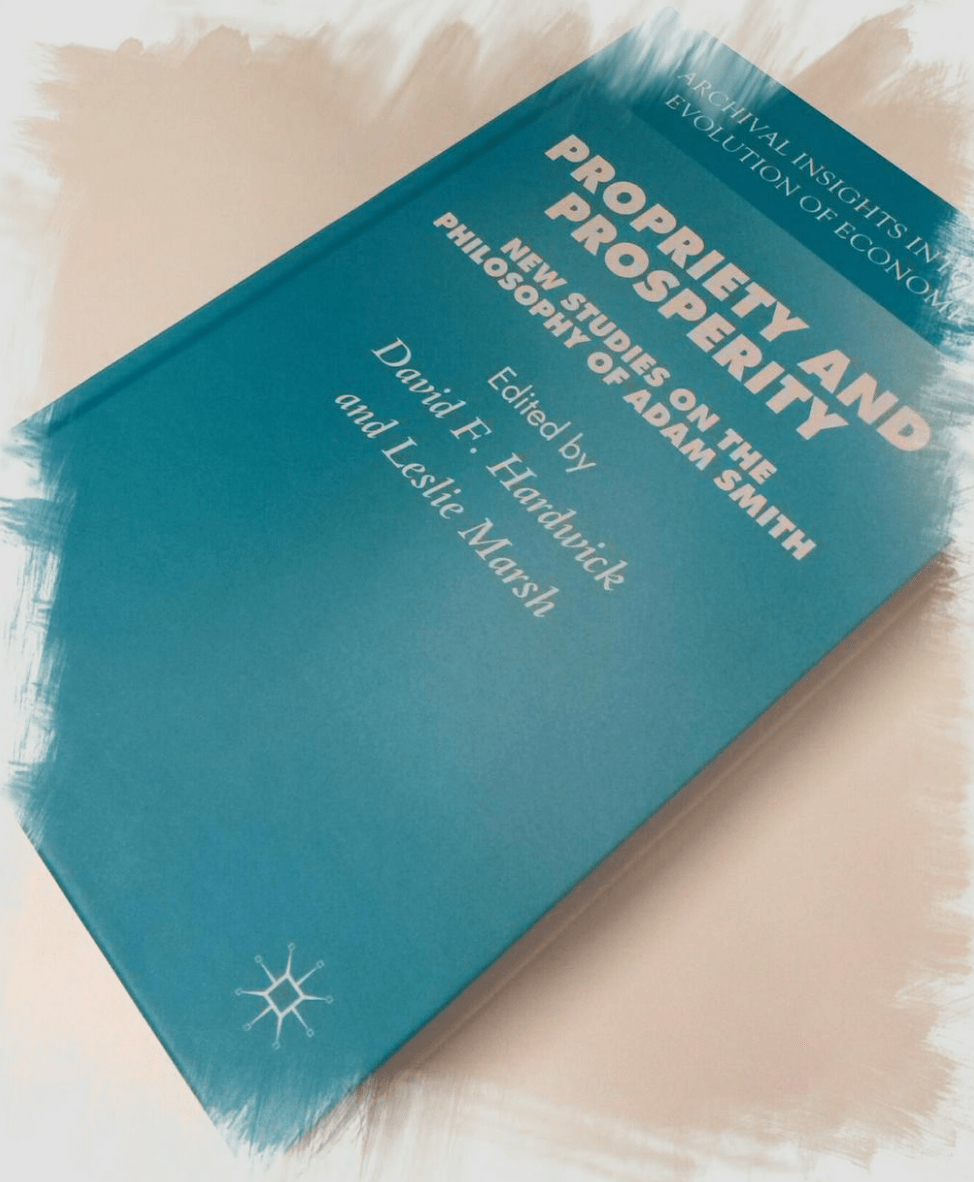
Last but by no means least here is an extract from Vernon’s Smith’s foreword.
This book is a welcome addition to the resurgent scholarly and practical interest in Adam Smith’s contributions to market economics and its antecedents in the social order of human culture. In Smith, propriety concerned the rules that govern human sociability by mutual consent in local group interactions. Out of this experience were fashioned the rules of property, justice and the liberal order of political economy, and thence to economic prosperity. It is a grand narrative alive with meaning for the contemporary world in which side-by-side with markets the demand for sociability has found new expression in the social media companies. No wonder that in a seminar Kenneth Boulding could refer to Adam Smith as the first great post-Newtonian scientist.
I was a candidate for an MA in economics at the University of Kansas in 1951 when I read Adam Smith’s Wealth of Nations (1776; hereafter WN) under the tutelage of Richard S. Howey, a leading scholar of the history of marginal analysis. My notes from that class make no mention of Smith’s first book, The Theory on Moral Sentiments (1759; hereafter TMS). Such was the state of economists’ knowledge of TMS, and of Smith’s lifelong interest in human sentiment—in his view the social foundation of our species’ very being. In retrospect, this was to be expected because TMS was a work in psychology, appearing a century and a quarter before psychology would be recognized as a field separate from philosophy. WN would be identified with the founding of economics by becoming an integral part of our understanding of the takeoff in the growth of material well-being in the 18th century at a time when the British defeat by the American colonies would lead to a reappraisal of British policy. Adam Smith set the intellectual stage for that change in his opposition to slavery, mercantilism, empire, colonialism and taxation without representation when such opposition was unpopular.
. . .
In no sense was Smith a champion of the unfettered profit motive. What it meant for the individual to pursue his own interest in his own way is exactly what the whole of TMS sought to explain. In this sense, Smith’s first book is essential in understanding the meaning of his argument in his second book. It was not his style to repeat that argument when he wrote WN.
The editors are to be congratulated in bringing these new and insightful papers to the task of understanding Adam Smith’s contribution to our modern world.
As for the present young man, the last of the line, he did not know what to think. So he became a watcher and a listener and a wanderer. He could not get enough of watching. Once when he was a boy, a man next door had gone crazy and had sat out in his back yard pitching gravel around and hollering out to his enemies in a loud angry voice. The boy watched him all day, squatted down and watched him, his mouth open and drying. It seemed to him that if he could figure out what was wrong with the man he would learn the great secret of life.
Like many young men in the South, he became overly subtle and had trouble ruling out the possible. They are not like an immigrant’s son in Passaic who decides to become a dentist and that is that. Southerners have trouble ruling out the possible. What happens to a man to whom all things seem possible and every course of action open? Nothing of course. Except war. If a man lives in the sphere of the possible and waits for something to happen, what he is waiting for is war—or the end of the world. That is why Southerners like to fight and make good soldiers. In war the possible becomes actual through no doing of one’s own.


Given Wayne’s age and life it’s highly probable that he died in complete obscurity quite some time ago. Anyway as you can see in his Wiki entry, he led quite the life. I can hear now why only someone like James Booker and Wayne himself gave the song such heartfelt authenticity (it has been covered by many). Angola and of course junk . . .