Long write-up in The New Yorker
Dennett does not believe that we are “mere things.” He thinks that we have souls, but he is certain that those souls can be explained by science.
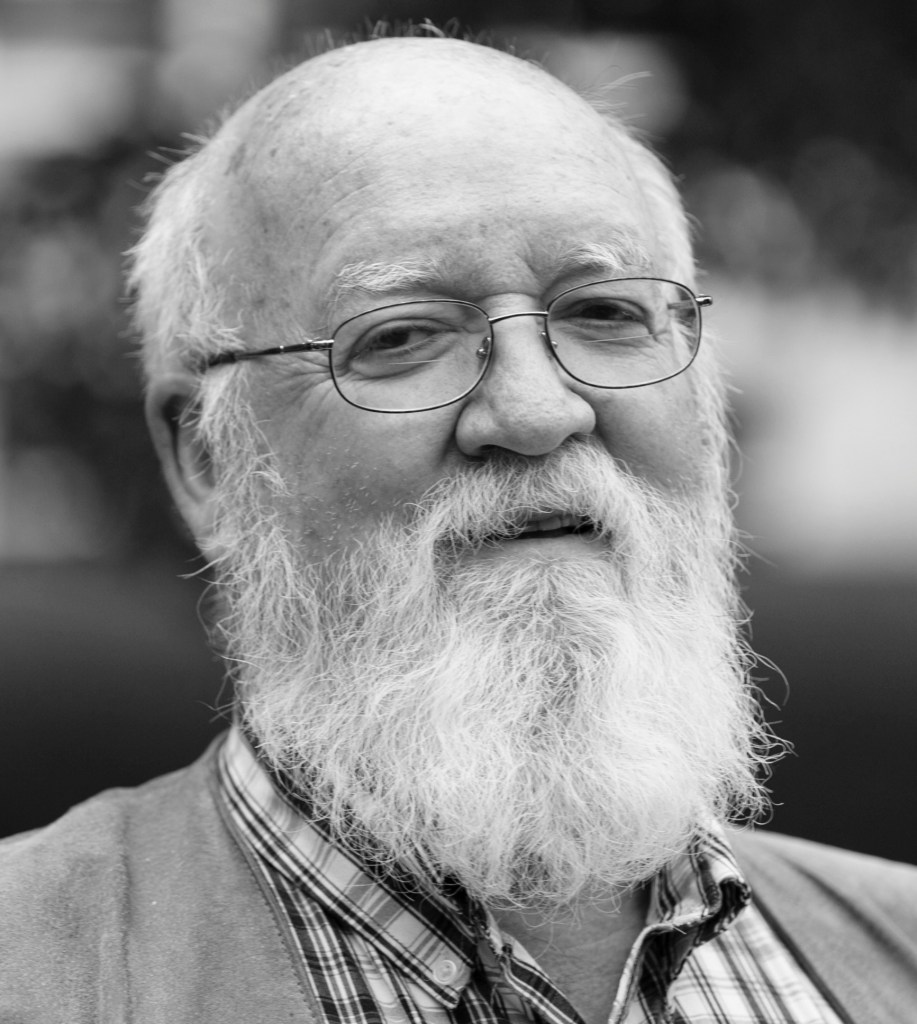
Long write-up in The New Yorker
Dennett does not believe that we are “mere things.” He thinks that we have souls, but he is certain that those souls can be explained by science.
I was startled to read, in the 6th edition of a well-known textbook, McCormick on Evidence, that the “reasonable doubt” formula “points to what we are really concerned with, the state of the jury’s mind,” whereas “preponderance of the evidence” and “clear and convincing evidence” “divert attention to the evidence.” This has things exactly backwards: As the “reasonable” in “beyond a reasonable doubt” signals, the evidence, and whether it is strong enough, is precisely what the fact-finder should be attending to (and a juror who is absolutely certain the defendant is guilty—but not because of the admissible evidence presented at trial but because of something he learned outside the courtroom, or because of evidence that was presented at trial but that the court instructed the jury to disregard—has an obligation to vote to acquit nonetheless). Legal degrees of proof are not degrees of credence; they are degrees of rational credibility or warrant.
— article available in Ratio Juris

If you don’t know every Chuck Berry lick, you can’t play rock guitar
— Ted Nugent

Sam Harris and Jordan Peterson take another run at a discussion and the result is far clearer and more satisfying than the first effort (I happen to think that the first podcast was not wasted time at all). Having heard Harris and Weinstein and now Harris and Peterson, I think we would be in for a treat listening to Weinstein and Peterson, two of the subtlest minds I’ve heard in a long while on religiosity.
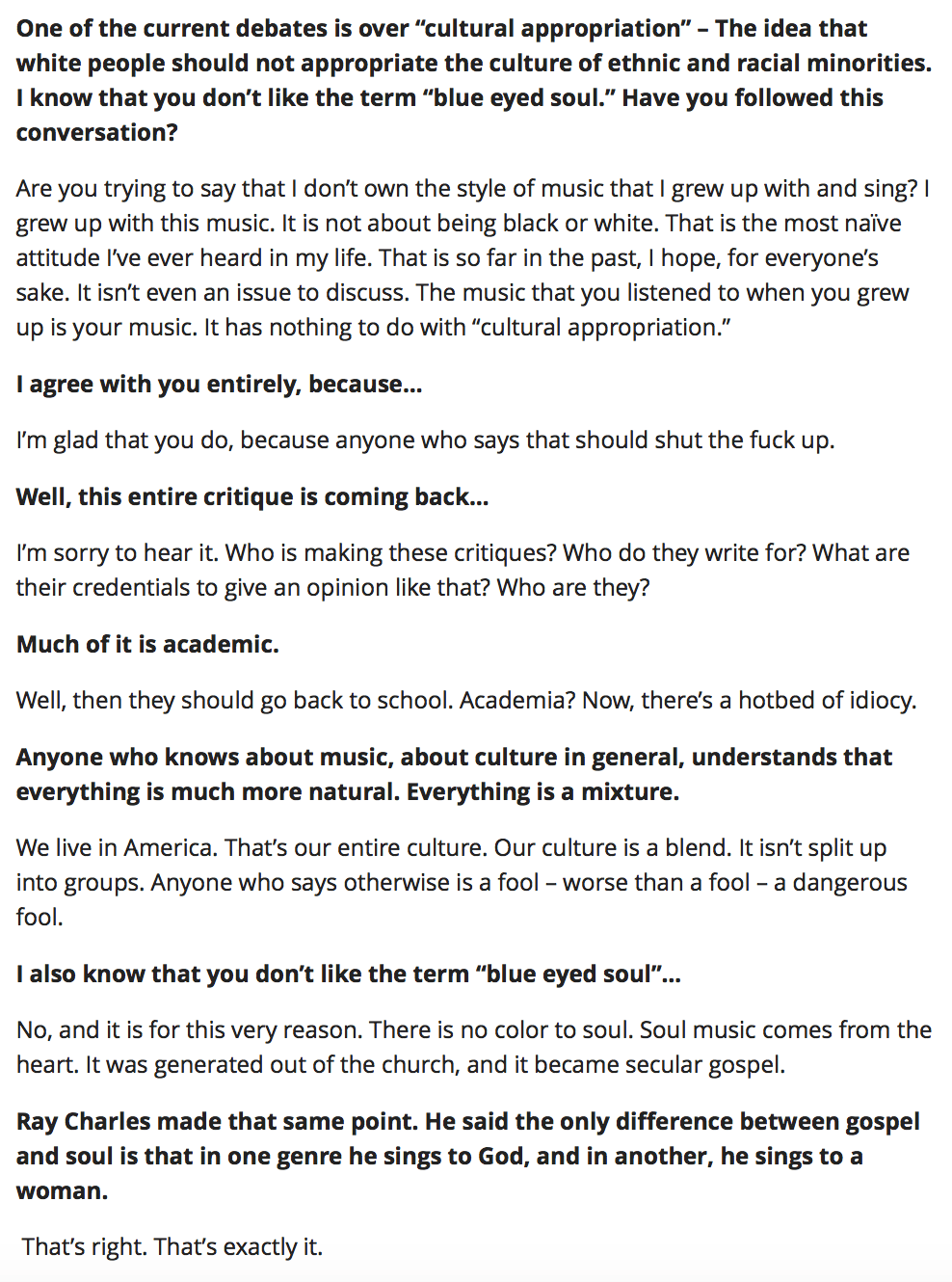
First, revisiting Daryl Hall in Salon on the incoherence and idiocy of “cultural appropriation” (nothing more than a species of crude rationalistic fundamentalism, a classic marker of the authoritarian mindset, arrogant enough to think that the mercurial nature of a healthy culture should/could be controlled); and second, John Oats has a memoir about to appear.

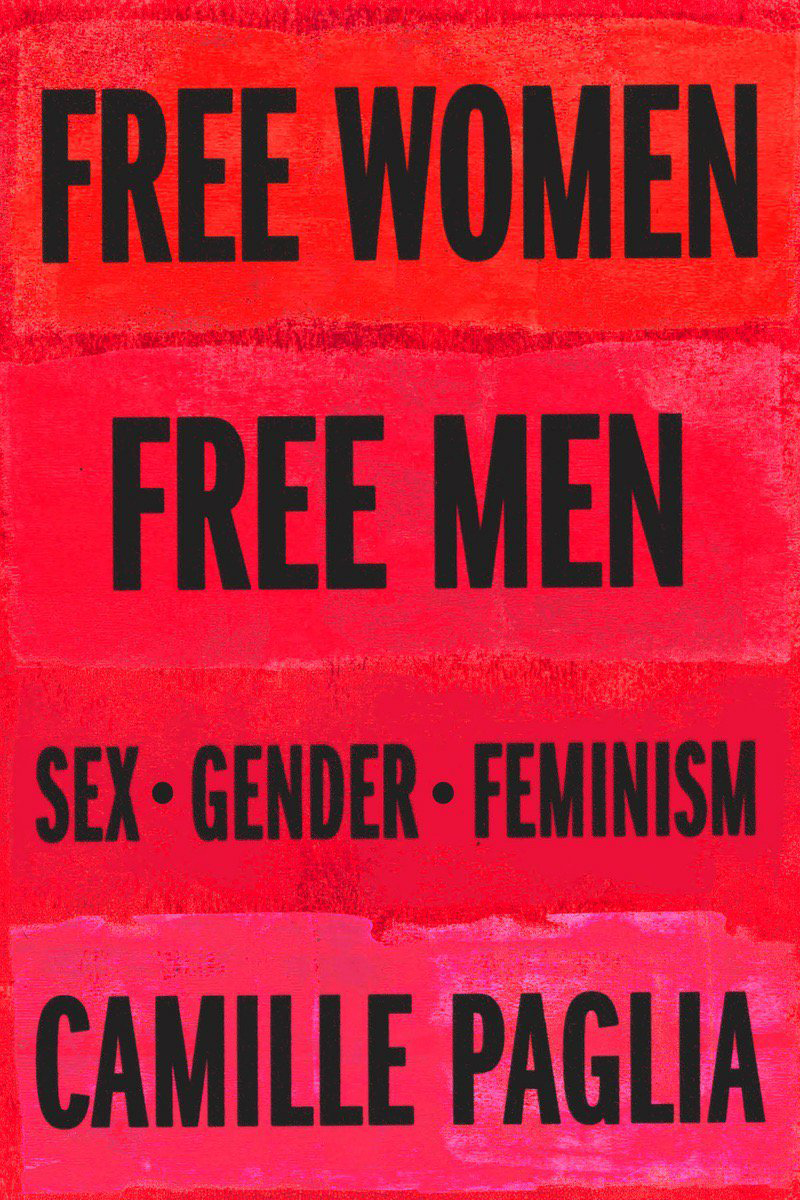
A voice of sanity, real scholarship, wit and class plugging her latest book in Broadly along with other interviews and reviews in Tablet (Jews and feminism); NYMag (predicting 2017); and Philly.com (politics, art, spirituality).
It is an absolute outrage how so many pampered, affluent, upper-middle-class professional women chronically spout snide anti-male feminist rhetoric, while they remain completely blind to the constant labor and sacrifices going on all around them as working-class men create and maintain the fabulous infrastructure that makes modern life possible in the Western world.
Against the odds, still with us. Happy 74th birthday.
Coming soon — check out the trailer and documentary’s website for details. Also Cosmos + Taxis has a special themed issue dedicated to Jane Jacobs’ work soon to be published, edited by Sanford Ikeda and featuring some of the leading theorists in the field.

THERE IS NO FASHION so absurd, even grotesque, that it cannot be adopted, given two things: the authority of the fashion-setter (Dior, Jackie Onassis) and the vacuity or noughtness of the consumer. E.g., bustles in the West, bound feet in the East.
00000
The efficacy of fashion turns on the self’s perception of itself either as a nought or at least as lacking something, and its perception or misperception of the splendid wholeness of public figures as evidenced by even the most carelessly worn badges of their substantiality—when in truth the selves of Jackie Onassis and Wallis Simpson and John Wayne are probably more insubstantial than most.
Question: What does the saleslady mean when she fits a customer with an article of clothing and says: “It’s you”?
(a) She means the same thing the customer means if you should ask her: It is becoming to me. It looks nice. I don’t have a thing to wear.* It does something for me.
(b) She means that it—the hat, blouse, hairstyle, dress—actually accentuates your best features—eyes, hair—while minimizing your worst: no neck, etc.
(c) It will please your husband or lover.
(d) It will impress other women.
(e) Most other women are already wearing it and you look dowdy without it.
(f) The saleslady means what she says. It really is you. That is, you are not much without it, you perceive yourself as mousy, and you are a something—your self in fact, your new true self—with it.
(CHECK ONE)
But if the saleslady means what she says—and since you have gone through any number of such styles in the past— then it must follow that the other articles in the past were also you and are no longer. How can that be? It could only be because some sort of consumption takes place. The nought which is you has devoured the style and been sustained for a while as a non-you until the style is emptied out by the noughting self.
Consider the stages of the consumption:
First stage: You see an article or a style worn by a person with a certain authority. At first glance it seems outlandish, even absurd. Or ugly, like the long skirt of the New Look of the 1950s.
Second stage: You see more people wearing it. It is still outlandish, but it is an outlandish something and you are fading.
Third stage: You try it on. The saleslady says it is you. You laugh, shrug, shake your head, but secretly the possibility is born that it can be you.
Fourth stage: You buy it and wear it. For a while, it is you and you are it. That is, you perceive it as informing you and you as informed, either as a new you or the old “real you which has never come to light before.
Fifth stage: Gradually the new style becomes everyday, quotidian, rendered neutral. No matter how exotic it is, like a morsel to which an amoeba is attracted and which it surrounds and takes into itself, it is devoured and becomes part of the transparent flowing substance of the amoeba.
Sixth stage: After a sufficient lapse of time, the husk or residue of the new style is excreted and becomes an oddity, a slightly shameful thing but still attached, like the waste in the excretory vacuole of the amoeba.
If you don’t believe this, take a look at an old snapshot of yourself wearing a Jackie-O pillbox hat twenty years ago—or a ducktail Elvis haircut. You will laugh or frown and put it away. It looks queer. It is not only not you. It is a not-you.

My correspondent, the very excellent Aaron Mishara, has just alerted me to his latest freely available coauthored paper in Frontiers in Human Neuroscience. For those familiar with Andy Clark’s “Whatever next? predictive brains, situated agents and the future of cognitive science” and Shaun Gallagher’s “Neurocognitive models of schizophrenia: a neurophenomenological critique” — this article should be of interest.