Walker Percy Wednesday 174

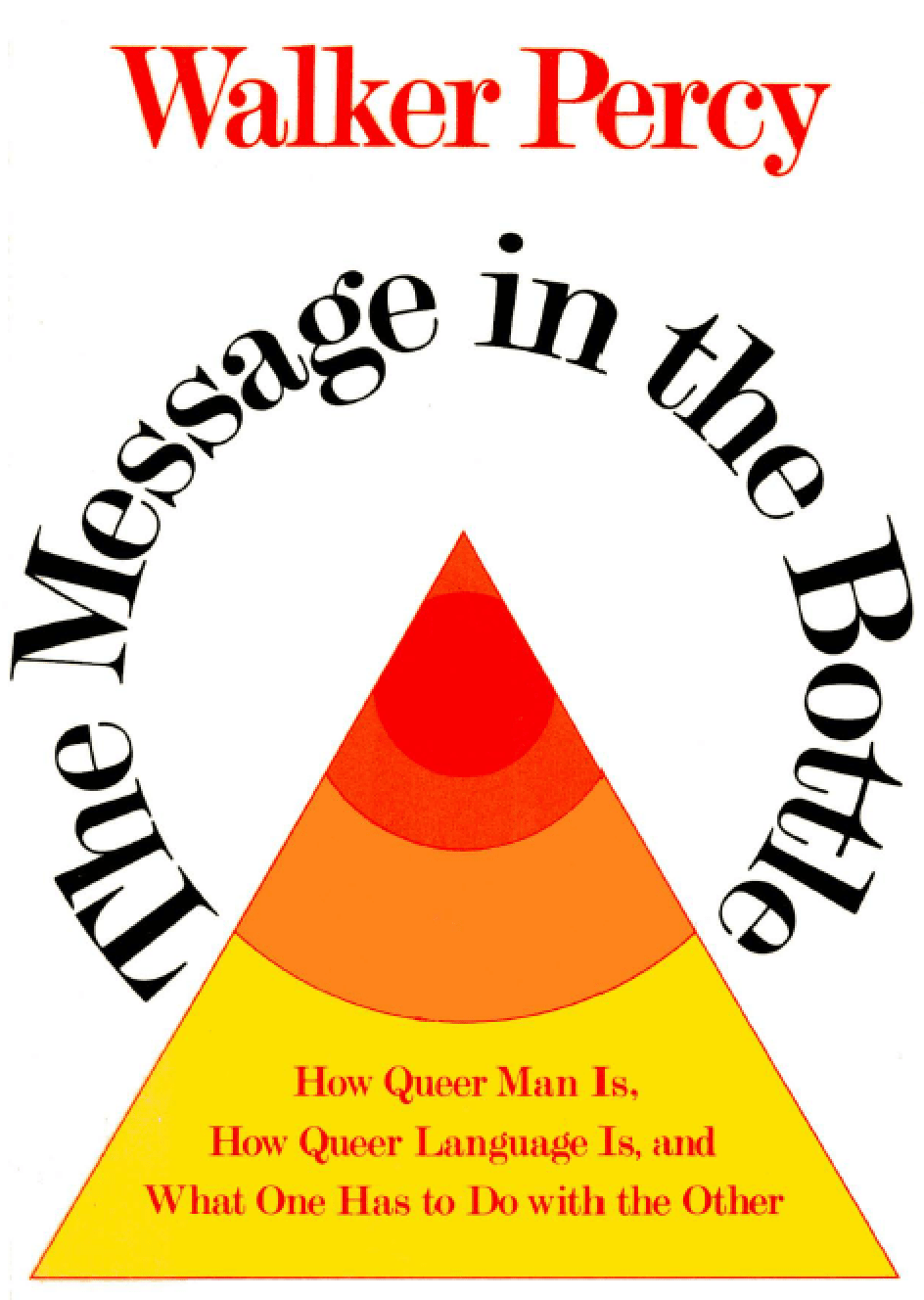
percycovercroppea

A Tertium Quid:

The Lady Novelist?

Tolstoy once said that a talented lady novelist could spend five minutes looking through the window of a barracks and know all she needed to know about soldiering.

If she can see so much in five minutes, how much more must the talented therapist see after, say, a hundred hours with his patient?

So here is the real question, or rather the main specter which haunts every inquiry into language as behavior. Granted the shortcomings of the two major methodological approaches to the talking patient-the analytic-psychical and the organismic-behavioristic is not the sole remaining alternative the novelistic? Instead of “novelistic” we could say phenomenological, for the novelist must first and last be a good phenomenologist, and to most behavioral scientists phenomenologists are closer to novelists than to scientists. But is it not the case that when all is said and done and all theories aside, what happens is that the therapist gets to know his patient pretty well, understands him, intuits him, can talk with him and about him-and that behavioral theory can never say much about it?

Let us at least articulate our unhappiness. Unhappiness changes. We are no longer miserable about the old quarrel between classical behaviorism and classical psychoanalysis or about the more intricate quarrels and rapprochements of their followers. For it has become more and more evident that our main emotion when confronted by both Freud and Skinner, say, is not partisan feelingsfor both are “right” in their way-but rather epistemological embarrassment. Both men put forward dyadic models, one for organisms interacting in an environment, the other for invisible “forces” interacting within a psyche. The question now is not which approach is right but how both can be right at the same time. To us now, Freud’s and Skinner’s models stand to each other like the two worlds on each side of Alice’s looking-glass. Both worlds are demonstrably right and useful in their way, but how do you get from one to the other?

Is the lady novelist the only tertium quid?

But first, what does the lady novelist see if we put her down, not outside a barracks window, but on the other side of a viewing mirror through which she can see therapist and patient who were talking about the rat behind the arras and related oedipal feelings? She notices first off, let us say, that the patient does get excited. But far from its being the case that he is upset and is “resisting” the disclosure of unpleasant unconscious contents, she has the distinct impression that the patient is delighted. Moreover, being a good novelist and well attuned to the intellectual fashions of the day, she has the distinct impression that the patient’s pleasure has something to do with the fact that he has produced a kind of behavior which measures up to, or fits in with, the very theory to which he and his analyst subscribe. Perhaps it also occurs to her that the patient is in a sorry fix indeed if his chief claim to happiness is that occasion when he manages to be sick in the right way.

Suppose that the lady novelist is right. Is she then the tertium quid? Is her way the only way to get at what is going on? And if it is, has not all the fun gone out of the game of behavioral science and the scientific method itself lost its splendid rigor?

Have we not in fact come back to George Miller’s original misgiving, which haunts all behavioral scientists when the subject of words and meanings is raised? Must we not then let it go at that, surrender the field to Tolstoy’s lady novelist, or to Husserl, which is to say the same thing?

Perhaps. But Charles Peirce did propose a radical theory of signs which undertook to give an account of those transactions in which symbols are used to name things and to assert sentences about things. In view of the heroic and generally unavailing attempts during the past fifty years to give such an account through one or another dyadic theory, it might be worthwhile for once to approach triadic behavior with a genuine triadic theory.

Such a theory might bestow order and system upon the phenomenologizing which to the behavioral scientist must seem closer to novel writing than to a science of behavior.

For example, the oedipal patient’s agitation may be given some such preliminary reading as follows:

The patient’s agitation is not dyadic misery-resistance to the disclosure of unacceptable unconscious contents-but triadic delight. This delight, moreover, is quite as fundamental a trait of triadic behavior as organismic “need-satisfaction” is in dyadic behavior. It is a naming delight which derives from the patient’s discovery that his own behavior, which until now he had taken to be the unformulable, literally unspeakable, vagary of one’s self, has turned out not merely to be formulable, that is to say, namable by a theory to which both patient and therapist subscribe, but to be namable with a name which is above all names: oedipal!

As such, the patient’s delight has good and bad, authentic and inauthentic components, which must be traced out and identified within an adequate triadic theory. Thus, the patient’s sentence It’s oedipal! must be investigated for Platonic and even magical components in its mode of coupling as well as for its valid intersubjective celebration of an important discovery. Perhaps the patient’s sentence can be paraphrased in some such terms as: “At last I have succeeded! At last I have produced a proper, even a classical, piece of psychopathology!”

Accordingly, the patient’s behavior with its strong normative components must be evaluated on a normative scale which is in tum an integral part of the triadic theory in question. It is impossible in other words to avoid the subject of the patient’s impoverishment and loss of sovereignty.
Screen Shot 2017-10-11 at 10.58.26 AM.png


The patriarchy of space exploration

Jerry Coyne takes on this POMO tripe: it’s become noticeable that the latest unexamined POMO buzzword to be added to the IYI lexicon in addition to the baseline “ghost in the machine” catchall (“patriarchy”) — is now “colonization”.

Do I really have to enact the emotional labor of deconstructing this rant from a very privileged young woman? Do I have to point out that there are women astronauts, and many women excited in space exploration, and. . . and nobody lives on Mars!?  Does she know that a planet is not a human body? And it’s not like there will be aliens on the planet that will be confined or placed on reservations. Yes, those who despoiled the planet are largely men, but that’s the result of capitalism, not because of some penis-induced desire to wreck things for their own sake. And now, as women begin to assume power, they, too can start wrecking stuff. Has Bianco heard of Anne M. Gorsuch?

frontcover

The reappearing tool: transparency, smart technology, and the extended mind

A recently published open access paper by Mike Wheeler.

160229_TECH_philosopher-iPhone-FBI.jpg.CROP.promo-xlarge2

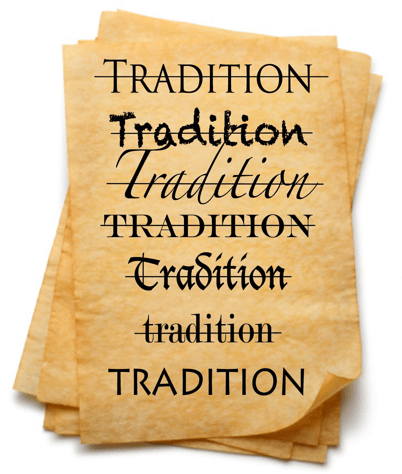
The Concept of a Living Tradition

The very excellent Martin Beckstein has a new paper out.

traditions


Philo of Alexandria

My copy arrived today. A quick glance at the bibliography, i.e. making sure the work of David Runia is consulted, bodes well.

Philo’s creation theology marks an important watershed in Western civilization. Within Judaism he ushers in a more philosophical approach to the creation, which subsequently receives more attention that it had during the Second Temple period.

81LFEdHDT+L

Hello Dark Web, My Old Friend

These vacuous homogenized lamestream glove-puppets, miscellaneous gatekeepers and other IYIs that comprise their now very shaky edifice are seriously pissed off for two inextricably linked reasons: (a) it’s the independent thinkers that now dominate YouTube, much to Google’s chagrin; and (b) the traditional wanna-be public intellectual IYIs of academia now openly display a bad case of sour grapes, writing off the many personages that Douglas Murray mentions here as shallow, trite, popular, derivative, and a whole litany of now meaningless and none-too-subtle smears. They are pissed off that their cultivated priestly mystique (“expertise”) is being dissolved. Two years before the Newman moment (“THE glitch in the matrix”), one could see their arrogance after being routed in open debate (topic — campus free speech) with the usual crass tantrum-like recriminations that followed. As Eric puts it:

  • The evening is wrecked by having to travel to a studio where you will be given a maximum of three minutes’ airtime to correct a set of false presumptions which the presenter has already gathered against you. ‘So what you’re saying’ could be the epitaph for this form of journalism. There is no opportunity for nuance, not much opportunity for correction and very little to recommend it to anyone but the producers.

  • these discussions are rarely set up in the dated red-corner/blue-corner style of a BBC or Channel 4 debate

  • For young people in particular, who have been let down by didactic and cowardly orthodoxies, these newly discovered heroes are providing a path out of the bewildering maze that their age has created for them. It is one of the great good news tales of our time: out from the dark web, into the light.

c8c889b65b80fcb4-2046x1024

Walker Percy Wednesday 173

percycovercroppea

The question must arise then: If triadic activity is overt behavior and as such is the proper object of investigation of a factual behavioral science and is not formulable by the postulates and laws of conventional behaviorism, what manner of “postulates” and “laws,” if any, would be suitable for such a science? Or is the game worth the candle? For, as George Miller says, whenever the behavioral scientist confronts language as behavior, he is generally nagged by the suspicion that the rule-governed normative behavior of naming, of uttering true and false sentences, may somehow be beyond the scope of natural science. Shall we as behavioral scientists accordingly surrender all claim to language as a kind of behavior and yield the field to formalists, logicians, and transformational linguists? Have we not indeed already settled for a kind of tacit admission that there exists a behavior for which there is no behavioral science? To give some simple examples:

Two events occurred in Helen Keller’s childhood. One can be reasonably well understood by learning theory. The other cannot.

Helen, we know from Miss Sullivan, learned to respond to the word cake spelled in her hand by searching for a piece of cake.

Even though we were not present and could not have seen the events inside Helen’s head if we had been, we nevertheless feel confident that learning theory can give a fairly adequate account of the kind of events which occurred. B. F. Skinner would have no difficulty explaining what happened and most of us would find his explanation useful.

But a second event occurred. One day Helen learned in great excitement that the word water spelled in one hand was the name of the liquid flowing over the other hand. She then wanted to know the names of other things.

Theorists of language behavior have been unable to give a coherent account of this event. When one tries to fit this triadic event onto a dyadic model, queer things happen. Ogden and Richards, for example, found themselves with a triangle, two sides of which represented proper “causal” relations between symbol and reference and between reference and referent. A dotted line was drawn between symbol and referent. The dotted line stood for an “imputed relation” between word and thing as contrasted with the “real” relation between word and organism, and organism and referent. The next step was to see man’s use of symbols as somehow deplorable. Korzybski constructed a curious quasi-ethical science of “general semantics” in which he berated people for the wrong use of symbols. Stuart Chase compared symbol-using man unfavorably with his cat Hobie.

One might suppose that a science of language behavior must first determine what sort of behavior is taking place before issuing moral judgments about it.

Three men have a toothache.

One man groans.

The second man say, “Ouch!”

The third man says, “My tooth aches.”

Now it may be unexceptionable to say that all three men emitted responses, the first a wired-in response, the second and third learned responses. ‘” But if one wishes to give a nontrivial account of language behavior, it does not suffice to describe the second and third utterances as learned responses. What kind of a learned response is a sentence and how does it differ from other responses?

Nor does it suffice to describe the two events in Helen Keller’s childhood as instances of learning by reinforcement.

The greatest obstacle to progress in semiotic has been the loose use of analogical terms to describe different events without specifying wherein lies the similarity and wherein lies the difference. To use a term like response analogically is to risk a spurious understanding of matters that are in fact little understood and difficult to investigate.

One recalls Chomsky’s reaction to Skinner’s Verbal Behavior:

Anyone who seriously approaches the study of linguistic behavior, whether linguist, psychologist, or philosopher, must quickly become aware of the enormous difficulty of stating a problem which will define the area of his investigation, and which will not be either trivial or hopelessly beyond the range of present-day understanding and technique.

The following is a loose set of postulates and definitions which I take to be suitable for a behavioral schema of symbol use and which might be adapted from Peirce’s theory of triads. Recognizing the peculiar difficulties that regularly attend such enterprises-not the least source of confusion is the fact that unlike any other field of inquiry language is fair game for everybody, for formal and factual scientists, for logicians, linguists, learning theorists, semanticists, syntacticians, information theorists, and, alas, even for philosophers — I accordingly offer these propositions with the minimal expectation that they will at least suggest an alternative, a way of thinking about man’s use of signs which is different from the standard treatment and, I trust also, less dispiriting.

Screen Shot 2017-10-11 at 10.58.26 AM.png