Oakeshott ’09 Programme

MICHAEL OAKESHOTT ASSOCIATION

BAYLOR UNIVERSITY

WACO, TEXAS

NOVEMBER 12-14, 2009

THURSDAY, NOVEMBER 12, 2009

6:30 PM   Check-in—Foyer of Armstrong Browning Library

7:00 PM   Dinner in Cox Reception Hall

7:45-9:00   Address—Timothy Fuller

FRIDAY, NOVEMBER 13, 2009

8:30-9:00  Coffee service

9:00 -10:15  Address—Roger Scruton: “Politics and Conversation”

10:30-12:00   Panel 1: Oakeshott and Strauss on Hobbes

Kang Chen: What Does It Take to Be Modern, and (Why) Should We Care?: Strauss contra Oakeshott on Hobbes

Silviya Lechner: The Morality of Individuality: Oakeshott and Strauss on Hobbes

Quentin P. Taylor: Michael Oakeshott and the Liberal Hobbes

Chair and Discussant: TBA

12:00-2:00   LUNCH AND BREAK

2-3:30   Panel 2: Politics/Political Theory

Roy Tseng: Scepticism in Politics: A Dialogue between Oakeshott and Dunn

M. Jeffrey Rabin: How Michael Oakeshott is the Philosopher for Our Age

Conor Williams: Oakeshott’s On Human Conduct: Connections Between Non-Foundational Politics and Human Cravings for Solidarity

Ferenc Hörcher: The interpretation of the concept of political phronesis in Oakeshott, Strauss and Voegelin

Chair and Discussant: Corey Abel

4-5:30   Panel 3: The Nature of Philosophy and Its Relation to Politics

Michael Henkel and Oliver Lemcke: Against Platonism: An Oakeshottian Critique of Voegelin and Strauss

John Coats: “Theory and Practice” in Oakeshott, Strauss and Voegelin

Till Kinzel: The Place of Politics in a Philosophical Education: Reflections on the Thought of Michael Oakeshott and Leo Strauss

Suvi Soininen: Philosophy and its relationship to politics; some touching points of Oakeshott’s and Strauss’ thinking

Chair and Discussant: David Corey

Dinner: On your own

SATURDAY, NOVEMBER 14, 2009

8:30-9:00   Coffee Service

9:00-10:15  Address—Robert Grant

10:30-12:00   Panel 4: Tradition and Historical Explanation

Martin Woessner: The Critique of Historical Reason and Its Political Consequences: Heidegger, Oakeshott, and Strauss

Lorraine Krall: Oakeshott: In Defense of Tradition

Chor-Yung Cheung: Skepticism, Poetic Imagination and the Art of Non-Instrumentality: Oakeshott and Chuang Tzu

Kenneth B. McIntyre: ‘What’s Gone and What’s Past Help…’:  Oakeshott and Strauss on Historical Explanation

Chair and Discussant: Paul Franco

12:00-2:00   LUNCH AND BREAK

2:00-3:30   Panel 5: Religion; Athens and Jerusalem

Ralph Hancock: Reason, Revelation, and the Problem of Technology in Leo Strauss

Eric Kos: Modernism in Religion: The Idealist’s Approach to Science and Religion

Matthew Sitman: Politics After Babel: Michael Oakeshott, Reinhold Niebuhr, and the Theological Defense of Modernity

Chair and Discussant: Elizabeth Corey

4:00-5:30   Panel 6: Modernity and Politics in the Western World

Noël O’Sullivan: Constitutionalism and modernity in Oakeshott, Strauss and Voegelin

William Mathie: What is Modernity?

Attila Molnar:  The problem of political knowledge and action in the criticism of Modernity

Ivo Mosley:  The Illusion of Democracy

Chair and Discussant: Richard Friedman

6pm till  Closing: Dinner and Reception

at the Coreys’ house, 500 North Park Avenue, Waco
The Lives of Ants

I came across a “review” of The Lives of Ants by Keller and Gordon. The book seems to have been very well received across several publications. Here is the Economist‘s “review” kindly sent to me by Shannon Selin.

This pheromone-driven behaviour means that although single ants are not clever, collectively they are capable of complex tasks. Such “swarm intelligence” is of huge interest to scientists and has already led to practical applications. Unilever, for instance, has used a computer program based on swarm intelligence to organise movements between storage tanks, mixers and packing lines in one of its factories.

Though Keller and Gordon (nor the reviewer) do not seem to invoke the term stigmergy, they do of course discuss swarm intelligence. This work follows in the wake of Sunstein’s Infotopia: How Many Minds Produce Knowledge and Surowiecki’s The Wisdom of Crowds: Why the Many Are Smarter Than the Few and How Collective Wisdom Shapes Business, Economies, Societies and Nations, neither of which are particularly deep. Still, it’s nice to see ideas such as these enter the popular domain.

41XIzqYOGLL._BO2,204,203,200_PIsitb-sticker-arrow-click,TopRight,35,-76_AA240_SH20_OU01_

Guilty Robots

Dov must surely have intended “stigmergy”! David McFarland certainly does: pp. 166, 178, 198. I hope this is picked up for the hardcopy review of McFarland’s Guilty Robots, Happy Dogs: The Question of Alien Minds.

Robots can be simply reactive to certain elements of their environment; they can demonstrate ‘stigmercy’, or ‘[t]he production of behavior that is a direct consequence of the effects produced in the local environment by previous behavior’ (219); a robotic ‘goal-achieving system’ can change its behavior (by stopping, for instance) when a certain goal has been achieved; a ‘goal-seeking system’ is designed to work towards the accomplishment of a certain goal ‘without the goal being represented within the system’ (11), while the behavior of ‘goal-directed’ systems is informed by such representations.

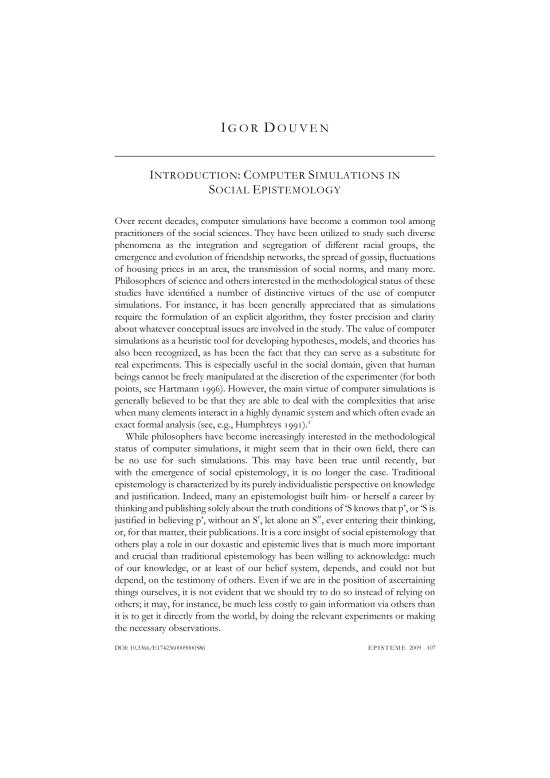
Computer Simulations in Social Epistemology

Another reminder: check out the special themed EPISTEME issue edited by Igor Douven.

e1742360009000586.fp.png_v03

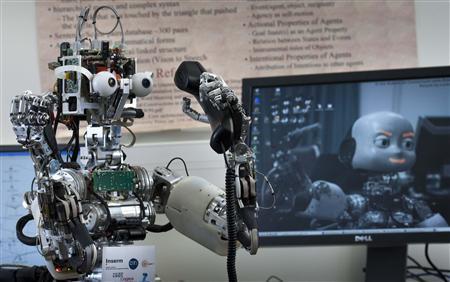
iCub hype

Telling aspect to this article:

“Is perception consciousness? The ability to understand that somebody has a goal, is that consciousness?” he asked.

“These kinds of questions, we will be able to ask with much more precision because we can have a test bed, this robot, or zombie, that we can use to implement things,” he said, describing working with iCub as “an outstanding pleasure.”

Away from such highbrow concerns, the aim is also to develop iCub so that it can have practical applications.

r

r-1

r-2

Critical Notices: Thompson and Strawson

I want to bring your attention to two superb reviews on the work of Evan Thompson and Galen Strawson. These very thoughtful reviews are not space fillers nor point scoring exercises, but represent a close engagement with the material. If you would like a copy of either review please don’t hesitate to get in touch with the authors – see here for their contact details. If you appreciate these reviews check out another recent review: there are several more in the pipeline.

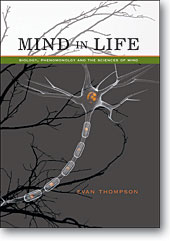
1. Mind in Life: Biology, Phenomenology, and the Sciences of Mind is reviewed by Dorothée Legrand.

THOMIN

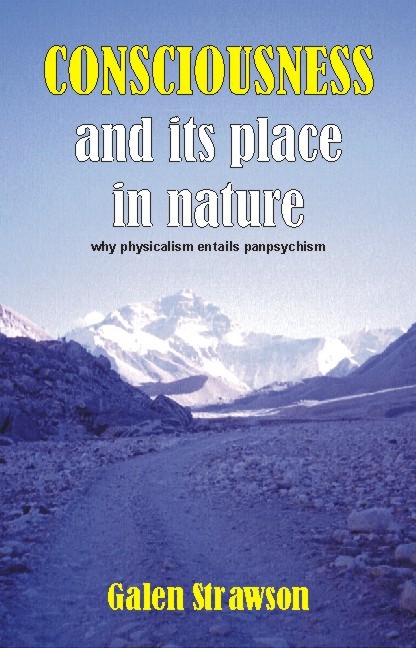
2. Consciousness and its Place in Nature: Does Physicalism Entail Panpsychism? is reviewed by my sometime collaborator Christian Onof.

1845400593

The Elusive Oakeshott

Here is a characteristically lucid piece by Ken Minogue on Oakeshott’s supposed conservatism. It should be noted that conservatism as Oakeshott understood it, is an anathema to “conservatism” understood in the American context. I take the view that these the terms are not at all helpful and are, for the most part, vulgarized. Oakeshott was merely an epistemological skeptic and had a “high” liberality as his central value. (By the way, I don’t view Minogue’s characterization of Hayek as a libertarian as particularly accurate, but that’s a side issue). Oakeshott understood that culture was necessarily dynamic: a culture that didn’t change or was frozen by a nostalgic foundationalism, was moribund.

P.S. Thanks to Gene Callahan for alerting me to Minogue’s piece.

The Extended Mind and Religious Thought

THE EXTENDED MIND AND RELIGIOUS THOUGHT Zygon symposium (Volume 44 Issue 3 September 2009) is now available online. The lineup as follows:

MINDSCAPES AND LANDSCAPES: EXPLORING THE EXTENDED MIND (p 625-627)
Leslie Marsh

THE EXTENDED MIND (p 628-641)
Mark Rowlands

PERSONS AND THE EXTENDED-MIND THESIS (p 642-658)
Lynne Rudder Baker

MINDS, INTRINSIC PROPERTIES, AND MADHYAMAKA BUDDHISM (p 659-674)
Teed Rockwell

EMPATHY AND THE EXTENDED MIND (p 675-698)
Joel W. Krueger

QUINTUPLE EXTENSION: MIND, BODY, HUMANISM, RELIGION, SECULARISM (p 699-718)
Leonard Angel

CONSTRUCTING RELIGION WITHOUT THE SOCIAL: DURKHEIM, LATOUR, AND EXTENDED COGNITION (p 719-737)
Matthew Day

Rob Rupert’s Cognitive Systems and The Extended Mind

Earlier this year I trailed Rob Rupert’s new book. I now want to give a plug to a workshop that is going to be held to discuss this eagerly awaited book. I’ve commissioned a Critical Review for The Journal of Mind and Behavior to be written by the very able Colin Klein.

51loqRlACRL._BO2,204,203,200_PIsitb-sticker-arrow-click,TopRight,35,-76_AA240_SH20_OU01_