See Andrew Sullivan’s blog. Elizabeth Corey’s book that Andrew so highly praises features heavily in the Oakeshott symposium for Zygon.
Neuroscience and Politics
Over the last few years there has been a rash of articles concerning the relationship of neuroscience to politics – Wired – BoingBoing – Crooked Timber. On this topic, here’s a recent posting from the ever-thoughtful Corey Abel. Update: assimilating this paper.
Friedrich A. Hayek: His Life and Work
Here is a lecture on Hayek by disciple Kurt Leube, someone I have had a brief correspondence with. Not deep stuff but I suppose a decent introduction. Interestingly enough he touches upon The Sensory Order though Leube’s enthusiasm for/assessment of this work is way over the top: “TSO is one of the most celebrated books ever penned in the last century . . . ” While certainly a fascinating and deep work, it is hardly the case that it corresponds to the superlatives Leube confers upon it. My take on TSO is forthcoming.
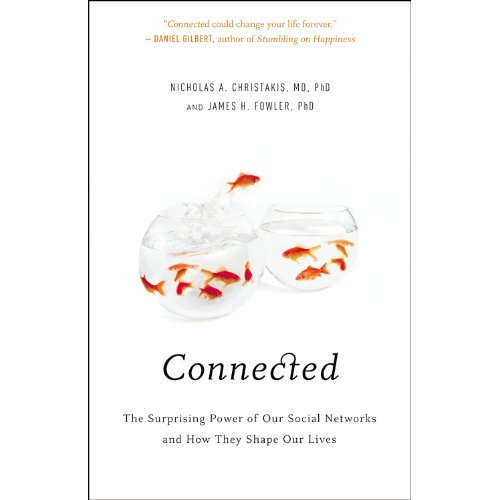
Connected
Yet another “popular” book on, as I term it, social connectionism – Connected – see New Scientist review. Shame about the dreadful dust jacket hype on Amazon.com.
Hubert Dreyfus on Husserl and Heidegger
From Brian Magee’s marvelous series (and accompanying book) The Great Philosophers from about ’87 with top-draw commentators on each major thinker.
Pt. 1
Pt. 2
Pt. 3
Pt. 4
Pt. 5
Online Oakeshottiana
Some Oakeshottiana can be found online available for download.
Oakeshott’s Introduction to Hobbes
A fragment from a Spanish version of the Voice of Liberal Learning
Happy birthday Google

Brin and Page:
We assume page A has pages T1, . . ., Tn which point to it (i.e., are citations). The parameter d is a damping factor which can be set between 0 and 1. We usually set d to 0.85, . . ., C(A) is defined as the number of links going out of page A. The PageRank of a page A is given as follows:
PR(A) = (1-d) + d (PR(T1)/C(T1) + … + PR(Tn)/C(Tn))
Google’s search algorithm is a refinement of degree centrality, namely eigenvector centrality, where degree centrality is something we touched upon in the last section when discussing testimony, trust and authority. Eigenvector centrality gives credence to the idea that not all connections should be equally weighted. Google’s Page-Rank (PR) is a star example of eigenvector centrality, and is a direct descendant of the citation system used in traditional librarian science, the most familiar being journal rankings. The more citations other documents make to a particular document, the more ‘‘important’’ a given document is and the more status accorded to a journal through aggregation techniques. In much the same way, Google’s PR algorithm assesses the importance or relevance of a Web page. Search engines are, as Christophe Heintz puts it, ‘‘reputation systems’’ (EigenTrust algorithms) in that they ostensibly promote epistemic and cognitive worth (Heintz, 2006). PR’s power lies in its ability to solve an equation with over 500 million variables and 2 billion terms. Its simplicity lies in its assessing a page’s importance by counting backlinks as a traditional technique of library science objectivity.
Brin, S. & Page, L. (1997). The anatomy of a large-scale hypertextual web search engine.
Heintz, C. (2006). Web search engines and distributed assessment systems. In S. Harnad, I. Dror (Eds.), Distributed cognition: Special issue of pragmatics & cognition (Vol. 14)(2), (pp. 287–409).
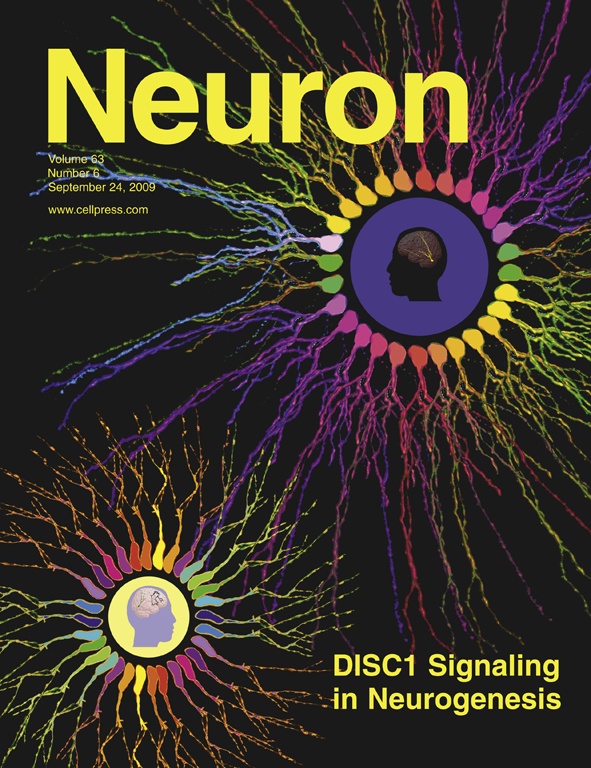
Bayesian Reconstruction of Natural Images from Human Brain Activity
Article in latest issue of Neuron – well worth checking out.
Ryle & Oakeshott on the “Knowing-How/Knowing-That” Distinction
Some two and a half years ago I previewed this paper. For several reasons, not least because of my faffing about and constantly reworking it in light of new reading, not to mention wrestling with some Quine and Frege, it only now has gone to press. Here are the first and last sections. Section II is entitled “KH and KT: Three Permutations” with sub-sections – KH and KT are Sui Generis: Ryle; KH As A Species of KT; The Agnostic View – Section III “Oakeshott on KH/KT: A Critique”; sub-sections “Will the Real Rationalist Please Stand Up?” and “Ryle and Oakeshott: A Discontinuity”; Section V “Tradition or Practice as an Extended Cognitive System” and finally Section V, some concluding remarks which I include here after section I.
I. The Social Nature of Rationality
Politics make a call upon knowledge. Consequently, it is not irrelevant to inquire into the kind of knowledge which is involved.[1] — Oakeshott
Gilbert Ryle’s “Knowing How/Knowing That” distinction (KH/KT) gave crisp articulation to a long-standing epistemological concern that Michael Oakeshott had: that is, what is the epistemic status of the area that comprises our waking lives, the domain of practical reasoning, of which political practice, on Oakeshott’s account, is but one aspect. [2] This concern is set against a much broader purview: that of the nature of rationality, or more accurately the social nature of rationality.
Though Ryle’s KH/KT distinction has been taken to be primarily an epistemological distinction, it is as much a claim about the operations of the mind. Ryle’s The Concept of Mind [3] was a work in philosophical psychology; and though Oakeshott couldn’t be considered a philosopher of mind, his work is replete with concerns about the bipartite relationship of mind to world and of the bipartite relationship of theorizing to action. Oakeshott’s concern with the KH/KT distinction is coextensive with a concern with “unconsidered actions” supposedly “irrational” conduct and reflective consciousness, the latter supposedly the spring of rational conduct. On Oakeshott’s account the former is not irrational (where tradition is the only reliable resource, its disregard is irrational); the latter is illusory and hardly rational. The contrast is a spurious one; all there ever is, is a socially embedded intelligence – “intelligibility is contextual” – to use what might be considered an Oakeshott slogan. This said, Oakeshott does not subscribe to the Marx-Mannheim line (and their intellectual heirs comprising the sociology of knowledge movement) that human conduct can merely be explained as being subject to ‘‘false consciousness’’ or a distortive miscognition.
Oakeshott rejects the prevailing Cartesian orthodoxy across cognitive science, the philosophy of mind, epistemology and metaphysics: an orthodoxy that has systematically overlooked not only the location of thinkers in their physical environments, but has also overlooked the interactions amongst thinkers in the ambient socio-cultural soup:
You do not first have a mind, which acquires a filling of ideas and then makes a distinction between true and false, right and wrong, reasonable and unreasonable, and then, as a third step, causes activity. Properly speaking the mind has no existence apart from, or in advance of, these distinctions. These and other distinctions are not acquisitions; they are constitutive of the mind. The whole notion of the mind as an apparatus for thinking is I believe an error and it is the error at the root of this particular view of the nature of “rationality.” (RIP, 109-13)
For Oakeshott, a tradition or practice implies the social situatedness of the self and the rejection of focal individualism, the idea that human drives and behavioral characteristics are socially and historically invariant: individuals draw their self-understanding and their conceptions of the good, their “constitutive” ends, from what is conceptually to hand in historically specific societies or civilizations. Society is in some sense antecedent to the individuals that compose it. Mind does not merely respond to a given world; mind is enacted [4] through a particularized history of socio-environmental coupling: perception is an act of interpretation and the generation of meaning, a self that is embedded and has coherence in a matrix of practices and traditions. Situatedness, for Oakeshott, is captured in the following:
(i) Manners of behavior which are meaningless when separated from their context (RIP, 63);
(ii) “Politics may be said to be the activity of responding to conditions of things already recognized to be the product of choices” (RIP, 70, italics added);
(iii) “Human self-understanding is inseparable from learning to participate in what is called a ‘culture’” (VL, 16-17)[5];
(iv) “Selves are not rational abstractions, they are historic personalities, they are among the components of [the] world of human achievements” (VL, 41).
Therefore, knowledge and cognition only exists against a background fabric of cultural possibility, a preexisting, complex web of linguistic, technological, social, political and institutional constraints — a social ecosystem if you like. [6] There is nothing external to a tradition in terms of which it can be appraised: an artless conduct is “as impossible as an utterance in no language in particular” (OHC, 86; RIP, 14). And again “Volition cannot carry us beyond thought, because there is no beyond” (EM, 26). A tradition fixes and applies its own internal criteria, methods, distinctions and standards of cogent argument, its own immanent standard of epistemic weight regarding its methodological, conceptual and empirical problems. Only from within a tradition-based politics can a tradition can be interrogated and applied. In Oakeshott’s terminology, it is to “pursue its intimations” or enter into a “flow of sympathy” (RIP, 57, 59, 60, 61, 129, 131) where there is no “changeless centre . . . everything is temporary but nothing is arbitrary” (RIP, 61). This means that one is always dealing with a reflective tradition, not an inert pattern of habitual behavior:
(i) “A human art is never fixed and finished; it has to be used and it is continuously modified in use” (VL, 13);
(ii) “A human being is a ‘history’ and he makes this history for himself out of his responses to the vicissitudes he encounters” (VL, 9; cf. VL, 63, passim);
(iii) “Practices are not stable compositions” (OHC, 100).
Later in On Human Conduct Oakeshott talks of a “practice” not as the outcome of a performance (OHC, 56) but as emerging and continuously invented: “an instrument to be played upon, not a tune to be played” (OHC, 58; cf. OHC, 91). In language reminiscent of Rationalism in Politics he writes: An agent’s understanding of a practice he or she is engaged in, “is not that of knowing the rules but of knowing how to speak it . . . “(OHC, 91; and cf. OHC, 26, where the theorist’s understanding is contrasted with the agent’s).
Tradition (or culture) is of such complexity, a complexity generated by infinitely fine-grained constantly shifting local and ephemeral variables, that as a guide to action, social knowledge (KH) cannot be reduced, abridged, or restated propositionally (KT) without remainder. Oakeshott’s conception of the KH/KT distinction manifests itself in two ways, the former I believe, morphed into the latter:
(i) Modality: Oakeshott’s idea that science, history, practice and aesthetics are domains constitutive of their own criteria of objectivity and standards appropriate to their own subject matter. Any attempt at cross- or trans-modal thinking is bound to be a corrupting exercise.
(ii) Political skepticism: the idea that politics has no intrinsic purpose or end; liberal society should properly be conceived as a civil association not an enterprise association. Social complexity will always defeat the calculation of efficient means (“scientific” politics) to clearly conceived, large-scale political ends. Aims are only incompletely accomplished and unforeseen side-effects always cause results to be markedly different from intentions. [7]
VI: Concluding Remarks
A history of thought is a history of men thinking, not a ‘history’ of abstract, disembodied ‘ideas’. [49] — Oakeshott
A more succinct and pointed statement of Oakeshott’s non-Cartesian credentials cannot be found. Oakeshott rejects the Cartesian bifurcation of the person into brain and body, apparent in the still prevailing methodological supposition that cognition can be studied independently of any consideration of the body and the physical and ambient social environment. Oakeshott’s emphasis on the notion of embodiment implies a goal driven and purposeful engagement with the world. The situated mind is enacted through a particularized history of socio-environmental coupling: perception is an act of interpretation and the generation of meaning, a kind of know how. Political philosophers would do well to see the broader relevance of Oakeshott’s epistemological concerns; situated cognitive science should now add Oakeshott to the roster theorists that include titans such as Heidegger, the later Wittgenstein, Merleau-Ponty and Hayek.
[1] Oakeshott, Rationalism in Politics and other essays, new and expanded edition, ed. Timothy Fuller (Indianapolis: Liberty Press, 1991), 45. Hereafter: RIP.
[2] Ryle’s “Knowing How, Knowing That” essay was first published in the Proceedings of the Aristotelian Society, New Series, Vol. 45 (1944 – 1945): 1-16. The terms “rationalism” and “knowledge of” and “knowledge about” make an appearance some thirty years earlier than the celebrated formulations of Rationalism in Politics in Oakeshott, Experience and its Modes (Cambridge: Cambridge Univ. Press, 1933), 23, 25, 53, 318. Hereafter: EM. The original essay “Rationalism in Politics” appeared in the Cambridge Journal, Vol. 1 (1947-8): 81-98, 145-57.
[3] Gilbert Ryle, The Concept of Mind (1949; reprint, Harmondsworth: Penguin, 1990).
[4] The terms “enacted” or “enactive,” coined by Francisco J. Varela, Evan Thompson & Eleanor Rosch, The Embodied Mind: Cognitive Science and Human Experience (1991; reprint, Cambridge, MA: MIT Press, 2000), here implies sense-making, embodiment, emergence, and experience. Enacted in this sense is not co-extensive with Oakeshott’s term “self-enactment.” Oakeshott, On Human Conduct (Oxford: Clarendon Press, 1990), 70-8, passim. Hereafter: OHC.
[5] Oakeshott, The Voice of Liberal Learning, ed. Timothy Fuller (Indianapolis: Liberty Fund, 2001), 57. Hereafter: VL.
[6] Elsewhere I have examined the relativistic implications of Oakeshott’s social constructivism. See Leslie Marsh, “Constructivism and Relativism in Oakeshott” In The Intellectual Legacy of Michael Oakeshott, ed. Corey Abel and Timothy Fuller (Exeter: Imprint Academic, 2005), 238-62.
[7] This is not an argument against all attempts at social change or improvement. For a Burkean, change is inevitable and desirable. As Burke said in Reflections on the Revolution in France, “a state without the means of some change is a state without the means of its conservation.” I am loath to use the term ‘conservative’ as it is a term that carries too many often incompatible connotations in Anglo-American philosophy (let alone in the public mind): there are self-avowed conservatives who are rationalists; the corollary is that not all anti-rationalists can be classed as conservative.
[49] LHPT, 42.
Key Terms in Philosophy of Mind
Pete Mandik is trailing his forthcoming book – Key Terms in Philosophy of Mind – to be published by Continuum. From what I’ve read of Pete’s work, he always offers a reliable hard-nosed account of issues in the philosophy of mind and is very up on the literature – he is not stuck in rehashing philosophy of mind circa 1989 – as it seems some are apt to do. An added bonus to the reader is that they can follow Pete’s blog which is arguably the most vibrant and provocative of blogs – Brain Hammer – here is a real enthusiast. Oh yes, a characteristic Mandik paper entitled “Shit Happens” for EPISTEME‘s special issue on conspiracy theories is well worth checking out given that conspiracy continues to animate the popular mind.

