Here’s a TPM interview with Alan Sokal. As Sokal says, perhaps it is inevitable that whatever his technical achievements are, he will be remembered for the so-called “Sokal hoax.” The vitriol that this debate generated I think did philosophy a service to a degree – “Continental” and analytical philosophy – but the slanging match did get tiresome and unproductive. I don’t think it was postmodernism per se that was Sokal’s target, but more areas where a lack of philosophical culture licenced uncritical and obscure “thinking.” We know of course that Sokal had political motivations – this wooly brand of postmodernism wasn’t doing the traditional Left any favours. The Right also picked up on this debate finding some common ground with Sokal but thereby also muddied the waters. The best work on this debate still remains Jim Brown’s magnanimous Who Rules in Science? An Opinionated Guide to the Wars. But cutting across this debate making it even more complex is the debate between radical social constructivists and more modest constructivists – the best work on this being Andre Kukla’s strident Social constructivism and the philosophy of science.
Levi-Strauss Dead

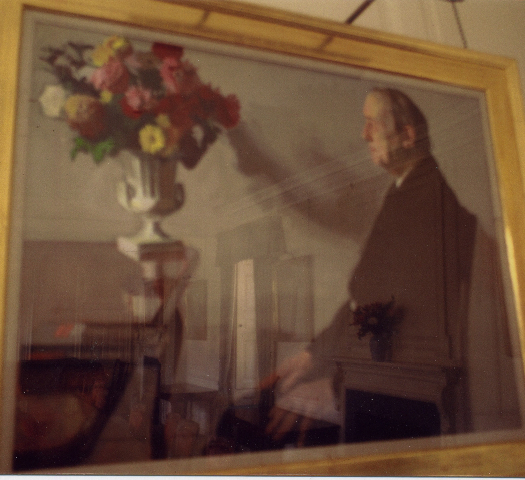
Oakeshott Caius Portrait
Here is the portrait that hangs in Caius College kindly sent to me by Graham A. MacDonald. The problem is that one can’t do much about the reflection giving this rather ghostly rendition – the artist who I tracked down and with whom I spoke did promise to send me a print – he never did. Graham tells me that it’s a copy of On Human Conduct on the table.
The epistemology of legal evidence
A reminder that the bumper issue of EPISTEME is available for free download. See the first paragraph below which discusses the lacuna this issue fills.
WALTER SINNOTT-ARMSTRONG AND FREDERICK SCHAUER
INTRODUCTION
Epistemology and the philosophy of law are both thriving, but it is unfortunate that there is so little interaction between the two. Few books on epistemology deal with legal evidence, and few books on the legal system’s approach to evidence even recognize the sphere of philosophical epistemology. Law is not listed in the index to the admirable Blackwell Companion to Epistemology, and its entry on evidence moves on quickly after distinguishing what epistemologists and lawyers mean by evidence. The Oxford Handbook on Epistemology also has no index entry on law and only one short discussion of how psychology has affected evidence law. Perhaps more surprisingly, the Oxford Handbook of Jurisprudence and Philosophy of Law has 1,050 pages with no article or even entry in its index on evidence and only two pages that refer to epistemology. The Blackwell Companion to Philosophy of Law and Legal Theory does have one short article on evidence, but only one mention of epistemology or evidence outside of that article.
Beauty and the brain
Here is a New York Review of Books blog report on a workshop conference held at IULM University Milan bringing together a mix of neurobiologists, philosophers and art historians.
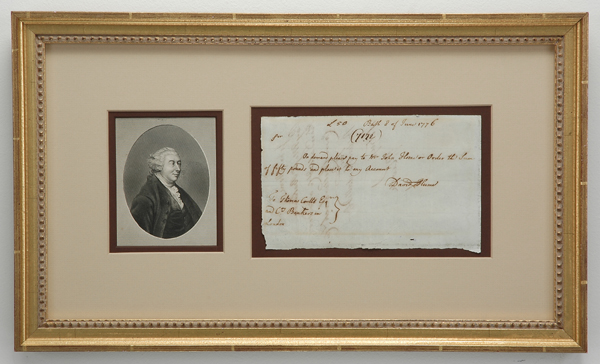
Signed Hume Cheque
This would make a lovely if somewhat expensive item for the Hume fan (thanks Gene via Mario for the link). See full details here.
Memory Game
Test your memory skills with National Geographic.
Constructivism and Relativism in Oakeshott
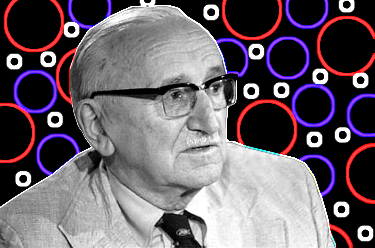
Hayek Interview
Here is a transcript of a 15.25-hour interview completed under the auspices of the UCLA Oral History Program and the Pacific Academy of Advanced Studies. I haven’t read the piece so I can’t vouch for its quality (I don’t recognise the interviewers). Anyway, one would hope that there will be some interest within the 1,046 pages. Download here (pdf: 19.73 MB).
Limits on the Communication of Knowledge in Human Organisations
I want to bring your attention to this superb paper by Jacky Mallett (one of the sharpest minds around) published in Studies in Emergent Order, Spring 2009, Vol. 2.

