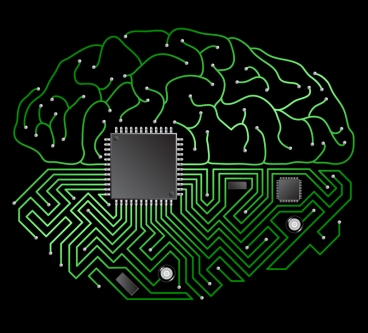
Essentially, we want to rewind to 30 years ago and revisit some ideas that had gotten frozen,” he says, adding that the new group hopes to correct “fundamental mistakes” made in AI research over the years.
Swarm
Swarm grandee Guy Theraulaz presents a lecture on Biological Principles of Swarm Intelligence.

Other salient talks available on this site include:
Evolutionary Algorithms by Adam Prügel-Bennett
Dance evolution by Jeff Balogh, Gregg Dubbin, Michael Do
Science, Technology, and Applications of Swarm Robotics by Dario Floreano
The Mathematics of Emergence and Flocking by Stephen Smale
Fuzzy Logic by Michael Berthold
Differential Evolution and Particle Swarm Optimization in Partitional Clustering by Thiemo Krink
Structure and Dynamics in Complex Networks by Mark Newman
Information Transfer in Moving Animal Groups by David J. T. Sumpter
Small is beautiful
Over at Vitorino Ramos’ ever thoughtful blog is a post extolling the virtues of the “small”. The point is twofold:
First, the superb detail afforded by the photographs that Vitorino has assembled shows a rather complexly “designed” creature – a design that belies the supposedly simple life-form that ants are typically taken to be. The engineering challenges required to even roughly approximate such creatures is formidable.
Second, the study of ant sociality is of central interest to researchers in A.I. – the concept of stigmergy offers those of us with an interest in complex systems (human sociality being the paradigm) – a very fertile vein of inquiry.
So, next time you are about to snuff out this creature, at the very least, stop and spare a thought for this creature – we have much to learn from the small and the “simple.” To adapt Shakespeare:
As ants (flies) to wanton boys are we to th’ gods,
They kill us for their sport.
Robotic pet
Meet Paro. He’s a robotic seal developed by Japanese researchers to help dementia patients feel that they have companionship and a feeling of security, without the responsibilities of a living pet. (Thanks to Suzie Katz for alerting me to this story).
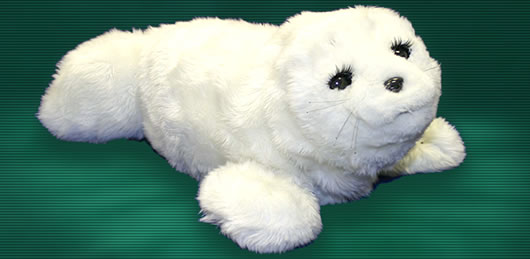
Made to emulate a live pet as much as possible, he can cuddle, nod and blink his big black eyes. Paro is currently being tested with patients in Baden-Baden and there are already 1,000 robot seals deployed in long-term care homes in Japan.

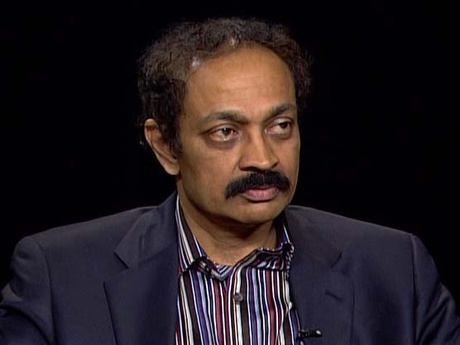
Charlie Rose in conversation with V.S. Ramachandran
V.S. is always good value for money – his enthusiasm is palpable. Click photo to view video.
The Modern Legacy of William James’s **A Pluralistic Universe**
Momento’s Revenge
I’ve read just about everything by Andy Clark – as I’ve said several times before he is a superb stylist and is philosophy at its most lively. Some years back I read his paper Memento’s Revenge: Objections and Replies to the Extended Mind. I don’t recall having seen the film that Andy references in his paper; I might have seen clips. Anyway, what’s interesting is that in the discussion after my recent presentation entitled Extended Cognitive Systems to a bunch of economists who didn’t know of the famous Clark-Chalmers Inga/Otto thought experiment (that I freely adapted in my talk) – they got the point so quickly and asked if I’d seen this film. So thanks to the two German scholars who brought it up (sorry I don’t recall your names) I’m now motivated to check out what I anticipate will be an intelligent film.

Brain Science Podcast
I want to give a plug to the excellent resource that is the Brain Science Podcast website so passionately managed by Ginger Campbell. There is even an iPhone app now available though I haven’t used it yet.
The Epistemology of Disagreement
The latest issue of EPISTEME is now available.
Cognitive Ecology
The program for EPISTEME 2010 is firming up nicely. It’s great to see Martin Kusch finally involved with EPISTEME. Discussants at large include David Bloor – how ecumenical is that? In many ways social epistemology comes home – Edinburgh historically being a hotbed of the Strong Programme – and EPISTEME being published by Edinburgh University Press.

