This past weekend I attended the Timothy Sprigge Memorial Conference (see link to obituary by Jane O’Grady who was in attendence). I met Sprigge in 1997 at the Bradley conference at Harris-Manchester College Oxford, a time when I was very interested in the idealists. Funny how philosophical changes come and go – Sprigge, ever the outsider, is now of interest to current philosophy of mind. Anyway, this conference brought together a very diverse group of theorists in the most congenial of environments and I was able to meet a few of my intellectual heroes.
+++++++++++++++++++++++++++++++++++
Leemon McHenry (California State University, Northridge)
Sprigge’s Ontology of Consciousness
Pierfrancesco Basile (University of Bern)
It must be true—but how can it be? Some Remarks on Panpsychism and Mental Composition
Alastair Hannay (University of Oslo)
The Space We Share: Phenomenology and Metaphysics
Jason Brown (New York University Medical Center)
What is a Mental State?
Galen Strawson (University of Reading)
Fundamental Singleness: How to Turn the 2nd Paralogism into a Valid Argument
Jaegwon Kim (Brown University)
Explaining Consciousness: From Emergentism to A Priori Physicalism
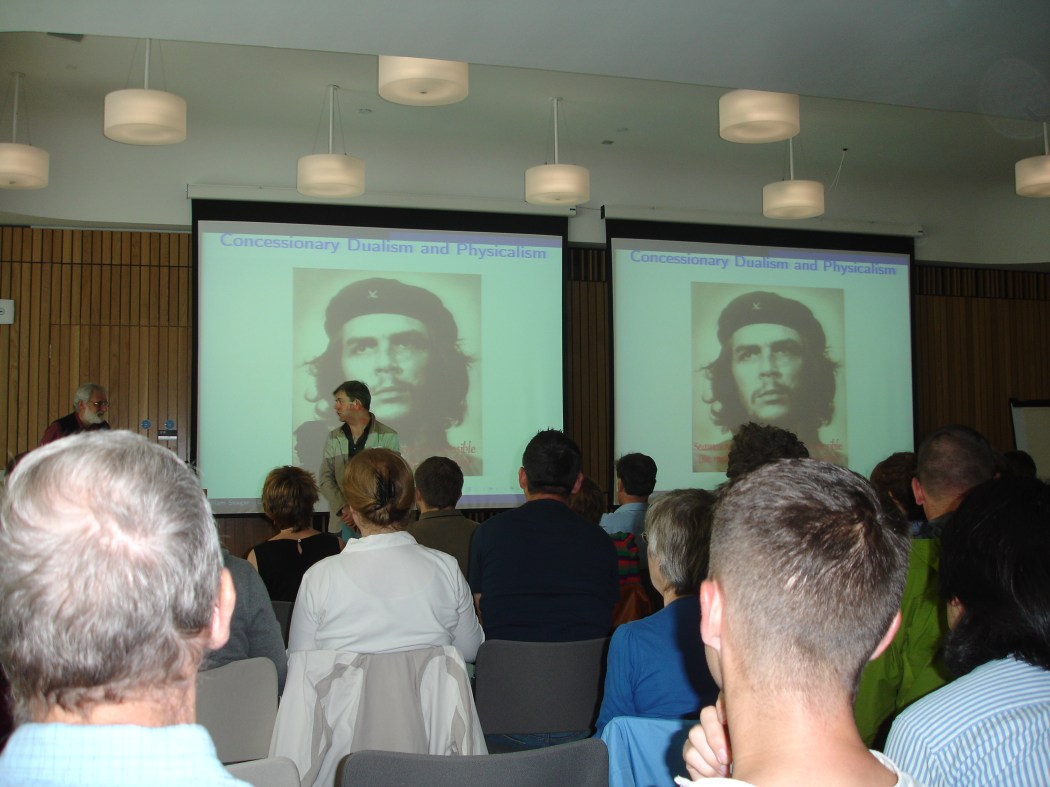
William Seager (University of Toronto)
Concessionary Dualism and Physicalism
Brian P. McLaughlin (Rutgers University)
Consciousness, Identity, and Explanation
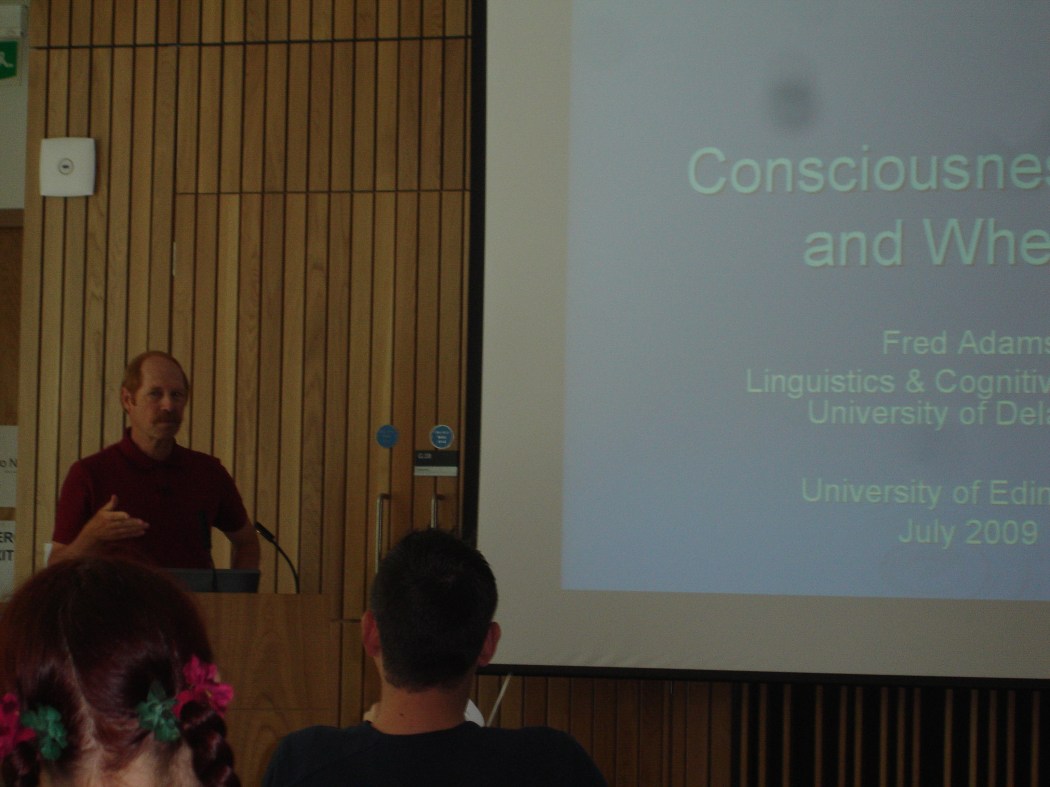
Fred Adams (University of Delaware)
Consciousness: Why and Where?
Geoffrey Madell (University of Edinburgh)
Substance Dualism: You Know it Makes Sense
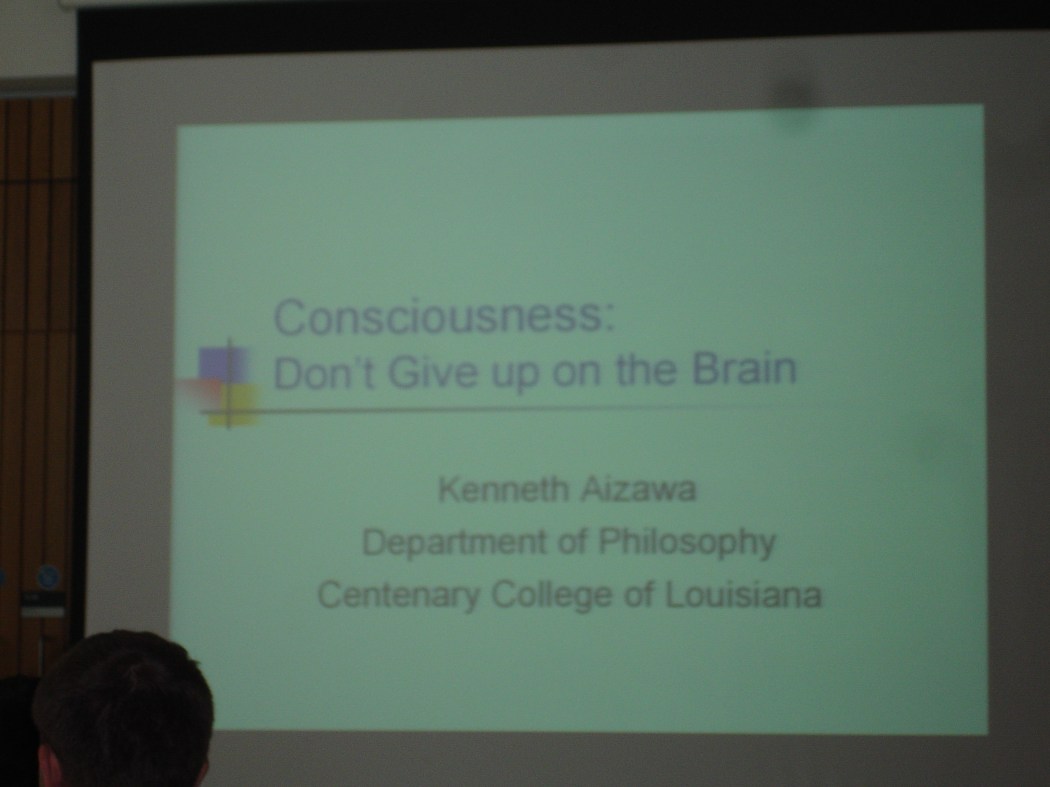
Ken Aizawa (Centenary College of Louisiana)
How Consciousness Can Safely Emerge
David Cockburn (University of East Anglia)
Doubts About “Consciousness”
Andy Clark (University of Edinburgh)
Locating the Conscious Mind
Howard Robinson (Central European University, Budapest)
Quality, Thought and Consciousness
Stephen Clark (University of Liverpool)
How to Become Unconscious
Eduard Marbach (University of Bern)
Is there a Metaphysics of Consciousness without a Phenomenology of Consciousness? Some thoughts derived from Husserl’s Philosophical Phenomenology
Brenda Almond (University of Hull)
Religious Consciousness: Revisiting the God of the Philosophers
Julian Kiverstein (University of Edinburgh)
The Metaphysics of Time Consciousness
James Giles (University of Guam)
The Metaphysics of Awareness in Taoist philosophy
Tim Crane (University College London)
Consciousness as Predicated of Human Beings
Barry Dainton (University of Liverpool)
Phenomenal Holism
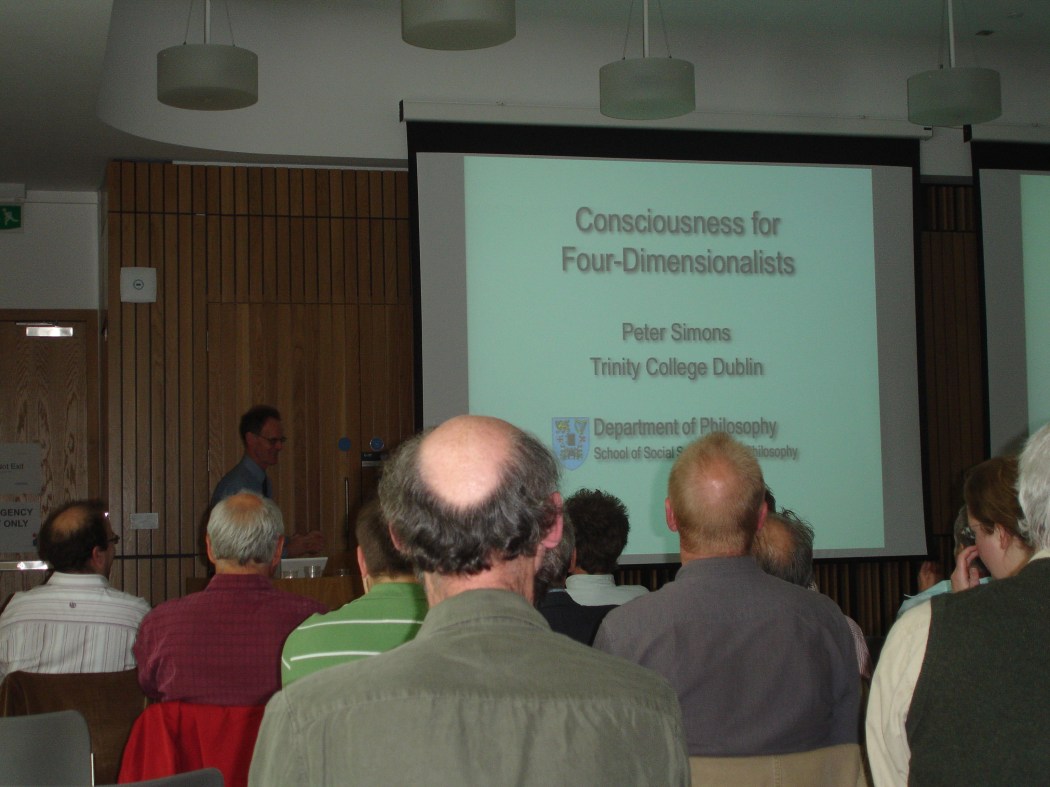
Peter Simons (Trinity College Dublin)
Consciousness for Four-Dimensionalists