“Empiricalizing” Heidegger

Tony Chemero has kindly sent me these links to a paper he, Dobromir Dotov and Lin Nie have just had published. The first link is to the full paper entitled “A Demonstration of the Transition from Ready-to-Hand to Unready-to-Hand.” The second link is to a popularized version of the aforementioned paper entitled “Your Computer Really Is a Part of You.” Also look out for Tony’s recently published book Radical Embodied Cognitive Science which will soon be reviewed in The Journal of Mind and Behavior by Rick Dale. I for one thoroughly enjoyed the book having read the proofs.

Ryle

ryle, v. to give examples. “He ryles on and on without ever daring a conclusion.” Hence, n. An example. “His argument was elucidated by a variety of apt ryles.” “The original ryle has been chisholmed beyond recognition.” (2) A variety of smooth, lucid, thin ice that forms on bogs.

The Philosophical Lexicon

I chanced upon the 60th anniversary edition of The Concept of Mind (COM). COM must rank as one of my favourite pieces of literature (at least in my top ten). Yes, I use literature in the broadest sense – what distinguishes this work is that it’s the perfect marriage of the substantive with a superb writing style – amusing and non-technical, crisply argued and imaginative. I haven’t read Julia Tanney’s introduction to the 60th anniversary version but I have read Dennett’s intro to the Penguin re-issue of COM (Dennett, as most will know, was a student of Ryle – check out Ryle’s last letter to Dennett). Also check out Tanney’s Stanford Encyclopedia of Philosophy entry on Ryle. Aside from COM, I particularly appreciated Ryle’s superb entry on Plato in Paul Edwards’ The Encyclopedia of Philosophy. I have  a longstanding interest in Ryle and Oakeshott (see here as well.)


Mind in Life

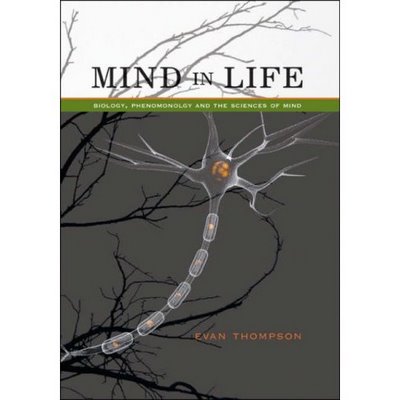
I’ve just completed reading Evan Thompson’s Mind in Life: Biology, Phenomenology, and the Sciences of Mind, a work which I heartily endorse as the best statement yet of the enactivist theory of mind. I especially like his taking on the philosopher’s zombie and his chapter on Empathy and Enculturation. Last, but by no means least, Thompson has clarified ideas from his now classic collaboration with Varela and Rosch – The Embodied Mind. But never mind my view, check out Dorothée Legrand’s superb critical notice from The Journal of Mind and Behavior.

In Mind in Life: Biology, Phenomenology, and the Sciences of Mind, Evan Thompson defends the thesis of a “deep continuity of life and mind” according to which “life and mind share a set of basic organizational properties . . . . Mind is life-like and life is mind-like” (p. 128, also p. ix). On the one hand, Thompson uncovers mind in life, by considering life and explaining how living organisms are organized in a way that involves the biological implementation of properties that are usually attributed to mental states. On the other hand, he roots mind in life by considering the mind and explaining how mental states are anchored to (neuro)biological processes. Following the lead of Merleau–Ponty and his notion of “comportment” (1963, p. 4; see Mind in Life, p. 67), Thompson argues that the notion of autonomous dynamic system can integrate the orders of life and mind, and account for the originality of each order, allowing the understanding that “on the one hand, nature is not pure exteriority, but rather in the case of life has its own interiority and thus resembles mind. On the other hand, mind is not pure interiority, but rather a form of structure of engagement with the world and thus resembles life” (p. 78).

Requests for reprints should be sent to Dorothée Legrand, Centre de Recherche en Epistemologie Appliquee, 32, boulevard Victor, 75015 Paris, France.

Hayek: Cognitive scientist Avant la Lettre

My published article is now available from here. Check out the full table of contents for this volume.

What is understanding?

Here’s a singularity summit talk by Eric Baum. Baum is known to me as the author of What is Thought? and in particular his discussion of his notion of “The Hayek Machine” as set out in his  “Toward a Model of Intelligence as an Economy of Agents” Machine Learning 35, pp. 155-185 (1999).

Metaphysics

When I was in school, I cheated on my metaphysics exam;

I looked into the soul of the boy sitting next to me.

Woody Allen (armchair philosopher)

Thanks to Joel Parthemore for this gem.

Virtual Autopsy

This article from the Economist Dec 10th 2009 .
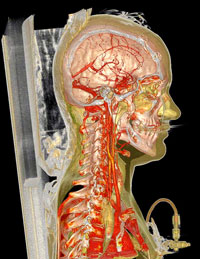
PERFORMING a postmortem on a murder victim can take days, delaying any criminal investigation. Moreover, pathologists sometimes get only one chance to look for clues when dissecting a body. But Anders Persson, director of Linköping University’s centre for medical image science and visualisation in Sweden, hopes to change that. Along with his colleagues Thomas Rydell and Anders Ynnerman of the Norrköping Visualisation Centre, they have created a virtual autopsy system.

The body needing to be examined is first scanned using a computed tomography (CT) machine, a process which takes about 20 seconds and creates up to 25,000 images, each one a slice through the body. Different tissues, bodily substances and foreign objects (such as bullets) absorb the scanner’s X-rays in varying amounts. The software recognises these and assigns them a density value. These densities are then rendered with the aid of an NVIDiA graphics card, of a type used for high-speed gaming, into a 3-D visualisation of different colours and opacities. Air pockets are shown as blue, soft tissues as beige, blood vessels as red and bone as white. A pathologist can then peel through layers of virtual skin and muscle with the click of a computer mouse.

To make the process easier, Dr Persson and his colleagues have also created a virtual autopsy table. This is a large touch-sensitive LCD screen which stands like a table in an operating room, displaying an image of the body. Up to six people can gather around the table and, with a swipe of a finger, remove layers of muscle, zoom in and out of organs and slice through tissue with a virtual knife.

The Swedish police have already used the researchers’ virtual-autopsy technology to investigate nearly 350 cases. It has proved capable of detecting crucial but difficult-to-spot pieces of evidence, such as the angle of a bullet’s trajectory, air pockets in the wrong place in the body and bone fractures in a burns victim. The virtual autopsy can also be used to determine the cause of death in a few hours. And unlike a physical autopsy it does not alter evidence, enabling investigators to revisit a cadaver for additional clues if necessary. Television detectives everywhere will have them soon.
War and Human Nature

Here is a recent lecture by NEI director David Livingstone Smith. Check out David’s press page.

Particle Swarm Optimization (PSO)

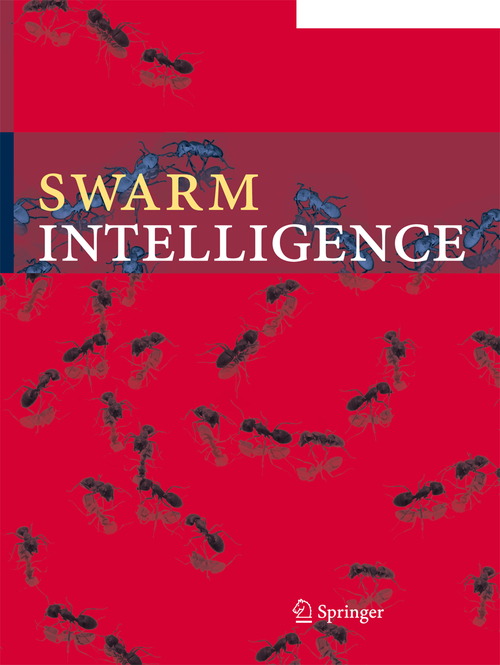
Check out the Editorial (and of course the full issue) for the special issue on Particle Swarm Optimization from the new journal Swarm Intelligence. This issue is edited by two of the most prominent luminaries in the field – Andries Engelbrecht and Jim Kennedy. The former is the author of Fundamentals of Computational Swarm Intelligence; the latter, the co-author of the now classic Swarm Intelligence and developer of the PSO algorithm – both books are essential reading in PSO. Please ask your library to subscribe to this high quality journal – swarm intelligence as a topic has relevance to so many endeavors – the implication and application only now being glimpsed. I bet that in five years reference to PSO will become commonplace in the philosophical and the sociological literature.