Koestler Biography

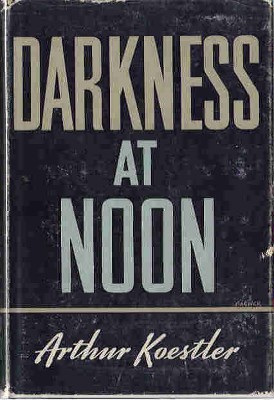
There is a glowing review in The Economist of Michael Scammell’s biography of Koestler. I do recall that the manner of Koestler’s death caused a great deal of controversy at the time. My knowledge of Koestler’s work is confined to his Darkness at Noon – given to me my an anti-Stalinist (and committed socialist) friend of mine. The other work I know of his is the very different The Ghost in the Machine (though thoroughly unfashionable in mind circles, it has had some popularization through a well-known beat combo).

The title is of course taken from Ryle’s wonderfully colourful term in The Concept of Mind. Ryle expounds what he takes to be the implications of the Cartesian project: I reconstruct Ryle’s critique as follows:

(i) Ryle rejects the idea that it seems that all intelligent performance involves ‘conscious’ thought, which typically involves the observance of rules, the consideration of propositions and the application of criteria. Were this the case, to do something, would always be to do two things – to first think about rules, propositions and criteria, and then to put into practice what they enjoin.

(ii) This gives the impression that the mind is a storehouse of representations – the “intellectualist legend.”

(iii) The combination of the assumptions that theorizing is the pre-eminent activity of minds and that it is a private operation, amounts to the postulation of a shadowy additional metaphysical entity – the dogma of the “ghost in the machine.”

(iv) This has the further consequence in that it requires the positing of a “central theatre,” some central place in the brain where something like an “I” or the self attends to and witnesses consciousness.

(v) The positing of some central authority or homunculus gives rise to “Ryle’s regress”: an observing self must necessarily contain another observing self, and so on ad infinitum.

(vi) Tempted by our language, a folk anatomy posits the mind as an object made of an immaterial substance (because predications of substance are not meaningful for a collection of dispositions). Thus Descartes allocates concepts to logical types to which they do not belong – hence the “category mistake.”

Ryle’s corrective is summarized as follows:

(i) Ascription of intelligence is to describe behavior, not to name an entity.

(ii) Intelligent conduct of serial operations does not entail that the agent is throughout the progress of the operation conscious both with what he has completed and with what remains to do. The careful driver does not plan for all possible contingencies. His readiness to cope would reveal itself were an emergency to arise but it is latently there even when nothing critical is happening.

(iii) Misunderstanding is a by-product of knowledge-how – mistakes are exercises of competences.
Extended X: Recarving the Biological and Cognitive Joints of Nature

Mike Wheeler has put online some draft chapters dealing with extended mind from his forthcoming work. If you enjoyed Mike’s last book Reconstructing the Cognitive World: the Next Step as I did, then this new work promises much.

The Character of Consciousness

Surely the biggest publishing event in mind – well since this one.

“Empiricalizing” Heidegger

Tony Chemero has kindly sent me these links to a paper he, Dobromir Dotov and Lin Nie have just had published. The first link is to the full paper entitled “A Demonstration of the Transition from Ready-to-Hand to Unready-to-Hand.” The second link is to a popularized version of the aforementioned paper entitled “Your Computer Really Is a Part of You.” Also look out for Tony’s recently published book Radical Embodied Cognitive Science which will soon be reviewed in The Journal of Mind and Behavior by Rick Dale. I for one thoroughly enjoyed the book having read the proofs.

Ryle

ryle, v. to give examples. “He ryles on and on without ever daring a conclusion.” Hence, n. An example. “His argument was elucidated by a variety of apt ryles.” “The original ryle has been chisholmed beyond recognition.” (2) A variety of smooth, lucid, thin ice that forms on bogs.

The Philosophical Lexicon

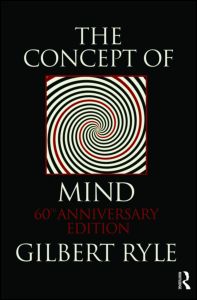
I chanced upon the 60th anniversary edition of The Concept of Mind (COM). COM must rank as one of my favourite pieces of literature (at least in my top ten). Yes, I use literature in the broadest sense – what distinguishes this work is that it’s the perfect marriage of the substantive with a superb writing style – amusing and non-technical, crisply argued and imaginative. I haven’t read Julia Tanney’s introduction to the 60th anniversary version but I have read Dennett’s intro to the Penguin re-issue of COM (Dennett, as most will know, was a student of Ryle – check out Ryle’s last letter to Dennett). Also check out Tanney’s Stanford Encyclopedia of Philosophy entry on Ryle. Aside from COM, I particularly appreciated Ryle’s superb entry on Plato in Paul Edwards’ The Encyclopedia of Philosophy. I have  a longstanding interest in Ryle and Oakeshott (see here as well.)


Mind in Life

I’ve just completed reading Evan Thompson’s Mind in Life: Biology, Phenomenology, and the Sciences of Mind, a work which I heartily endorse as the best statement yet of the enactivist theory of mind. I especially like his taking on the philosopher’s zombie and his chapter on Empathy and Enculturation. Last, but by no means least, Thompson has clarified ideas from his now classic collaboration with Varela and Rosch – The Embodied Mind. But never mind my view, check out Dorothée Legrand’s superb critical notice from The Journal of Mind and Behavior.

In Mind in Life: Biology, Phenomenology, and the Sciences of Mind, Evan Thompson defends the thesis of a “deep continuity of life and mind” according to which “life and mind share a set of basic organizational properties . . . . Mind is life-like and life is mind-like” (p. 128, also p. ix). On the one hand, Thompson uncovers mind in life, by considering life and explaining how living organisms are organized in a way that involves the biological implementation of properties that are usually attributed to mental states. On the other hand, he roots mind in life by considering the mind and explaining how mental states are anchored to (neuro)biological processes. Following the lead of Merleau–Ponty and his notion of “comportment” (1963, p. 4; see Mind in Life, p. 67), Thompson argues that the notion of autonomous dynamic system can integrate the orders of life and mind, and account for the originality of each order, allowing the understanding that “on the one hand, nature is not pure exteriority, but rather in the case of life has its own interiority and thus resembles mind. On the other hand, mind is not pure interiority, but rather a form of structure of engagement with the world and thus resembles life” (p. 78).

Requests for reprints should be sent to Dorothée Legrand, Centre de Recherche en Epistemologie Appliquee, 32, boulevard Victor, 75015 Paris, France.

Hayek: Cognitive scientist Avant la Lettre

My published article is now available from here. Check out the full table of contents for this volume.

What is understanding?

Here’s a singularity summit talk by Eric Baum. Baum is known to me as the author of What is Thought? and in particular his discussion of his notion of “The Hayek Machine” as set out in his  “Toward a Model of Intelligence as an Economy of Agents” Machine Learning 35, pp. 155-185 (1999).

Metaphysics

When I was in school, I cheated on my metaphysics exam;

I looked into the soul of the boy sitting next to me.

Woody Allen (armchair philosopher)

Thanks to Joel Parthemore for this gem.