The Semiotics of Eyewear

Another classic from The Chap this time, issue 15. I trust that you chaps are also monitoring the encroaching vulgarity that I noticed corroding Jermyn Street. Long live anarcho-dandyism!

Screen Shot 2018-03-05 at 1.16.02 PM

Screen Shot 2018-03-05 at 1.19.11 PM

Taleb on EconTalk

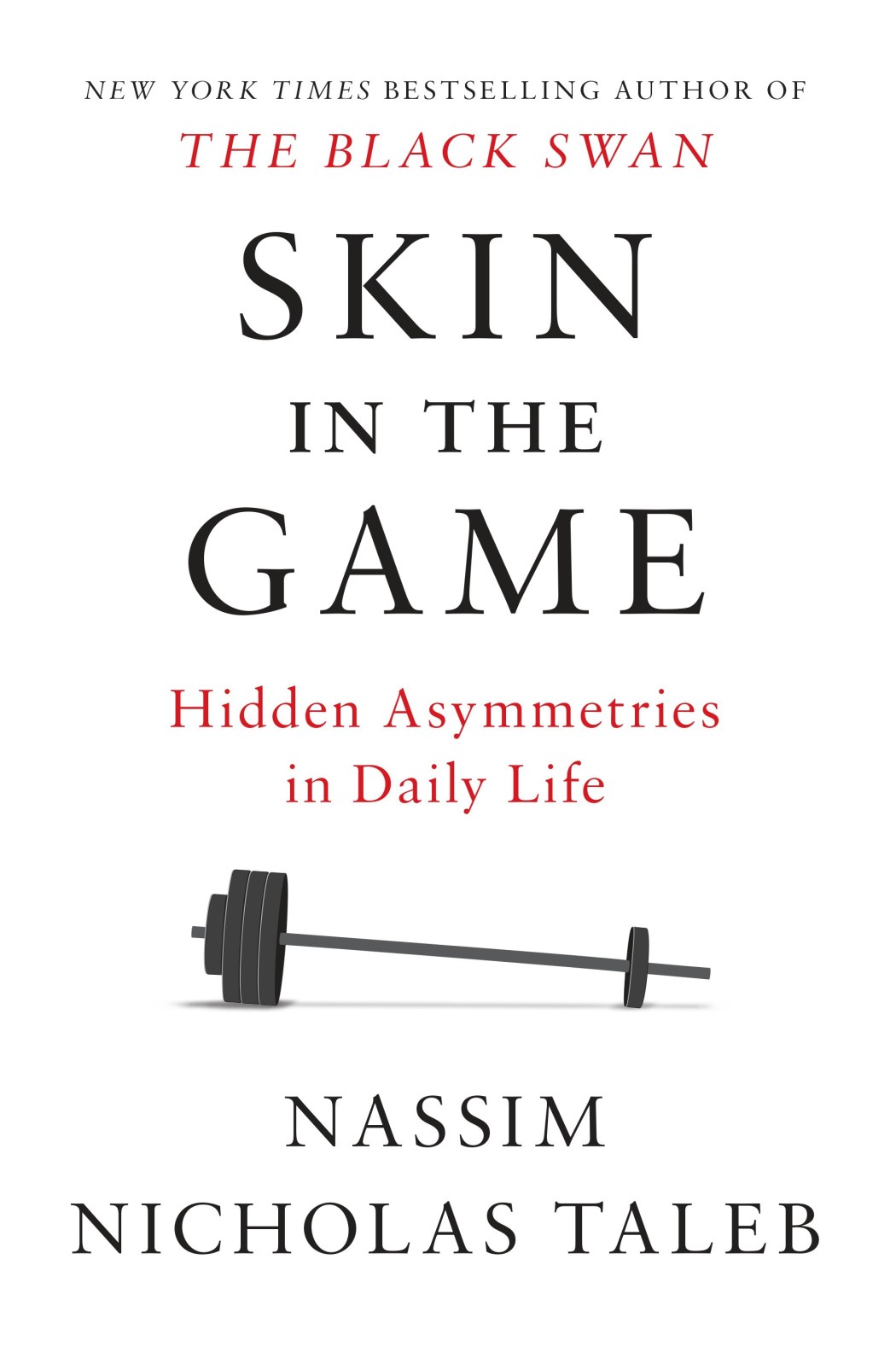
Russ Roberts chats with Taleb about his latest book Skin in the Game, my copy due to be in my hands tomorrow.
042528462X


Bobby

Birthday boy in conversation with Terry Gross.

And he say, hey, Bobby, come here a minute. And I froze – came back. Hey, oh man, I didn’t see you. He said I loved the way you did the song. I think it’s fantastic. And I felt really good. I said oh, I’m glad you really like it, Mr. Bennett. And that was it.

3E6S2OAJ35AWHAUDPDPC3J47MY

Extended minds, predictive processes, and Andy Clark

Andy Clark in conversation with Joe Gelonesi.

extended_mind

Charlotte Rampling

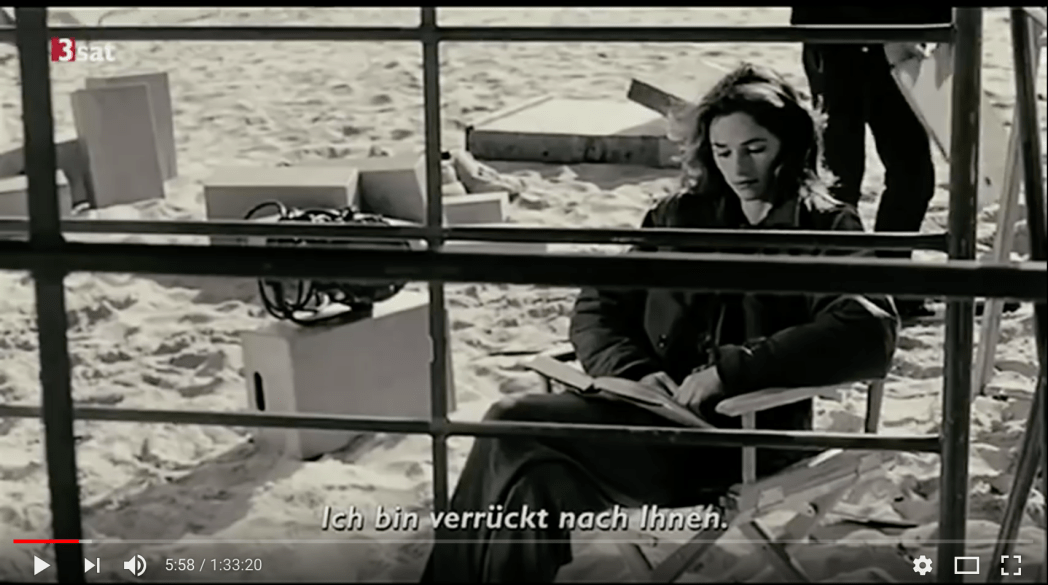
On the eve of the annual (and in decline) luvvy virtue-signaling regress-fest, there still stands Charlotte Rampling who, along with Catherine Deneuve, have timeless and towering unalloyed class, dignity, elegance and, most importantly, critical faculties — unlike the pompous half-baked cause du jour “celeb” types who are superficially deep, but deep down, are superficial! This documentary, clearly done on Rampling’s terms, powerfully shows up the Hollywood fuckwittery of trying to arrest the aging process. For me Rampling’s most memorable performance is still in The Night Porter, and though pretty much universally decried in the day, at least it could be made, a time when transgressive art could exist side-by-side with bread and circus idiocy. Of course, she trusted her co-lead Dirk Bogard, who arguably had the greatest transgressive acting career of all and yet who started out as matinée fluff. Rampling really did/does have THE look and she is acutely aware of it — but she also has integrity and a finely tuned talent.
Screen Shot 2018-03-03 at 1.43.33 PM

A Surprise for Pops

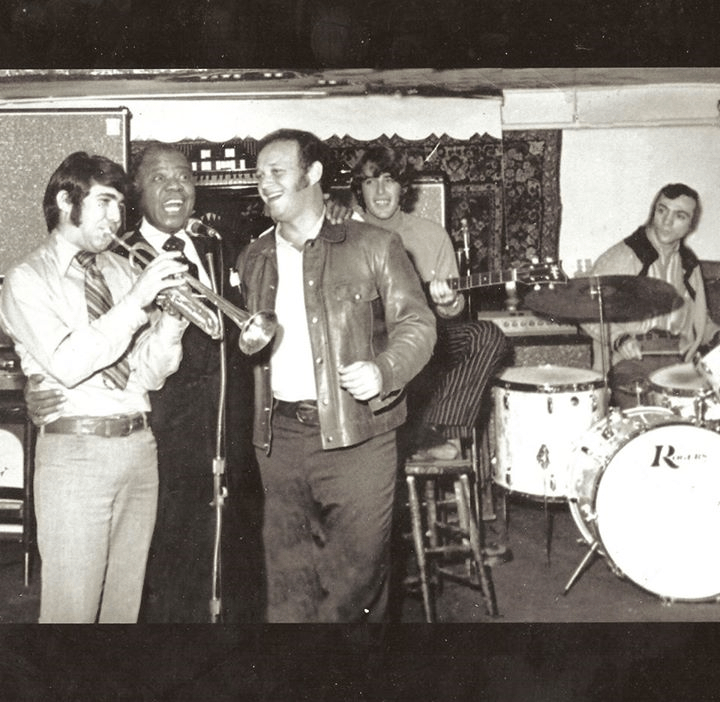
Today marks the 75th anniversary of Lucille’s surprising Pops with the purchase of 34-56 107th Street, Corona. The full story here. Each time I have the opportunity to be in New York City, a visit to Louis Armstrong House Museum is highest on my list of priorities as is a visit to the archives at Queens run by the one and only Ricky Riccardi. One of my favourite items in the house is this bible, a gift from Yacov Uriel, inscribed as per the photo below. (I think Yacov is to Pops’ right in the second photo). The positive and wise spirit of Pops really does pervade the house — it’s a good place to take refuge from the hustle and bustle of life if only for a few hours — and if you are NYC-based, you have no excuse not to attend one of the many wonderful events put on there.

540730_10151638292723385_151652306_n

31

The Metaphysical Cityscape in Iris Murdoch’s Under the Net

If you are inclined to the philosophical novel and one that is actually quite light-hearted such as A Confederacy of Dunces, then Iris Murdoch’s Under the Net would fit the bill. In much the same way as New Orleans is a “character” in CoD, so too is London in UtN. Jamieson Ridenhour discusses this aspect at The Literary London Society. Here too is the classic review of UtN by Malcolm Bradbury — and if you don’t know who Bradbury is, see his obituary in The Telegraph; even The Guardian views his legacy in a highly favorable light (do follow the links listed there). Here is a good write-up of the posthumous Liar’s Landscape in The Independent. Bradbury represented the dying ember of the cultivated academic literary mind, before the complete and utter degradation of a noble enterprise by the IYI postmodern charlatans. Bradbury was so well-placed to observe the, at best, “how to write” trend and at worst, the off-the-peg philosophical shallowness of those who now purport to be “English” dons.

To begin with, the ending is not so much moral as philosophical; if, in James, we recognise the need to allow each person his own independence, this is because to encroach upon human individuality is a moral fault. In Under the Net it is more conspicuously a philosophical fault. — Bradbury
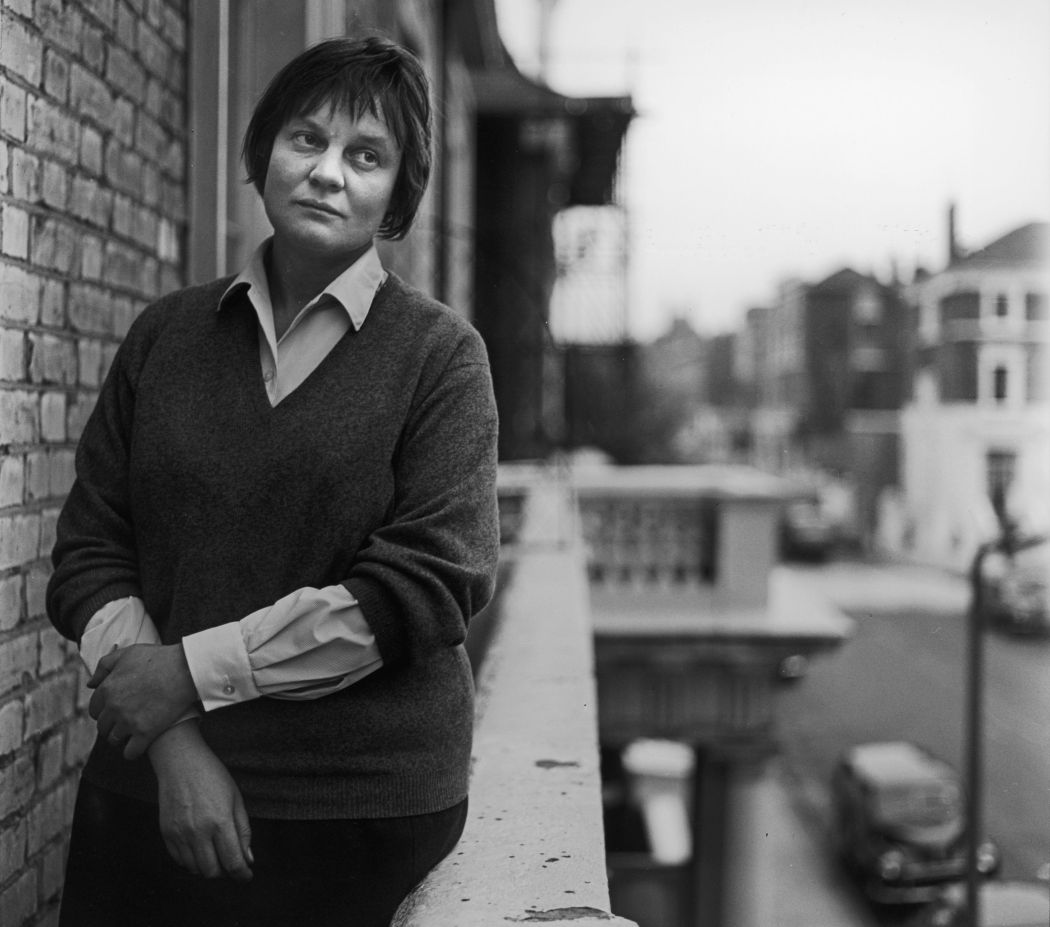
iris-murdoch-3204654-59d5a15a054ad9001133124a

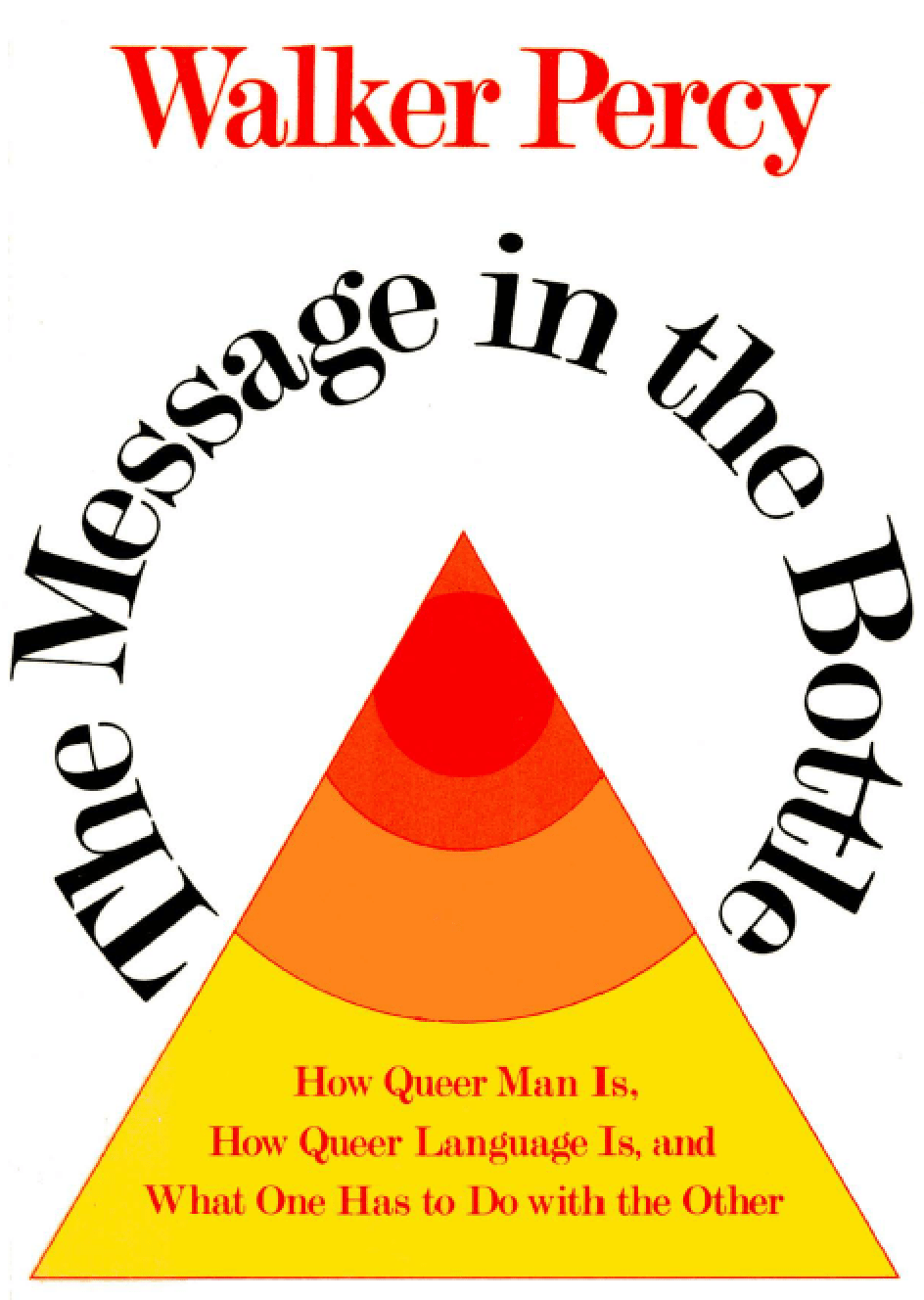
Walker Percy Wednesday 174

percycovercroppea

A Tertium Quid:

The Lady Novelist?

Tolstoy once said that a talented lady novelist could spend five minutes looking through the window of a barracks and know all she needed to know about soldiering.

If she can see so much in five minutes, how much more must the talented therapist see after, say, a hundred hours with his patient?

So here is the real question, or rather the main specter which haunts every inquiry into language as behavior. Granted the shortcomings of the two major methodological approaches to the talking patient-the analytic-psychical and the organismic-behavioristic is not the sole remaining alternative the novelistic? Instead of “novelistic” we could say phenomenological, for the novelist must first and last be a good phenomenologist, and to most behavioral scientists phenomenologists are closer to novelists than to scientists. But is it not the case that when all is said and done and all theories aside, what happens is that the therapist gets to know his patient pretty well, understands him, intuits him, can talk with him and about him-and that behavioral theory can never say much about it?

Let us at least articulate our unhappiness. Unhappiness changes. We are no longer miserable about the old quarrel between classical behaviorism and classical psychoanalysis or about the more intricate quarrels and rapprochements of their followers. For it has become more and more evident that our main emotion when confronted by both Freud and Skinner, say, is not partisan feelingsfor both are “right” in their way-but rather epistemological embarrassment. Both men put forward dyadic models, one for organisms interacting in an environment, the other for invisible “forces” interacting within a psyche. The question now is not which approach is right but how both can be right at the same time. To us now, Freud’s and Skinner’s models stand to each other like the two worlds on each side of Alice’s looking-glass. Both worlds are demonstrably right and useful in their way, but how do you get from one to the other?

Is the lady novelist the only tertium quid?

But first, what does the lady novelist see if we put her down, not outside a barracks window, but on the other side of a viewing mirror through which she can see therapist and patient who were talking about the rat behind the arras and related oedipal feelings? She notices first off, let us say, that the patient does get excited. But far from its being the case that he is upset and is “resisting” the disclosure of unpleasant unconscious contents, she has the distinct impression that the patient is delighted. Moreover, being a good novelist and well attuned to the intellectual fashions of the day, she has the distinct impression that the patient’s pleasure has something to do with the fact that he has produced a kind of behavior which measures up to, or fits in with, the very theory to which he and his analyst subscribe. Perhaps it also occurs to her that the patient is in a sorry fix indeed if his chief claim to happiness is that occasion when he manages to be sick in the right way.

Suppose that the lady novelist is right. Is she then the tertium quid? Is her way the only way to get at what is going on? And if it is, has not all the fun gone out of the game of behavioral science and the scientific method itself lost its splendid rigor?

Have we not in fact come back to George Miller’s original misgiving, which haunts all behavioral scientists when the subject of words and meanings is raised? Must we not then let it go at that, surrender the field to Tolstoy’s lady novelist, or to Husserl, which is to say the same thing?

Perhaps. But Charles Peirce did propose a radical theory of signs which undertook to give an account of those transactions in which symbols are used to name things and to assert sentences about things. In view of the heroic and generally unavailing attempts during the past fifty years to give such an account through one or another dyadic theory, it might be worthwhile for once to approach triadic behavior with a genuine triadic theory.

Such a theory might bestow order and system upon the phenomenologizing which to the behavioral scientist must seem closer to novel writing than to a science of behavior.

For example, the oedipal patient’s agitation may be given some such preliminary reading as follows:

The patient’s agitation is not dyadic misery-resistance to the disclosure of unacceptable unconscious contents-but triadic delight. This delight, moreover, is quite as fundamental a trait of triadic behavior as organismic “need-satisfaction” is in dyadic behavior. It is a naming delight which derives from the patient’s discovery that his own behavior, which until now he had taken to be the unformulable, literally unspeakable, vagary of one’s self, has turned out not merely to be formulable, that is to say, namable by a theory to which both patient and therapist subscribe, but to be namable with a name which is above all names: oedipal!

As such, the patient’s delight has good and bad, authentic and inauthentic components, which must be traced out and identified within an adequate triadic theory. Thus, the patient’s sentence It’s oedipal! must be investigated for Platonic and even magical components in its mode of coupling as well as for its valid intersubjective celebration of an important discovery. Perhaps the patient’s sentence can be paraphrased in some such terms as: “At last I have succeeded! At last I have produced a proper, even a classical, piece of psychopathology!”

Accordingly, the patient’s behavior with its strong normative components must be evaluated on a normative scale which is in tum an integral part of the triadic theory in question. It is impossible in other words to avoid the subject of the patient’s impoverishment and loss of sovereignty.

Screen Shot 2017-10-11 at 10.58.26 AM.png