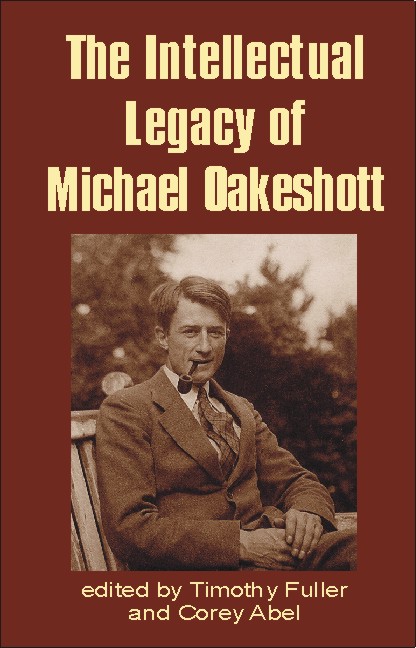
This chapter highlights a troubling tension within the philosophy of Michael Oakeshott. The relativistic stance that informs his radical constructivism gives license to socio-political conclusions we know Oakeshott could not possibly accept.
A Confederacy of Dunces – quotes and extracts – 89
“He resented my worldview rather actively.”
. . .
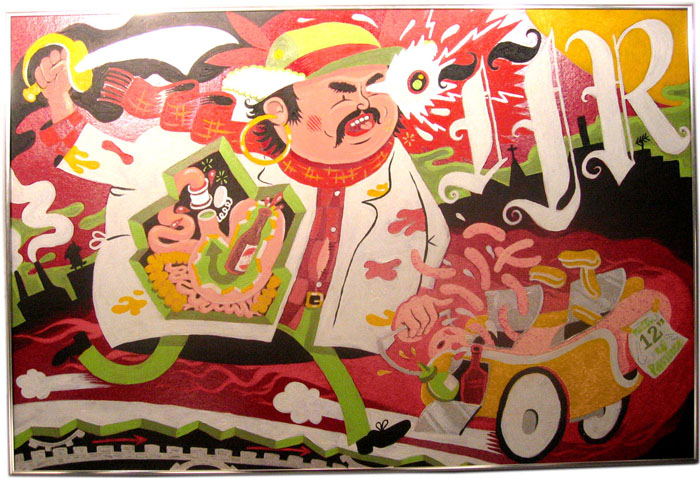
Once a person was asked to step into this brutal century, anything could happen. Everywhere there lurked pitfalls like Abelman, the insipid Crusaders for Moorish Dignity, the Mancuso cretin, Dorian Greene, newspaper reporters, stripteasers, birds, photography, juvenile delinquents, Nazi pornographers. And especially Myrna Minkoff. The musky minx must be dealt with. Somehow. Someday. She must pay. Whatever happened, he must attend to her even if the revenge took years and he had to stalk her through decades from one coffee shop to another, from one folk singing orgy to another, from subway train to pad to cotton field to demonstration. Ignatius invoked an elaborate Elizabethan curse upon Myrna and, rolling over, frantically abused the glove once more.
How dare his mother contemplate a marriage. Only someone as simpleminded as she could be so disloyal. The aged fascist would conduct witch hunt after witchhunt until the formerly intact Ignatius J. Reilly was reduced to a fragmented and mumbling vegetable. The aged fascist would testify for Mr. Levy so that his future stepson would be locked away and he would be free to satisfy his warped and archaic desires upon the unsuspecting Irene Reilly, to perform his conservative practices upon Irene Reilly with free enterprise. Prostitutes were not protected by the Social Security and unemployment compensation systems. No doubt the Robichaux roué was thus attracted to them. Only Fortuna knew what he had learned at their hands.

Adam Smith on Sensory Perception: A Sympathetic Account
The intro to Brian Glenney’s chapter:
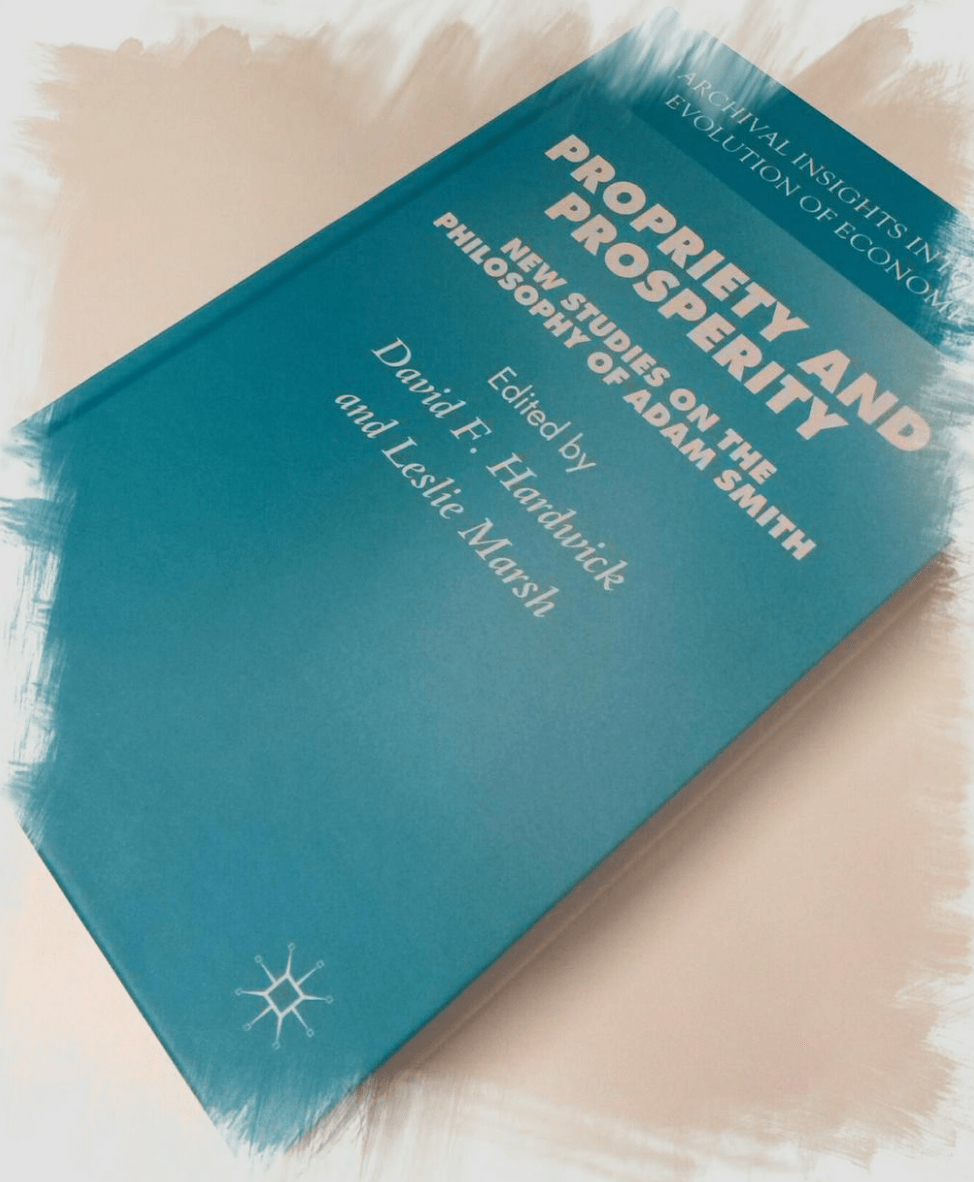
The aim of this chapter is to propose an account of sensory perception from the known writings of Adam Smith, chiefly his juvenile work, “On the External Senses.” This account asserts that when we perceive an object we simulate its painful or pleasurable effects on our body—we imaginatively place ourselves in proximity to the object and feel some measure of the pain or pleasure we naturally associate or have learned to associate with its presence. When we smell food, our mouths water with the pleasure we anticipate will result from eating it (ES 80). When we hear a loud sound, we automatically shrink with fright in anticipation of the pain we imagine would be caused by such an object (ES 87). As Adam Smith writes, the senses “instinctively suggest to us some conception of the solid and resisting substances which excite their respective sensations” (ES 75).
In two previous papers I have expounded on some aspects of Smith’s account of perception. Glenney (2011) provides analysis of some of the sensory mechanisms involved in Smith’s account of perception. The spatial senses of vision and audition employ an innate mechanism of “suggestion” that attributes externality to the objects of sight and sound by way of instinctively simulating the associated feelings of tactile resistance that automatically suggest the externality of objects. Without associations of resistance, sight and sound are non-spatial and, as in Smith’s initial assessment of Cheselden’s once-blind patient, colors (and sounds) are felt in the eye (or ear) (ES 65). The remaining senses of smell, taste, and felt temperature, even when associated with feelings of resistance, remain proto-spatial at best, “some vague idea or preconception of the existence of that body; of the thing to which it directs, though not the precise shape and magnitude of that thing” (ES 79; See also ES 85). Hence, non-spatial senses never engage the “suggestion” mechanism for external attributions, but rather derive external “anticipations” from a mechanism that Smith calls “preconception.” Thus, two distinct inborn mechanisms guide two different external associations. But Smith provides little further detail regarding how these innate mechanisms actually work, alluding only to an “ascription by our imagination” (ES 54); later, in TMS, he writes of a “transporting by the imagination” (TMS III.iii.2) in his discussion of perception as analogy to moral judgment.
A second paper on ES extends the possibility that these innate mechanisms of external attribution and anticipation are the work of a mechanism of “sympathy,” paralleling Smith’s account of the moral assessments made of the behavior of others (Glenney, 2014). A perceiver first attributes a sight, sound, smell, taste or felt temperature to a particular object, projects him or herself into proximity with that object, and approximates the associated feelings that would be felt were the object made present, leading to an evaluative judgment as to the health or harm such proximity would generate for the body based on comparing a similarity or difference of their immediate feelings and approximated feelings. While the epistemic reliability of these perceptual judgments by sympathy is marked by concerns similar to those expressed by Smith regarding moral judgments in TMS, a kind of “impartial spectator” provides analogical support for their reliability. Hence, it is likely that perception and morality rely on a similar mechanism of sympathy for Smith. An account of perception, however, requires more than the structural and epistemic theories outlined in these two papers.
The focus of this paper covers perhaps the most important of Smith’s considerations on perception, his discussion of its qualia or the character of sensory experience. Qualia are usually characterized by very simple features: the qualia of a tomato are its appearance as red and round, its softness when squeezed, and its garden patch smell and tangy taste. These sensations help compose what it is like to experience a tomato with our different senses. Crucially, qualia distinguish a tomato sensory experience from a thought about a tomato, adding vivacious feelings to our tomato representations. Qualia reflect, in many ways, the unique nature of perception; to study qualia is to study what it is that makes perception distinctive. Today, the study of qualia is informed primarily by consideration of the representational content that determines the experiential character of qualia. For example, the red and round character of a tomato experience is determined by round and red tomato representations rather than, say round and red rubber ball representations. In this paper, consideration of representational content will provide an instructive model for studying Smith’s own discussion of sensory experience.
Smith’s own study of qualia in ES is focused on two kinds of sensory experience: the feeling of resistance in tactile experience and the feeling of “presence” or externality of objects in non-tactile experience:
- Tactile Resistance: the feeling of an object’s pressure on one’s body, from which follows a “distinct sense and feeling of its Externality, or of its entire independency upon the organ which perceives it, or by which we perceive it” (ES 18).
- Tactile Empathy: the feeling of seeing, hearing, or smelling an object with attention to the object’s tactile resistance and the pain or pleasure that it might engender, which “instinctively suggest to us some conception of the solid and resisting substances which excite their respective sensations” (ES 75).
While the qualia of both tactile resistance and tactile empathy represent objects as external, the former do so directly, the latter indirectly. Smith’s account of how visual, auditory, and olfactory qualia indirectly generate feelings of tactile qualia of resistance is a most important contribution to the study of perception, and becomes the particular focus here.
While this is a reconstruction of Smith’s discussion of perception by sympathy, it is one that Smith may have made more explicit had the focus of his philosophical inquiries turned to the topic of perception. Smith’s would-be proposal based on sympathy is, furthermore, unique to philosophical accounts of perception both historical and contemporary. Lastly, as documented in the previous work on ES discussed above, the cognitive sciences provide empirical support for such an account. Thus, though preliminary descriptions of ES judged it to be a mere “essai” that was “no more than competent,” closer inspection may reveal a startlingly innovative theory of some importance.
Bob Marley
Viewing this definitive, albeit hagiograhic, film on Bob Marley has reignited my interest in his music which I first came across, of course, via Clapton (two years earlier Jimmy Cliff and Johnny Nash gave me my first taste of reggae). It was when Sting came on the scene that my interest waned: about this time even Jagger’s silly effort with Peter Tosh didn’t annoy me as much as Sting did (and still does).
I think that Live! rates as one of the best live records ever released. Two things of interest in the film struck me. First, the explanation of the musical and sociological influences that constitutes reggae (gospel, soul, funk, rock, rhythm and blues, jazz, calypso) makes better sense to me now. Second, there is the role of the fascinating Chris Blackwell — the last of a breed that included his mentor Ahmet Ertegun.
The Guardian has the most intelligent review of the film. As a postscript to the film here is an article, also from The Guardian (“I teach a course at New York University called Marley and Post-Colonial Music” — cringe), marking what would have been BM’s 70th birthday.
Misbehaving Baldly: What’s behind the smoking ban?
A balanced and insightful analysis by very excellent Wayne Curtis.
. . . more than the loss of indoor smoking itself, seems to aggrieve many of those who opposed the ban. In fact, the loudest grousing I heard came from friends who are nonsmokers. They saw this as an attack on what makes New Orleans New Orleans.
This is, after all, a city where you can not only misbehave badly, but also misbehave baldly. Bars don’t have a closing time, and you can carry your drink down the street to the next bar, possibly behind a brass band that’s snarling traffic. The smoking ban was seen as the first step on a regrettable journey, the final stop of which is a New Orleans indistinguishable from Columbus, Ohio.
They see the quirks of New Orleans—smoking inside, drinking outside, music everywhere—as worth celebrating and defending. They argue that the city’s laissez-faire approach to vice is at the heart of the city’s culture . . .
The pride of being apart from the rest of the country was nicely captured in an anecdote I heard at a literary conference a few years back. A writer from Jamaica was talking about his first trip to the city, and said that his friends back home assured him he’d love it. “It’s got great food and music,” they told him. “And it’s so close to America!” The audience howled.
I’m a nonsmoker, and I’m rather ambivalent about the smoking ban. I’m all for it if this means healthier musicians and bartenders, and a wider selection of bars to watch the Saints without feeling like I’ve walked into a “Pittsburgh 1963” Instagram filter. But I’m totally opposed to the smoking ban if it’s a shot across the bow, and signals a larger push on curbing music and marching and drinking in the street.

Hayek on Mill
Where’s that Joe Buck?
The Virtuous Whisky Drinker and Living Well
I want to suggest that becoming a virtuous whisky drinker is not simply seeking after pleasurable sensations. Being a virtuous whisky drinker is taking pleasure in directing our senses at the complex array of tastes and smells that the beautiful dram affords us. My acquaintance enjoyed his sweet alcoholic mix, but almost any alcohol would have been as good. He wasn’t interested in distinguishing the oak, peat, and candied fruit flavors in the whisky itself. This was because he wasn’t yet a virtuous whisky drinker, he hadn’t taken time to develop his aesthetic virtues where whisky was concerned. If he had, and for all I know he has now, he would have discovered a new range of pleasurable experiences and a new set of virtues for discriminating tastes and smells. He would have added a new dimension to his life that would have made him happier. Who would have thought that all that was possible through taking a little time over a dram? . . .
But how does whisky fit into this picture, you might ask? Well, just as we have virtues aimed at moral excellence and virtues aimed at intellectual excellence, we also have virtues aimed at sensory or experiential excellence: the aesthetic virtues. The virtuous whisky drinker has acquired the necessary aesthetic virtues to appreciate the full range of sensory experiences that a beautiful dram has to offer. This is not a matter of simply seeking a pleasure hit; the simple immediate gratification of my sugar-obsessed acquaintance is not at all the same thing . . .
A great joy in life is to share and explore interests with ourfriends, and what better way to do that than by sharing andenjoying a dram together. While we may take great satisfaction in developing our aesthetic virtues, what use are they if they are never shared, never put to use in company? To be able to share experiences and discuss them with our friends is an important part of what makes a life well lived. The virtuous whisky drinker prefers to take a dram in the company of his or her virtuous friends. Thus, whisky plays a dual role in a life well lived.It helps us actively use our senses, to attune virtuously them toall the various tastes and aromas of all the different varieties of whiskies. It also allows us to share these experiences with our friends, and that makes for shared happiness.

Walker Percy Wednesday – 20

It is my mother’s way to see life, past and present, in terms of a standard comic exaggeration. If she had spent four years in Buchenwald, she would recollect it so: “So I said to him: listen, Mister, if you think I’m going to eat this stuff, you’ve got another think coming.”
. . .
One night he heard an in credibly beautiful voice sing the whole of Winterreise. He was sure it was delirium until the next morning when he met the singer, an Austrian engineer who sang lieder better than Lotte Lehmann, etc. When he finished I was practically beside myself with irritable pleasure and became angry with the others because they were not sufficiently moved by the experience.
. . .
In Feliciana we used to speculate on the new messiah, the scientist-philosopher-mystic who would come striding through the ruins with the Gita in one hand and a Geiger counter in the other.
A chapter that can be skipped by anyone who has no very high opinion of thinking as an occupation
Excerpt from Robert Musil’s Man Without Qualities
Volume One
Translated by Eithne Wilkins and Ernst Kaiser Picador (1979)

28 A chapter that can be skipped by anyone who has no very high opinion of thinking as an occupation
MEANWHILE Ulrich was at home, sitting at his desk, working. He had got out the analysis that he had broken off short some weeks earlier when he had made his decision to return from abroad. He did not intend finishing it; it merely pleased him that he was still capable of doing this sort of thing. The weather was fine, but in the last few days he had only left the house on brief errands and did not even go into the garden. He had drawn the curtains and was working by shaded light, like an acrobat in the semi-darkness of a circus, performing dangerous new leaps in front of a gathering of experts before the public are let in. The precision, vigour and sureness of this kind of thinking, which has not its equal anywhere in life, filled him with something like melancholy.
He now pushed away the paper, covered with formulae and symbols, on which the last thing he has written was an equation of state of water, as a physical example, in order to apply a new mathematical operation that he was describing. But his thoughts must have strayed some time before that.
‘Wasn’t I talking to Clarisse about something to do with water?’ he wondered, but could not clearly recollect. Still, it did not matter. His thoughts wandered on, idly.
Unfortunately nothing is so difficult to represent by literary means as a man thinking. A great scientist, when he was once asked how he managed to hit upon so much that was new, replied: “By keeping on thinking about it.” And indeed it may safely be said that unexpected inspirations are produced by no other means than by the expectation of them. To no small extent they are a success due to character, permanent inclinations, unflagging ambition and persistent work. How boring such persistence must be! And then again, from another aspect, the solution of an intellectual problem comes about in a way not very different from what happens when a dog carrying a stick in its mouth tries to get through a narrow door: it will go on turning its head left and right until the stick slips through. We do pretty much the same, only with the difference that we do not go at it quite indiscriminately, but from experience know more or less how it should be done. And although of course a head with brains in it has far more skill and experience in these turnings and twistings than an empty one, yet even for it the slipping through comes as a surprise, it is something that just suddenly happens; and one can quite distinctly perceive in oneself a faintly nonplussed feeling that one’s thoughts have created themselves instead of waiting for their originator. This nonplussed feeling refers to something that many people nowadays call intuition, whereas formerly it used to be called inspiration, and they think they must see something supra-personal in it; but it is only something non-personal, namely the affinity and kinship of the things themselves that meet inside one’s head.
The better the head, the less perceptible it is in all this. Hence thinking, so long as it is not completed, is really a thoroughly wretched condition to be in, not unlike a colic affecting all the convolutions of the brain; and when it is complete, it no longer has the shape of thought, and this unfortunately is a non-personal shape, for the thought is then extraverted and adjusted for communication to the world. One cannot, so to speak, catch hold, when a man is thinking, of the moment between the personal and the non-personal. And for this reason thinking is obviously such a source of embarrassment to writers that they prefer to avoid it.
However, the Man Without Qualities was now thinking. From this the conclusion may be drawn that it was at least partly not a personal matter. What then was it? The world going in and out, aspects of the world falling into shape inside a head . . . Nothing in the least important has occurred to him. After he had been dealing with water by way of example, nothing else occurred to him but that water is something as three times as great as land, even if one takes into account only what everyone recognizes as water – rivers, seas, lakes and springs. It was long believed to be akin to air. The great Newton believed this, and most of his ideas are nevertheless still quite up to date. In the Greek view the world and life originated from water. It was a god, Okeanos. Later water-sprites, elves, mermaids and nymphs were invented. Temples and oracles were founded on its banks and shores. But were the not the cathedrals of Hildesheim, Padeborn and Bremen built over springs? – and here these cathedrals were to this day. And was not water still used for baptism? And were there not water-lovers and aspostles of nature-cures whose souls had a touch of peculiarly sepulchral health? So there was somewhere in the world something like a blurred spot, or grass trodden flat. And of course the Man Without Qualities also had modern knowledge somewhere in his consciousness, whether he happened to be thinking about it or not. And there now was water, a colourless liquid, blue only in dense layers, odourless and tasteless (as one had repeated in school so often that one could never forget it again), although physiologically it also included bacteria, vegetable matter, air, iron, calcium sulphate and calcium bicarbonate, and this archetype of all liquids was, physically speaking, fundamentally not a liquid at all but, according to circumstances, a slid body, a liquid or a gas. Ultimately the whole thing dissolved into systems of formulae that were all somehow connected with each other, and in the whole wide world there were only a few dozen people who thought alike about even as simple thing as water; all the rest talked about it in languages that were ate home somewhere between today and several thousands of years ago. So it must be said that if a man just starts thinking a bit he gets into what one might call pretty disorderly company.
And now Ulrich remembered too that he had actually said all this to Clarisse. She was as ignorant as a little animal, but in spite of all the superstition of which she was made up, one vaguely felt a sense of community with her. It gave him a prick like a hot needle.
He felt annoyed.
The well-known capacity that thoughts have – as doctors have discovered – for dissolving and dispersing those hard lumps of deep, ingrowing, morbidly entangled conflict that arise out of gloomy regions of the self probably rests on nothing other than their social and worldly nature, which links the individual being with other people and things; but unfortunately what gives them their power of healing seems to be the same as what diminishes the quality of personal experience in them. The casual mention of a hair on a nose weighs more than the most significant thought; and acts, feelings and sensations when repeated convey the impression that one has been present at an occurrence, a more or less great personal event, however ordinary and non-personal they may have been.
‘Silly,’ Ulrich thought, ‘but there it is.’ It reminded him of that stupidly profound, exciting sensation, touching immediately on the self, that one has when sniffing at one’s own skin. He stood up and pulled the curtains back from the window.
The bark of the trees was still moist with morning dew. Outside in the street there lay a violet-blue haze of petrol vapour. The sun was shining into it and people were moving briskly. It was like spring hovering over the tarmac, an out-ofseason spring day in autumn, a day such as only cities conjure forth.