
Where’s that Joe Buck?
The Virtuous Whisky Drinker and Living Well
I want to suggest that becoming a virtuous whisky drinker is not simply seeking after pleasurable sensations. Being a virtuous whisky drinker is taking pleasure in directing our senses at the complex array of tastes and smells that the beautiful dram affords us. My acquaintance enjoyed his sweet alcoholic mix, but almost any alcohol would have been as good. He wasn’t interested in distinguishing the oak, peat, and candied fruit flavors in the whisky itself. This was because he wasn’t yet a virtuous whisky drinker, he hadn’t taken time to develop his aesthetic virtues where whisky was concerned. If he had, and for all I know he has now, he would have discovered a new range of pleasurable experiences and a new set of virtues for discriminating tastes and smells. He would have added a new dimension to his life that would have made him happier. Who would have thought that all that was possible through taking a little time over a dram? . . .
But how does whisky fit into this picture, you might ask? Well, just as we have virtues aimed at moral excellence and virtues aimed at intellectual excellence, we also have virtues aimed at sensory or experiential excellence: the aesthetic virtues. The virtuous whisky drinker has acquired the necessary aesthetic virtues to appreciate the full range of sensory experiences that a beautiful dram has to offer. This is not a matter of simply seeking a pleasure hit; the simple immediate gratification of my sugar-obsessed acquaintance is not at all the same thing . . .
A great joy in life is to share and explore interests with ourfriends, and what better way to do that than by sharing andenjoying a dram together. While we may take great satisfaction in developing our aesthetic virtues, what use are they if they are never shared, never put to use in company? To be able to share experiences and discuss them with our friends is an important part of what makes a life well lived. The virtuous whisky drinker prefers to take a dram in the company of his or her virtuous friends. Thus, whisky plays a dual role in a life well lived.It helps us actively use our senses, to attune virtuously them toall the various tastes and aromas of all the different varieties of whiskies. It also allows us to share these experiences with our friends, and that makes for shared happiness.

Walker Percy Wednesday – 20

It is my mother’s way to see life, past and present, in terms of a standard comic exaggeration. If she had spent four years in Buchenwald, she would recollect it so: “So I said to him: listen, Mister, if you think I’m going to eat this stuff, you’ve got another think coming.”
. . .
One night he heard an in credibly beautiful voice sing the whole of Winterreise. He was sure it was delirium until the next morning when he met the singer, an Austrian engineer who sang lieder better than Lotte Lehmann, etc. When he finished I was practically beside myself with irritable pleasure and became angry with the others because they were not sufficiently moved by the experience.
. . .
In Feliciana we used to speculate on the new messiah, the scientist-philosopher-mystic who would come striding through the ruins with the Gita in one hand and a Geiger counter in the other.
A chapter that can be skipped by anyone who has no very high opinion of thinking as an occupation
Excerpt from Robert Musil’s Man Without Qualities
Volume One
Translated by Eithne Wilkins and Ernst Kaiser Picador (1979)

28 A chapter that can be skipped by anyone who has no very high opinion of thinking as an occupation
MEANWHILE Ulrich was at home, sitting at his desk, working. He had got out the analysis that he had broken off short some weeks earlier when he had made his decision to return from abroad. He did not intend finishing it; it merely pleased him that he was still capable of doing this sort of thing. The weather was fine, but in the last few days he had only left the house on brief errands and did not even go into the garden. He had drawn the curtains and was working by shaded light, like an acrobat in the semi-darkness of a circus, performing dangerous new leaps in front of a gathering of experts before the public are let in. The precision, vigour and sureness of this kind of thinking, which has not its equal anywhere in life, filled him with something like melancholy.
He now pushed away the paper, covered with formulae and symbols, on which the last thing he has written was an equation of state of water, as a physical example, in order to apply a new mathematical operation that he was describing. But his thoughts must have strayed some time before that.
‘Wasn’t I talking to Clarisse about something to do with water?’ he wondered, but could not clearly recollect. Still, it did not matter. His thoughts wandered on, idly.
Unfortunately nothing is so difficult to represent by literary means as a man thinking. A great scientist, when he was once asked how he managed to hit upon so much that was new, replied: “By keeping on thinking about it.” And indeed it may safely be said that unexpected inspirations are produced by no other means than by the expectation of them. To no small extent they are a success due to character, permanent inclinations, unflagging ambition and persistent work. How boring such persistence must be! And then again, from another aspect, the solution of an intellectual problem comes about in a way not very different from what happens when a dog carrying a stick in its mouth tries to get through a narrow door: it will go on turning its head left and right until the stick slips through. We do pretty much the same, only with the difference that we do not go at it quite indiscriminately, but from experience know more or less how it should be done. And although of course a head with brains in it has far more skill and experience in these turnings and twistings than an empty one, yet even for it the slipping through comes as a surprise, it is something that just suddenly happens; and one can quite distinctly perceive in oneself a faintly nonplussed feeling that one’s thoughts have created themselves instead of waiting for their originator. This nonplussed feeling refers to something that many people nowadays call intuition, whereas formerly it used to be called inspiration, and they think they must see something supra-personal in it; but it is only something non-personal, namely the affinity and kinship of the things themselves that meet inside one’s head.
The better the head, the less perceptible it is in all this. Hence thinking, so long as it is not completed, is really a thoroughly wretched condition to be in, not unlike a colic affecting all the convolutions of the brain; and when it is complete, it no longer has the shape of thought, and this unfortunately is a non-personal shape, for the thought is then extraverted and adjusted for communication to the world. One cannot, so to speak, catch hold, when a man is thinking, of the moment between the personal and the non-personal. And for this reason thinking is obviously such a source of embarrassment to writers that they prefer to avoid it.
However, the Man Without Qualities was now thinking. From this the conclusion may be drawn that it was at least partly not a personal matter. What then was it? The world going in and out, aspects of the world falling into shape inside a head . . . Nothing in the least important has occurred to him. After he had been dealing with water by way of example, nothing else occurred to him but that water is something as three times as great as land, even if one takes into account only what everyone recognizes as water – rivers, seas, lakes and springs. It was long believed to be akin to air. The great Newton believed this, and most of his ideas are nevertheless still quite up to date. In the Greek view the world and life originated from water. It was a god, Okeanos. Later water-sprites, elves, mermaids and nymphs were invented. Temples and oracles were founded on its banks and shores. But were the not the cathedrals of Hildesheim, Padeborn and Bremen built over springs? – and here these cathedrals were to this day. And was not water still used for baptism? And were there not water-lovers and aspostles of nature-cures whose souls had a touch of peculiarly sepulchral health? So there was somewhere in the world something like a blurred spot, or grass trodden flat. And of course the Man Without Qualities also had modern knowledge somewhere in his consciousness, whether he happened to be thinking about it or not. And there now was water, a colourless liquid, blue only in dense layers, odourless and tasteless (as one had repeated in school so often that one could never forget it again), although physiologically it also included bacteria, vegetable matter, air, iron, calcium sulphate and calcium bicarbonate, and this archetype of all liquids was, physically speaking, fundamentally not a liquid at all but, according to circumstances, a slid body, a liquid or a gas. Ultimately the whole thing dissolved into systems of formulae that were all somehow connected with each other, and in the whole wide world there were only a few dozen people who thought alike about even as simple thing as water; all the rest talked about it in languages that were ate home somewhere between today and several thousands of years ago. So it must be said that if a man just starts thinking a bit he gets into what one might call pretty disorderly company.
And now Ulrich remembered too that he had actually said all this to Clarisse. She was as ignorant as a little animal, but in spite of all the superstition of which she was made up, one vaguely felt a sense of community with her. It gave him a prick like a hot needle.
He felt annoyed.
The well-known capacity that thoughts have – as doctors have discovered – for dissolving and dispersing those hard lumps of deep, ingrowing, morbidly entangled conflict that arise out of gloomy regions of the self probably rests on nothing other than their social and worldly nature, which links the individual being with other people and things; but unfortunately what gives them their power of healing seems to be the same as what diminishes the quality of personal experience in them. The casual mention of a hair on a nose weighs more than the most significant thought; and acts, feelings and sensations when repeated convey the impression that one has been present at an occurrence, a more or less great personal event, however ordinary and non-personal they may have been.
‘Silly,’ Ulrich thought, ‘but there it is.’ It reminded him of that stupidly profound, exciting sensation, touching immediately on the self, that one has when sniffing at one’s own skin. He stood up and pulled the curtains back from the window.
The bark of the trees was still moist with morning dew. Outside in the street there lay a violet-blue haze of petrol vapour. The sun was shining into it and people were moving briskly. It was like spring hovering over the tarmac, an out-ofseason spring day in autumn, a day such as only cities conjure forth.
Remembering Bobby Charles
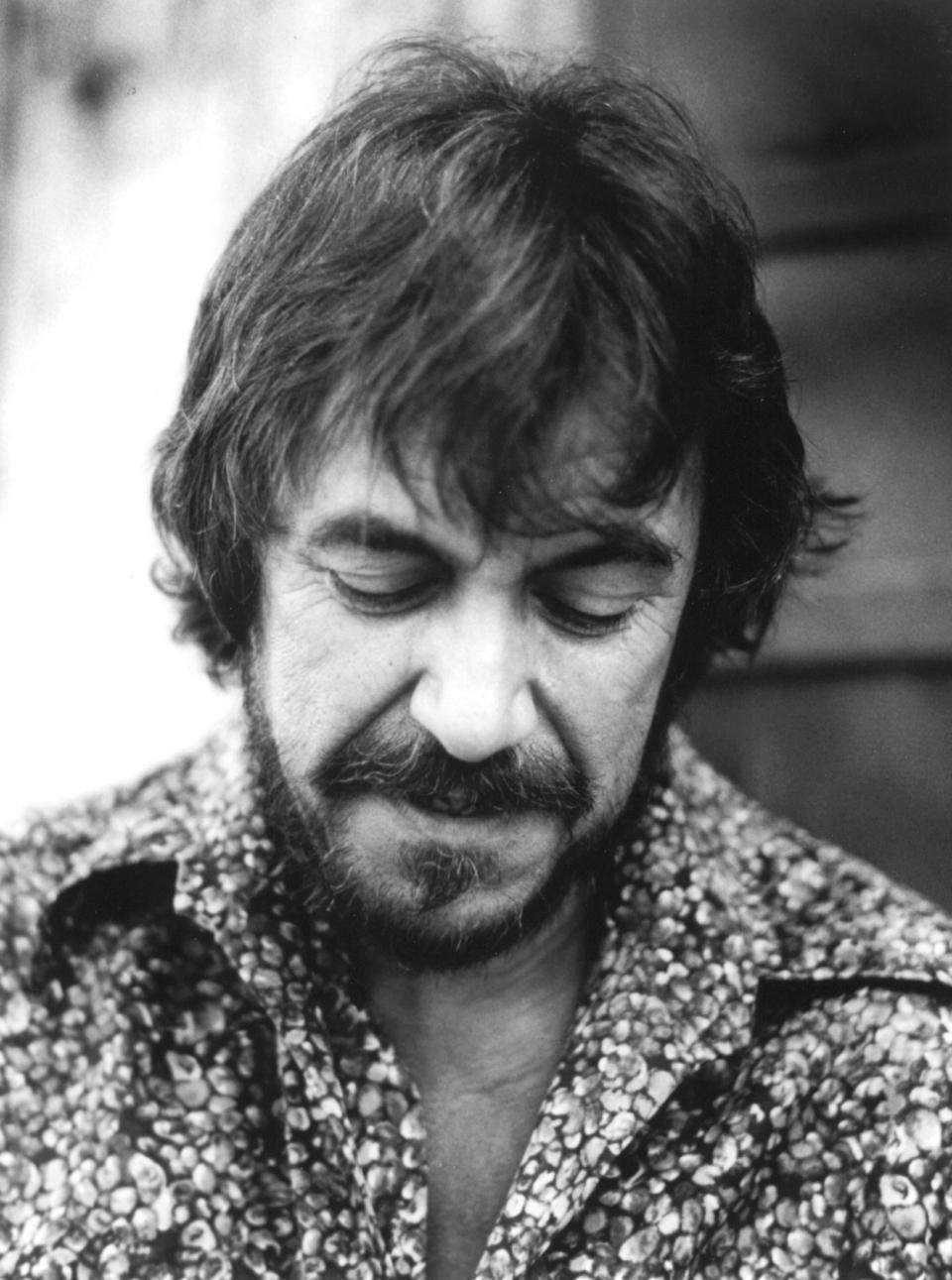
It’s been just over five years since Bobby Charles died. Here is his fascinating story on NPR. So many of his songs have resonance for me, a good-natured wistfullness despite the subject matter.
“He was so unpretentious and laid-back. On further investigation, you’d find out he wrote all these incredible songs.”
In his younger years, Mr. Charles raised all kinds of hell. His rogue’s resume included scrapes with the law, a busted marriage, and general excess.
“I don’t really have anybody,” Mr. Charles said in 2007. “I just don’t have a whole lot in common with the people I went to school with. I still love them as my friends, but I don’t have anything to say to ‘em. They wouldn’t believe half the (stuff) that happened to me anyway.
Here is one of the songs he co-wrote for Fats.
This was cut from The Last Waltz
The song mentioned in the NPR piece
Big Chief Bo Dollis
With Mardi Gras almost upon us the loss of Big Chief Bo Dollis is really felt. Here is an interview with Big Chief Bo Dollis and the funeral report.
And Bo Dollis was the Louis Armstrong, the Mahalia Jackson of the Mardi Gras Indian culture of New Orleans.

Reviews of Stoppard’s The Hard Problem

A Confederacy of Dunces – quotes and extracts – 88
“You’re kneeling on Rex’s grave!” Ignatius shouted. “Now tell me what you and that debauched McCarthyite have been doing? You probably belong to some secret political cell. No wonder I’ve been bombarded with those witch hunt pamphlets. No wonder I was trailed last night. Where is that Battaglia matchmaker. Where is she? She must be lashed. This whole thing is a coup against me, a vicious scheme to get me out of the way. My God! That bird was doubtlessly trained by a band of fascists. They’ll try anything.”
“Claude’s been courting me,” Mrs. Reilly said defiantly.
“What?” Ignatius thundered. “Do you mean to tell me that you have been permitting some old man to paw allover you?”,
“Claude’s a nice man. All he done is hold my hand a few times.” The blue and yellow eyes crossed in anger. The paws closed over the ears so that he would not have to listen to more.
“Goodness only knows what unmentionable desires that man has. Please don’t tell me the whole truth. I would have a total breakdown.”
“Shut up!” Miss Annie screamed from behind her shutters. “You people are living on borrowed time in this block.”
“Claude ain’t smart, but he’s a nice man. He’s good to his family and that’s what counts. Santa says he likes the communiss because he’s lonely. He ain’t got nothing else to do. If he was to ax me to marry him this very minute, I’d say, ‘Okay, Claude.’ I would, Ignatius. I wouldn’t haveta think twice about it. I got a right to have somebody treat me nice before I die. I got a right not to haveta worry about where my next dollar’s coming from. When Claude and me went to get your clothes from that head nurse and she hands us over your wallet with almost thirty dollars in it, that was the last straw. All your craziness was bad enough, but keeping that money from your poor momma…”
“I needed the money for a purpose.”
“For what? To hang around with dirty women?” Mrs. Reilly lifted herself laboriously from Rex’s grave. “You ain’t only crazy, Ignatius. You mean, too.”
“Do you seriously think that Claude roué wants marriage?” Ignatius slobbered, changing the subject. “You’ll be dragged from one reeking motel to another. You’ll end up a suicide.”
“I’ll get married if I want to, boy. You can’t stop me. Not now.”
“That man is a dangerous radical,” Ignatius said darkly. “Goodness knows what political and ideological horrors lurk in his mind. He’ll torture you or worse.”

Must cognition be representational?
William Ramsey in Synthese


