Bounded Rationality in the Digital Age

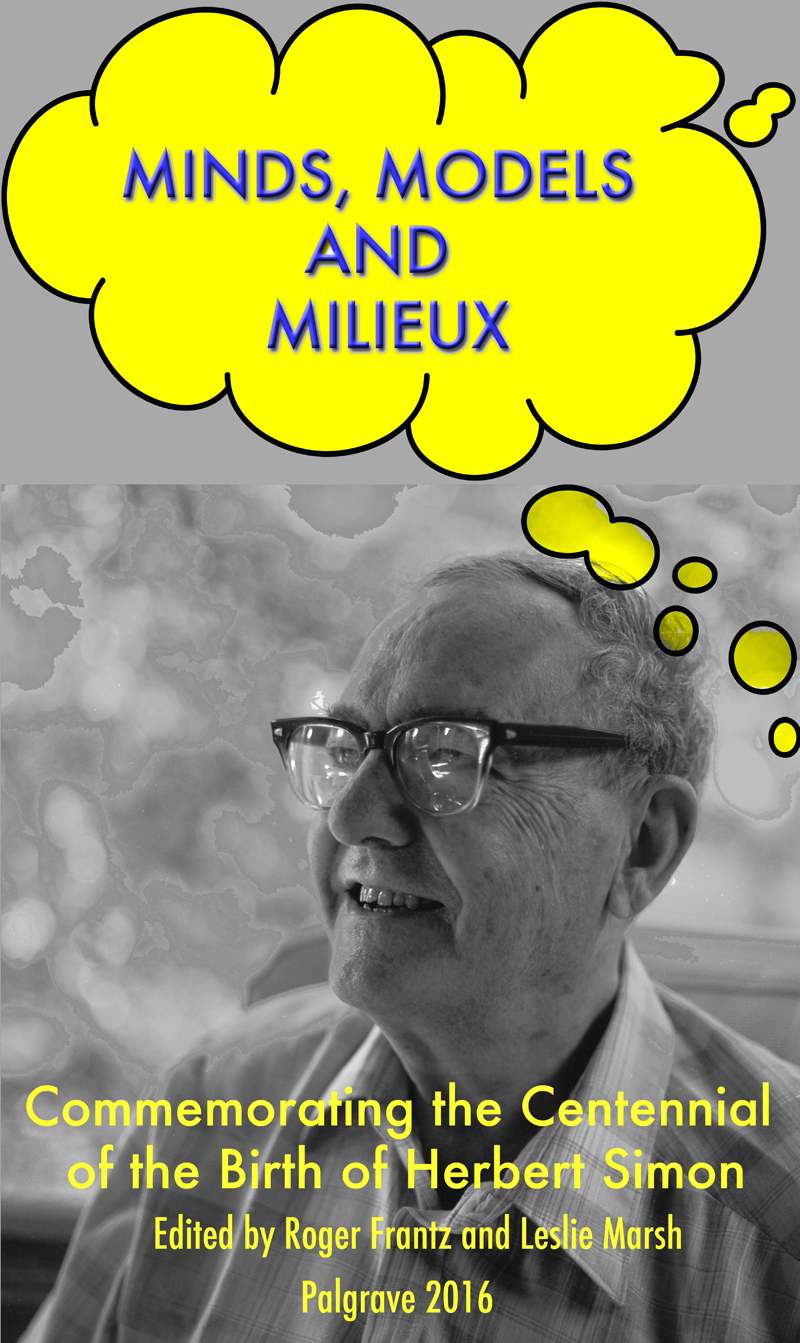
The fifteenth in a series of excerpts from Minds, Models and Milieux: Commemorating the Centennial of the Birth of Herbert Simon.

Peter E. Earl

One of the great tragedies in economics in the decades since Simon received the 1978 Alfred Nobel Memorial Prize in Economic Sciences is that the uptake of his ideas within the discipline has been either poor or in a partial manner that does not properly capture his vision (as with mainstream models purporting to address bounded rationality). In this chapter I begin by trying to make sense of this situation and then argue that the digital revolution is making it more imperative than ever that economists take up Simon’s key ideas – not merely his satisficing view of choice in the face of bounded rationality but also his thinking on artificial intelligence and the evolutionary roles of altruism and system design. The modern economy is undergoing supply side upheavals at the heart of which lie the issues of programmability and modularity. On the demand side, buyers now have to contend with choice problems of extraordinary complexity, whose solutions increasingly rely on social inputs.

A recurrent theme in what follows is that, in the digital age, Simon’s (1991, pp. 306–7) Travel Theorem takes on a wider significance. He set out the Theorem with reference to what one can hope to learn about something in a good public library, as opposed to making a journey to study it at first-hand for a short period (for example, as a tourist or business consultant). His contention was that if information is all one hopes to obtain, being there is far less efficient that trying to gather it remotely. Hence, if journeys are actually undertaken, they are/should be for reasons other than the gathering of information. In the world of the Internet, the webcam, smartphones, Skype, virtual reality experiences, and so on, Simon’s Travel Theorem provides a powerful starting point for asking questions about motivation and economic organisation.

HS_POSTER

Beauty Itself Became a Deadly Enemy

The very excellent Mishima scholar Donald Keene briefly discusses the English publication of The Temple of the Golden Pavilion almost exactly 57 years ago.

What transforms this world is — knowledge. Do you see what I mean? Nothing else can change anything in this world. Knowledge alone is capable of transforming the world, while at the same time leaving it exactly as it is. When you look at the world with knowledge, you realize that things are unchangeable and at the same time are constantly being transformed.

Walker Percy Wednesday 85

percycovercroppea

Surely, though, all is not well with a man who falls down in the fairway, and finds himself overtaken by unaccountable memories, memories of extraordinary power and poignancy. But memories of what?

*****

He smiled. Yes, that was it. With two mirrors it is possible to see oneself briefly as a man among men rather than a self sucking everything into itself—just as you can see the back of your head in a clothier’s triple mirror.

*****

Yes, that is possible, he thought smiling, that is one way to cure the great suck of self, but then I wouldn’t find out, would I? Find out what? Find out why things have come to such a pass and a man so sucked down into himself that it takes a gunshot to knock him out of the suck—or a glimpse in a double mirror. And I wouldn’t find out about the Jews, why they came here in the first place and why they are leaving. Are the Jews a sign?

*****

At any rate, within the space of the next three minutes there occurred two extraordinary events which, better than ten thousand words, will reveal both Barrett’s peculiar state of mind and the peculiar times we live in.

First, as he sat in the Mercedes, Luger in hand, gazing at the cat nodding in the sunlight, there came to him with the force of a revelation the breakthrough he had been waiting for, the sudden vivid inkling of what had gone wrong, not just with himself but, as he saw it, with the whole modern age.

*****

Later he remembered thinking even as he dove for cover: Was not the shot expected after all? Is this not in fact the very nature of the times, a kind of penultimate quiet, a minatory ordinariness of midafternoon, a concealed dread and expectation which, only after the shot is fired, we knew had been there all along?

Are we afraid quiet afternoons will be interrupted by gunfire? Or do we hope they will?

Was there ever a truly uneventful time, years of long afternoons when nothing happened and people were glad of it?

But first his “revelation.” As he sat gazing at the cat, he saw all at once what had gone wrong, wrong with people, with him, not with the cat—saw it with the same smiling certitude with which Einstein is said to have hit upon his famous theory in the act of boarding a streetcar in Zurich.

There was the cat. Sitting there in the sun with its needs satisfied, for whom one place was the same as any other place as long as it was sunny—no nonsense about old haunted patches of weeds in Mississippi or a brand-new life in a brand-new place in Carolina—the cat was exactly a hundred percent cat, no more no less. As for Will Barrett, as for people nowadays—they were never a hundred percent themselves. They occupied a place uneasily and more or less successfully. More likely they were forty-seven percent themselves or rarely, as in the case of Einstein on the streetcar, three hundred percent. All too often these days they were two percent themselves, specters who hardly occupied a place at all. How can the great suck of self ever hope to be a fat cat dozing in the sun?

There was his diagnosis, then. A person nowadays is two percent himself. And to arrive at a diagnosis is already to have anticipated the cure: how to restore the ninety-eight percent?

71x7p-XhQGL


Well said Daryl: “Academia? Now, there’s a hotbed of idiocy”

One of the current debates is over “cultural appropriation” – The idea that white people should not appropriate the culture of ethnic and racial minorities. I know that you don’t like the term “blue eyed soul.” Have you followed this conversation?

Are you trying to say that I don’t own the style of music that I grew up with and sing? I grew up with this music. It is not about being black or white. That is the most naïve attitude I’ve ever heard in my life. That is so far in the past, I hope, for everyone’s sake. It isn’t even an issue to discuss. The music that you listened to when you grew up is your music. It has nothing to do with “cultural appropriation.”

I agree with you entirely, because…

I’m glad that you do, because anyone who says that should shut the fuck up.

Well, this entire critique is coming back…

I’m sorry to hear it. Who is making these critiques? Who do they write for? What are their credentials to give an opinion like that? Who are they?

Much of it is academic.

Well, then they should go back to school. Academia? Now, there’s a hotbed of idiocy.

Anyone who knows about music, about culture in general, understands that everything is much more natural. Everything is a mixture.

We live in America. That’s our entire culture. Our culture is a blend. It isn’t split up into groups. Anyone who says otherwise is a fool – worse than a fool – a dangerous fool.

I also know that you don’t like the term “blue eyed soul”…

No, and it is for this very reason. There is no color to soul. Soul music comes from the heart. It was generated out of the church, and it became secular gospel.

Ray Charles made that same point. He said the only difference between gospel and soul is that in one genre he sings to God, and in another, he sings to a woman.

That’s right. That’s exactly it.

Salon

MI0001330252_full

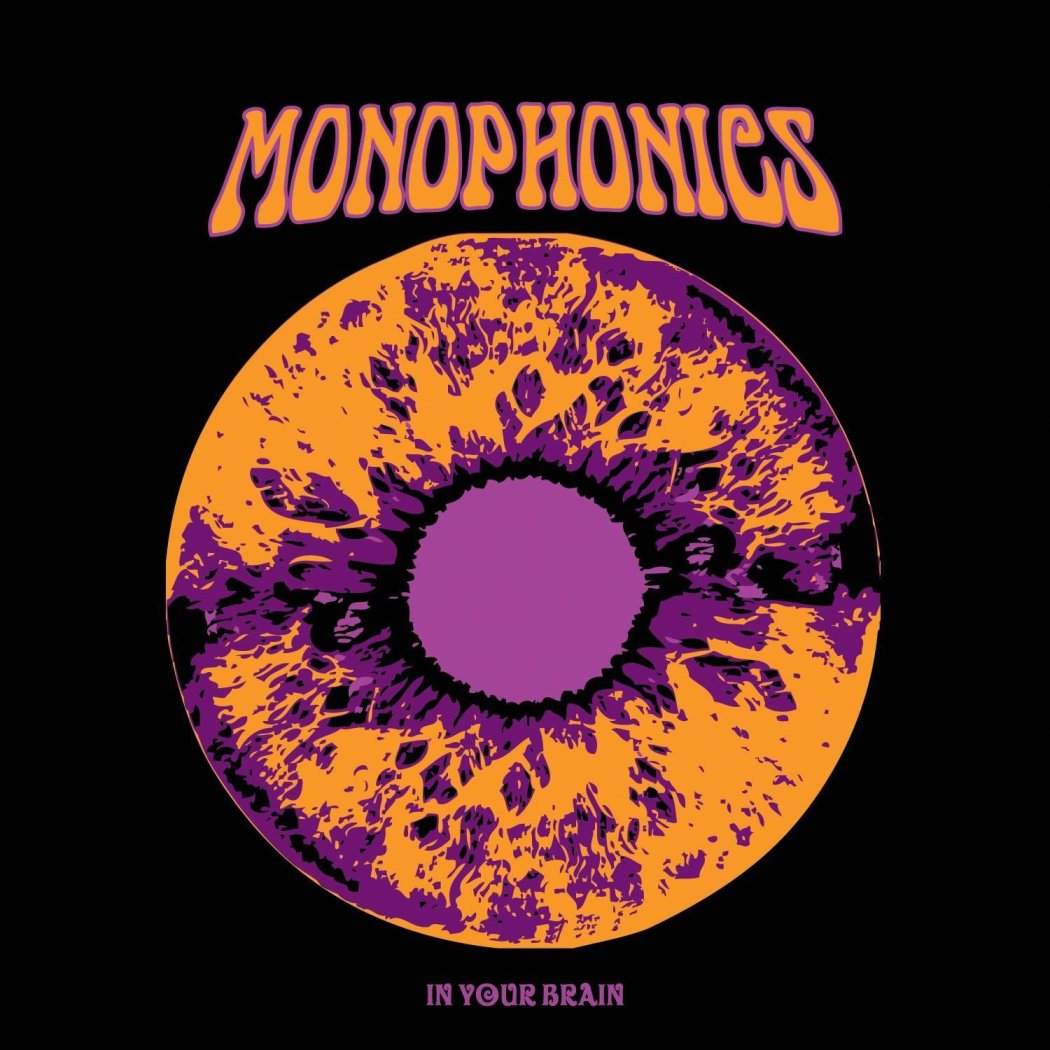
Monophonics: In Your Brain

Four years ago this classic album by the Monophonics was released. And they are currently on tour. Though there doesn’t seem to be much of anything of substance written on the band, this review of their latest comes closest to capturing their spirit. Now if you don’t know who the Dap-Kings are (as per quote below) you need to check out this small label that oozes with charm, class and talent (more on them in a later posting).

The Monophonics are sort of a more psychedelic west coast counterpart to the Dap-Kings, masters of all things darkly slinky and soulful.

81x4Z2MQQ9L._SL1500_

Terrence Malick — philosopher with a camera

Malick, the greatest living American filmmaker, has never made the consistently good fully philosophical film that we know he’s quite capable of. I fear that unless he dumps the star actors, he never will. I suppose that beginning with the Thin Red Line (after a 20 year hiatus) he understandably exploited high-priced luvvies eager to embellish their resume with something artsy — so that Malick could actually have his films generously funded and distributed. The problem as I see it is that having a decent sized budget doesn’t necessarily mean Malick’s vision gets better articulated. Much like Herzog, his best work is done in spite of the financial constraints. The actors in his films from 1998 onwards either try too hard not to reflect their public persona and/or they are just too flat to carry the larger vision — there seems to be no middle ground. Because Malick is so deeply philosophical it occurred to me that he would be the ideal person to film a Walker Percy novel. There was talk of Wenders flirting with such a project. Speaking of Percy, it is quite clear why Catholics have, of late, been particularly fascinated by Malick’s work — and rightly so. Not surprisingly, if one is tone deaf to the sacred then Malick’s work does come over as pompous and pretentious. See the various discussions linked to below (in no particular order). I haven’t read Terrence Malick: Film and Philosophy yet but check out the discussion of Malick’s philosophical journey here.

Malick studied philosophy as an undergraduate with Stanley Cavell, and briefly taught philosophy at the MIT. He then traveled to Germany in the mid 1960s to meet with Heidegger, and produced a scholarly translation of Vom Wesen des Grundes (The Essence of Reasons) in 1969. That same year, Malick abandoned philosophy to become a film-maker. A philosopher turned film-maker is a rare and fascinating creature, so we can readily understand Furstenau and MacEvoy’s confident claim that Malick clearly ‘transformed his knowledge of Heidegger in cinematic terms’ (2003, 175), a knowledge that came to fruition in his first feature, Badlands (1973), in Days of Heaven (1978), and of course in The Thin Red Line (1998).

— Robert Sinnerbrink

The film seems to be fighting a losing battle to make sense of itself, to coalesce into a statement, to not fade away. This feels right. “Knight of Cups” is not a young man’s movie. It’s an old man’s movie. A philosophically engaged, beatific, starchild-as-old-man’s movie. The end is coming. What did it all mean? What else is there but sunlight, water, sex, laughter, sunlight? Why do people sneer when they hear questions like that? Why is it unacceptable to make films like “Knight of Cups,” which speak in the language of poetry, fables, dreams, calendar art, Tarot cards? Why is it banal, vacuous, naive, to hear Rick’s father assign redemptive meaning to “the light in the eyes of others”?

— Roger Ebert.com

National Catholic Reporter 

The Week

MUBI

The American Conservative

The New Yorker

Patheos

Roger Ebert (Malick content listing)

First Things

Bounded Rationality, Shared Experiences, and Social Relationships in Herbert A. Simon’s Perspective

The fourteenth in a series of excerpts from Minds, Models and Milieux: Commemorating the Centennial of the Birth of Herbert Simon.

Stefano Fiori

In his autobiography, Herbert Simon writes: “The most important years of my life as a scientist were 1955 and 1956” (Simon, 1991a, p. 189). In those years he published two important articles that laid the foundations of his theory of bounded rationality: A Behavioral Model of Rational Choice (1955) and Rational Choice and the Structure of the Environment (1956) (henceforth, Simon (1956)). One year later, in 1957, Simon wrote a short story, The Apple, in which he presented in literary form the scientific results of Simon (1956).

The thesis of this article is that The Apple gives interesting insights into Simon’s research and that, because of its literary form, it highlights topics which are less apparent in his scientific papers. Hugo, the protagonist of The Apple, lives in isolation in a castle, and his story represents how a rationally bounded agent interacts with, and learns from, an environment by choosing not optimal but satisficing alternatives. The perspective which inspired both Simon (1956) and The Apple would remain essentially unchanged in the course of time, even when Simon examined bounded rationality in light of artificial intelligence and of simulations performed by means of computer programs.

The question from which we begin concerns the implications of an analysis of (bounded) rationality which removes human relationships, as occurs in Simon’s scientific paper of 1956 and his short story of 1957. In fact, Hugo reminds us of homo œconomicus of the neoclassical approach, that is, an individual who, given environmental constraints, is concerned solely with her/his needs. The difference with Simon’s view is that  in the neoclassical tradition s/he is perfectly rational and maximizes her/his utility, while in Simon’s view s/he is rationally limited and chooses not the best but a satisficing alternative, i.e. an alternative which meets or exceeds certain criteria different from those required by the maximization of utility function.

However, it would be a mistake to state that Simon does not consider social relationships in his work. On the contrary, he took them into account in his early works on administrative and organizational behavior, and even more so in the 1990s, when themes like loyalty, identification with organizational goals, and altruism became topics of new inquiries. These themes were not elaborated in light of artificial intelligence; rather, they remained connected to the theory of organizations, or they were influenced by other approaches, such as the Darwinian view which Simon took into account for his hypotheses on altruism. Although the two perspectives (namely, the one that emerged in the 1950s and was later developed within artificial intelligence and cognitive psychology, which analyses bounded rationality at the individual level; and the other, which deals with bounded rationality within administrative systems and organizations) are basically connected, they partially refer to different theoretical tools and use different languages. Their analysis is the subject-matter of this paper, which is organized as follows: Section 1 compares Simon’s (1956) model of bounded rationality with its literary version; Section 2 examines how bounded rationality, especially in The Apple, is represented by starting from the traditional image of an isolated individual; Section 3 discusses how the paradigm of the isolated individual raises problems relative to the emergence of meanings; Section 4 shows that Simon dealt with relationships between the individual and society in his approaches to organizational and administrative behavior and in his studies of the 1990s. Finally, Section 5 concludes.

HS_POSTER

Methodological Individualism, Structural Constraints, and Social Complexity

New (double) issue of Cosmos+Taxis

Cover

Walker Percy Wednesday 84

The 10th May commemorates the death of Percy in 1990: this year marks the centenary of his birth.

percycovercroppea

The lives of other people seemed even more farcical than his own. It astonished him that as farcical as most people’s lives were, they generally gave no sign of it. Why was it that it was he not they who had decided to shoot himself? How did they manage to deceive themselves and even appear to live normally, work as usual, play golf, tell jokes, argue politics? Was he crazy or was it rather the case that other people went to any length to disguise from themselves the fact that their lives were farcical? He couldn’t decide.
What is one to make of such a person?
To begin with: though it was probably the case that he was ill and that it was his illness—depression—which made the world seem farcical, it is impossible to prove the case.
On the one hand, he was depressed.
On the other hand, the world is in fact farcical.
Or at least it is possible to make the case that for some time now life has seemed to become more senseless, even demented, with each passing year.
True, most people he knew seemed reasonably sane and happy. They played golf, kept busy, drank, talked, laughed, went to church, appeared to enjoy themselves, and in general were both successful and generous. Their talk made a sort of sense. They cracked jokes.
On the other hand, perhaps it is possible, especially in strange times such as these, for an entire people, or at least a majority, to deceive themselves into believing that things are going well when in fact they are not, when things are in fact farcical. Most Romans worked and played as usual while Rome fell about their ears.
But surely it is fair to say that when a man becomes depressed, falls down in a sand trap, and decides to shoot himself, something has gone wrong with the man, not the world.
If one person is depressed for every ninety-nine who are not or who say they are not, who is to say that the depressed person is right and the ninety-nine wrong, that they are deceiving themselves? Even if this were true, what good would it do to undeceive the ninety-nine who have diverted themselves with a busy round of work and play and so imagine themselves happy?

*****

It was a scene from his youth, so insignificant a recollection that he had no reason to remember it then, let alone now thirty years later. Yet he seemed to see every detail as clearly as if the scene lay before him. Again the explanation of the neurologist was altogether reasonable. The brain registers and records every sensation, sight and sound and smell, it has ever received. If the neurones where such information is stored happen to be stimulated, jostled, pressed upon, any memory can be recaptured.
Nothing is really forgotten.
The smell of chalk dust on the first day of school, the feel of hot corduroy on your legs, the shape of the scab on the back of your hand, is still there if you have the means of getting at it.

*****

It is not at all uncommon for persons suffering from certain psychoses and depressions of middle age to exhibit “ideas of reference,” that is, all manner of odd and irrational notions about Jews, Bildebergers, gypsies, outer space, UFOs, international conspiracies, and whatnot. Needless to say, the Jews were and are not leaving North Carolina. In fact, the Jewish community in that state, though small, is flourishing. There were at the last census some twenty-five synagogues and temples, ten thousand Jews with a median income of $21,000 per family.

71x7p-XhQGL