Rouslan Koumakhov has brought my attention to this newly coauthored and freely available Simon paper. Rouslan was one of the contributors to our Simon centenary volume as well.
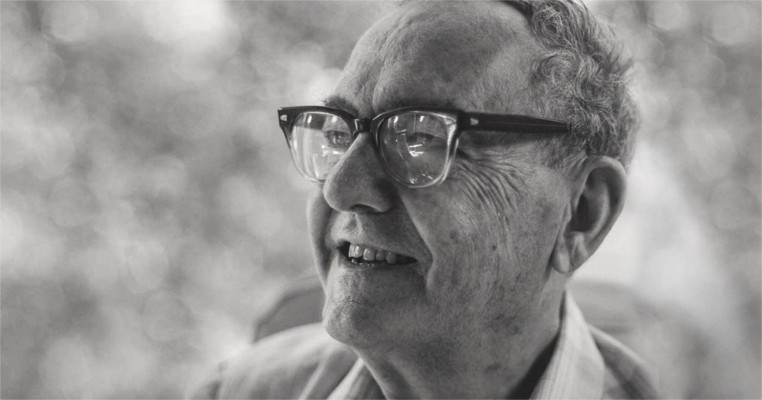
Rouslan Koumakhov has brought my attention to this newly coauthored and freely available Simon paper. Rouslan was one of the contributors to our Simon centenary volume as well.
The very excellent Keith Spera reports. Also check out Robert Marovich’s excellent Journal of Gospel Music for his thoughts on the release.

He lights up. “Tom, it’s beautiful. It’s beautiful because it’s so simple. All great scientific breakthroughs are simple. One change and presto, all the old hassles, twelve-year-olds getting knocked up, contraceptives in school, abortion, child abuse—all the old political and religious hassles are simply bypassed, left behind. Did you ever notice that the great controversies in history are never settled, that they are simply left behind? Somebody has a new idea and the old quarrels become irrelevant.”
00000
“A neonate is a human infant who according to the American Psychological Association does not attain its individuality until the acquisition of language and according to the Supreme Court does not acquire its legal rights until the age of eighteen months—an arbitrary age to be sure, but one which, as you well know, is a good ballpark figure.”
00000
“He’s got bigger fish to fry.”
“What are they?”
“A little item which he calls the sexual liberation of Western civilization. According to Van, the entire Western world has been hung up on sex since St. Paul.”
“I see.”
“We call him our Dr. Ruth, Dr. Ruth of the bayous.”
00000
“Try to imagine a Harvard and M.I.T. brain who is not an asshole and try to imagine a Texas Humana can-do surgeon who is not an airhead.”
00000
“Those guys are a bunch of ham-fisted social engineers, barnyard technicians, small-time Washington functionaries, long-distance reformers—you know who they remind me of? They remind me of the New England abolitionists, that bunch of guilt-ridden Puritan transcendentalist assholes who wanted to save their souls by freeing the slaves and castrating the planters. These guys—you know how they produce Olympic weight lifters in the U.S.S.R.? By steroids and testosterone—the same way they do football players and racehorses in Texas. These guys are running a barnyard. That’s no way to treat social ills or to treat people. Those damn cowboys are killing flies with sledgehammers. Do you know the latest they’re up to?”
“No.”
“Okay, so we’ve got a problem with teen pregnancy, children getting knocked up by the thousands right here. Plus a mean, demoralized, criminal black underclass. A real problem, right? But you don’t cure it by knocking back all women in the pilot area into a pre-primate estrus cycle, do you? You don’t treat depression by lobotomizing the patient anymore, do you? You don’t treat homosexuals by dumping stuff in their water supply and turning them into zombies, do you?”

Two thinkers I greatly admire are having a dust-up — well at least, Jerry Coyne has taken Richard Gunderman to task concerning his article (I’m familiar with Richard’s work on the philosophy of philanthropy and classical sense of liberality). I trust that if this spat gets energized, that it will remain civil.
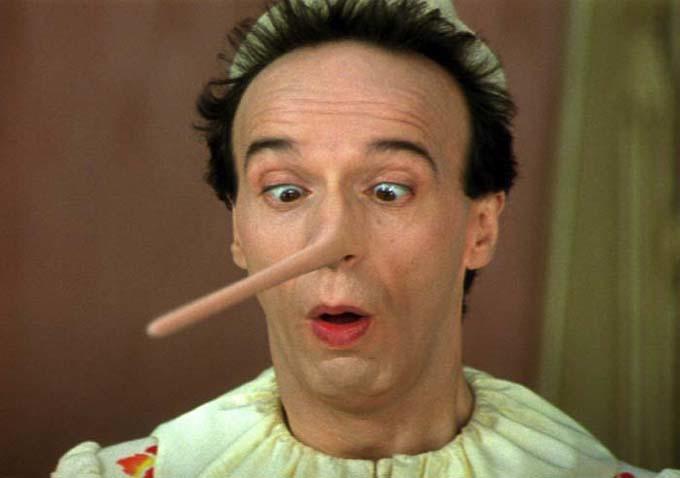
Époisses is so stinky that it is banned on public transportation in France — a country usually tolerant of such aromas. Unbeknownst to me, my hosts in Bourgogne packed some really ripe cartons into my luggage for me to take back to London: it really was quite noticeable in the Tube but of course I played innocent. It’s like Marmite — either you like it or loath it — there is no in-between. It stands as one of my three favourite cheeses of all time and according to The Independent was Napoleon’s favourite.

Chose your digital format of “The Case Of Wagner: A Musician’s Problem” made available by Project Gutenberg. Of course, one should also give a close listen to this version of Parsifal from Bayreuth 2016.
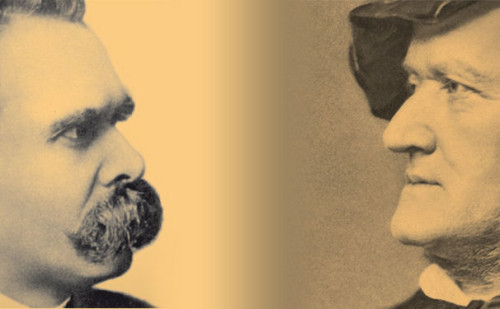
And yet this other question can certainly not be circumvented: what business had he actually with that manly (alas! so unmanly) “bucolic simplicity,” that poor devil and son of nature—Pasifal, whom he ultimately makes a catholic by such insidious means—what?—was Wagner in earnest with Parsifal? For, that he was laughed at, I cannot deny, any more than Gottfried Keller can…. We should like to believe that “Parsifal” was meant as a piece of idle gaiety, as the closing act and satyric drama, with which Wagner the tragedian wished to take leave of us, of himself, and above all of tragedy, in a way which befitted him and his dignity, that is to say, with an extravagant, lofty and most malicious parody of tragedy itself, of all the past and terrible earnestness and sorrow of this world, of the most ridiculous form of the unnaturalness of the ascetic ideal, at last overcome. For Parsifal is the subject par excellence for a comic opera…. Is Wagner’s “Parsifal” his secret laugh of superiority at himself, the triumph of his last and most exalted state of artistic freedom, of artistic transcendence—is it Wagner able to laugh at himself? Once again we only wish it were so; for what could Parsifal be if he were meant seriously? Is it necessary in his case to say (as I have heard people say) that “Parsifal” is “the product of the mad hatred of knowledge, intellect, and sensuality?” a curse upon the senses and the mind in one breath and in one fit of hatred? an act of apostasy and a return to Christianly sick and obscurantist ideals? And finally even a denial of self, a deletion of self, on the part of an artist who theretofore had worked with all the power of his will in favour of the opposite cause, the spiritualisation and sensualisation of his art? And not only of his art, but also of his life? Let us remember how enthusiastically Wagner at one time walked in the footsteps of the philosopher Feuerbach. Feuer- bach’s words “healthy sensuality” struck Wagner in the thirties and forties very much as they struck many other Germans—they called themselves the young Germans—that is to say, as words of salvation. Did he ultimately change his mind on this point? It would seem that he had at least had the desire of changing his doctrine towards the end…. Had the hatred of life become dominant in him as in Flaubert? For “Parsifal” is a work of rancour, of revenge, of the most secret concoction of poisons with which to make an end of the first conditions of life, it is a bad work. The preaching of chastity remains an incitement to unnaturalness: I despise anybody who does not regard “Parsifal” as an outrage upon morality.
Surprisingly, only now has an official website for Fats been launched. Let’s hope it actually becomes content rich and not just another naff and crass exercise in merchandizing. The best source for the Fats story remains Rick Coleman’s Blue Monday: Fats Domino and the Lost Dawn of Rock ‘n’ Roll.