As one would expect, a subtle view of religion that rationalists (typically adhering to one secular religion or another) have a blind spot to.
Walker Percy Wednesday 115

Upriver and into West Feliciana, the first low loess bluffs of St. Francisville, and into the pleasant deciduous hills where Audubon lived with rich English planters, painted the birds, and taught dancing for a living. Out of the hills and back toward the river and Grand Mer, the great widening of the river into a gulf where the English landed with their slaves from the Indies, took up indigo farming, and lived the happy life of Feliciana, free of the seditious Americans to the north, the corrupt French to the south, and in the end free even to get rid of the indolent Spanish and form their own republic.
*****
Lucy fixes toddies of nearly straight bourbon in crystal goblets the size of a mason jar. My nose is running. Perhaps the toddies will help. I haven’t had a toddy for years. An eighteenth-century traveler once wrote of Feliciana and Pantherburn: “There is always at one’s elbow a smiling retainer ready with a toddy or a comfit.” What’s a comfit?
*****
They, the Bons, are known hereabouts as freejacks, meaning free persons of color, freed, the story goes, by Andrew Jackson for services rendered in the Battle of New Orleans. More likely, they’re simply descendants of the quadroons and octoroons of New Orleans. A proud and reticent people, often blue-eyed and whiter than white, many could “pass” if they chose but mainly choose not to, choose, rather, to stay put in small contained bayou communities.
*****
There is this to be said for drinking. It frees one from the necessities of time, like: now it is time to sit down, stand up. One would as soon do one thing as another.
Time passes, but one need not tell oneself: take heed, time is passing.

Michael Oakeshott
Thinking of this great subtle humane thinker — his birth and death dates are close together (December 11, 1901 — December 19, 1990) — whose work stands as one of the greatest challenges to salvation peddlers. For a freebie overview check out Terry Nardin’s SEP entry and two collections — Paul and my Penn State volume and Efraim’s CUP volume.

EPISTEME: Volume 13 – Issue 4
The latest issue of EPISTEME is now available.
How Biology Shapes Philosophy
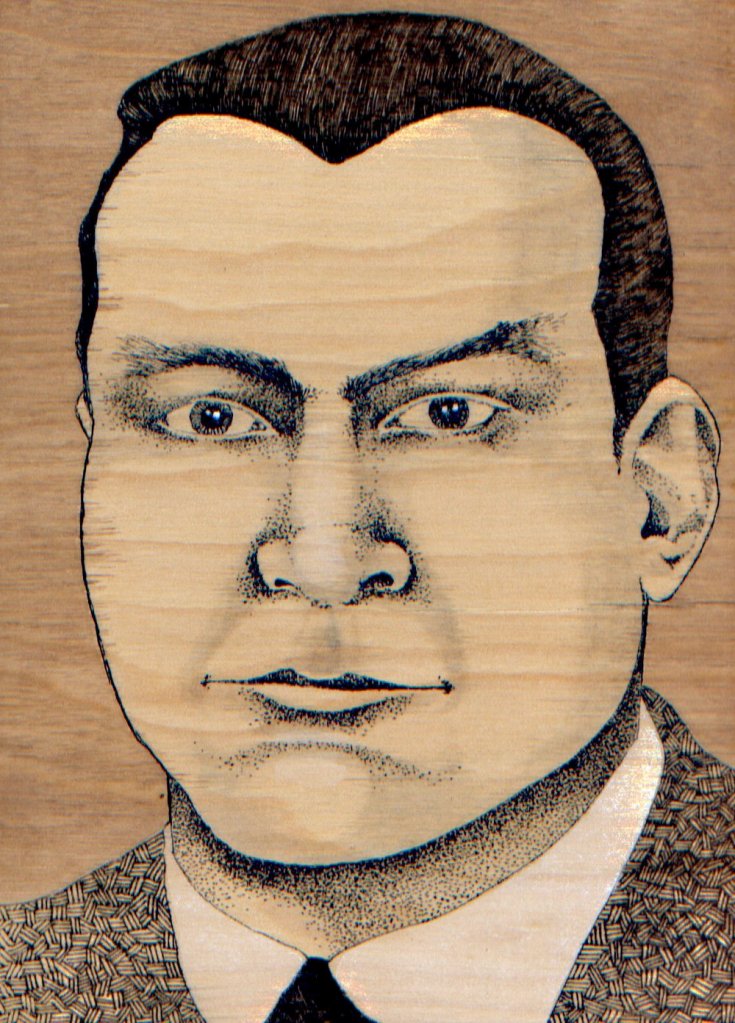
My chum David Livingstone Smith’s long awaited edited collection of essays by a top-notch lineup is now available. To get a better sense of the scope of the project check out the book’s homepage as well as David’s other writings here. For the past thirty years I been of the view that though Hume did not have a modern scientific toolbox at his disposal “sociobiology” (called “evolutionary psychology” these days) is a scientific vindication of Hume’s speculative anthropology. Hume’s moral psychology has, of late, found new voice within the recent trend that has come to be known as experimental philosophy. I’d be interested to see how E. O. Wilson is treated in this volume given that he was pretty much (unfairly) deemed to be a pariah for two decades from the mid-70s.

Giacomo Leopardi
Leopardi is quite possibly my favourite poet, this despite my reading him in English and being aware that quite a bit must be getting lost. Anyway, David Bentley Hart reviews Zibaldone published a few years back pointing out in his review Leopardi’s paradoxical cast of mind as does the always insightful John Gray (second and third quotes)
He had a particular disdain for the beguiling myth of progressive enlightenment. As far as he was concerned, all cultural values are historical contingencies; and those of the modern age enjoy no conspicuous superiority over those of antiquity. Quite the reverse, in fact. He saw the tension between traditional religious piety and scientistic rationalism as no more than the natural hostility that exists between incompatible, and equally arbitrary, dogmatic adherences. The latter devotion has perhaps brought about considerable advancement in the sciences, but this he regarded as anything but an unequivocal good. The practical benefits of modern science can hardly compensate for the abyss of meaninglessness that modern rationalism opens beneath our feet, or for the surrender to total nihilism that it invites.
Leopardi found the unthinking moral certainty of secular thinkers highly questionable, not least because of their hidden debts to Christianity.
Realising that the human mind can decay even as human knowledge advances, Leopardi would not have been surprised by the stupefying banality and shallowness of current debates on belief and unbelief. He accepted that there is no remedy for the ignorance of those who imagine themselves to be embodiments of reason.

John Kennedy Toole
Another great N.O. luminary’s birthday to commemorate.
Booker’s Birthday
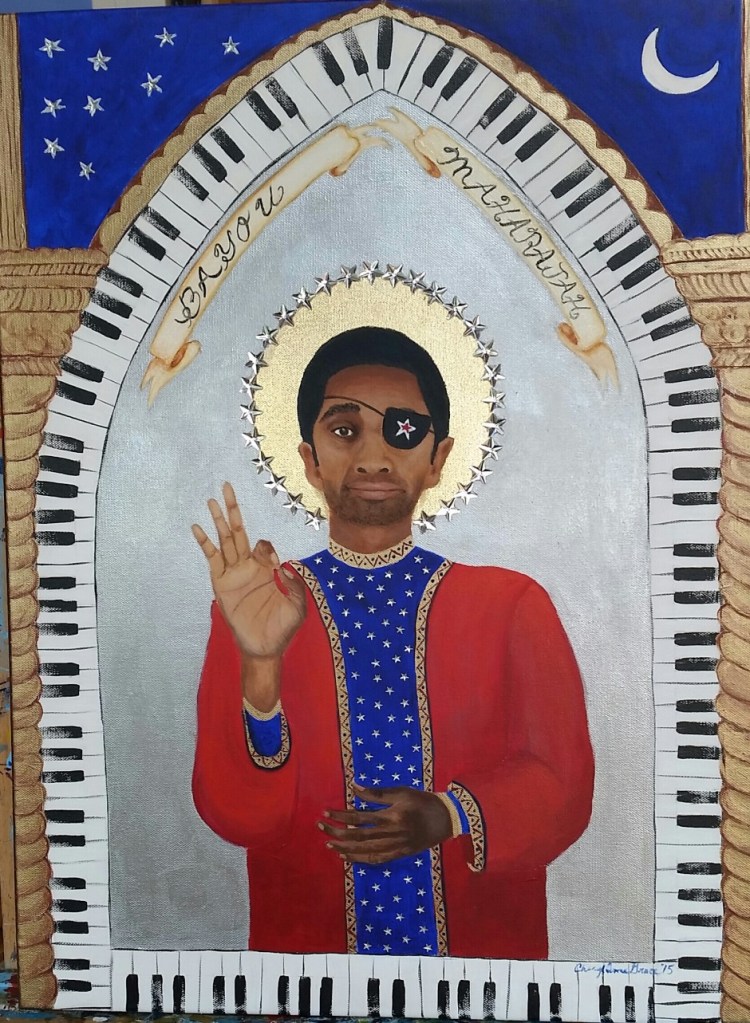
Today marks the birth of James Booker. Quite recently while looking for a fresh image of Booker I stumbled across the work of Cheryl Anne Grace. What’s particularly appealing about her work is that it doesn’t suffer from that Jackson Square/Pirate’s Alley schlock (Confederacy of Dunces) look. Cheryl’s work is palpably affectionate and the stylish iconography adds a very nice “canonized” touch to several great musical N.O. characters: Mr. Okra, Fats, Ernie K-Doe, Booker, Allen Toussaint as well as some still life paintings that have resonance for me as well — The Bead Tree, Café au Lait at Napoleon House, Mother In Law Lounge, Snake and Jake’s and Bachanal. Anyway, check out the Booker documentary to learn more about the amazing character that was Booker and support Cheryl’s work — and hopefully Cheryl’s roster of N.O. portraits will expand.
The search goes on
Nick Spencer’s The Evolution of the West: How Christianity Has Shaped Our Values warmly reviewed in The Economist. This theme was one that Walker Percy repeatedly returned to.
Lurking everywhere in the secularised West is what he calls a “disenchantment with disenchantment”. People still want more than just freedom and choice. They want to belong, they want community rooted in something shared and they want to find meaning beyond themselves. “Having arrived at the secular self,” says Mr Spencer, “we kept on searching.”

The ideological opposition to biological truth
Jerry Coyne’s latest on his blog Why Evolution is True.
To claim that there are no evolutionary differences in behavior and psychology between men and women is fatuous.


