
Zeno’s Conscience: quotes (37)
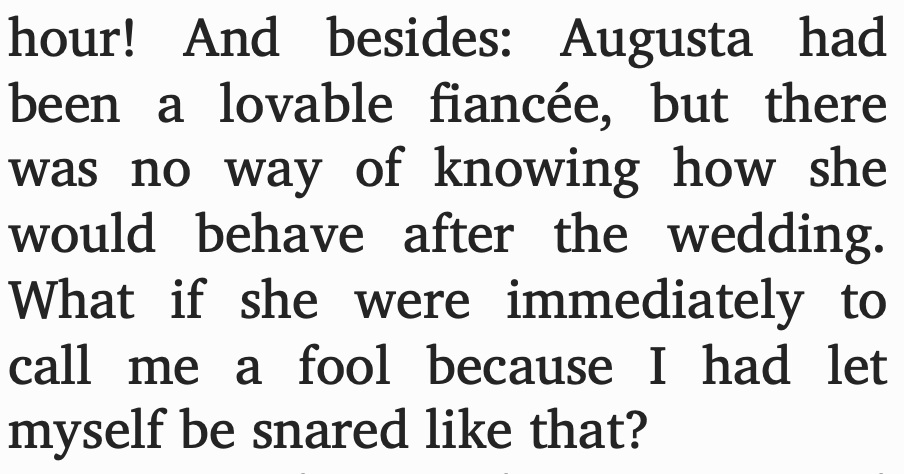
“I will never forget that, even without loving me, you married me.”
I didn’t protest because the matter was so obvious that protest was impossible. But, filled with compassion, I embraced her.
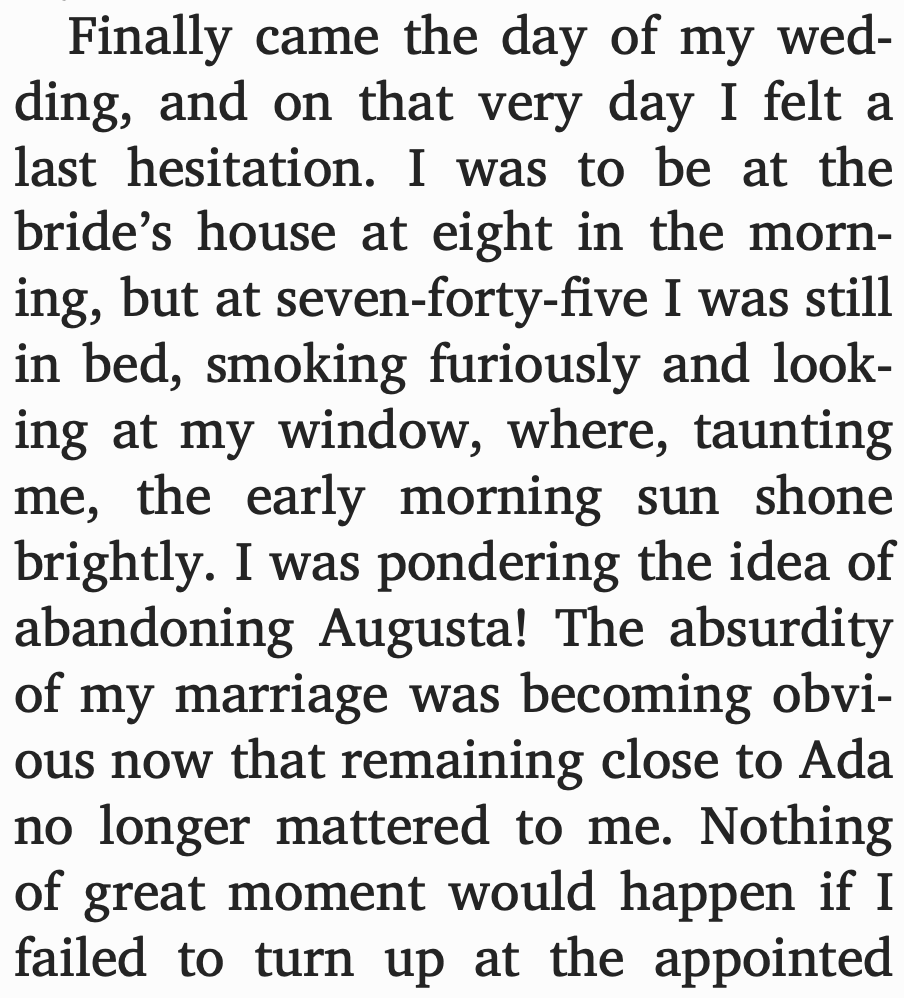
None of this was ever discussed again between Augusta and me because a marriage is far simpler than an engagement. Once married, you don’t talk anymore about love, and when you feel the need to speak of it, animal instincts quickly intervene and restore silence. Now, these animal instincts may become so human that they also become complex and artificial, and it can happen that, bending over a woman’s head of hair, you also make the effort to find in it a glow that is not present. You close your eyes and the woman becomes another, only to become herself again when you leave her. You feel only gratitude, all the greater if the effort has been successful. This is why, if I were to be born again (Mother Nature is capable of anything!), I would agree to marry Augusta; but never to be engaged to her.
Hadrian the Seventh: extracts (5)


A Confederacy of Dunces: quotes (37)
She had chiseled quite a bit of money from her father to go away to college to see what it was like “out there.” Unfortunately she found me. The trauma of our first meeting fed each other’s masochism and led to an affair (platonic) of sorts. (Myrna was decidedly masochistic. She was only happy when a police dog was sinking its fangs into her black leotards or when she was being dragged feet first down stone steps from a Senate hearing.) I must admit that I always suspected Myrna of being interested in me sensually; my stringent attitude towards sex intrigued her; in a sense, I became another project of sorts. I did, however, succeed in thwarting her every attempt to assail the castle of my body and mind. Since Myrna and I confused most of the other students when we were apart, as a couple we were doubly confusing to the smiling Southern birdbrains who, for the most part, made up the student body. Campus rumor, I understand, linked us in the most unspeakably depraved intrigues.
Myrna’s cure-all for everything from fallen arches to depression was sex. She promulgated this philosophy with disastrous effects to two Southern belles whom she took under her wing in order to renovate their backward minds. Heeding Myrna’s counsel with the eager assistance of various young men, one of the simple lovelies suffered a nervous breakdown; the other attempted unsuccessfully to slash her wrists with a broken Coca-Cola bottle. Myrna’s explanation was that the girls had been too reactionary to begin with, and with renewed vigor, she preached sex in every classroom and pizza parlor, almost getting herself raped by a janitor in the Social Studies building. Meanwhile, I tried to guide her toward the path of truth.
After several semesters Myrna disappeared from the college, saying in her offensive manner, “This place can’t teach me anything I don’t know.” The black pants, the matted mane of hair, the monstrous valise were all gone; the palmlined campus returned to its traditional lethargy and necking. I have seen that liberated doxy a few times since then, for, from time to time she embarks on an “inspection tour” of the South, stopping eventually in New Orleans to harangue me and attempt to seduce me with the grim prison and chain and gang songs she strums on her guitar. Myrna is very sincere; unfortunately, she is also offensive.

Despised: Why the Modern Left Loathes the Working Class
Given the top-notch endorsements from names of the calibre of Eric Kaufmann, Douglas Murray and Maurice Glasman, I’m very much looking forward to this read. Though written from within the British context, I fully expect that much of what Paul has to say will have salience to the US, Canada and other places besides. See Paul in conversation below.

Sylvain Sylvain

Zeno’s Conscience: quotes (36)

Michael Oakeshott Association 2021: Call for Papers
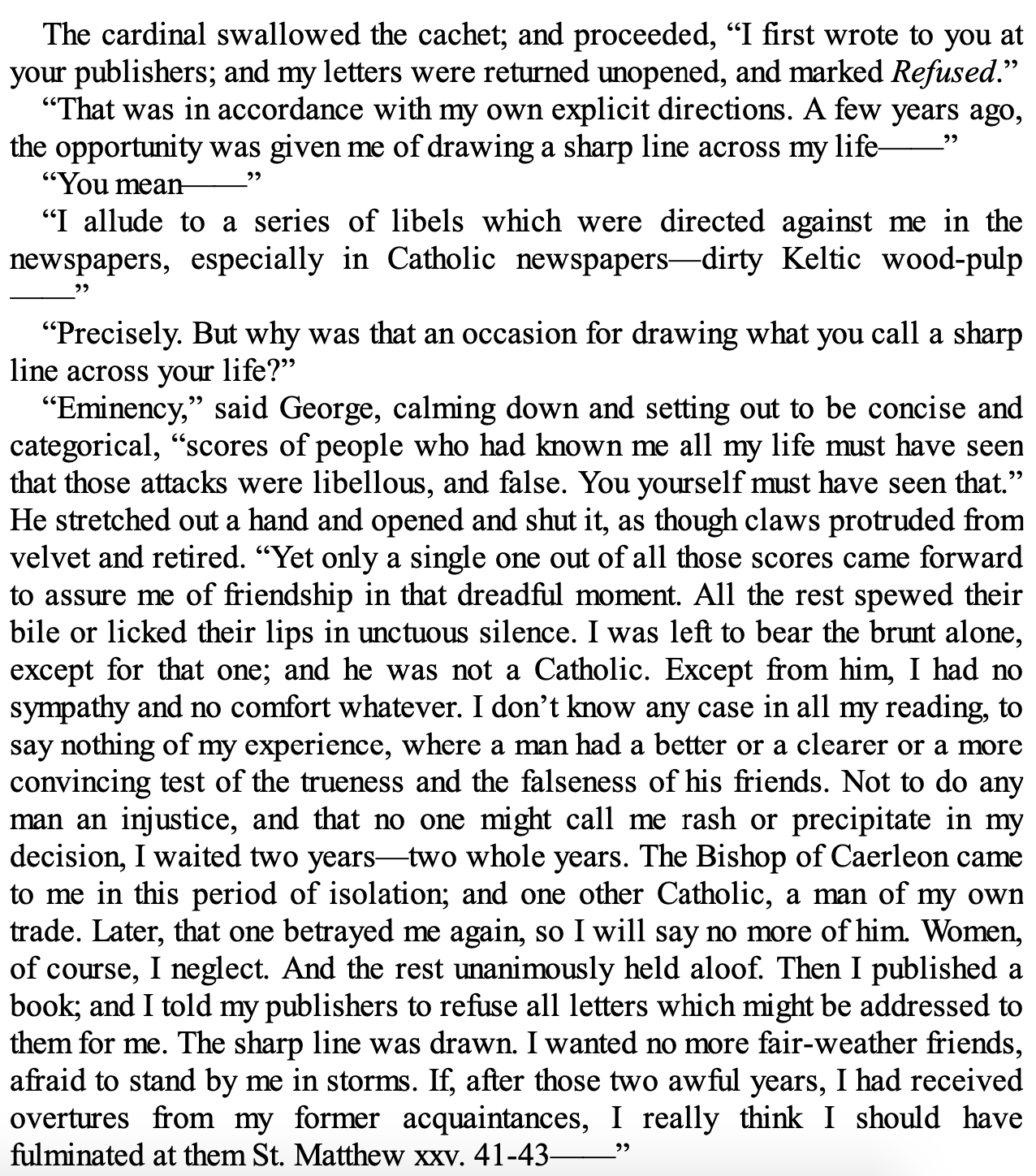
Hadrian the Seventh: extracts (4)
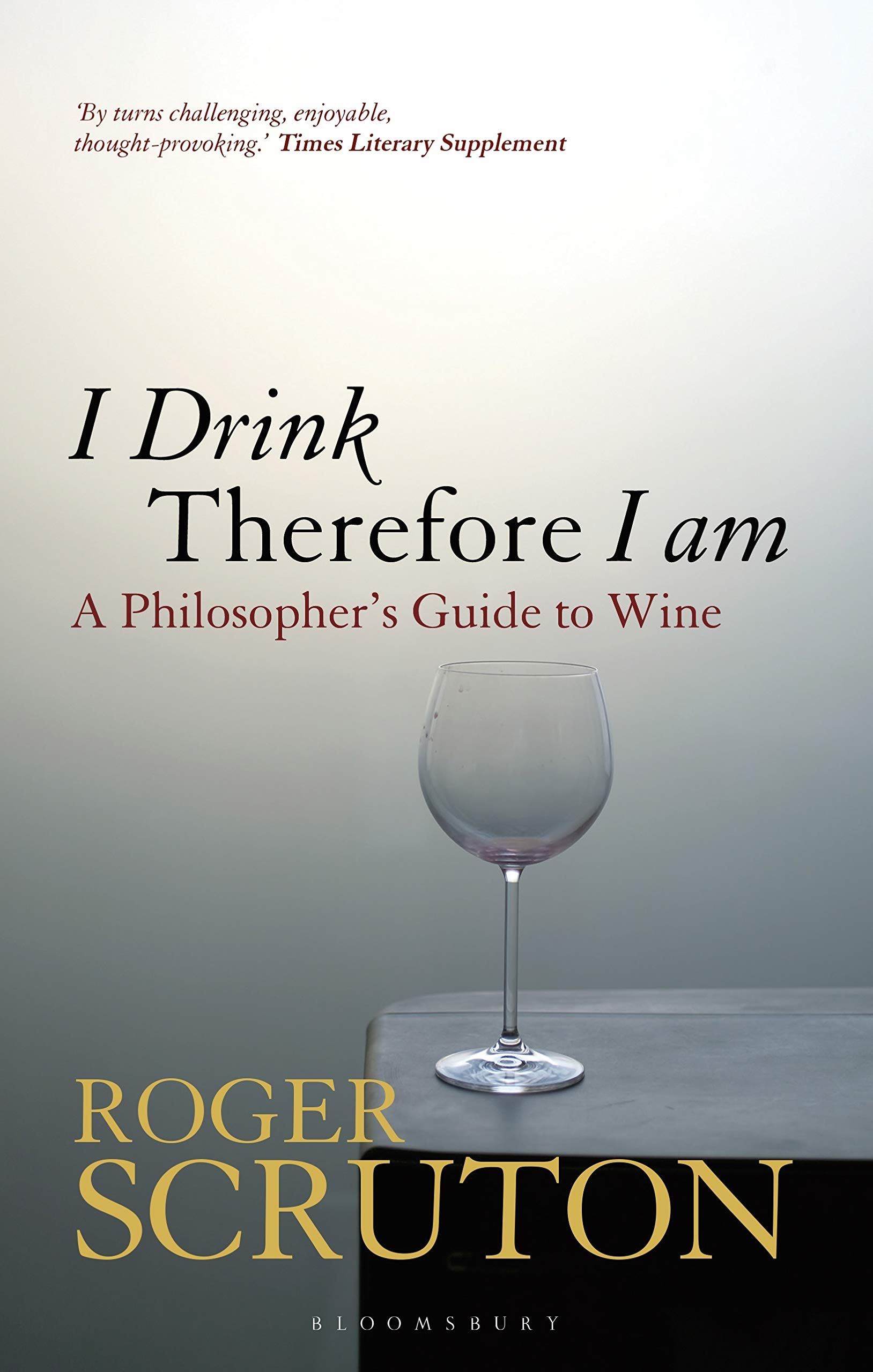
What wine meant to Roger Scruton
Commemorating the one year anniversary since his passing, here’s an article in The Critic.
 manwithoutqualities