Browse by:

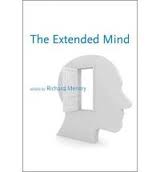
Review of Menary’s (ed.) The Extended Mind

Richard Menary’s long time coming The Extended Mind is reviewed here by  Joseph Ulatowski. CognitionCognitive neuroscienceCognitive scienceEmbodied cognitionExtended MindneurosciencePhilosophy of mindqualia

Colin McGinn: All machine and no ghost?

Colin McGinn locates his position within philosophy of mind. Though not a fashionable position, I’m very sympathetic to it – and of course, it is a position that has much in common with Hayek. The “mysterianism” I advocate is really nothing more than the acknowledgment that human intelligence is a local, contingent, temporal, practical and…

Extended mind, architecture and design

Chalmers’ and Clark’s extended mind thesis cited in this article from an architecture and design publication. Turning to philosophy and robotics gives us a new insight into what might be going on. In 1998, A. Clark and D. Chalmers proposed the “extended mind” concept, where the workings of our mind actually extend beyond the brain…

Meet the New Boss

This article from The Atlantic. A FEW YEARS AFTER Philip Rosedale graduated from college with a degree in physics, he joined RealNetworks, then an audio-streaming company. It was a top-down, command-and-control kind of place, where difficult software projects were outlined in advance and executed according to carefully conceived plans. Rosedale hated it. As a teenager…

Shapin on Polanyi

Shapin’s London Review of Books review of Michael Polanyi and His Generation: Origins of the Social Construction of Science by Mary Jo Nye. (Both Hayek and Oakeshott are mentioned by Shapin). Michael Polanyi lives on in the footnotes. If you want to invoke the idea of ‘tacit knowledge’, Polanyi is your reference of choice. You’ll probably…

Remembering Varela

Four articles (and more) of interest to theorists interested in enaction: 1. Tom Froese’s new article in Adaptive Behavior: Critics of the paradigm of enaction have long argued that enactive principles will be unable to account for the traditional domain of orthodox cognitive science, namely “higher-level” cognition and specifically human cognition. Moreover, even many of the…