Browse by:

Meet the New Boss

This article from The Atlantic. A FEW YEARS AFTER Philip Rosedale graduated from college with a degree in physics, he joined RealNetworks, then an audio-streaming company. It was a top-down, command-and-control kind of place, where difficult software projects were outlined in advance and executed according to carefully conceived plans. Rosedale hated it. As a teenager…
Shapin on Polanyi

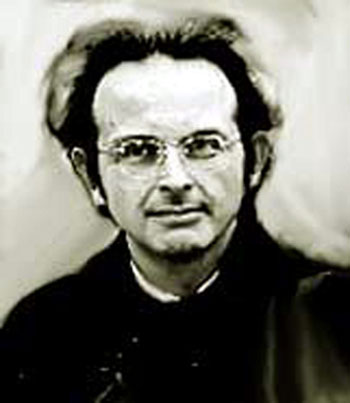
Shapin’s London Review of Books review of Michael Polanyi and His Generation: Origins of the Social Construction of Science by Mary Jo Nye. (Both Hayek and Oakeshott are mentioned by Shapin). Michael Polanyi lives on in the footnotes. If you want to invoke the idea of ‘tacit knowledge’, Polanyi is your reference of choice. You’ll probably…

Remembering Varela

Four articles (and more) of interest to theorists interested in enaction: 1. Tom Froese’s new article in Adaptive Behavior: Critics of the paradigm of enaction have long argued that enactive principles will be unable to account for the traditional domain of orthodox cognitive science, namely “higher-level” cognition and specifically human cognition. Moreover, even many of the…

Cambridge Companion to Oakeshott

I see that CUP now have a page up for Efraim Podoksik’s forthcoming Companion. One doesn’t have to be an astute reader to see that CUP are being slack in that the graphic has Steven Crowell as the editor (Crowell is the editor of The Cambridge Companion to Existentialism). Judging by the TOC, Podoksik’s volume will be a good…

Views of Hayek, Hebb, and Heisenberg: Toward an Approach to Brain Functioning

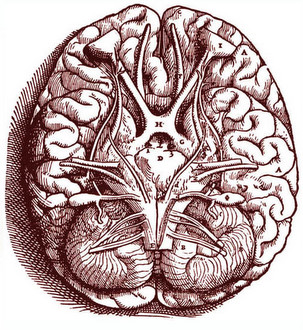
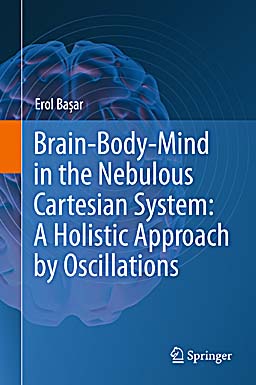
Neuroscientist Erol Basar on Hayek F. A. Hayek’s The Sensory Order must rate as one of the most creative books written on general philosophy of neuroscience. Although Hayek was a Noble-prize winner in economics and was not educated as a neuroscientist, his book opens up a new window on neuroscience, and this window certainly offers…