Here is an NPR interview with Werner talking about his latest documentary “The Cave Of Forgotten Dreams“. Interesting thoughts on filming in 3-D:
The brain is lazy and tries to avoid 3-D . . .

Here is an NPR interview with Werner talking about his latest documentary “The Cave Of Forgotten Dreams“. Interesting thoughts on filming in 3-D:
The brain is lazy and tries to avoid 3-D . . .
My chum David Livingstone Smith’s latest book is getting some good coverage. The latest review of Less Than Human: Why We Demean, Enslave and Exterminate Others can be found in Scientific American.
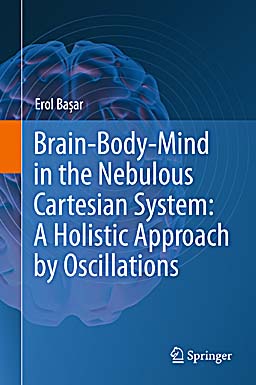
Here is the recently published book by my chum Erol Başar who as it happens is also contributing to my forthcoming edited book entitled Hayek in Mind: Hayek’s Philosophical Psychology. Not surprisingly, there is much reference to Hayek’s The Sensory Order peppered throughout Erol’s book most notably in section 2.12 (pp. 39-41). Other distinguished neuroscientists who appreciate the virtues of Hayek’s prescient insights include of course Fuster and Edelman. Erol writes:
The writing of a monograph on brain-body-mind is extremely ambitious. This is because I think that Friedrich von Hayek was correct when he stated (1952), “The mind must remain forever in a realm of its own, which we shall never be able fully to explain.”
I unfashionably argue for this view in a forthcoming paper borrowing Colin McGinn’s phrase “Cognitive Closure.”
Robert Musil (November 6, 1880 – April 15, 1942). A chapter from Man Without Qualities entitled: A chapter that can be skipped by anyone who has no very high opinion of thinking as an occupation. See also this forthcoming collection.

Here is the Symphony of Science‘s latest music video – “Ode to the Brain”.
“Ode to the Brain” is the ninth episode in the Symphony of Science music video series. Through the powerful words of scientists Carl Sagan, Robert Winston, Vilayanur Ramachandran, Jill Bolte Taylor, Bill Nye, and Oliver Sacks, it covers different aspects the brain including its evolution, neuron networks, folding, and more.
We know that extended mind discussion is entering unlikley quarters. The same it seems is happening with embodiment. Check out this recent paper “Embodied economics: how bodily information shapes the social coordination dynamics of decision-making” by Olivier Oullier and Frederic Basso.
To date, experiments in economics are restricted to situations in which individuals are not influenced by the physical presence of other people. In such contexts, interactions remain at an abstract level, agents guessing what another person is thinking or is about to decide based on money exchange. Physical presence and bodily signals are therefore left out of the picture. However, in real life, social interactions (involving economic decisions or not) are not solely determined by a person’s inference about someone else’s state-of-mind. In this essay, we argue for embodied economics: an approach to neuroeconomics that takes into account how information provided by the entire body and its coordination dynamics influences the way we make economic decisions. Considering the role of embodiment in economics—movements, posture, sensitivity to mimicry and every kind of information the body conveys—makes sense. This is what we claim in this essay which, to some extent, constitutes a plea to consider bodily interactions between agents in social (neuro)economics.
These two items via Ken Aizawa’s blog.
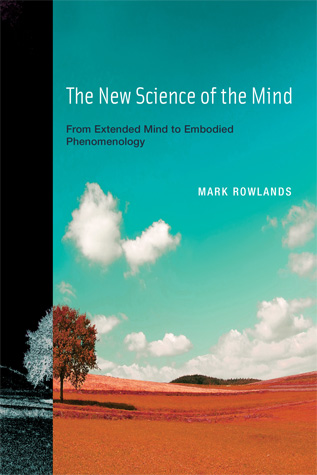
1. Rob Rupert reviews Mark Rowlands’ latest
2. Ginger Campbell interviews Larry Shapiro (check out the companion episodes Ginger mentions)


Check out my chum and occasional collaborator Chris Onof’s paper Moral Worth and Inclinations in Kantian Ethics just published at Kant Studies Online. There are few philosophers around today that write with such exacting precision, such intimacy with their topic and with such philosophical breadth that Chris Onof does.

I chanced upon this freely available review of Rorty’s notorious PMN (30th anniversary edition). It reminded me that I’d read PMN long before reading Oakeshott and that coming across Rorty’s invocation of Oakeshott’s conversational metaphor had no resonance for me. Even though I’m not in sympathy with Rorty and Oakeshott’s relativism I’m amazed at the kerfuffle it engenders.
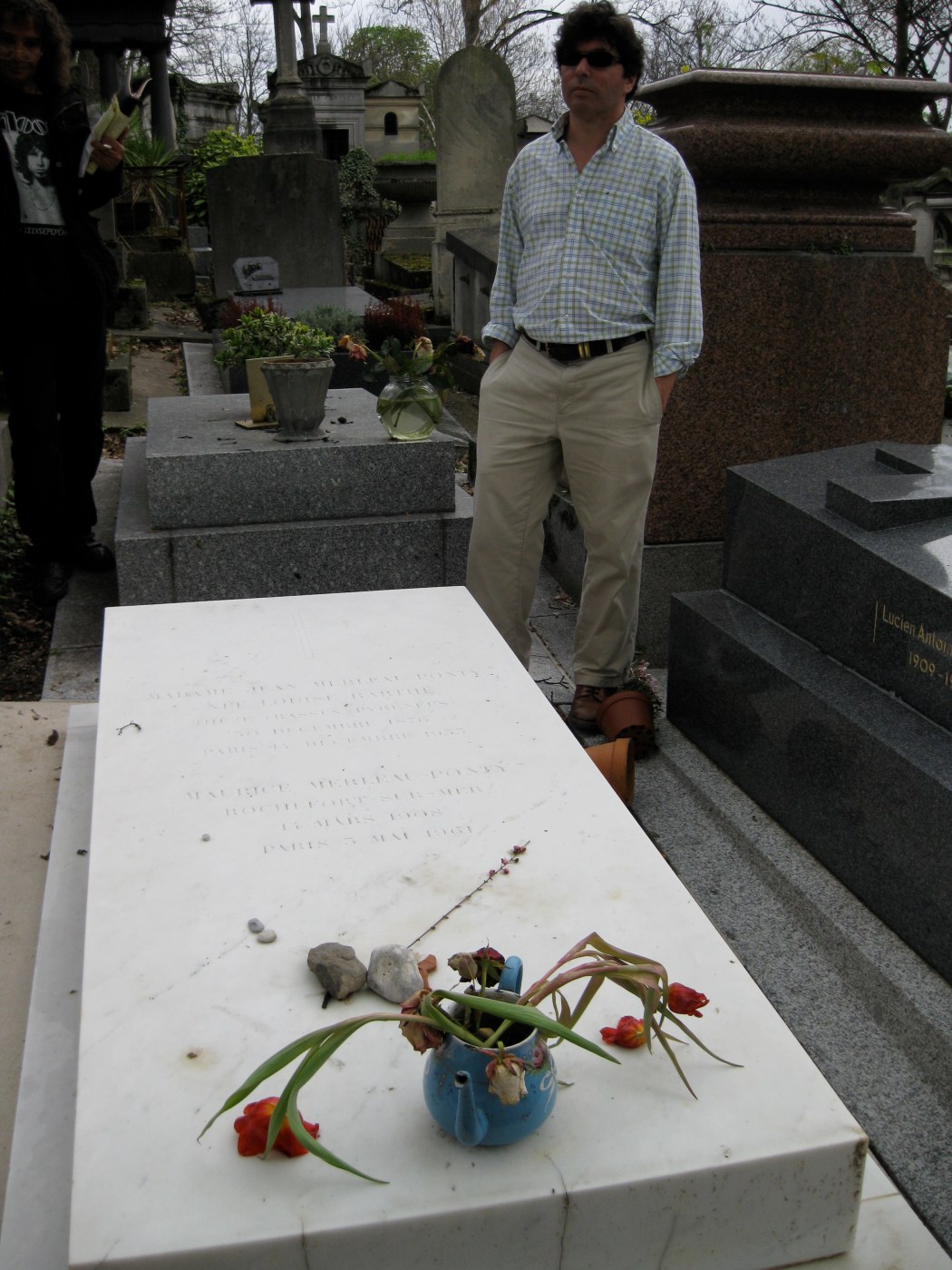
My visit to Merleau-Ponty’s grave coincided with the 50th anniversary of his death. It was Andy Clark who first brought Merleau-Ponty to my attention (Phenomenology of Perception) in his seminal book Being There, the latter, for me at least, one of those books that presented a seismic shift to my thinking. My interest in M-P is in his phenomenology, not his Marxism which I had no knowledge of. (The guy in the Jim Morrison T-shirt was a Père Lachaise guide that tracked down M-P’s grave without whom I wouldn’t have found it.)

