Stigmergic Simulations

Here are some terrific stigmergic simulations by architectural student Yang Chenghan that I chanced across:

The first is a 3D simulation deploying 45-70 agents (source code)

The second a 2D simulation deploying 20-30 agents (source code)

Here are some great synthetic stigmergic stills Yang has created.

Pat Churchland on the source of value

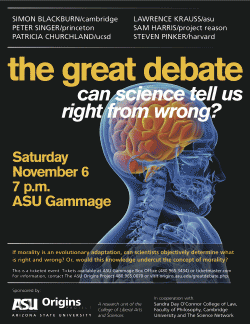
Another video (via David Livingstone Smith) of Pat Churchland plugging her and Paul’s forthcoming book Braintrust: What Neuroscience Tells Us About Morality. This talk is part of the The Great Debate conference Can Science Tell Us Right From Wrong?

Kripke for beginners

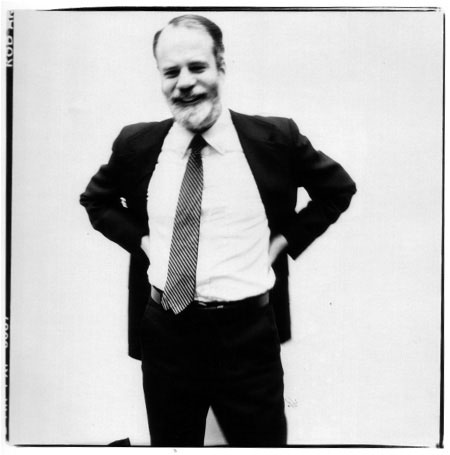
Here’s a great post in the New York Times (via my chum David Livingstone Smith) on one of the most influential philosophers of recent times within the analytic tradition – the one and only Saul Kripke. My favourite Kripke quote: “It really is a nice theory. The only defect I think it has is probably common to all philosophical theories. It’s wrong.”  Naming and Necessity (1980, p. 64). The photo below is from the warts ‘n all photographer Steve Pyke capturing Kripke in Oxford, 18 May 1990.

British Idealism and the concept of the self

I don’t normally post conference calls or CFP but this conference has appeal to me. I did attend the Bradley Society conference in about 1997 at Harris Manchester hosted by Bill Mander and had a great time there.

~~~~~~~~~~~~~~~~~~~~~~

Date: 27th – 29th August, 2013

Location: Harris Manchester College, Oxford

Idealism dominated British philosophy during the last third of the nineteenth century, and continued to be a significant force into the early years of the twentieth. Its advocates, who worked across the full spectrum of philosophical topics from metaphysics through ethics and political theory to the philosophy of religion, both reflecting and influencing turn of the century culture and society, included such figures as T.H. Green, Edward Caird, F.H. Bradley, William Wallace, Bernard Bosanquet, J.M.E. McTaggart, Henry Jones, D.G. Ritchie, J.H. Muirhead, R.B. Haldane, J.S. Mackenzie, H.J.W. Hetherington and A.S. Pringle-Pattison.

The conference aims to explore this tradition and its continuing relevance to modern thought  by taking as its central theme the concept of the self in British Idealist thought.

Whether through rethinking the metaphysical and epistemological relations between self and the world, through engagement with contemporary psychological science, through understanding it as something essentially social, through regarding its finitude as the manifestation of a deeper infinity, through considerations of its freedom and immortality, or through exploring the inter-relations between individual personhood and the more universal Absolute, notions of the self were always central to British Idealist philosophy; and contributions are sought exploring the many different manifestations of the self in British Idealist thought in relation to society, politics and ethics, religion, aesthetics, history, logic and metaphysics.

There are no restrictions in the methodological or philosophical perspective to be adopted, and papers would be particularly welcome which connect together the thoughts of different Idealist philosophers, or which link them to more contemporary discussions of the self.

Accommodation in the College will be limited so early expressions of interest are welcomed. Abstracts of no more than 500 words to be sent by 15 December 2012 to the conference organisers:

Bill Mander. Harris-Manchester College Oxford. Email: William.mander@hmc.ox.ac.uk

Stamatoula Panagakou. University of Cyprus and University of York. Email: sp117@york.ac.uk

Consciousness, plasticity, and connectomics: the role of intersubjectivity in human cognition

Check out this just published paper by Micah Allen and Gary Williams in the open access journal Frontiers in Psychology.

Consciousness is typically construed as being explainable purely in terms of either private, raw feels or higher-order, reflective representations. In contrast to this false dichotomy, we propose a new view of consciousness as an interactive, plastic phenomenon open to sociocultural influence. We take up our account of consciousness from the observation of radical cortical neuroplasticity in human development. Accordingly, we draw upon recent research on macroscopic neural networks, including the “default mode,” to illustrate cases in which an individual’s particular “connectome” is shaped by encultured social practices that depend upon and influence phenomenal and reflective consciousness. On our account, the dynamically interacting connectivity of these networks bring about important individual differences in conscious experience and determine what is “present” in consciousness. Further, we argue that the organization of the brain into discrete anti-correlated networks supports the phenomenological distinction of prereflective and reflective consciousness, but we emphasize that this finding must be interpreted in light of the dynamic, category-resistant nature of consciousness. Our account motivates philosophical and empirical hypotheses regarding the appropriate time-scale and function of neuroplastic adaptation, the relation of high and low-frequency neural activity to consciousness and cognitive plasticity, and the role of ritual social practices in neural development and cognitive function.

Oakeshott’s Skepticism

I’ve finally received a copy of Aryeh Botwinick’s book that I noted last year. The topic of Oakeshott’s scepticism has occupied Aryeh for a good decade now when he presented a paper at the inaugural conference of the MOA in 2001 entitled “Unifying Skeptical Motifs in Oakeshott’s Thought”. Thanks is due to none other than Harry “On Bullshit” Frankfurt for another major university press (Princeton) with a strong (analytical) philosophical catalogue running with the idea of publishing something on Oakeshott.

Rob Haskell Obituary

Last year I reported the death of my chum Rob Haskell. Here is an obituary from the latest issue of the Journal of Mind and Behavior with which he was long associated.

A Compassionate Scholar: A Tribute to Dr. Robert Eugene Haskell

April 16, 1938 – July 17, 2010

Though no rigorous researcher would downplay the power of experimental and laboratory designs, the same generally can not be said of addressing the issue of increasing the robustness of experimental design with convergent data from everyday situations. Just as everyday phenomena need to be subjected to experimental testing, so do experimental designs need to be informed by the conditions attached to everyday phenomena for which they serve as models. No aircraft flight design is based solely on findings from wind tunnel experiments but on in-flight data from similar aircraft and from early prototypes of actual aircraft. Similarly, laboratory findings in psychology can be increasingly informed with variables and situations closely resembling those operations in everyday settings.

Robert Haskell

The scholarly community and his many friends, colleagues and students mourn the passing of one of its brightest stars, Robert “Rob” Haskell, Ph.D. Rob died suddenly due to complications following treatment for cancer. A notable figure in interdisciplinary studies, he studied with Ernest Becker at San Francisco State University and Joseph J. Kockleman at Penn State University. In an academic career that spanned more than 50 years, Rob produced an impressive and impactful corpus on the interdisciplinary underpinnings of cognition and unconsciousness.

Raised along the mid-Maine coast he loved, he combined in his own personality the rugged solitude, beauty, and magnetism of that state: he was first and always a scholar of the solitary cut who nonetheless commanded the attention and esteem of his colleagues. Passionately excited by the ideas and scholarship of his peers, he added an incisive vision and relentless commitment to their pursuit of truth.

Haskell was a working class American enlarged by the benefit of travel in the military and introduction to books. He once shared with me that he read his first book at 19 after entering the Army. (I never learned what that book was, but would not be surprised to learn it was Freud’s Interpretation of Dreams or Carroll’s Alice in Wonderland — his two favorite works.) From there, he said, it was sheer adventure: his love of books and learning never ceased. Indeed, years after the event, he and I often recalled with childlike glee how we had once discovered a quaint, seldom-visited used bookstore in Harrisburg, Pennsylvania; there, we discovered in an unlit attic a mountain of books, into which we climbed in search of literary gems.

After traveling across country with his wife and small child in a Volkswagen Beetle in 1970, he settled for a decade at Harrisburg Area Community College in Pennsylvania. At Harrisburg, Haskell was an inspiration and mentor for several first-generation working-class white and minority students. I first met Rob when I joined the faculty; I was newly returned from study in Canada, and we embarked on a friendship that was to span nearly 40 years. As both his closest friend and colleague, I was the observer and frequent beneficiary of the spirit and wit of a rare human being. Decency was his hallmark. He was a person who, in Becker’s terms, faced the contradictions of life without resorting to fanaticism; and whose compassion for humans inhered in a recognition of the heroic in each of us as we face with hope the inevitability of death. This attitude infused his scholarship with a compassion that was evident in his relations with people as well as the great minds contained in books. Generosity and humor, along with a demand for solid thought and application, marked his tenure as a teacher. He never placated sloppy thinking or shoddy work from his students, yet he remained always respectful and encouraging.

Rob was a scholar whose work crossed many boundaries. Trained in sociology, rhetoric, and psychology, he wrote with a disciplined commitment to empirical theory building. Fascinated with unconscious language and thought, he constructed a method for understanding the hidden logic behind much of ordinary communication. Working with ideas from linguistics, logic, and mathematics, he delineated a way of looking at ordinary communication that revealed both structural and semantic order and significance. A co-founder of the Institute for Cognitive Science at the University of New England, he was especially pivotal in bringing to the students and professors of his institution some of the world’s foremost thinkers, including Thomas Szasz and Molefi Asante.

Rob was an eager student–scholar: he loved learning new things and he was generous in his acknowledgement of the insights and accomplishments of others. This largeness of vision underlay the scope of his work and the energy he put into various fields, including small group dynamics, the transfer of learning, student–faculty evaluation, dream processes, analogic reasoning, and unconscious cognitive processes. He wrote more than 60 scholarly papers on student evaluations, analogic reasoning, rhetoric, and the cognitive psychology of dreams. He was the author of seven books, including Deep Listening: Hidden Meanings in Everyday Conversation and Between the Lines: Unconscious Meaning in Everyday Conversation. Perhaps his most challenging work, and my personal favorite, was the 1993 semi-autobiographical Adult–Child Research and Experience: Personal and Professional Legacies of a Dysfunctional Co-Dependent Family [Developments in Clinical Psychology]. In this study, he deftly combined his personal narrative as an adult child of an alcoholic with the cumulative research on the personality of children growing up in alcoholism-related dysfunctional families.

Haskell also served on several journal editorial review boards and was an Associate Editor of The Journal of Mind and Behavior. Consistent with his deep respect and affection for the founder and Editor of the Journal, Ray Russ, he edited several special issues of this journal and provided leadership in the advocacy of greater interchange among diverse fields. His ability to assume a leadership role in these projects derived from his own established prominence as a leading scholar.

Though his great passion and achievement was empirical theory building, his compassion for the concrete struggles of daily life led to work beyond the boundaries. Never one to be a joiner of causes, he nonetheless championed them. In 1979, as he was removing his wife and daughter from Harrisburg and the fallout from Three Mile Island, he took time to write several important essays on the dangers and challenges of nuclear energy and fallout. Similarly, his essays on the integrity, or lack thereof, of student–teacher evaluations, now some decades old, remain among the most cited.

In these, and other examples of academic advocacy, we have a model of the committed scholar who retained integrity over despair and remained engaged with his fellow travelers until the end. We shall continue to miss and remember him.

Aaron David Gresson III, Ph.D.

Professor Emeritus

The Pennsylvania State University

December 2010