Born on this day in 1899
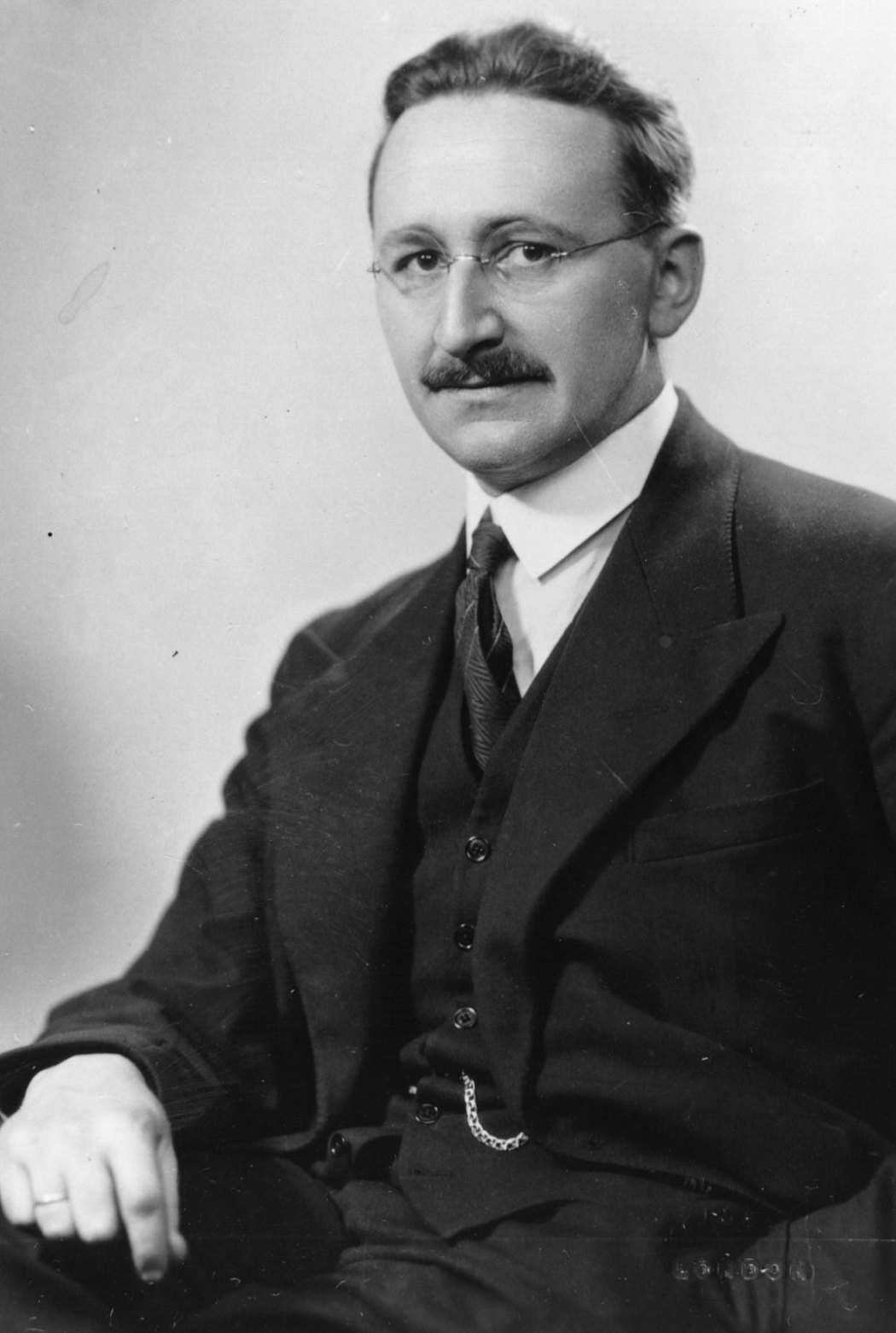
Born on this day in 1899
A nice piece (via my chum David Livingstone Smith) entitled “A Philosopher in Love“:
The “chief triumph of art and philosophy,” he wrote years before meeting Boufflers, is that it “refines the temper” and “points out to us those dispositions which we should endeavor to attain, by a constant bent of mind and by repeated habit.”
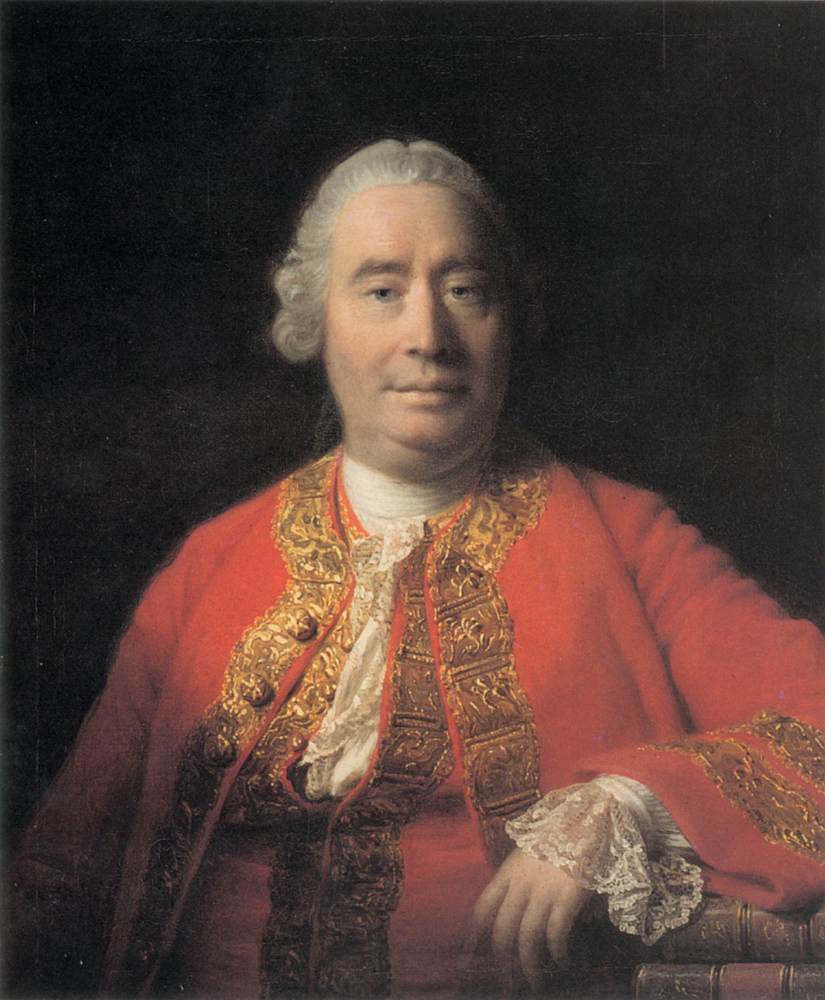
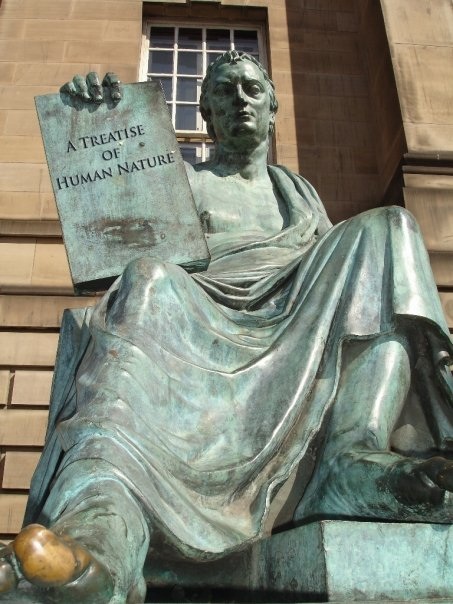

Paying my respects
Here is an interview with Alva in the German language Frankfurter Rundschau. Here is a video interview with Alva setting out in very general terms his research interest. Click here for a Google translation.
The many faces of subjective experience
Here’s a man of genuine distinction who singlehandedly reinvigorated philosophy of mind with his The Conscious Mind: In Search of a Fundamental Theory (thanks to Chris Onof who gave it to me as a gift) not to mention Dave’s hand in the extended mind literature and selfless service to the community – PhilPapers.
I’m interested in consciousness as a scientific concept and there is always this difficulty representing [it] using language; we simply don’t have the words to describe it . . . The artworks in this exhibition can be seen as ways of effectively depicting subjective experience.
Nicely put Dave. No wonder I have a soft spot for all artistic endeavours.
Here is an interview with Chomsky conducted by the very excellent Peter Ludlow.
Here is another interview conducted by Ali G:
EPISTEME announces an impending move and transformation. With the first issue of 2012 we begin publication with Cambridge University Press and expand our scope from social epistemology specifically to all of epistemology. Our new title will be: EPISTEME, A Journal of Individual and Social Epistemology. Since 2004 EPISTEME has published with Edinburgh University Press. With Cambridge we shall publish four issues per year, approximately 500 pages per volume. Cambridge will include EPISTEME in a bundle of journals to which 1,500 institutions already subscribe.
Scope and Mission Statement. EPISTEME is a general journal of epistemology in the analytic tradition that invites both informal and formal approaches. Among its primary “traditional” topics are knowledge, justification, evidence, reasons, rationality, skepticism, truth, probability, epistemic norms and values, and methodology. The journal devotes special attention to topics in social epistemology, including testimony, trust, disagreement, relativism, diversity and expertise, collective judgment, and the epistemic assessment of social institutions (e.g., science, law, democracy, and the media). The Journal welcomes interdisciplinary approaches to epistemology that borrow methods from allied disciplines such as experimental psychology, linguistics, economics, game theory, evolutionary theory, and computer simulation studies. We do not publish purely historical work or case studies.
Editorial Team
Editor
Alvin Goldman (Rutgers)
Associate Editors
Jessica Brown (St. Andrews)
Igor Douven (Groningen)
Don Fallis (Arizona)
Branden Fitelson (Rutgers)
Jennifer Lackey (Northwestern)
Christian List (London School of Economics)
Jack Lyons (Arkansas)
Matthew McGrath (Missouri)
Jonathan Schaffer (Rutgers)
Frederick Schmitt (Indiana)
Jonathan Weinberg (Arizona)
Michael Weisberg (University of Pennsylvania)
The first issue of 2012, guest-edited by Jennifer Lackey, will include the following contents:
(1) A symposium on pragmatic encroachment, with papers by Jessica Brown, Jeremy Fantl & Matthew McGrath, and Jason Stanley;
(2) A paper on the epistemic case for multiple-vote majority rule, by Richard Bradley and Christopher Thompson; and
(3) A critical notice of Sanford Goldberg,’s Relying on Others, by Mikkel Gerken.
The journal welcomes submissions for publication in 2012 and thereafter. Manuscripts should be directed to: episteme@philosophy.rutgers.edu. Manuscripts should be anonymized, and should be accompanied by a separate file containing an abstract, author identification (including institution), and contact information.
Richard Brown (ebullient blogger at Philosophy Sucks!) and Keith Frankish discuss qualia on Philosophy TV. Richard’s dog Frankie chimes in as well.

Ludwig Büchner. According to Wikipedia:
The extreme materialism of this work excited so much opposition that he was compelled to give up his post at Tübingen.

David Hume
Paying my respects

