Web Stigmergy

Stigmergy yet again – well, there is no escaping it. While I wouldn’t call stigmergy a new paradigm (that’s too pompous – in any event, paradigms only have shape in a historical sense), stigmergy is one of the most fruitful mechanisms around that speaks to distributed cognition.

Check out this paper nicely titled “Standing on the shoulders of ants: stigmergy in the Web” by a student who is working on the stigmergic properties of the Web. A nice overture to further more technical work highlighting some important issues that need to be addressed.  Two points are in order.

(1) I disagree that “we don‟t yet have a clear definition of stigmergy” – I don’t think that one can prescribe necessary and sufficient conditions but we sure can specify typical features.

(2) And “combining bio-inspired designs and algorithms based on stigmergy with social network analysis might facilitate the creation of a more sophisticated web application.” This is already here, the preeminent example being Amazon’s recommendation algorithm.

Recommendation algorithms generally come in two varieties – collaborative filtering (CF) and cluster models (CM). CF attempts to mimic the process of ‘‘word-of-mouth’’ by which people recommend products or services to one another. CF runs on the notion that people who agreed in the past will agree in the future. CF aggregates ratings of items to recognize similarities between users, and generates a new recommendation of an item by weighting the ratings of similar users for the same item. But this technique is computationally expensive because ‘‘the average customer vector is extremely sparse’’ (Linden, Smith, & York, 2003, p. 77). By contrast CM divides the agent base into segments, treating the task as a classificatory problem. An agent is assigned a category comprised of similar agent profiles. Only then are recommendations generated. CM is computationally efficient since it only searches segments, rather than the complete database. Amazon.com’s recommendation algorithm is a derivative form of CF and CM. Consider an example. A search on Amazon for ‘‘stigmergy’’ returns 176 items, the default sort being by relevance (as opposed to price, reviews, publication date). Also given some prominence is a category ‘‘Customers who bought items in your Recent History also bought x, y, z . . ..’’ supplemented by Listmania, lists of salient material compiled by agents (all-comers as in Wikipedia) who ostensibly have some intimacy with the topic. There are also so-called ‘‘reviews’’ of a given title. All this over and above a record of my recent purchases which included stigmergy related material, assuming one hasn’t expunged Amazon’s cookies from one’s browser. Even on offer is the opportunity, for many titles, to peruse the contents page, read an excerpt and even be enticed by the dustjacket hyperbole. Furthermore, one can be alerted by email when a new title or new edition of a book matching one’s previous trails of interest, will become available: a preorder entitling the buyer to a discount. This all adds up to a highly bespoke experience that is better tailored than being in a bookstore, because it is unlikely the bookstore even stocks a title you have yet to discover as one scans the shelves – there is no ‘‘pheromone’’ trail. The Amazon algorithm rather than matching user-to-user finds items that customers tend to purchase together. It is computationally efficient (and easily scalable) because much of the computation has already been done off-line. The stigmergic interest of Amazon’s algorithm is patently clear: an item-to-item search generates a trail that gives rise to novel patterns of behavior. CF’s great virtue is that suppliers can be finely attuned to consumer behavior. The downside is that there runs the risk of ‘‘a kind of dysfunctional communal narrowing of attention’’ that can be self-fulfilling (Clark, 2003, p. 158; Gureckis & Goldstone, 2006, p. 296). Excerpt from Stigmergic epistemology, stigmergic cognition.

Stigmergy Installation

Check out this installation supported by the Welcome Trust.

People walking along Euston Road will encounter an unusually arresting reflection of themselves in a new light installation, ‘Reflex’, created by rAndom International.

The work inhabits the windows of the Wellcome Trust as though it were a living organism. Reacting to viewers, passers-by and traffic on Euston Road, ‘Reflex’ produces mesmerising flows of light, inviting a physical response to the building.

The installation’s swarming behaviour is based on an algorithm developed to emulate the collective decision making that we see in large groups of creatures such as birds or ants.

The work is constructed from hundreds of brass rods and thousands of LEDs arranged on small custom chips. Their movement is based on programmes that aim to simulate complex natural phenomena. ‘Reflex’ recreates “stigmergy”, whereby traces left by random actions stimulate further actions that build on one another, leading to the spontaneous emergence of apparently patterned activity. rAndom’s work allows for error, experimentation and unpredictability, and ‘Reflex’ encourages its viewers to see how they can influence the work.

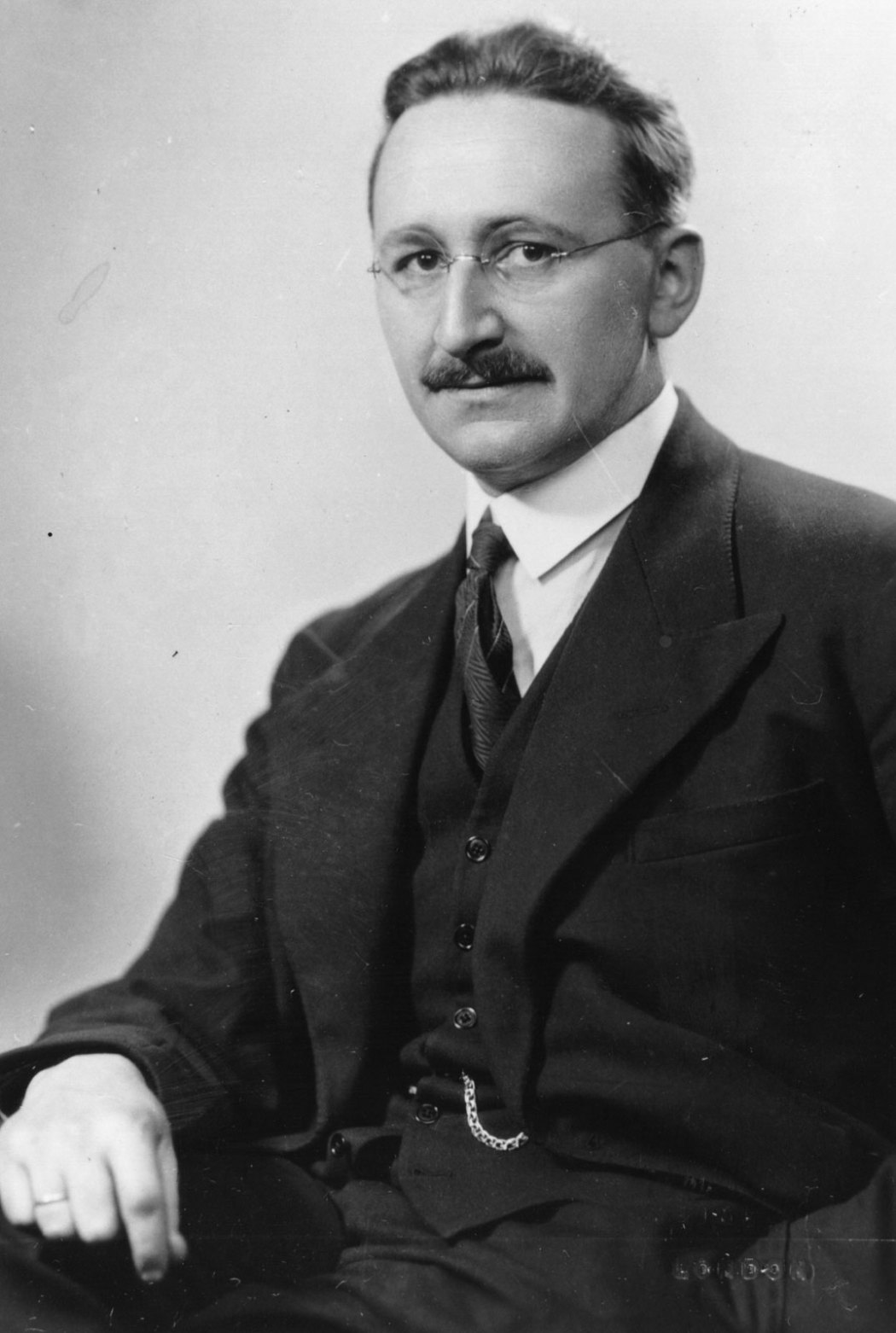
Friedrich Hayek

Born on this day in 1899

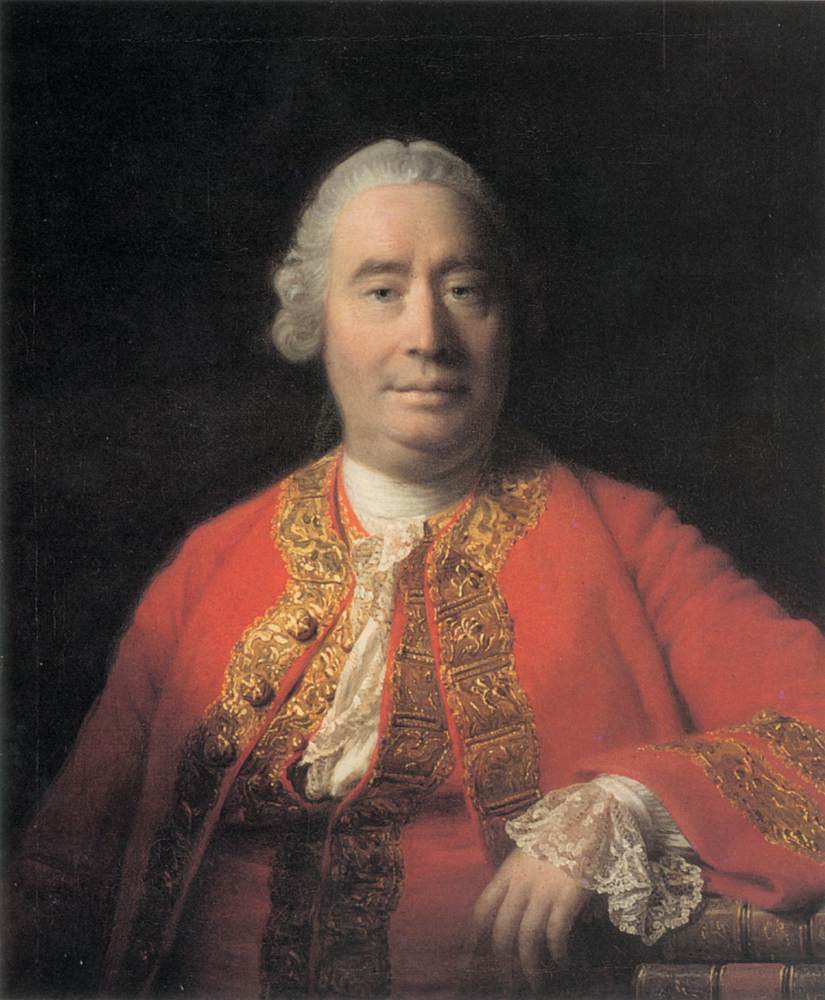
Dear dear David . . . we salute you

A nice piece (via my chum David Livingstone Smith) entitled “A Philosopher in Love“:

The “chief triumph of art and philosophy,” he wrote years before meeting Boufflers, is that it “refines the temper” and “points out to us those dispositions which we should endeavor to attain, by a constant bent of mind and by repeated habit.”

Paying my respects

Alva Noë Interview

Here is an interview with Alva in the German language Frankfurter Rundschau. Here is a video interview with Alva setting out in very general terms his research interest. Click here for a Google translation.

Portrait of Chalmers

The many faces of subjective experience

Here’s a man of genuine distinction who singlehandedly reinvigorated philosophy of mind with his The Conscious Mind: In Search of a Fundamental Theory (thanks to Chris Onof who gave it to me as a gift) not to mention Dave’s hand in the extended mind literature and selfless service to the community – PhilPapers.

I’m interested in consciousness as a scientific concept and there is always this difficulty representing [it] using language; we simply don’t have the words to describe it . . . The artworks in this exhibition can be seen as ways of effectively depicting subjective experience.

Nicely put Dave. No wonder I have a soft spot for all artistic endeavours.

Chomsky philosophy of mind discussion

Here is an interview with Chomsky conducted by the very excellent Peter Ludlow.

Here is another interview conducted by Ali G:

EPISTEME: A Move and Reincarnation

EPISTEME announces an impending move and transformation. With the first issue of 2012 we begin publication with Cambridge University Press and expand our scope from social epistemology specifically to all of epistemology.  Our new title will be:  EPISTEME, A Journal of Individual and Social Epistemology. Since 2004 EPISTEME has published with Edinburgh University Press. With Cambridge we shall publish four issues per year, approximately 500 pages per volume.  Cambridge will include EPISTEME in a bundle of journals to which 1,500 institutions already subscribe.

Scope and Mission Statement. EPISTEME is a general journal of epistemology in the analytic tradition that invites both informal and formal approaches. Among its primary “traditional” topics are knowledge, justification, evidence, reasons, rationality, skepticism, truth, probability, epistemic norms and values, and methodology.  The journal devotes special attention to topics in social epistemology, including testimony, trust, disagreement, relativism, diversity and expertise, collective judgment, and the epistemic assessment of social institutions (e.g., science, law, democracy, and the media).  The Journal welcomes interdisciplinary approaches to epistemology that borrow methods from allied disciplines such as experimental psychology, linguistics, economics, game theory, evolutionary theory, and computer simulation studies. We do not publish purely historical work or case studies.

Editorial Team

Editor

Alvin Goldman (Rutgers)

Associate Editors

Jessica Brown (St. Andrews)

Igor Douven (Groningen)

Don Fallis (Arizona)

Branden Fitelson (Rutgers)

Jennifer Lackey (Northwestern)

Christian List (London School of Economics)

Jack Lyons (Arkansas)

Matthew McGrath (Missouri)

Jonathan Schaffer (Rutgers)

Frederick Schmitt (Indiana)

Jonathan Weinberg (Arizona)

Michael Weisberg (University of Pennsylvania)


The first issue of 2012, guest-edited by Jennifer Lackey, will include the following contents:

(1)  A symposium on pragmatic encroachment, with papers by Jessica Brown, Jeremy Fantl & Matthew McGrath, and Jason Stanley;

(2)  A paper on the epistemic case for multiple-vote majority rule, by Richard Bradley and Christopher Thompson; and

(3)  A critical notice of Sanford Goldberg,’s Relying on Others, by Mikkel Gerken.

The journal welcomes submissions for publication in 2012 and thereafter. Manuscripts should be directed to: episteme@philosophy.rutgers.edu. Manuscripts should be anonymized, and should be accompanied by a separate file containing an abstract, author identification (including institution), and contact information.

Qualia on Philosophy TV

Richard Brown (ebullient blogger at Philosophy Sucks!) and Keith Frankish discuss qualia on Philosophy TV. Richard’s dog Frankie chimes in as well.