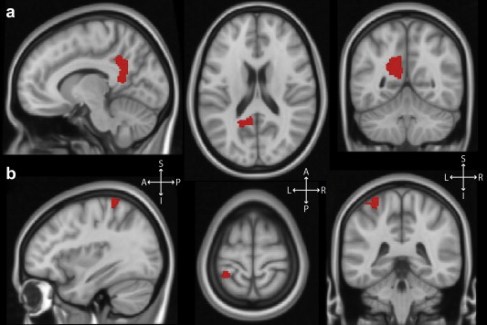
A report on a paper recently published in Cortex.

A report on a paper recently published in Cortex.

Michael Baruzzini‘s thoughts on Percy’s famous “ode” to Bourbon. (A companion piece is Luis Buñuel’s recipe for the perfect Martini mentioned in his autobiography and perhaps most famously in the film The Discreet Charm of the Bourgeoisie — for another time).
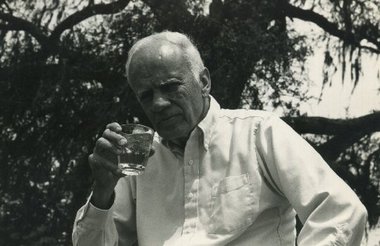
Not only should connoisseurs of bourbon not read this article, neither should persons preoccupied with the perils of alcoholism, cirrhosis, esophageal hemorrhage, cancer of the palate, and so forth—all real enough dangers. I, too, deplore these afflictions. But, as between these evils and the aesthetic of bourbon drinking, that is, the use of bourbon to warm the heart, to reduce the anomie of the late twentieth century, to cure the cold phlegm of Wednesday afternoons, I choose the aesthetic. What, after all, is the use of not having cancer, cirrhosis, and such, if a man comes home from work every day at five-thirty to the exurbs of Montclair or Memphis and there is the grass growing and the little family looking not quite at him but just past the side of his head, and there’s Cronkite on the tube and the smell of pot roast in the living room, and inside the house and outside in the pretty exurb has settled the noxious particles and the sadness of the old dying Western world, and him thinking: “Jesus, is this it? Listening to Cronkite and the grass growing?”

Here’s a film that I chanced upon (I haven’t seen it yet).
Once upon a time there was a world full of meaning, focused by exemplary figures in the form of gods and heroes, saints and sinners. How did we lose them, or, might they still be around, in the form of modern day masters, in fields like sports, music, craft and cooking. Are these masters able to inspire us and bring back a sense of wonder, possibly even of the sacred?

The boy has done it! He has won the title to his own existence, as plenary an existence now as Holden’s, by refusing to be stampeded like the ladies from Hattiesburg. He is a citizen like Holden; two men of the world they are. All at once the world is open to him. Nobody threatens from patio and alley. His girl is open to him too. He puts his arm around her neck, noodles her head. She feels the difference too. She had not known what was wrong nor how it was righted but she knows now that all is well.
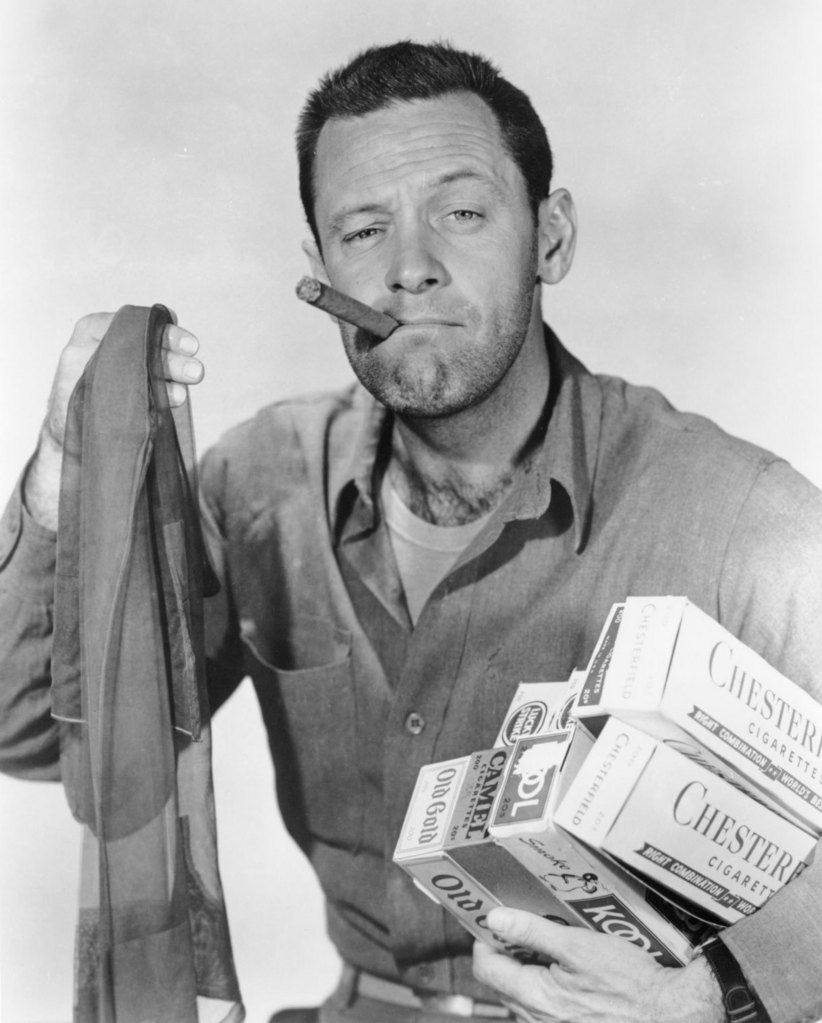
I am attracted to movie stars but not for the usual reasons. I have no desire to speak to Holden or get his autograph. It is their peculiar reality which astounds me.
Am I mistaken or has a fog of uneasiness, a thin gas of malaise, settled on the street?
He [Eddie] understands everything out there and everything out there is something to be understood (pp. 16-19).

Evan on neurophenomenology (Evan is UBC’s big gain).
Dave Chalmers’ Amherst lecture.

Ignatius looked sternly at the young boy who had placed himself in the wagon’s path. His valve protested against the pimples, the surly face that seemed to hang from the long well-luricated hair, the cigarette behind the ear, the aquamarine jacket, the delicate boots, the tight trousers that bulged offensively in the crotch in violation of all the rules of theology and geometry.
“What’s matter with me? What’s the matter with you? Are you unnatural enough to want a hot dog this early in the afternoon? My conscience will not let me sell you one. Just look at your loathsome complexion. You are a growing boy whose system needs to be surfeited with vegetables and orange juice and whole wheat bread and spinach and such. I, for one, will not contribute to the debauchery of a minor.”
“Someone with decency grab that juvenile delinquent. That filthy little minor. Where is his respect? That little guttersnipe must be lashed until he collapses!”
“Is my paranoia getting completely out of hand,” Ignatius asked the group, “or are you mongoloids really talking about me?”
“My entire nervous system is on the brink of revolt against me for subjecting it to such trauma. Ignore me if I suddenly go into a state of shock.”
They probably derive some sort of pleasure from the spectacle of a poor and struggling vendor’s being publicly humiliated. They probably respect the boy’s initiative.”
“Money? No money was stolen. After all, there was no money to steal, for I had not been able to vend even one of these delicacies. He stole the hot dogs . . .
“Perhaps he was hungry. Perhaps some vitamin deficiency in his growing body was screaming for appeasement. The human desire for food and sex is relatively equal. If there are armed rapes, why should there not be armed hot dog thefts? I see nothing unusual in the matter.”
“You are full of bullshit.”
“I? The incident is sociologically valid. The blame rests upon our society. The youth, crazed by suggestive television programs and lascivious periodicals had apparently been consorting with some rather conventional adolescent females who refused to participate in his imaginative sexual program. His unfulfilled physical desires therefore sought sublimation in food. I, unfortunately, was the victim of all of this. We may thank God that this boy has turned to food for an outlet. Had he not, I might have been raped right there on the spot.”
Of course no one would help me up. My white smock stamped me as a vendor, an untouchable.”
“How about making another try?”
“What? In my present condition, do you seriously expect me to take to the streets again and hustle? My ten cents is going to be deposited in the hands of St. Charles streetcar conductor. The remainder of the day I intend to spend in a hot tub trying to recapture some semblance of normality” (pp. 139-143).

A new article in the latest issue of the PNAS entitled “Predicting risky choices from brain activity patterns“ (h/t to Shannon Selin).
This study reminds me of Daniel Kahneman and Amos Tversky’s work:
Prospect theory concerns the psychophysics of wealth utility: that is, the perceived tradeoffs between potential outcomes and the probability of some outcome occurring. Kahneman and Tversky reworked Bernoulli’s long established orthodoxy of wealth utility that supposedly explained loss aversion through quantifiable states of wealth. Instead, they took the view that by asking subjective questions rather than propositional (or abstract) questions regarding terms of loss and gain, they presented a richer explanation for loss aversion. They found that that though agents like winning and dislike losing, they in effect are orientated to dislike losing more. Kahneman and Tversky (1979) initially articulated decisions under risk (as opposed to decisions under uncertainty) involving at most two non-zero outcomes. Later as cumulative prospect theory (1992) they accommodated decisions under uncertainty and risky conditions that employs cumulative, rather than separable decision weights with any number of outcomes.
Kahneman, D., & Tversky, A. 1979. Prospect theory: An analysis of decisions under risk. Econometrica, Vol. 47, No. 2: 263-291.
Kahneman, D., & Tversky, A. 1992. Advances in prospect theory: Cumulative representation of uncertainty. Journal of Risk and Uncertainty 5 (4): 297–323.

Latest issue of EPISTEME. Some freebies and I think the first review (critical notice) for the jnl, fittingly the target book being Hilary Kornblith’s On Reflection.
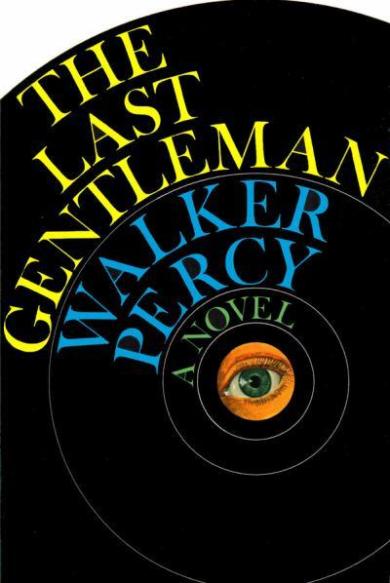
Truthfully, it is the fear of exposing my own ignorance which constrains me from mentioning the object of my search. For, to begin with, I cannot even answer this, the simplest and most basic of all questions: Am I, in my search, a hundred miles ahead of my fellow Americans or a hundred miles behind them? That is to say: Have 98% of Americans already found what I seek or are they so sunk in everydayness that not even the possibility of a search has occurred to them? (p. 14).